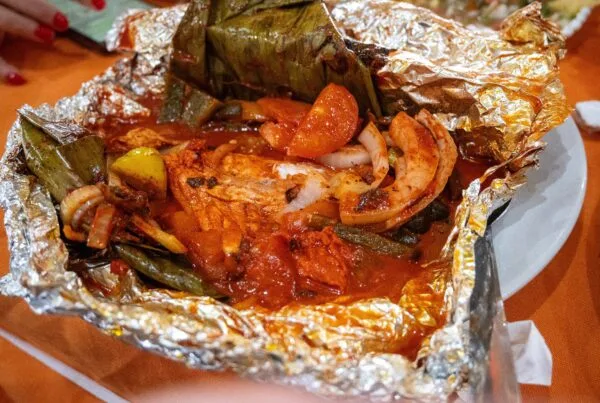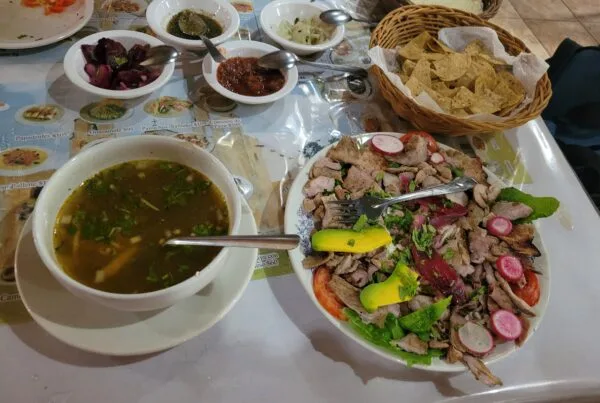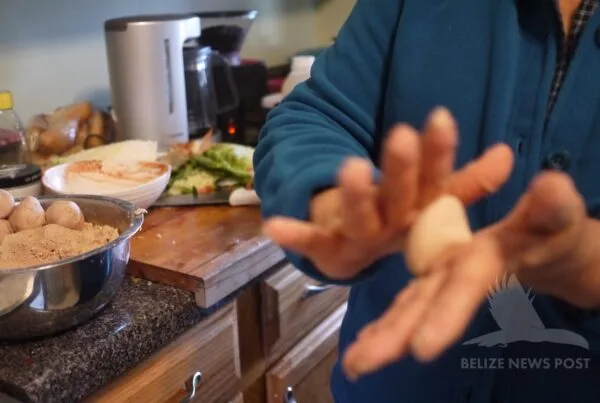
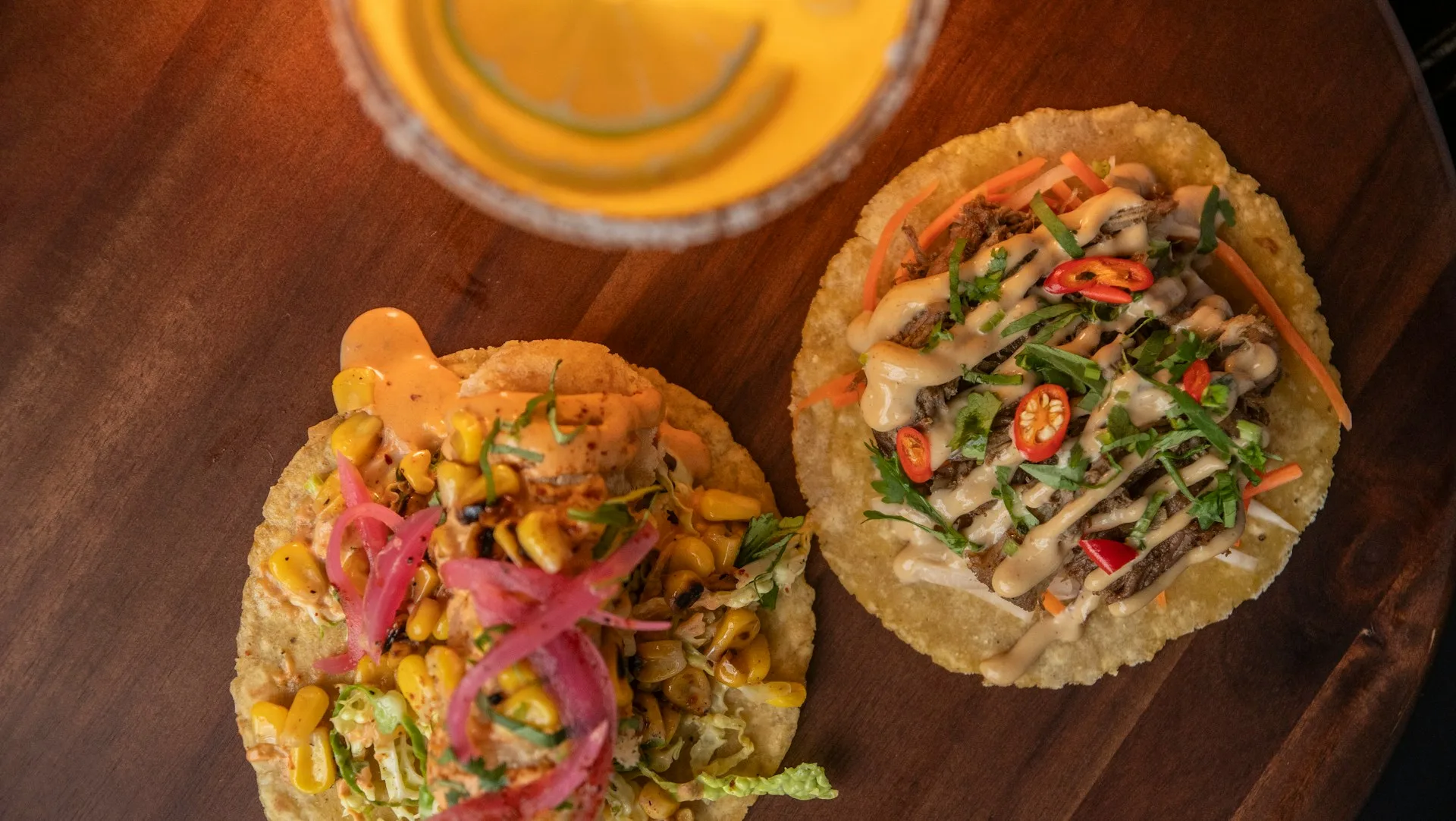
Panuchos yucatecos are small corn tortillas cooked dry on a comal until they puff, then split open and stuffed with seasoned black beans before being fried in lard. They are topped with shredded meat, cabbage, pickled onion, and avocado. Found in Mérida, Chetumal, Playa del Carmen, and across the Yucatan peninsula, they are well known to Belizeans, who cross into Mexico regularly and have done so for generations.
Corozal and Chetumal are eight miles apart. We called it Chet. You go for the gas, Mexican gas is cheaper, and while you are there you eat. Panuchos at the market. You are home by noon. The bus runs daily. Has run for years. Some people crossed every week. Others go further. Mérida, Playa del Carmen. Belizeans know the Yucatan. The border is a formality. The food on both sides is not so different. It is the same Maya kitchen, just a different flag at the crossing.
Panuchos are Yucatan food. You know them if you have crossed. Here is how you make them at home.
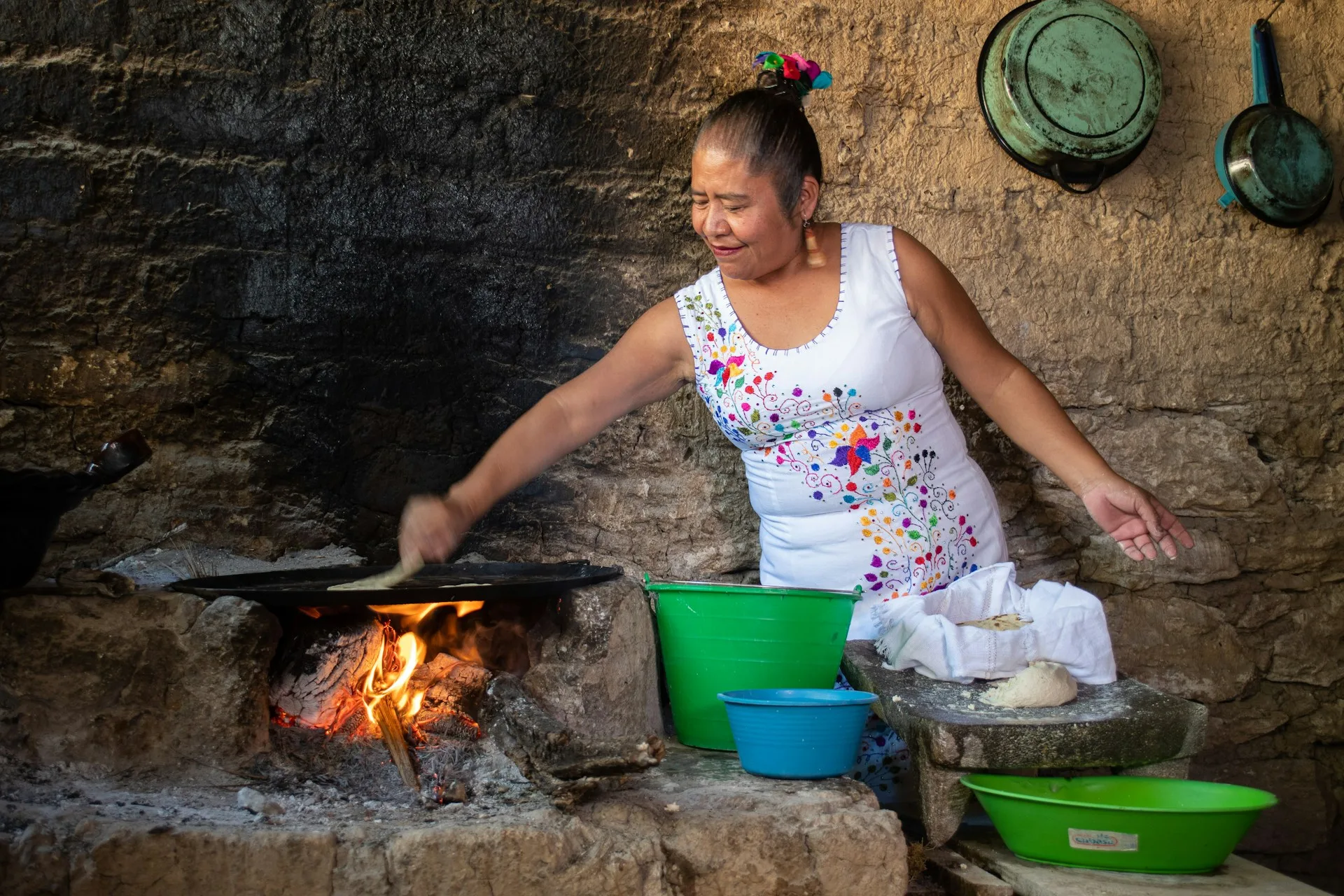
Tortilla has to be homemade. This is not preference. That is how it is. A store-bought tortilla will not puff. When fresh masa goes on the comal, the heat makes a pocket inside. That pocket is what you fill with beans. Without the puff there is nothing to stuff.
The difference is in the order. Salbutes go into the oil raw. This one, you cook it dry on the comal first. When it puffs, that is the pocket. That pocket is where the beans go. Then it fries. Is two steps, not one. That is what makes it a panucho.
One thing that helps: after you press the tortilla, run your fingers around the edge and press a slight ridge. Just a little thicker at the border than the center. It encourages the puff and makes the pocket easier to open without tearing.
Ingredients
The Tortillas and Bean Fill
- 2 cups masa harina (or fresh ground masa). See the corn tortilla guide for full mixing technique.
- 1/2 teaspoon salt
- 1 1/4 cups warm water (adjust as needed; fresh masa will need less)
- 1 cup cooked black beans, drained (reserve some cooking liquid)
- 2 sprigs epazote, fresh or dried (adds an herby note to the beans; said to settle them in the stomach)
- Salt to taste
- Lard for frying
Toppings (use what you have)
- 2 cups shredded recado chicken (see recado baked chicken), OR shredded beef, OR pulled pork
- 1/2 head cabbage, finely shredded
- 1 large white or red onion, thinly sliced, marinated in bitter orange and salt
- Avocado slices (optional)
- Tomato slices (optional)
- Pickled or fresh carrots (optional)
- Crumbled or sliced cheese (optional)
- Habanero sauce or xni-pek (optional)
Instructions
Make the Bean Fill
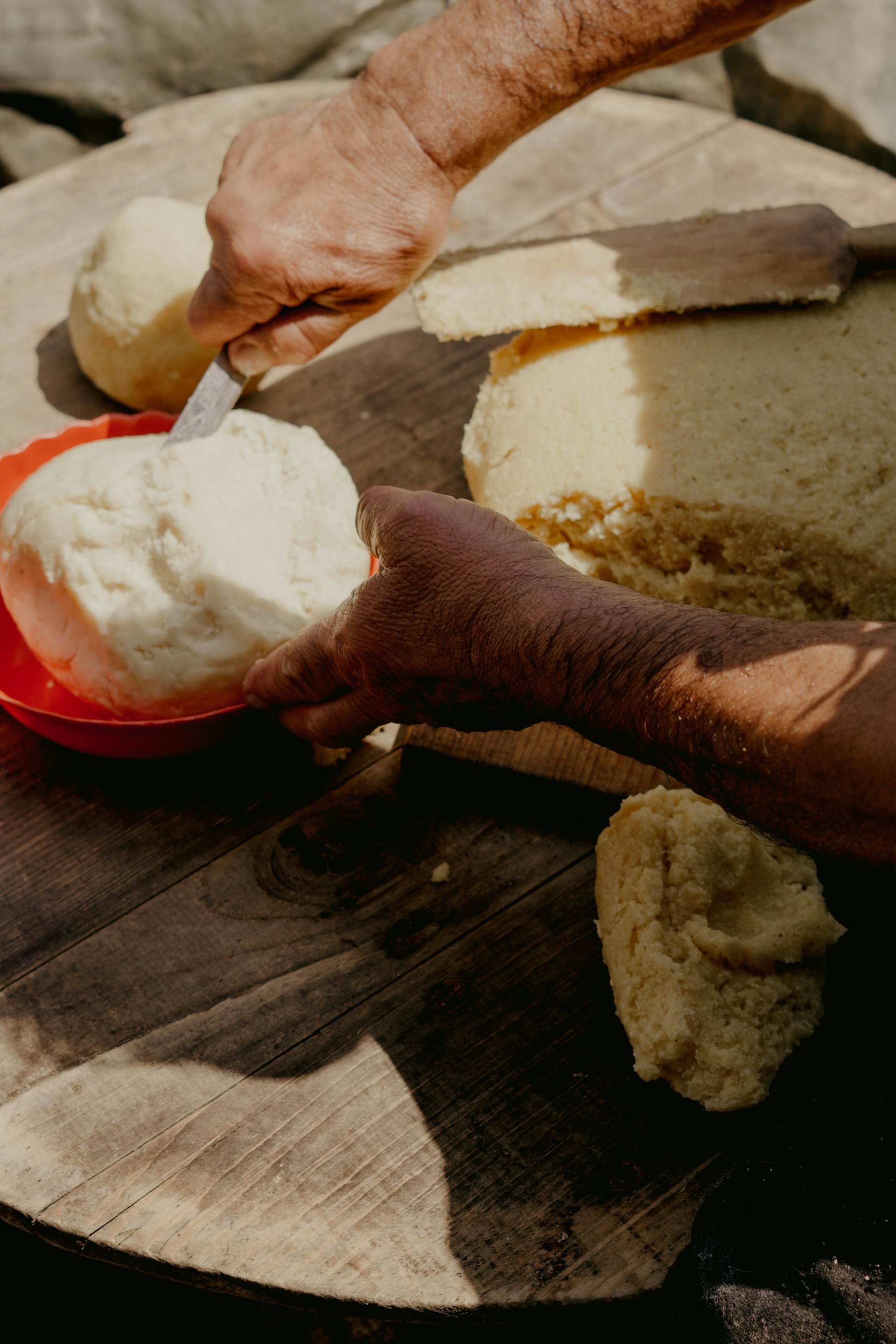
- Mash the black beans with epazote, adding their cooking liquid a spoonful at a time. Make the paste thick. Not soupy. It has to stay in the pocket. Taste and adjust salt. Set aside.
Marinate the Onion
- Combine the sliced onion with bitter orange juice and salt. Set aside. The onion, it needs at least 20 minutes. It will soften and take the sour.
Make, Stuff, and Fry
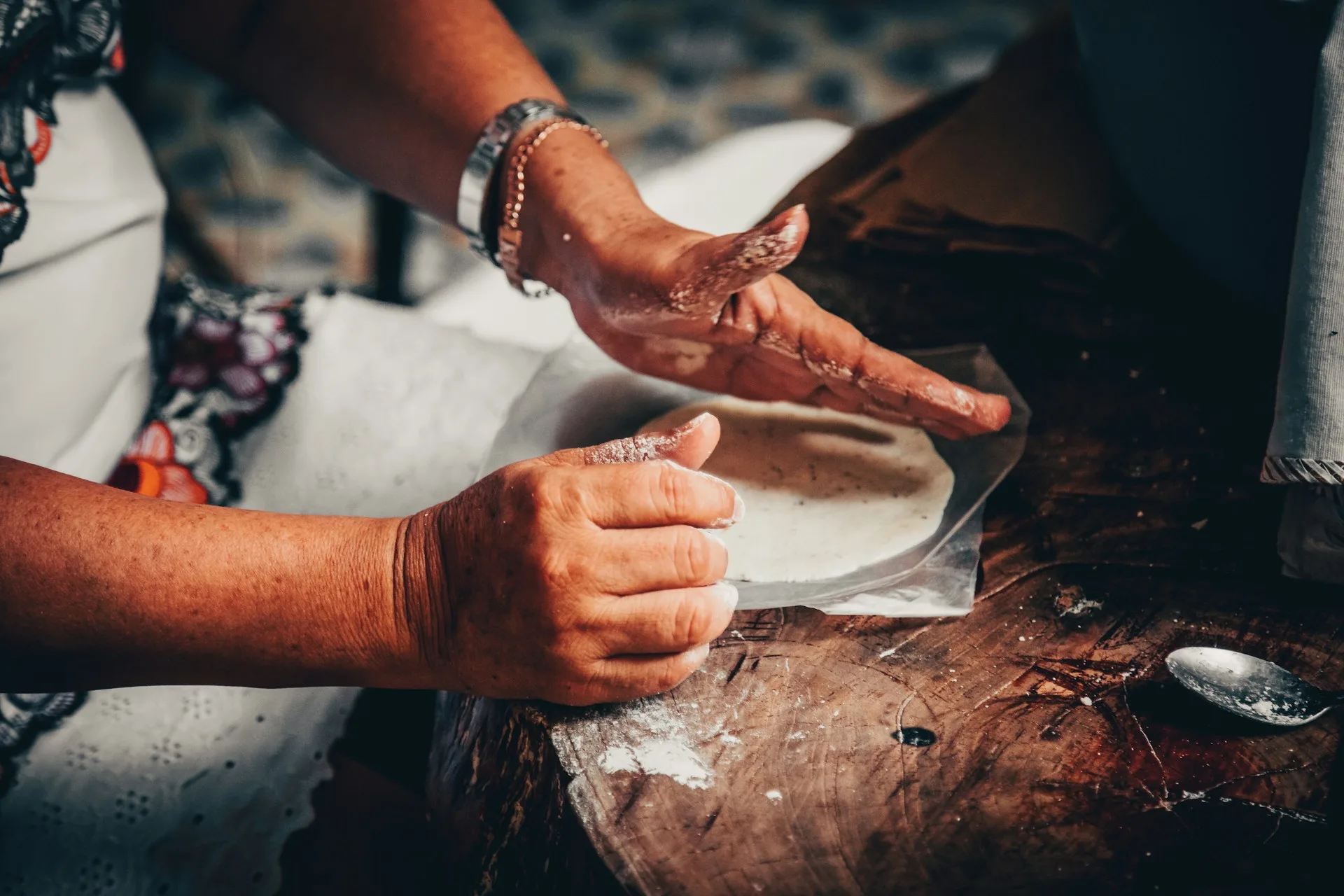
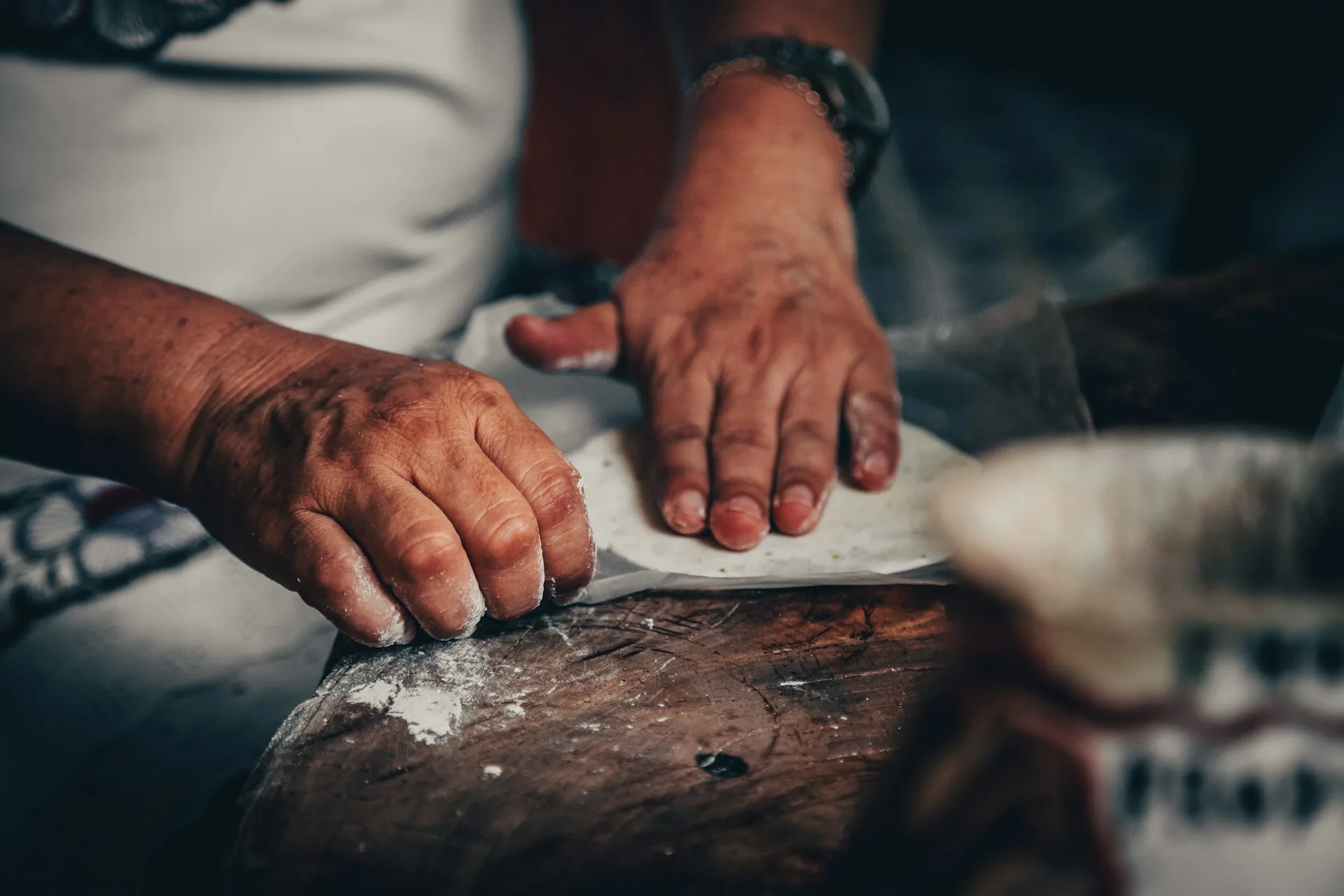
- Press the masa into small rounds, about 3 to 4 inches across, no thicker than 1/4 inch. After the press, run your fingers around the edge and press a slight ridge. Just a little thicker at the border than the center. This helps the pocket form and makes the tortilla easier to open cleanly. For the full masa mixing method, see the corn tortilla guide.
- Heat the comal or cast iron pan over medium-high. Lightly oil it if it is not well seasoned, or leave it dry if it is. Cook each tortilla first side: 60 to 90 seconds, until the edges dry out. Flip. Second side: 60 seconds. Watch for the puff. The tortilla will bubble up across the surface. That is the pocket forming. Press gently with a folded cloth if it needs help. Remove and keep covered under a cloth to stay warm and pliable.
- Open the pocket while the tortilla is still warm. This is important. Once it cools it will seal back and you cannot open it cleanly. Hold the edge and work a small opening with a knife tip or your fingernail. Put about a teaspoon of bean paste inside and press gently so it spreads in a thin, even layer. Seal the flap back down.
- Heat lard in a wide pan over medium-high, enough to come 1/4 inch up the sides. Fry each stuffed tortilla bean-side down first, 60 to 90 seconds until golden and crisped. Flip carefully, 45 seconds more. Drain on a rack.
- Top each panucho with shredded meat, cabbage shredded fine, marinated onion. Add avocado, cheese, or hot sauce as you like. Serve while the tortilla is still crisp.
The marinated onion is not decoration. The bitter orange, it gives the sharpness that cuts through the lard and the richness of the beans. By the time you finish frying, the onion is ready. If you do not have bitter orange, lime works. Xni-pek on the side, not mixed in. Each person manages their own plate.
For more on recado, see the red recado guide and the recado hub. For the plain fried tortilla from the same tradition, the salbutes post has the method.
Panuchos vs Salbutes
Both come from the same tradition. Both are fried. The panucho has beans inside. The salbut does not. That is the short answer. The longer one is in the order of cooking.
| Panuchos | Salbutes | |
|---|---|---|
| Tortilla starts | Dry on the comal first | Raw, straight into the oil |
| The puff | Forms on the comal — that is the pocket | Forms in the oil during frying |
| Stuffed | Yes. Black beans inside. | No. |
| Weight | Heavier. You feel the beans. | Light. Airy. |
| Toppings | Meat, cabbage, onion, avocado, cheese | Meat, cabbage, onion |
| Recipe | This post | Salbutes recipe |
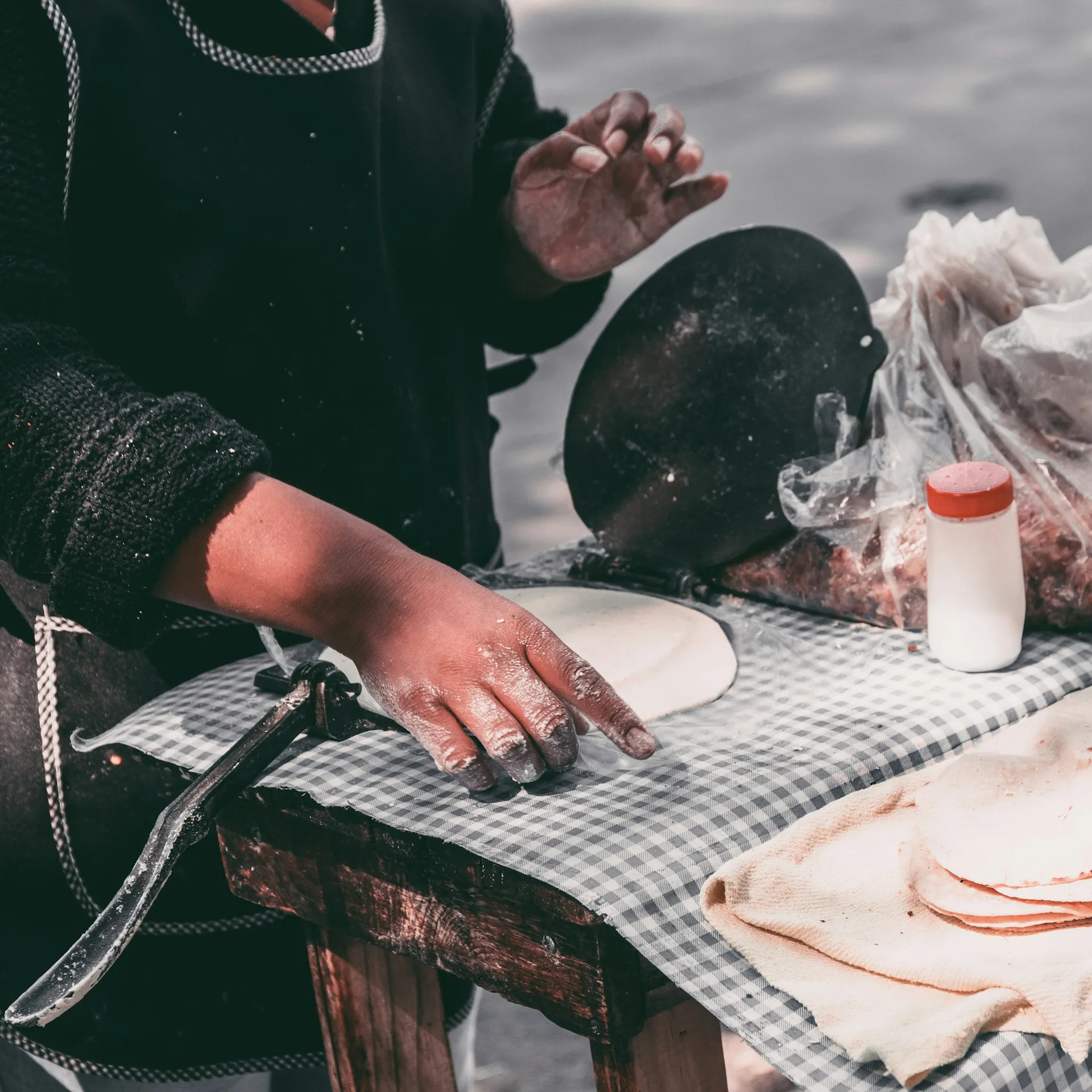
Tools
A real comal never leaves the fire heart. The fogón. Daily use is what seasons it. Cast iron or cast aluminum, circular, no lip, about 14 to 18 inches across and a quarter inch thick. Over time it becomes naturally non-stick the same way a well-kept cast iron pan does. You do not wash it with soap. You wipe it. In Belize and Mexico this is the pan that is always there.
A cast iron pan is a good substitute. A non-stick griddle will work, but it is not the same. It will not season the same way and the heat is different. If you cook South Asian food and own a tawa for dosa, that is the same form. Use it.
A tortilla press makes the work faster and the rounds more even. You can press by hand or use a heavy flat pan, but a press is worth having if you make tortillas regularly.
Tips
- Open the pocket while warm. Once the tortilla cools it seals back. You have maybe two minutes after it comes off the comal. Work fast or keep them under a warm cloth.
- The bean paste must be thick. If it is too loose it runs into the oil when you fry and burns. Add cooking liquid a little at a time. The paste should hold its shape when you press a spoonful flat.
- Press the edge ridge after every tortilla. Not before the press. After. The tortilla is still warm and pliable. Run your fingers around the border to make it just slightly thicker than the center. It takes seconds and it matters.
- Fry bean-side down first. The bean side seals against the hot lard and holds. If you flip it bean-side up first the pocket can open and spill.
- Serve immediately. Panuchos go soft as they sit. They are a made-to-order food. Top them at the pan and eat at the table. Do not stack them.
- The epazote is not optional. It is what separates a bean fill from a bean spread. Dried works if you cannot get fresh. A sprig or two is enough.
Cook Time
| Prep time | 20 minutes |
| Cook time | 20 minutes |
| Total time | 40 minutes |
| Yield | 12 to 16 panuchos |
Estimated Nutrition
Per panucho, with shredded chicken topping and no additional cheese:
| Calories | 220 |
| Fat | 9g |
| Saturated fat | 3g |
| Carbohydrates | 28g |
| Fiber | 4g |
| Protein | 8g |
| Sodium | 310mg |
Estimates based on standard ingredient data. Values will vary with topping choices and lard absorption.
Shop This Recipe
Masa Harina
Diaspora cooks who cannot get fresh ground masa rely on Maseca to make the homemade tortillas panuchos require — store-bought won’t puff on the comal.
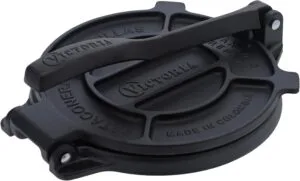
Tortilla Press
A cast iron press gives the uniform thickness that lets you press the edge ridge after each round — the step that helps the pocket form and hold during stuffing.
Dried Epazote
The recipe calls epazote non-optional — it separates a bean fill from a bean spread, and dried works when fresh sprigs are not available outside the region.
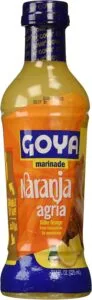
Bitter Orange Juice
Naranja agria goes into both the pickled onion topping and the xni-pek — the sour element that cuts through the lard and bean richness in every bite.
Frequently Asked Questions
What are panuchos yucatecos?
Panuchos yucatecos are small corn tortillas cooked dry on a comal until they puff and form an interior pocket, which is stuffed with seasoned black beans before the tortilla is fried in lard. They are topped with shredded meat, cabbage, pickled onion, and avocado. A staple street food of the Yucatan peninsula.
What is the difference between panuchos and salbutes?
The main difference is the comal step and the bean stuffing. Salbutes go raw into hot oil and puff during frying. Panuchos are cooked dry on the comal first. The puff that forms on the comal is the pocket — and that pocket gets stuffed with black beans before the tortilla fries. Panuchos are heavier. Salbutes are lighter and airier.
What beans go in panuchos?
Black beans, mashed thick with epazote. The beans must hold their shape in the pocket during frying. If the paste is too loose it runs out when the tortilla hits the oil. Reserve some of the bean cooking liquid to adjust the consistency — add it a little at a time.
Can I use store-bought tortillas for panuchos?
No. A store-bought tortilla will not puff. The pocket only forms in a fresh homemade masa tortilla on a hot comal. Start with masa harina or fresh ground masa.
What toppings go on panuchos yucatecos?
Shredded chicken, beef, or pork are the most common. Cabbage shredded fine, pickled or marinated onion in bitter orange, avocado slices, crumbled cheese, and xni-pek are typical. The toppings are flexible. Use what you have.
Where do Belizeans eat panuchos?
Mostly in Chetumal, just across the border from Corozal. Belizeans in the north cross regularly for food, fuel, and shopping. The market in Chetumal is where most people know panuchos from. You will also find them in Mérida, Playa del Carmen, and throughout the Yucatan. Inside Belize they are less common, but the northern Maya communities know the dish.
This recipe is part of the Mayan Recipes collection — living food traditions of the Maya of Belize, Mexico, and Guatemala.
About Fili Post
Fili Post is from Xaibe in the Corozal District of Belize. She is Mayan. She grew up eating game from the bush — gibnut, deer, chachalaca, iguana — and she has been making her own recado from hand-ground spices for as long as her family can remember. She sold spices at a stall in the Corozal market. She still sources locally and grinds her own blends. Her recado is known to locals as the best they can get. She raised yard birds, guinea fowl, and the occasional pig. She writes for the Belize News Post.