If you’ve been researching Belize beaches and seen photos of brown seaweed piled on the sand, that’s sargassum, and it’s worth understanding before you book — because the panic online is bigger than the actual problem for most trips.
What it is and when it comes
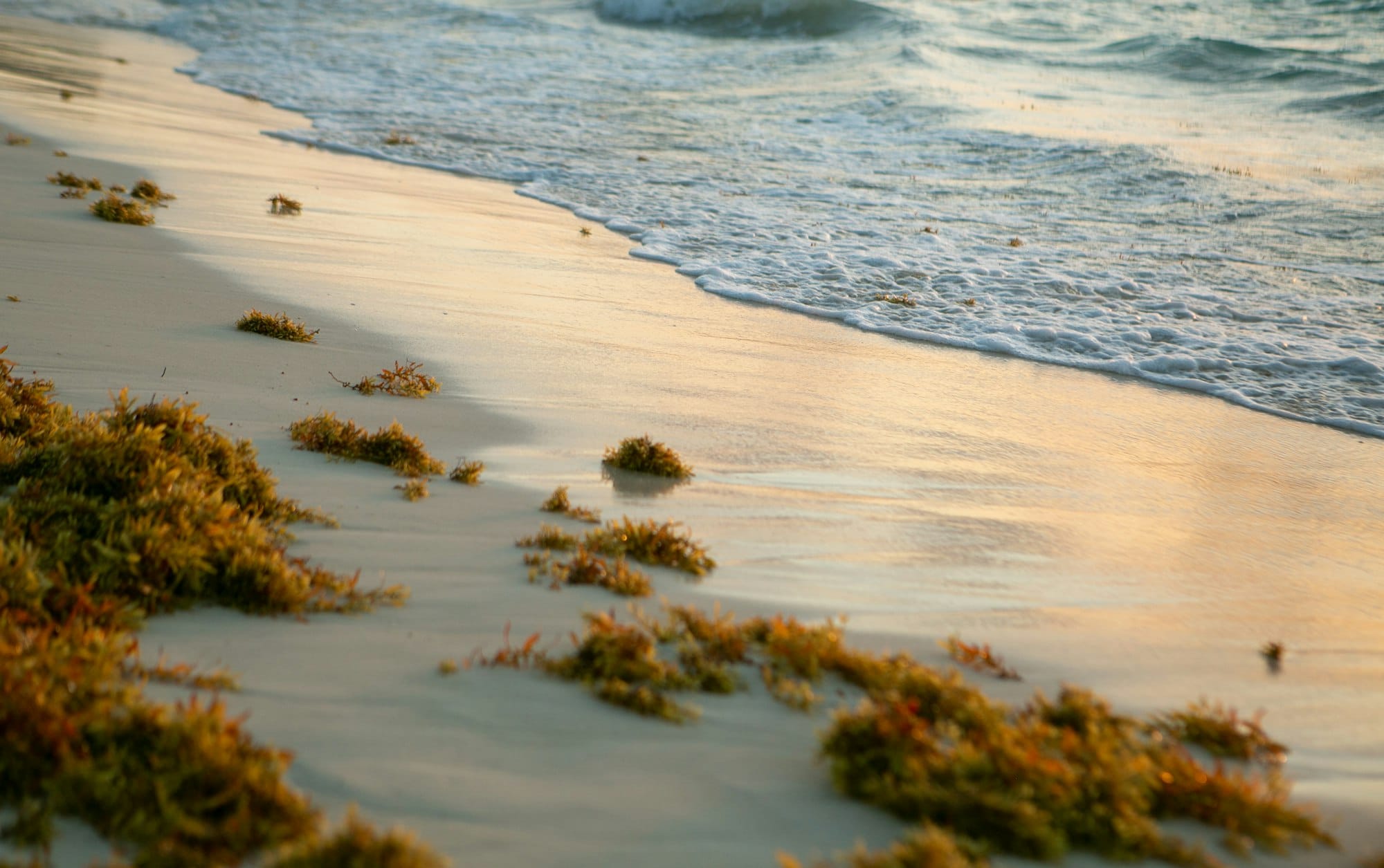
Sargassum is a free-floating brown seaweed that drifts in on Caribbean currents and washes up on east-facing beaches. In Belize it’s heaviest roughly March through October, and it hits the windward coast hardest: Ambergris Caye, Caye Caulker, Placencia, and Hopkins all face the open Caribbean and catch it. Some weeks the beach is buried and crews are hauling it off by the ton; other weeks it’s clear. It varies year to year and even week to week with the wind and current.
The thing most people miss: the reef is fine
Here’s what the alarming beach photos don’t tell you. The Belize Barrier Reef sits offshore, and the sargassum collects against the shoreline. The snorkeling and diving — the reason most people come — happen out past the beach, where the water is clean. A morning when the beach looks rough is often a perfect morning on the reef. If you came for the water, the seaweed on the sand is a nuisance, not a trip-ender.
How to plan around it
- Come in the dry season if a pristine beach matters to you. December through April is your best shot at clean sand, ahead of the heaviest sargassum.
- Stay where the beach gets tended. The resorts on the busy stretches rake and clean their beachfront daily in season. A hotel that maintains its beach makes a real difference.
- Use the reef and the boats. Plan your water time around snorkel and dive trips that head offshore; treat the beach as bonus, not the main event, in the heavy months.
- Check recent reports before you book a green-season trip. Local sources post current beach conditions through the season; a quick look tells you what’s actually happening that month.
Is it a reason not to come?
No. It’s a reason to time it well and set expectations. Belize is reef, jungle, rivers, and Maya ruins as much as it is beach. In the heavy season you lean into the water tours and the inland trips, and you still have a great week. In the dry season you may barely notice it. See the best time to visit Belize and the full Belize travel FAQ.
Sargassum FAQ
When is sargassum season in Belize?
Roughly March through October, heaviest on the windward (east-facing) beaches. It varies week to week with wind and current.
Which Belize beaches get the most sargassum?
The open-Caribbean-facing spots — Ambergris Caye, Caye Caulker, Placencia, and Hopkins — catch it most. Conditions change through the season.
Does sargassum affect snorkeling and diving in Belize?
Generally no. The barrier reef is offshore, beyond where the seaweed collects, so reef trips are usually clear even when beaches have sargassum.
How do I avoid sargassum in Belize?
Travel in the dry season (December to April), choose a hotel that cleans its beachfront daily, build your trip around offshore reef tours, and check current local beach reports before booking in the green season.
Is sargassum dangerous?
It’s not dangerous to swim near, but large rotting piles smell of sulfur and can attract sand flies, which is another reason to pack repellent — see what to pack for Belize.
About Joe Post
Joe Post is the founder and editor of Belize News Post. He grew up in Corozal Town, Belize, on the Caribbean sea with a view across Corozal Bay to Cerro Maya. He has lived in Costa Rica, Kenya, England, Spain, and the United States. He grew up cooking alongside his mother and grandmother, and has personally tested the vast majority of the recipes on this site. He started BNP in the early 2000s as one of the few independent Belizean news sources online. Over the years, the food became the stickiest thing. News comes and goes. Food stays.