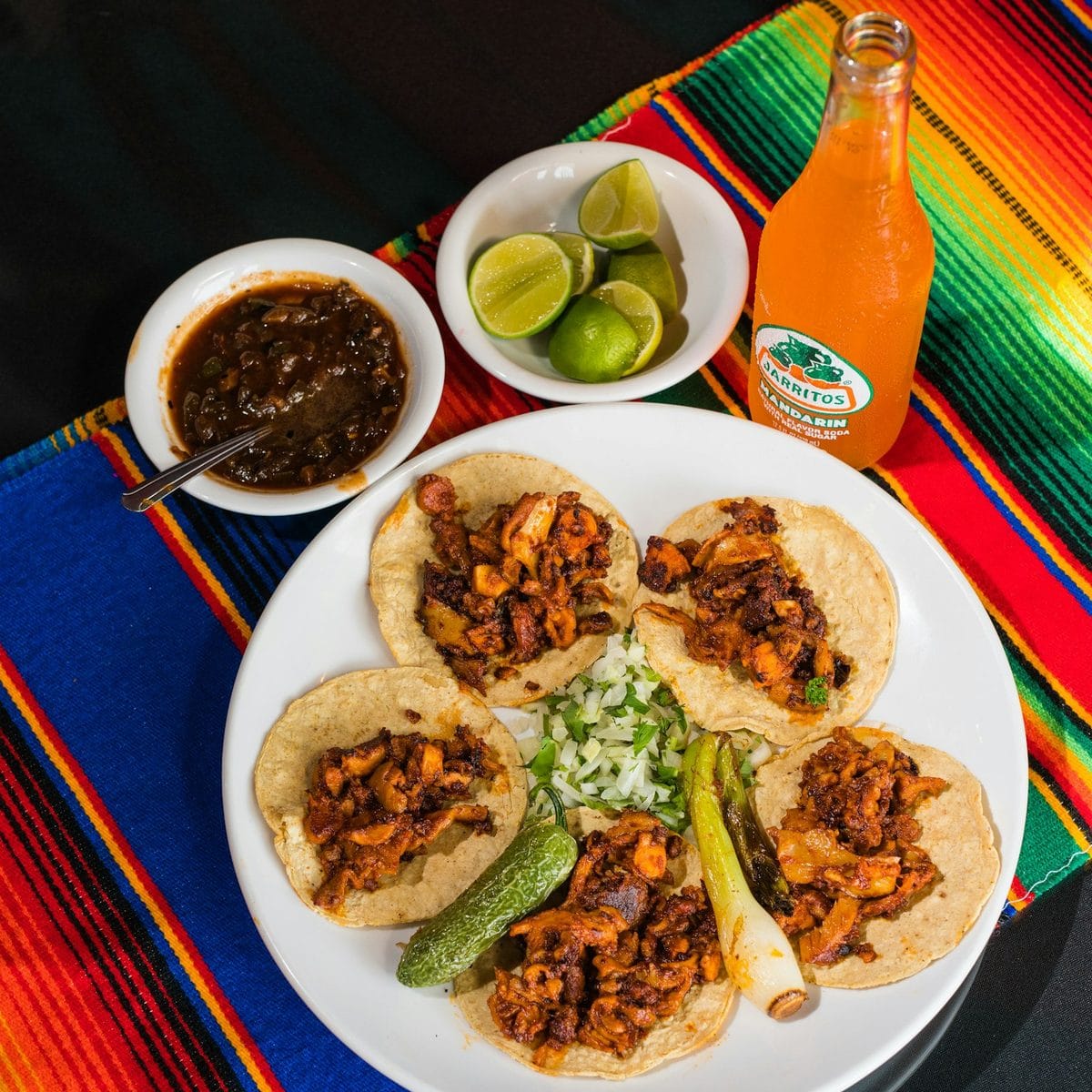
Short answer: The best food in Belize is rarely in a restaurant. It is on a cart at the corner, in a market stall, on a fold-out table outside a house at night. Start with the Belizean street-food trio: salbutes, garnaches, and panades. Eat fry jacks for breakfast, tacos in Orange Walk after dark, and barbecue in Cayo on the weekend. Look for conch and ceviche on the coast. Eat where the line of locals is longest. It is cheap, it is fresh, and it is the real thing.
I have eaten this food my whole life and tested most of it in my own kitchen for this site. This is not a list I assembled from a guidebook. It is what I would tell you to eat if you showed up in Corozal and asked, and where in the country to look for each thing.

Flan, dulce de leche, fudge, key lime pie, fruit cake: Belizean and Caribbean desserts are built on a can of sweetened condensed milk. The 14oz can is the standard size every recipe assumes.
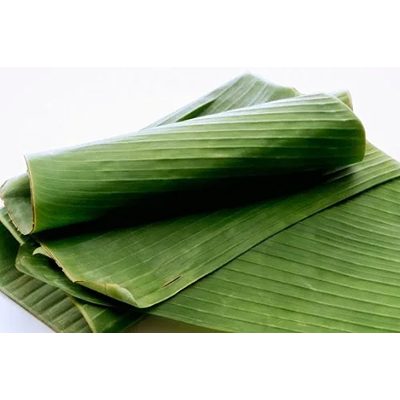
Frozen banana leaves for tamales, mukbil pollo, pibil, conkies, dukunu, and the Garifuna wrappers on hudut and bundiga — pass over a flame to make them pliable before wrapping; far easier than chasing fresh leaves outside the tropics.
Salbutes, garnaches, and panades
This is also what you eat standing on a parade route in September, when the street food trade is busiest. See the September Celebrations for the calendar, and Belize Independence Day food for what gets cooked at home the same day.
If you eat three things in Belize, eat these. They are built on the same base, the corn tortilla, and a stranger to them confuses them constantly. Here is how to tell them apart.
- Salbutes are puffed, soft fried tortillas topped with chicken, cabbage, tomato, and onion. The tortilla is fried fresh so it balloons up, soft and a little chewy.
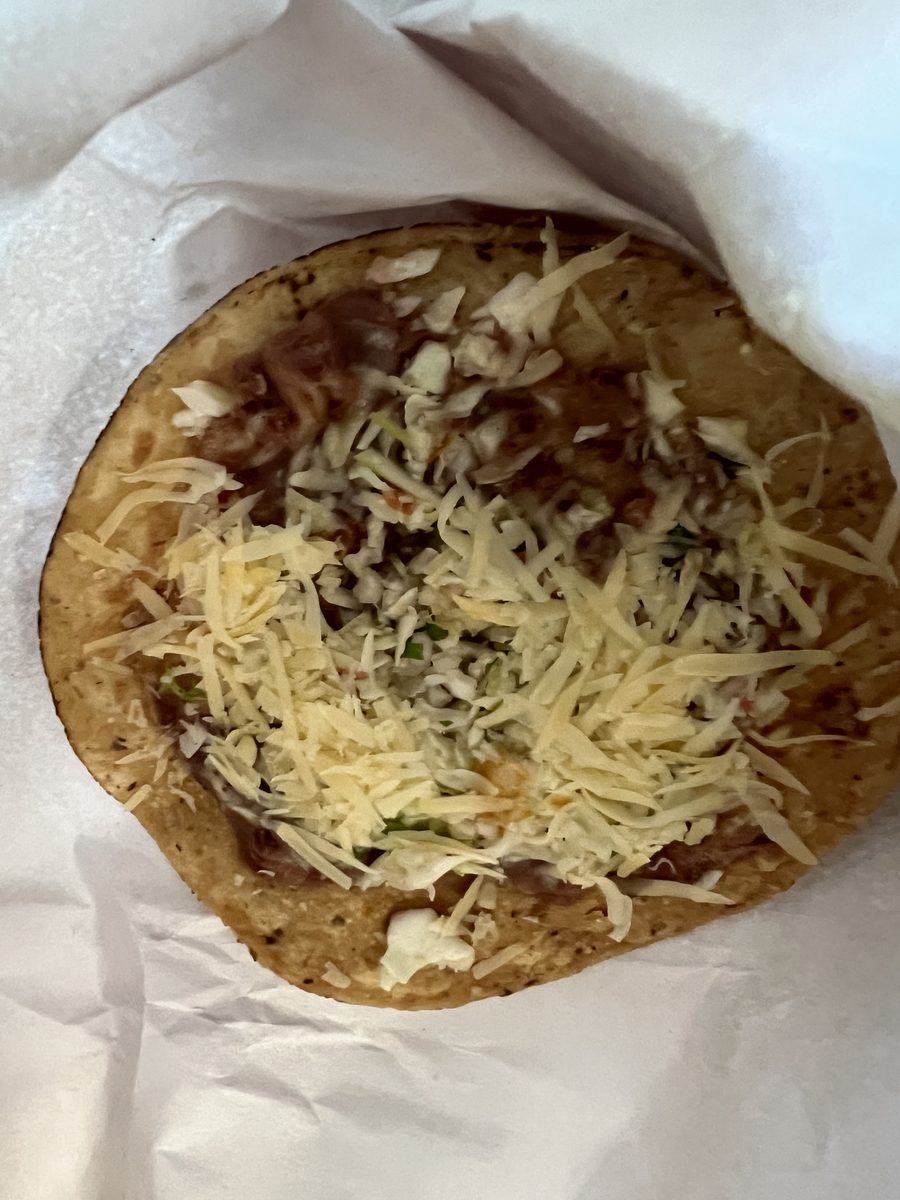
- Garnaches are crisp fried tortillas with refried beans, cheese, and onion. Smaller, crunchy, the cheapest of the three, and easy to eat four of without noticing.
- Panades are fried masa turnovers, crimped at the edge and usually filled with fish or beans, sold hot by the bag with a little pepper sauce and onion. These are the ones you will actually find everywhere, all over the country, the workhorse of Belizean street food.
You will find all three at carts and stands from Corozal to the cayes. In the north, around Corozal and Orange Walk, add panuchos to your list, the Yucatecan cousin stuffed with beans before frying and topped like a salbute; they are more a northern Mestizo specialty than a nationwide staple, so look for them up there rather than everywhere. Order one of each the first time and decide for yourself.
Breakfast on the street
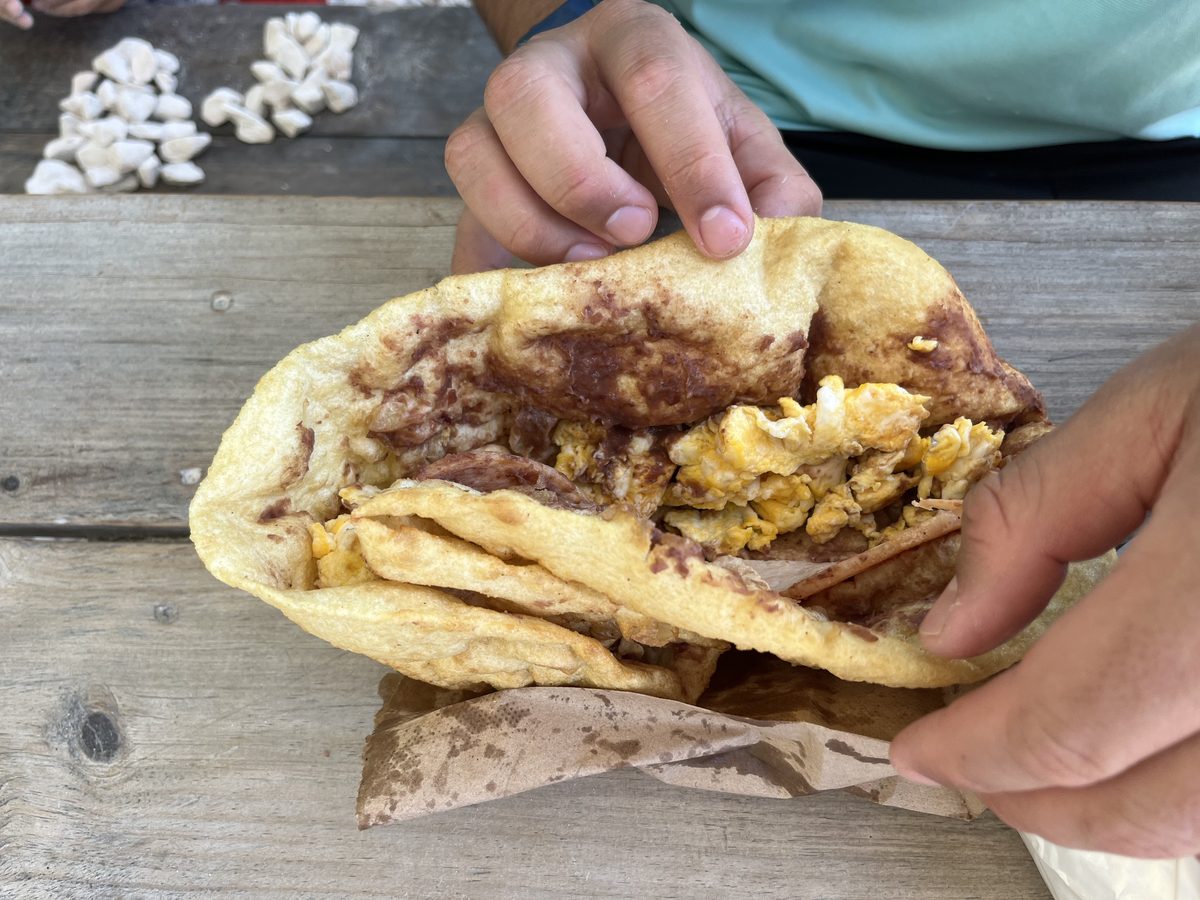
Belizean breakfast is street food too. The thing to find your first morning is the fry jack, a puffed triangle of fried dough eaten with beans, eggs, cheese, or jam, usually with a coffee, from a stand or a small shop. It is the breakfast of the country. Johnny cakes, dense little baked breads split and filled, are the other morning staple. Either one, with refried beans and a fried egg, is how a Belizean starts the day. Not a continental buffet.
Margaret’s Fireheart Food: the airport stand worth knowing
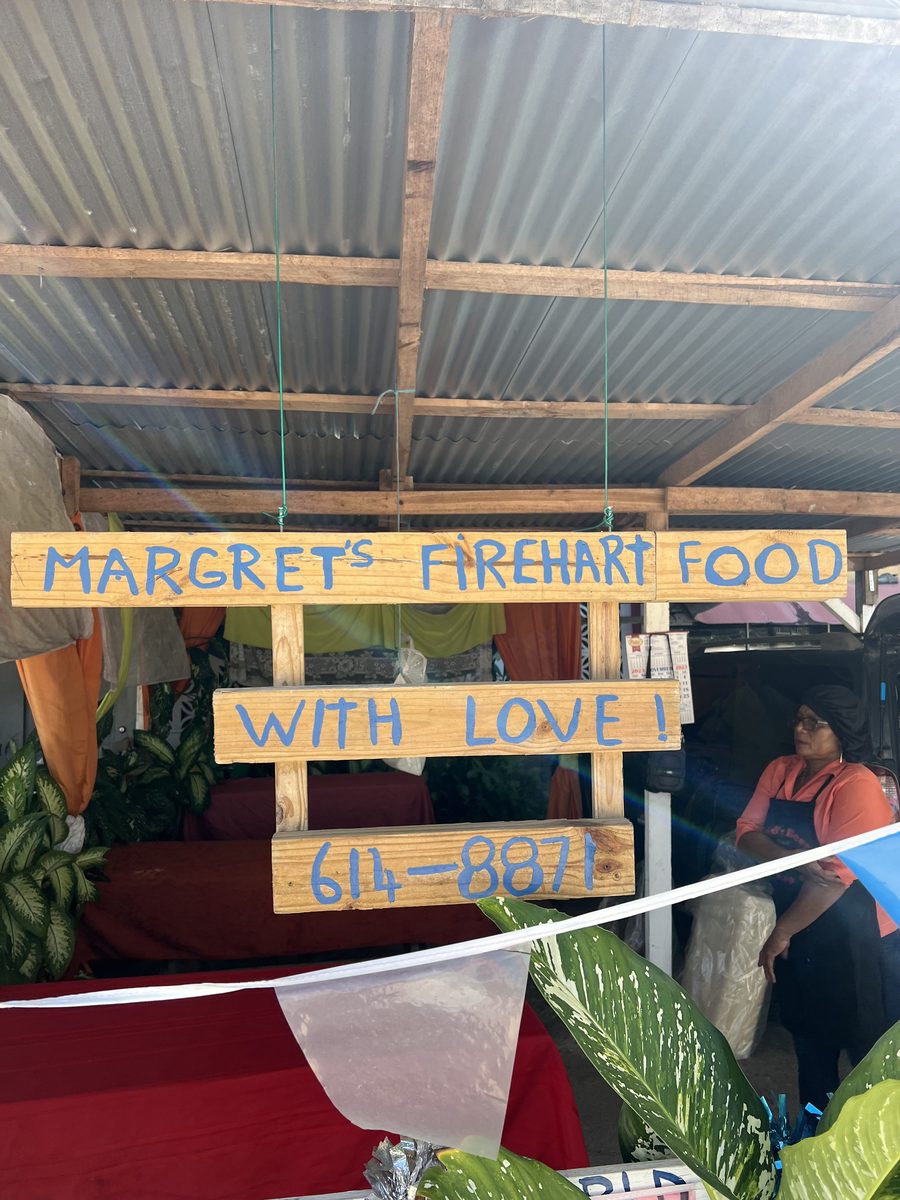
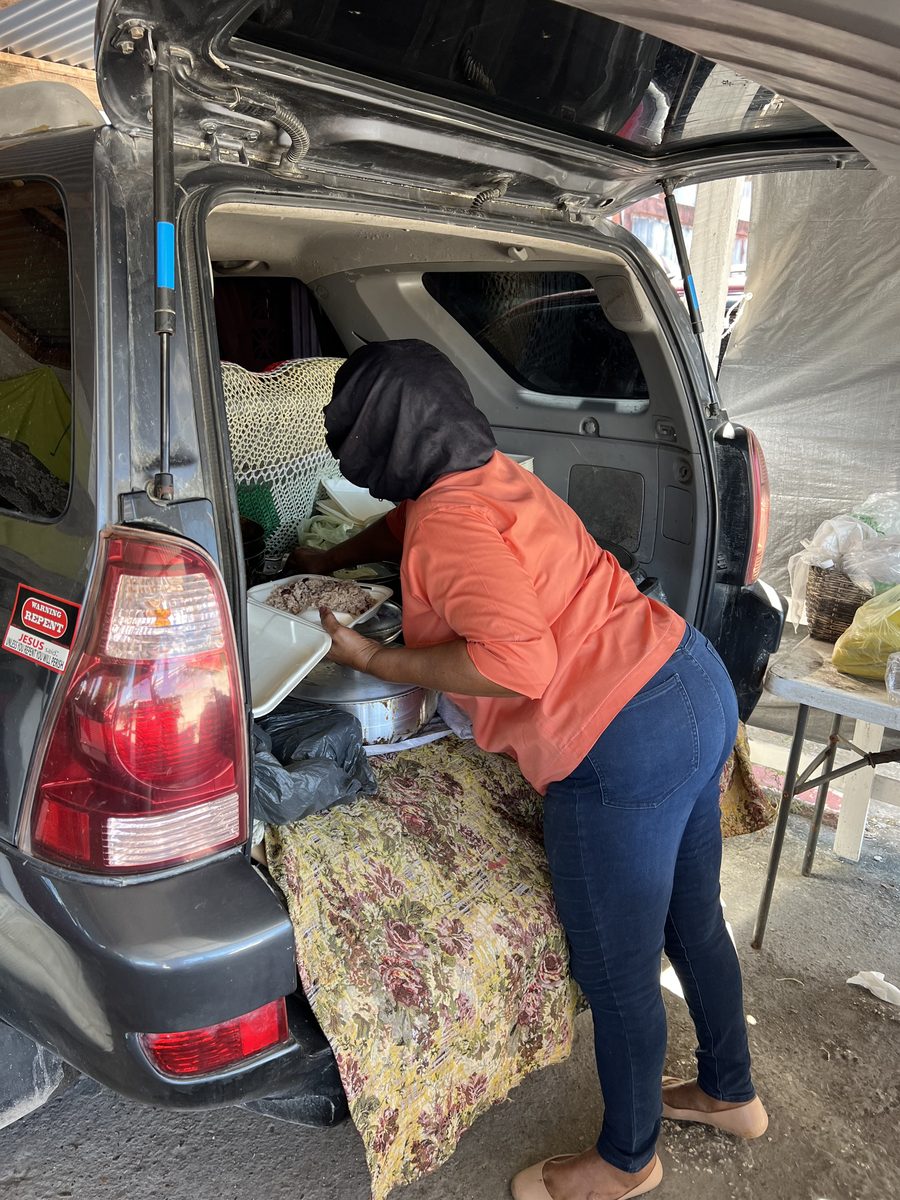
If you land at or fly out of Philip Goldson International, your best Belizean meal is not in the terminal. It is across the parking lot, under a zinc shed with picnic tables and bright curtains, served out of the back of an SUV. This is Margaret’s Fireheart Food, and it is the kind of place I send people to on purpose, the first or last real plate of the country.
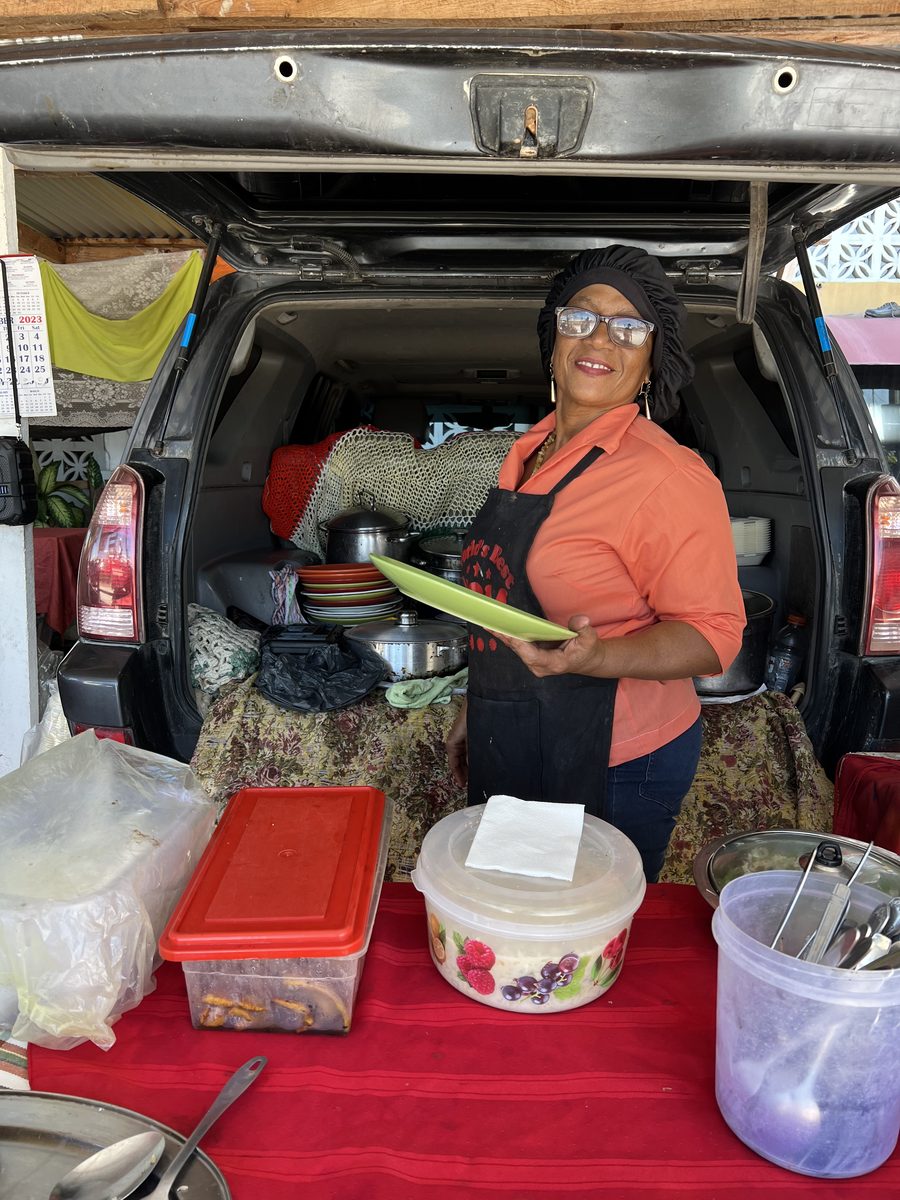
Margaret Hendy cooks everything herself, on a traditional fire hearth over firewood, two of them going at once so she can hold a gentle flame under the rice and beans and a blazing one for the plantains. Her beef she starts the night before and lets it simmer down soft, almost to a jelly. She does sixteen or so dishes a day, by hand, alone, because that is how she keeps it the same every time.
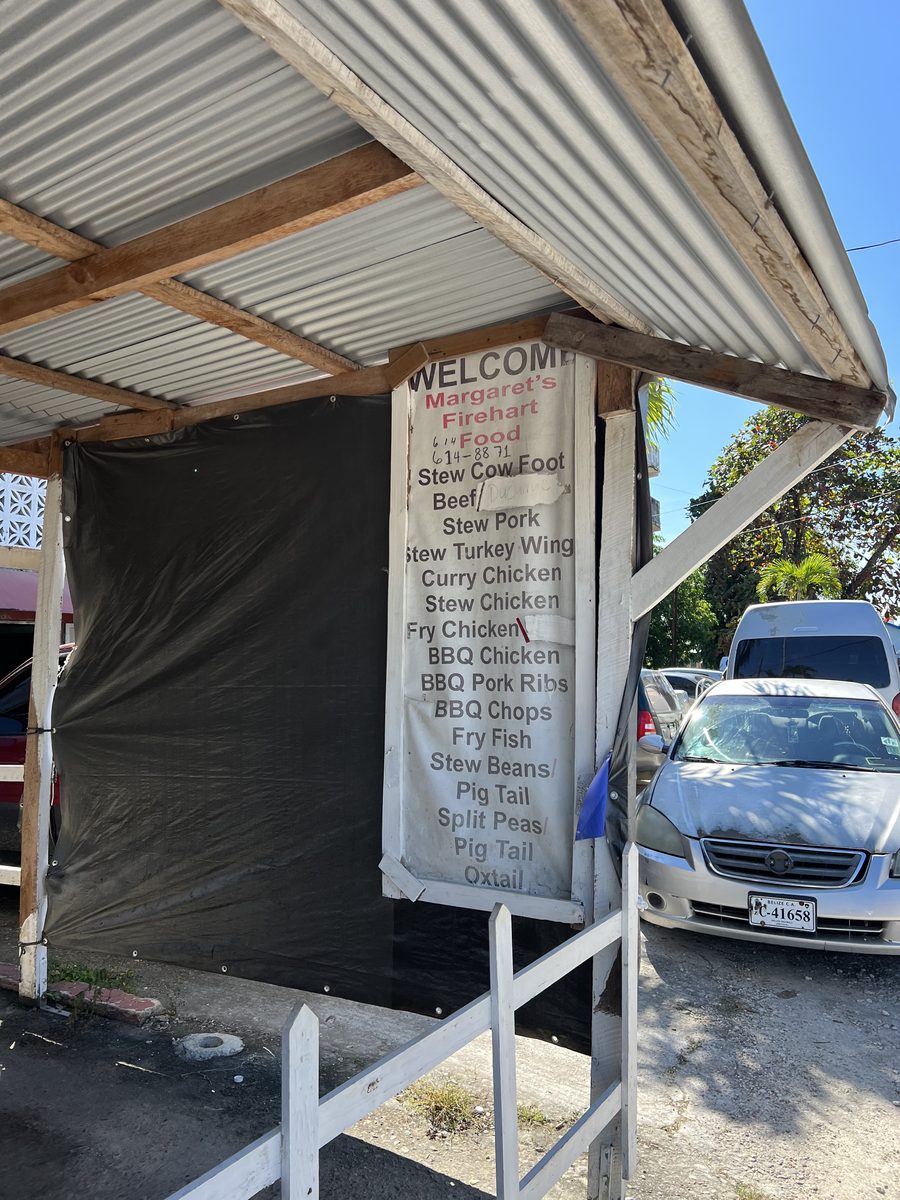
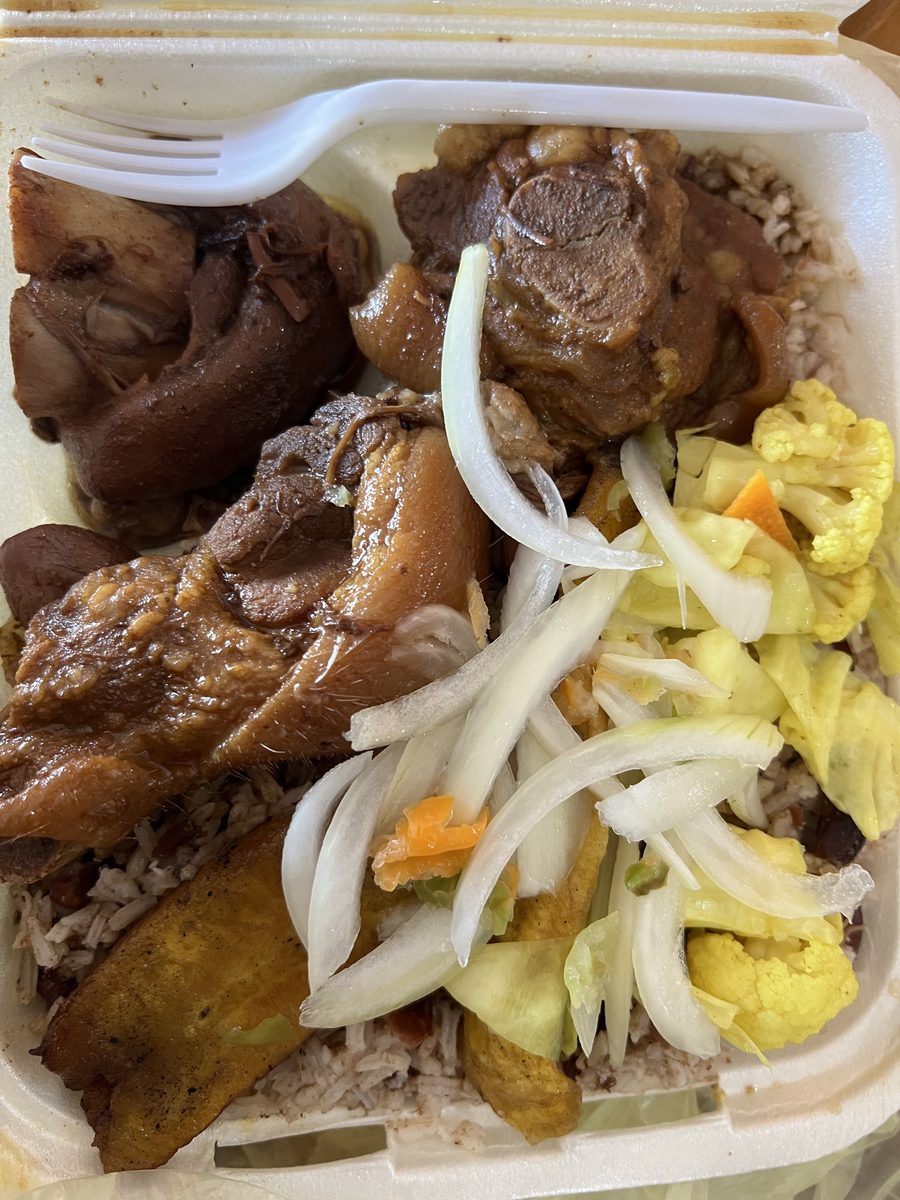
The board reads like a Belizean Sunday: stew cow foot, oxtail, stew and barbecue pork, barbecue chicken and ribs, curry chicken, turkey wing, fried fish, pigtail done three ways, all over rice and beans with fried plantain on the side. And it is as close to the land as street food gets. She does not buy her pork, she raises her own pigs; much of the fish she or her children catch; the vegetables and the coconut come from her own yard. You taste it.
Two things to know. She is popular and she sells out, usually by the early afternoon, so go for an early lunch, not a late one. And she has moved her spot once or twice as the airport expanded, so if the shed is not quite where you expect, look across the lot for the hand-painted sign that reads “With Love.” Her regulars find her every time. I have eaten there over the years, and through every move it has stayed every bit as good.
After dark: tacos in Orange Walk
When the sun goes down, the taco tables come out, and the capital of that scene is Orange Walk. In the north, eating tacos at night is the tradition, and Orange Walk tacos are an institution: soft corn tortillas, citrus-marinated or stewed meat, slaw, and a fire-roasted salsa, sold cheap and fast. This is the famous “dollar taco” scene. Walk the market and downtown and you will pass taqueria after taqueria, six in a row some blocks, and every local will tell you a different one is the only one worth eating at. Where there are tacos there are usually tostadas too, the flat crisp cousin piled with beans, meat, and cabbage.
The good stands take the small things seriously. The onion alone tells you who is paying attention: a mix of white and yellow onion for the topping, and a “sour onion” pickled with local habanero on the side. The meat is cooked fresh through the day, the sauces are made in-house, nothing comes out of a bag. Some places have been at it for decades, like Garcia’s in Orange Walk, going back more than thirty years and known across the country. The honest move is the one the locals make: try two or three stands in a night and pick your own.
Cayo is barbecue country
If Orange Walk owns the taco, the west owns the grill. In San Ignacio and Santa Elena, weekend barbecue is its own institution, and it feels like there is a barbecue spot every mile. Saturday and Sunday the pits fire up: chicken, by the leg and the breast, pork, and sausage, served with rice and beans or warm flour tortillas, and the sides do real work, coleslaw, plantain, potato or pasta salad, baked beans, a homemade barbecue sauce, and a separate onion sauce people swear by. The good pits cook over coals on a homemade grill, the meat turned every half minute and seasoned simply with black pepper and salt, the charcoal smoke doing the rest. It is cooked in volume and it sells out, so get there while the food is hot, because when it is gone the stand closes for the day. Ask anyone in town for their pit and follow the smoke.
Where to eat what, by region
Belize is small, but the street food shifts as you move through it, and knowing the map saves you from ordering the wrong thing in the wrong town.
- The north (Corozal, Orange Walk): Mestizo and Yucatec country. Panuchos, salbutes, garnaches, escabeche, and the dollar-taco night tables are at their best here. It is the food that crossed the border with families like mine.
- The west (Cayo, San Ignacio, Santa Elena): barbecue country, and the San Ignacio Saturday-morning market, the best single food stop inland.
- Belize City and the central corridor: Creole staples and a bit of everything. Meat pies, small savory hand pies, are a Belize City obsession and a perfect thing to eat walking. The downtown market by the water is where the catch comes in, snapper, kingfish, and grouper straight off the boat, and a fried whole fish is the move.
- The coast and the cayes: seafood off the reef. Look for conch fritters and conch ceviche when conch is in season, and fish panades, fried masa pockets filled with fish, sold by the bag.
The San Ignacio Saturday market
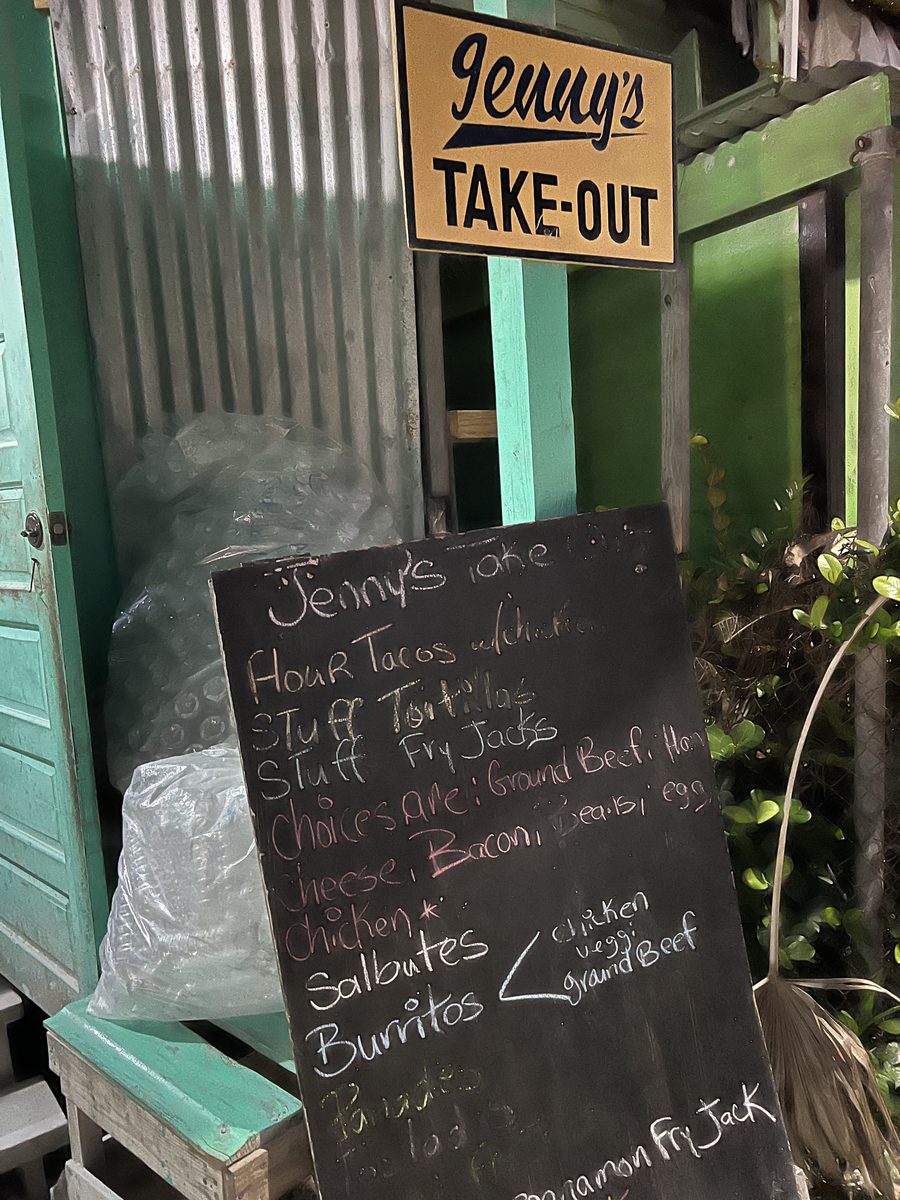
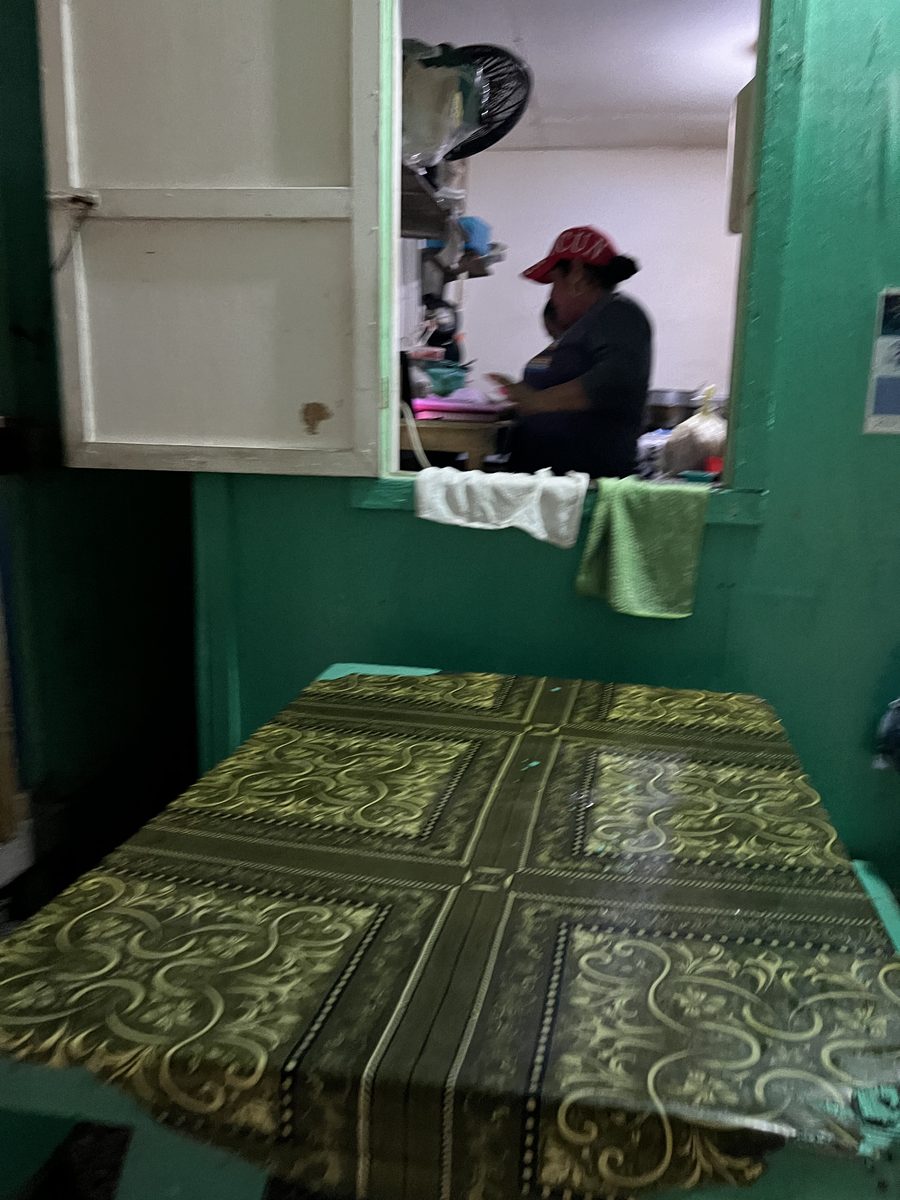
If you are inland on a Saturday, this is where to eat. The San Ignacio market on a Saturday morning is the most authentic single food stop in the country: fresh tortillas and beans, produce stacked everywhere, and a row of stands cooking to order. The things to eat there are the stuffed fry jack, a fried bread packed with beans, cheese, and meat, the quesadilla with melted cheese and chicken, the cheese pupusa, and a burrito if you want it hot and fast. Most stands sell the same handful of items a little differently, so do what you do with the tacos: try a few and pick your own.
Market, roadside, and the Hummingbird Highway
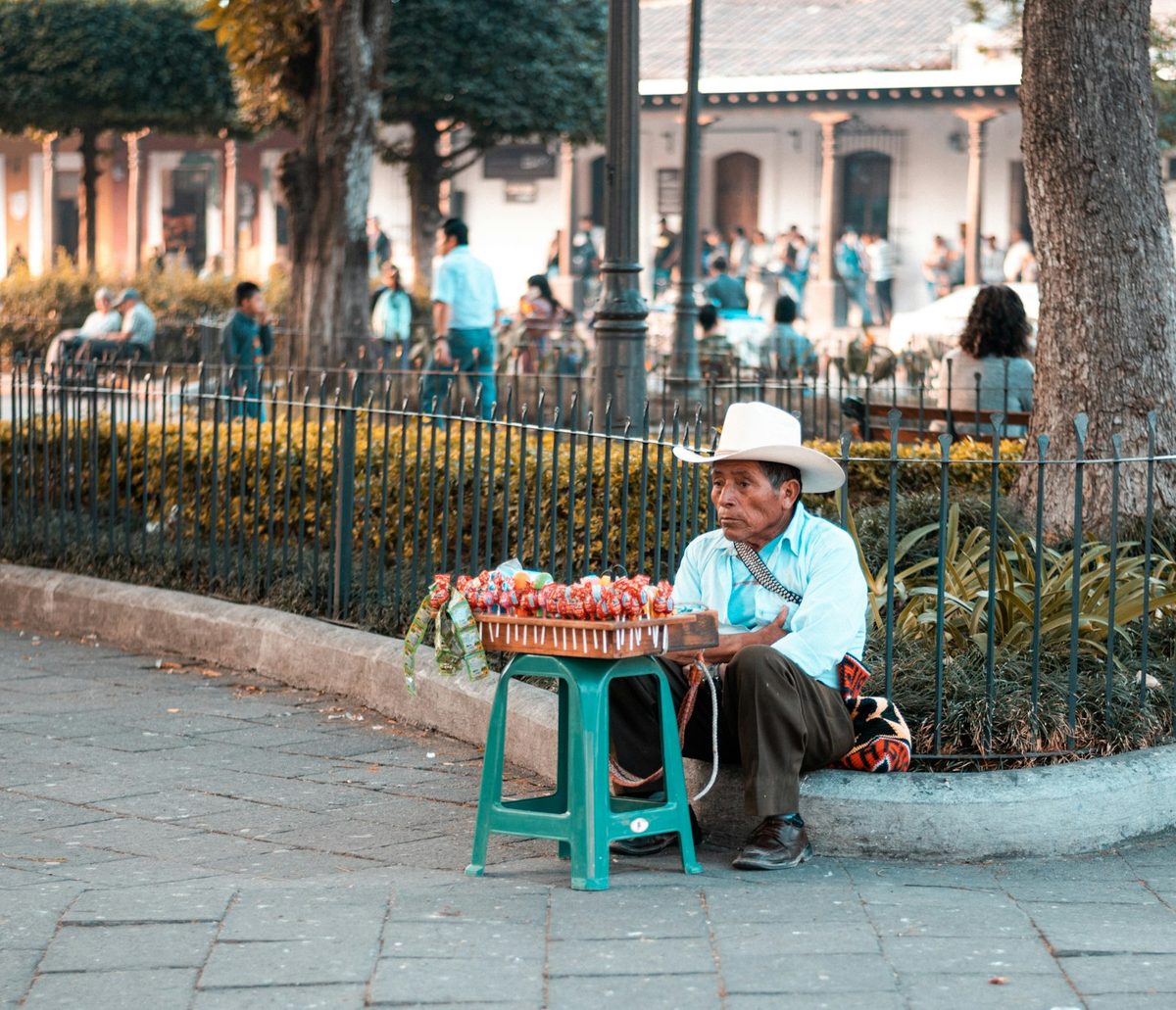
The markets and the roadside stands are where you find the rest of it. Tamales and bollos steamed in leaves turn up at markets and from home cooks selling by the dozen, and the roadside is its own pleasure. Drive the Hummingbird Highway, the scenic road between the coast and Cayo, and you will pass stands selling fresh tamales out of a cooler, corn dough steamed in a banana leaf with a k’ol gravy and chicken, for next to nothing. Pull over. Buy the pepper sauce too. Pupusas, the Salvadoran stuffed griddle cakes, have become a roadside staple as well. Buy where the turnover is high and the food is going straight from the comal to your hand.
Rice and beans, not beans and rice
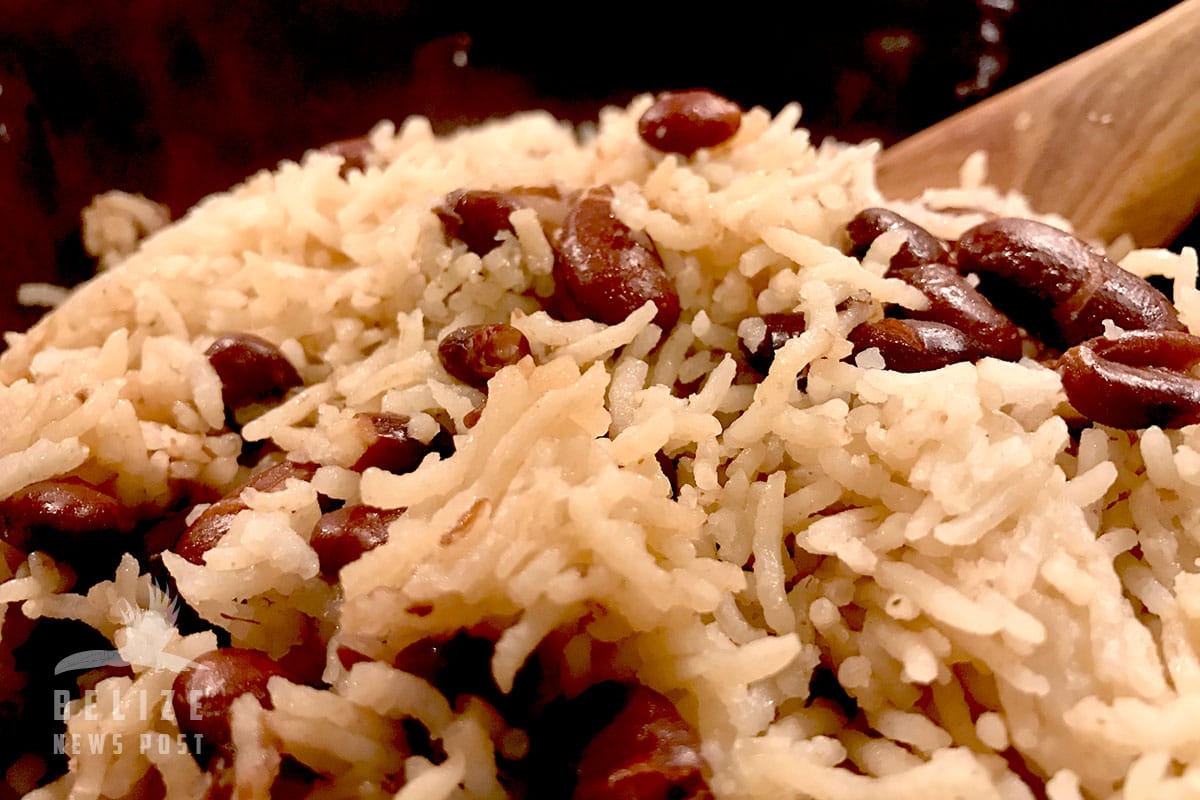
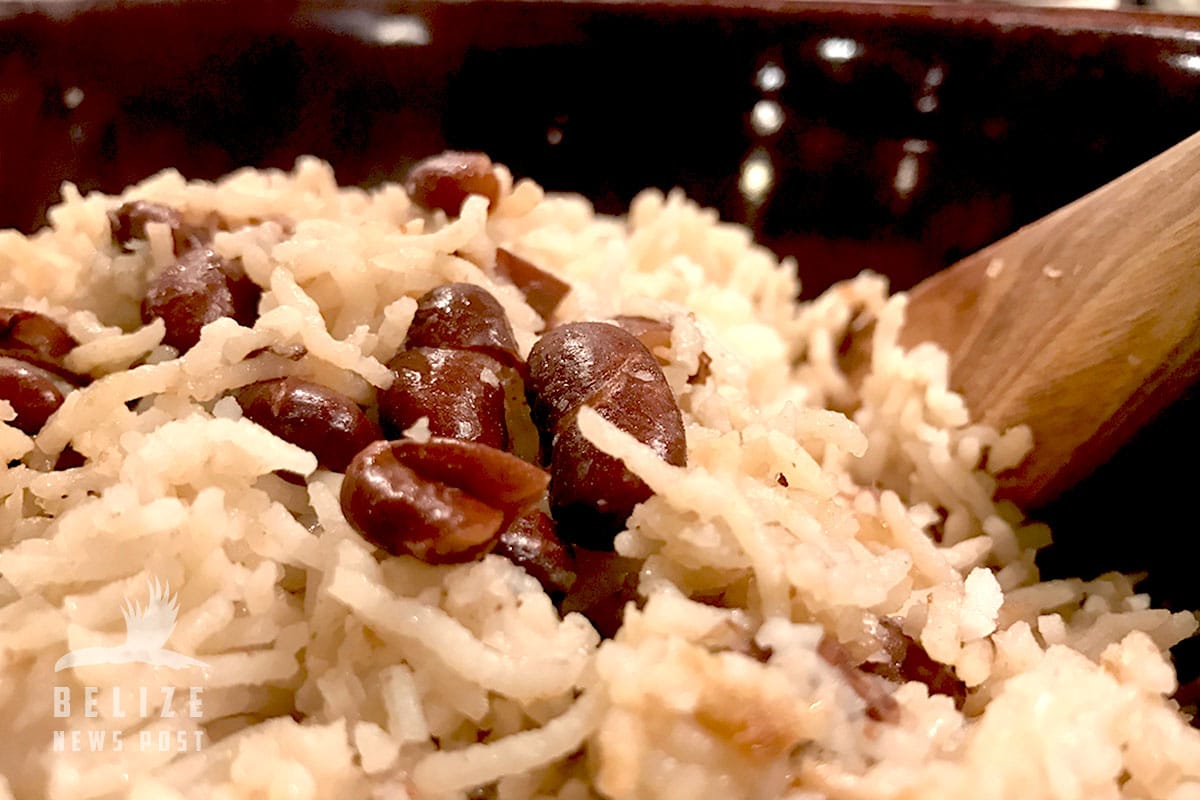
Learn this distinction before you order and you will sound like you have been here a while. In Belize, “rice and beans” and “beans and rice” are two different plates. Rice and beans is cooked together, the rice fried in coconut oil with the beans worked through it, so every grain carries the flavor. Beans and rice is the two served separately, white rice on the plate with a side of stewed beans. Both come with a stewed chicken, a fish, or a pork, and a coleslaw. It is the everyday plate of the country, sold from kitchens, market stalls, and weekend cookouts, and a Sunday pot of rice and beans is close to a national ritual.
Sweets, fruit, and cold things
The fruit alone is worth the trip, and it is cheap. Roadside stands and markets pile up mango, watermelon, papaya, pineapple, and the local favorites a visitor will not know: craboo, the small yellow nance fruit Belizeans love stewed and sweetened with condensed milk or churned into ice cream, and soursop, big and green and made into juice and ice cream. Near the Mennonite farm country you will find watermelon and produce sold by the truckload for next to nothing.
For something cold, the cayes run on ice cream. In San Pedro you will see the national brand, Western Dairies, everywhere, and the flavors to ask for are the local ones, soursop and craboo, alongside a handful of small artisan parlors worth hunting down. On the sweeter, chewier side, look for tamarind balls, sweet-sour and rolled in sugar, and coconut tableta, a grated-coconut candy sold at stands and markets. Even the cut fruit is a snack here: jicama and green mango with chili and salt is the classic street nibble.
A word on what to expect, and what not to
A few corrections, because I hear them every season. First, do not come looking for what you eat at home. Belize has its own street food, deep and good, and it is not a worse version of Mexican or American food. The Belizean taco is soft, with stewed meat and fresh tortillas, not the hard shell out of a box. Eat the salbute, not the burger.
Second, on safety: street food in Belize is generally safe, and the busy stand with a line of locals and high turnover is your friend. Hot food cooked in front of you, served fast, is exactly what you want. Use the same judgment you would anywhere. Eat where the locals eat and you will be fine.
Third, it is cheap. Eating from carts and stands is the least expensive way to eat well here, far cheaper than the tourist restaurants on the water. You can eat like a local for very little if you eat like a local.
Getting here: how to get from Cancún to Belize and the full Belize travel guide. Cook it at home: browse the Belizean recipes index.
Frequently asked questions
What food is Belize most famous for?
On the street, the fried-tortilla trio of salbutes, garnaches, and panades, plus fry jacks for breakfast, Orange Walk tacos at night, Cayo barbecue on weekends, meat pies, and conch dishes on the coast. Rice and beans is the everyday national plate.
What is the difference between rice and beans and beans and rice in Belize?
They are two different plates. Rice and beans is cooked together, the rice fried in coconut oil with the beans through it. Beans and rice is the two served separately, white rice with a side of stewed beans. Both usually come with stewed chicken, fish, or pork and a coleslaw.
Where are the best tacos in Belize?
Orange Walk, in the north, is the home of the Belizean taco and its dollar-taco night scene. The downtown and market have taqueria after taqueria, some open for decades; try two or three and pick your own favorite.
Where can I get good local food near the Belize airport?
Margaret’s Fireheart Food, a mobile stand across the parking lot from Philip Goldson International Airport. Margaret Hendy cooks a daily spread of Belizean stews, barbecue, and pigtail over rice and beans on a firewood fire hearth, much of it raised or caught on her own farm. She sells out by the early afternoon, so go for an early lunch.
What fruit is Belize known for?
Mango, watermelon, papaya, and pineapple are everywhere and cheap, but the local favorites are craboo, a small yellow nance fruit stewed with condensed milk or churned into ice cream, and soursop, made into juice and ice cream. Cut green mango or jicama with chili and salt is the classic street snack.
What do Belizeans eat for breakfast?
Fry jacks or johnny cakes, usually with refried beans, eggs, and cheese, and a coffee. Both are commonly bought from street stands and small shops in the morning.
Is street food in Belize safe to eat?
Generally yes. Stick to busy stands with high turnover where food is cooked hot in front of you, and use normal travel judgment. Eating where locals line up is the simplest rule.
Is it expensive to eat out in Belize?
Street food and market food are inexpensive and the best value in the country. Tourist restaurants, especially on the cayes, cost much more. Eat from the carts and stands to eat well for little.
What is the difference between salbutes, garnaches, and panades?
Salbutes are soft, puffed fried tortillas with toppings; garnaches are crisp fried tortillas with beans, cheese, and onion; panades are fried masa turnovers filled with fish or beans. Panuchos, found mostly in the north, are bean-stuffed tortillas topped like a salbute.
What foods can you not bring into Belize?
Belize, like its neighbors, restricts bringing in fresh produce, meats, and plant material across the border for agricultural reasons; that is why vehicles sometimes get an agricultural spray at the crossing. Eat the local food rather than packing your own, and check current customs rules before you travel.
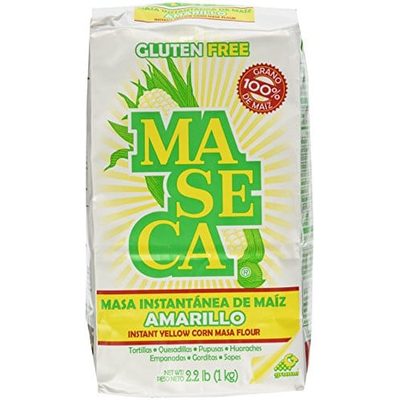
Maseca brand yellow corn masa harina, pre-ground and treated for immediate use in dough for tortillas, tamales, and other corn dough applications.