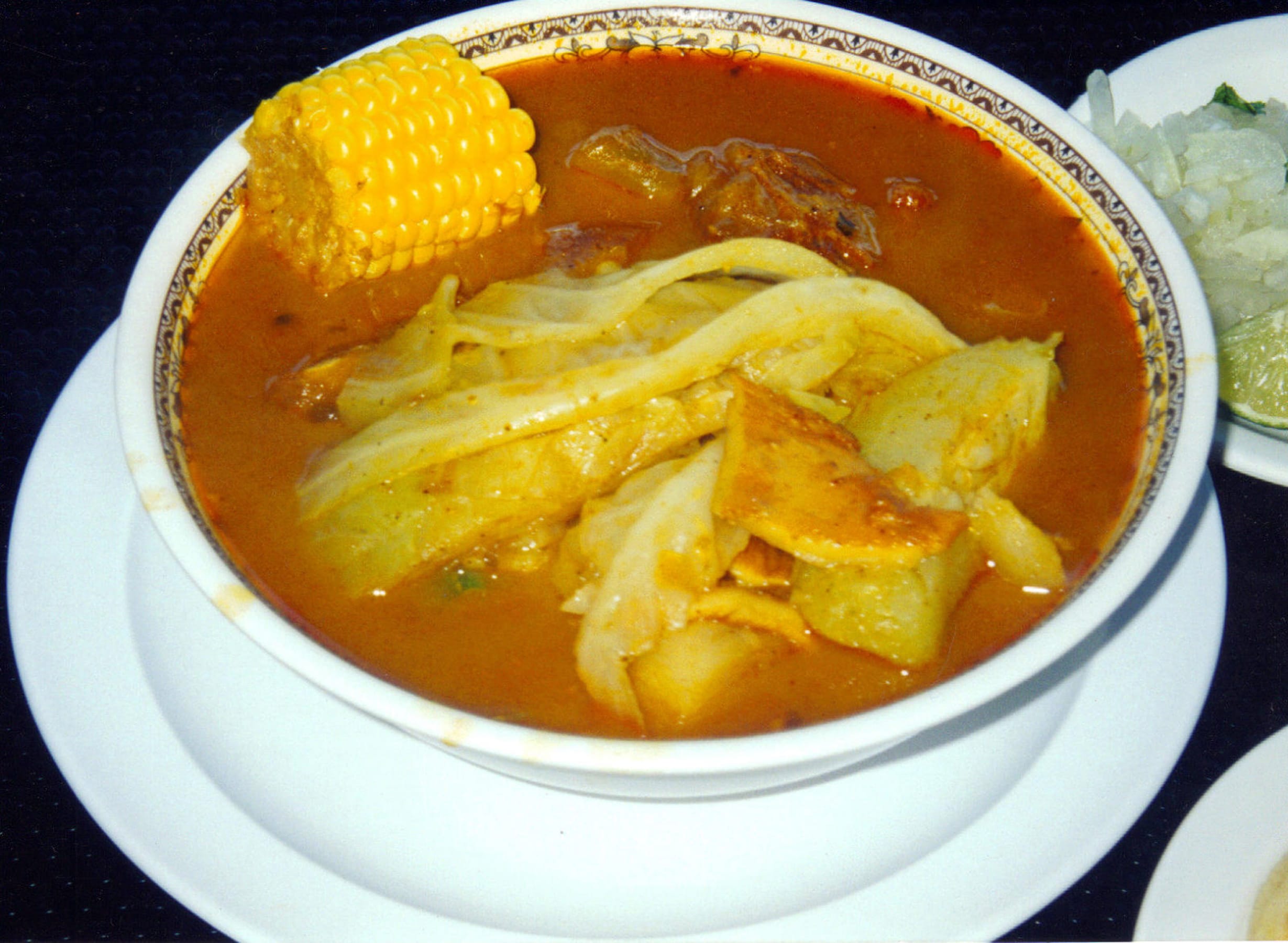
This sopa de pata recipe makes the classic Salvadoran cow’s-foot and tripe soup, slow-simmered with yuca, güisquil (chayote), corn, green plantain, and cabbage. Seasoned with achiote, oregano, and cilantro and finished at the table with lime, the soup has been a Sunday and weekend staple in El Salvador since at least the 1960s.
What Kind of Soup Is Sopa de Pata — and Why Do Salvadorans Make It on Sundays?
Sopa de pata is Salvadoran in the specific way that a dish can belong to a country: not because no one else makes it, but because El Salvador made it its own. The name tells you what matters. Pata is the foot. The cow’s foot is the lead protein, the source of the collagen-rich broth that makes this soup different from every other offal soup in the region. The tripe comes second.
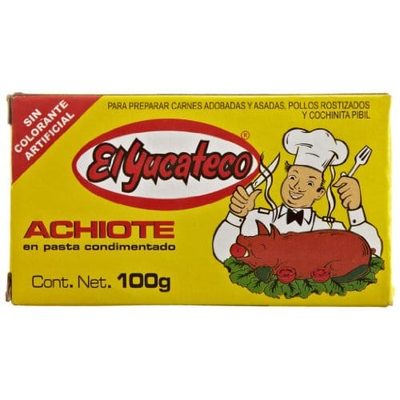
Cochinita pibil, poc chuc, and escabeche all start with red recado. A prepared achiote paste dissolves into sour orange in minutes instead of the hour it takes to grind annatto, oregano, and clove from seed.
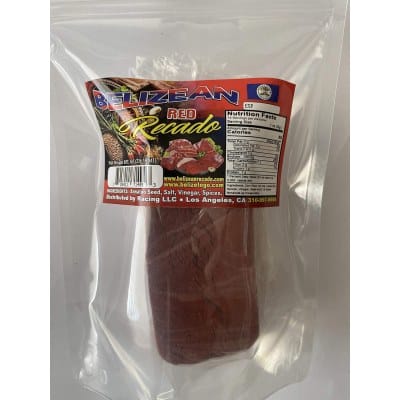
The achiote-based paste behind stew chicken, pibil, and escabeche. Sold ready-made so you skip toasting and grinding annatto, cumin, oregano, and clove from seed.
The name tells you what matters. Pata is the foot. The cow’s foot is the lead protein, the source of the collagen-rich broth that makes this soup different from every other offal soup in the region.
The dish is colonial mestizo in origin. The root vegetables — yuca, güisquil, elote — come from indigenous tradition; the offal, the cow’s foot and tripe, arrived with Spanish colonialism. El Salvador’s population is roughly 86 percent mestizo, and sopa de pata reflects that layered history: offal, root vegetables, corn, and the slow-cooking methods that stretch tough cuts into something worth making. According to Wikipedia, the dish has been prepared and sold out of the Tinetti market in San Salvador since the 1960s. That market history is part of why the soup feels like national property.
The Sunday timing is practical, not ceremonial. The feet need three to four hours of cooking: one hour for the feet alone, another for the tripe, then the vegetables. On a weekday, that schedule is impossible. On a Sunday morning, you put the pot on and the house smells like dinner by noon. Families eat late and eat slowly. The soup keeps.
Salvadorans also call it levanta muertos — “raises the dead” — a recognition of the soup’s traditional role as a morning-after restorative after a long Saturday. The same collagen-dense broth that makes it worth the hours of preparation is what the body reaches for the next morning.
There is also a restorative tradition behind it. The broth from the feet is dense with gelatin and collagen. According to the recipe documentation at 196flavors.com, sopa de pata broth is “often recommended in the diet of children and the elderly because it strengthens the body.” Whether or not that claim holds nutritionally, it describes how Salvadoran families think about the dish. It is food that does something for you, not just food that fills a bowl.
I have eaten versions of this soup in Honduras and throughout Central America in my years of traveling the region. The Salvadoran version is the one I keep returning to: the achiote color, the güisquil adding a mild crunch, the lime arriving at the table to cut the fat. It is honest and direct. You know exactly what you are eating.
Ingredients
- 2 cow’s feet, sliced into pieces
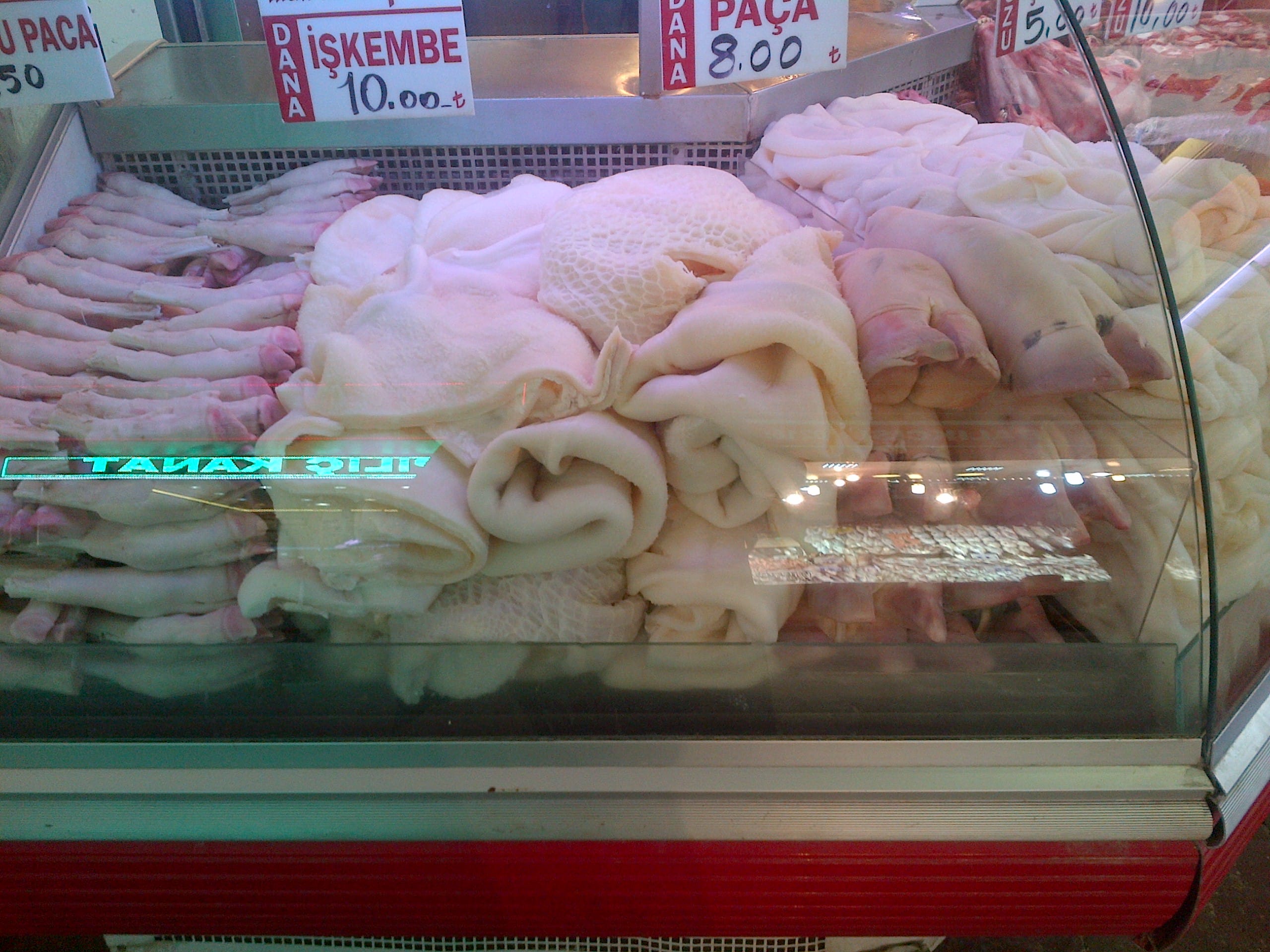
- 3 lb (1.4 kg) beef tripe (mondongo / panza), cleaned
- 9 cups water
- 1¼ cups beef broth
- 1 head garlic, pressed
- 2 tablespoons achiote (annatto paste or powder)
- 4 güisquiles (chayotes), peeled and cut into pieces
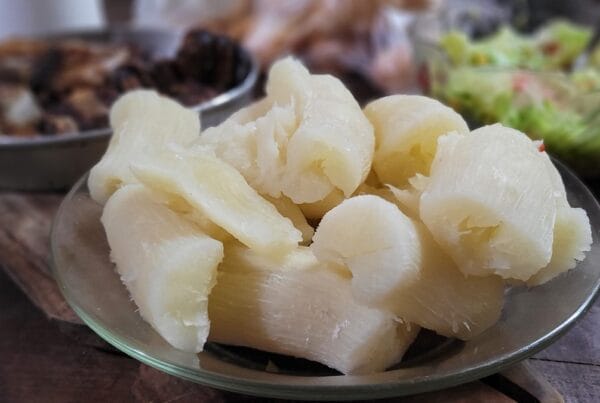
- 8 lb (3.6 kg) yuca (cassava), peeled and cut into chunks
- 4 ears elote (corn), cut into thick rounds
- 1 small head cabbage, cut into wedges
- 2 tomatoes, peeled, seeded, and crushed
- 1 green chile (güisquil pepper or jalapeño), chopped
- 3 scallions
- 1 teaspoon dried oregano
- 4 tablespoons Mexican cilantro (cilantro de monte / culantro)
- Salt and pepper to taste
- Lime wedges and dry chile powder for serving
- Optional: green plantain rounds, green beans, peanuts (for thickening)
A note on substitutions: If you cannot find beef tripe, pig’s trotters (pig’s feet) work in place of cow’s foot and produce similar collagen content. Some Salvadoran households use only trotters. If you prefer to skip the tripe entirely, the cow’s-foot-only version is lighter and still worth making. Increase the vegetable quantities to compensate.
Instructions
- Soak the cow’s feet in a large bowl of cold water with 1 tablespoon salt and the juice of 1 lime for 20 minutes. Drain and rinse thoroughly.
- Bring a large pot of water to a boil. Add the feet and blanch for 15 minutes, skimming any foam that rises. Drain and rinse with cold water.
- Wash the tripe under cold running water, rubbing the surface well. Soak in cold salted water with a squeeze of lime for 20 minutes.
- Blanch the tripe in a separate pot of boiling water for 5 minutes. Drain, rinse, and repeat twice more for three blanches total. This step is not optional. Shortcuts produce a strong off-flavor that no amount of seasoning corrects.
- Cut the blanched tripe into 2-inch pieces.
- Place the cow’s feet, pressed garlic, and a pinch of salt in a pressure cooker. Add the 9 cups of water. Seal and cook on low-medium heat for 1 hour.
- Release pressure. Add the tripe pieces and enough boiling water to keep everything submerged. Seal and cook for 1 more hour.
- Release pressure. Stir in the achiote, dried oregano, cilantro, and beef broth.
- Add the yuca chunks and güisquil pieces. Cook covered for 15 minutes, until the yuca begins to soften.
- Add the cabbage wedges, elote rounds, green chile, and crushed tomatoes. Cook covered for 15 more minutes.
- Stir in the scallions. Taste and adjust salt and pepper.
- Serve immediately in deep bowls with lime wedges and dry chile powder on the side. Each person squeezes lime at the table. This is part of the dish, not a garnish.
Stovetop method: Skip the pressure cooker. After blanching, simmer the feet uncovered in fresh water for 2 to 2.5 hours. Add the tripe and simmer for 1 more hour before adding the achiote and vegetables. The stovetop method takes approximately 4 to 4.5 hours of active cook time after blanching. Plan for 5 to 5.5 hours start to finish.
How Sopa de Pata Differs from Honduran Mondongo and Belizean Cow Foot Soup
The question “sopa de pata vs mondongo” comes up often, and it deserves a real answer.
Start with the name. In El Salvador, the soup is named for the foot (pata). That is the lead protein. The tripe supports it. In Honduras, Honduran sopa de mondongo is named for the tripe (mondongo). The tripe is the point; the foot may not appear at all, or may appear as a secondary element. The vegetable profiles also differ. The Honduran version uses yuca but typically lacks the full Salvadoran set of güisquil, elote, and cabbage all together in one pot.
In El Salvador, the soup is named for the foot. That is the lead protein. The tripe supports it.
Belizean cow foot soup is a different dish entirely. It uses the foot only, with no tripe, and is built on a broth with root vegetables and green banana. There is no achiote. The seasoning base is different. The two soups share the collagen-rich foot broth as a starting point, but they go separate directions from there.
The Salvadoran identity signature is specific: pata plus tripe, achiote for the orange-red broth color, güisquil, elote, and yuca all present, and lime with dry chile powder served at the table. That combination is what makes this soup recognizably Salvadoran. Even TasteAtlas, which documents regional food traditions across Central America, notes that sopa de pata is “particularly associated with domestic and family Sunday cooking” in El Salvador.
Sopa de gallina india, El Salvador’s free-range hen soup, occupies a different register — reserved for celebrations, illness recovery, and festive meals, not the weekend levanta muertos tradition. Each of these soups has its own occasion and its own broth character.
A practical note: in everyday conversation, Salvadorans sometimes use sopa de mondongo and sopa de pata interchangeably, and some families use the terms as regional variants of the same dish. The distinction matters most when you are deciding what to cook. If you want the collagen-forward broth with the full vegetable set, you want sopa de pata.
For more on El Salvador’s broader food traditions, see the El Salvador food guide.
Getting the Broth Right — and What to Do If You Can’t Find Cow’s Foot
On cleaning: The three-blanch method for tripe is specific for a reason. Tripe has a strong smell before it is properly cleaned, and a single blanch does not remove it. By the third blanch, the water runs clear and the tripe is ready. Do not rush this step.
On achiote: Use achiote paste (recado de achiote) rather than powder if you can find it. The paste dissolves more evenly in the broth and gives deeper, more consistent color. If only powder is available, dissolve it in a small amount of warm broth before adding it to the pot. This prevents it from clumping.
On scale: The recipe above serves 6 to 8. The 8 lb yuca measurement is calibrated for a family pot. Home cooks making a smaller batch can halve every quantity without affecting the technique.
On storage: The soup keeps for 3 days in the refrigerator. The broth gels solid when cold because of the collagen from the feet. This is correct. Reheat gently over low heat, adding a small amount of water if needed. Do not boil it hard; that breaks down the texture.
On finding cow’s feet: Most Latin American grocery stores, Caribbean markets, and some Asian grocery stores carry cow’s feet, usually pre-sliced. If unavailable, pig’s trotters are the nearest substitute. The collagen content is similar. The flavor is slightly different but the technique is identical.
Frequently Asked Questions
What is sopa de pata?
Sopa de pata is a traditional Salvadoran soup made from cow’s feet (pata) and tripe, slow-simmered with yuca, chayote (güisquil), corn, cabbage, and seasonings including achiote, oregano, and cilantro. The broth is orange-red from the achiote and rich with collagen from the feet. It is a Sunday and family occasion dish, sold at the Tinetti market in San Salvador since at least the 1960s. The soup is also known colloquially as levanta muertos (“raises the dead”), reflecting its traditional role as a morning-after restorative.
How do you clean cow’s feet and tripe for sopa de pata?
Cow’s feet: soak in cold water with salt and lime juice for 20 minutes, then blanch in boiling water for 15 minutes, skimming foam. Rinse well. Tripe requires more work: soak in cold salted water with lime for 20 minutes, then blanch in boiling water for 5 minutes, drain, and repeat twice more for three blanches total. After three blanches, the tripe should have no strong odor.
What is the difference between sopa de pata and sopa de mondongo?
Sopa de pata is Salvadoran and leads with the cow’s foot (pata) as the primary protein, with tripe as a secondary ingredient. The broth is colored with achiote and includes the full Salvadoran vegetable set: güisquil, yuca, elote, and cabbage. Sopa de mondongo, as made in Honduras, leads with tripe (mondongo) as the primary protein, the foot may be absent, and the vegetable profile differs. Despite the name overlap in everyday speech, the two are distinct dishes.
Can I make sopa de pata without a pressure cooker?
Yes. Use a large heavy pot and simmer the cow’s feet in fresh water for 2 to 2.5 hours after blanching. Add the tripe and simmer for another hour before adding the achiote and vegetables. The stovetop method adds roughly 1.5 to 2 hours to the total time and produces the same result.
Is sopa de pata the same as Belizean cow foot soup?
No. Belizean cow foot soup uses only the cow’s foot with no tripe, and is built on a different broth with root vegetables, green banana, and a distinct seasoning base that does not include achiote. The orange-red broth color is specific to the Salvadoran version. The two soups share the collagen-rich foot broth as a foundation but are otherwise separate dishes from different food traditions.
How long does sopa de pata take to cook?
Using a pressure cooker: the cleaning and blanching preparation takes approximately 60 minutes. The pressure cooking takes 2 hours total (1 hour for the feet, 1 hour after adding the tripe). The vegetable phase adds 30 minutes. Total active and rest time is approximately 3 hours 45 minutes. Using a stovetop method adds roughly 1.5 to 2 hours. Plan for a full morning or afternoon.