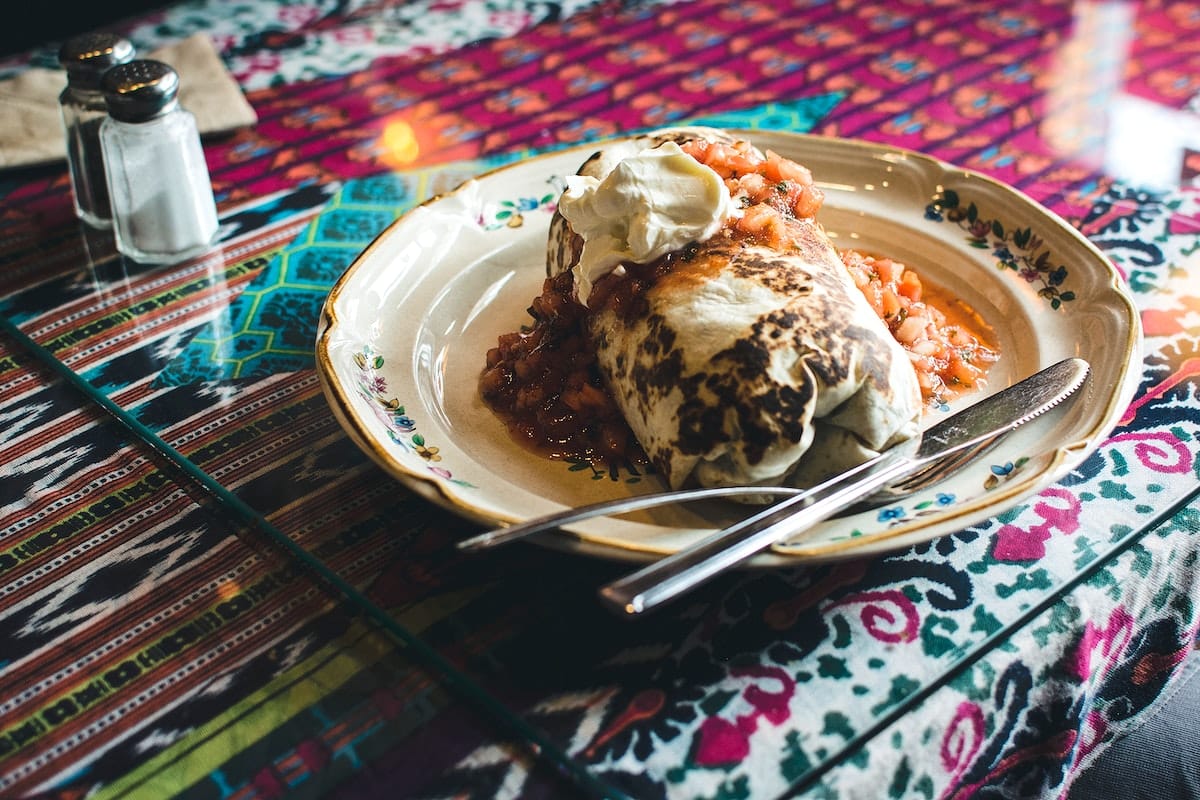
Short answer: Yucatecan food is the Maya kitchen of southern Mexico, and it is the same tradition as northern Belize. This is where so much of the food we cook comes from: panuchos, salbutes, cochinita pibil, the recados, the achiote, the sour orange. If you have eaten in Corozal, you have eaten Yucatán.
We cover a lot of this food already, because it is our food too. Below are 20 Yucatecan dishes worth knowing, each with a full recipe. The one thing worth saying plainly: the Yucatec Maya are a living people on both sides of the line, and their kitchen does not recognize the border.
Cochinita Pibil: achiote pork in banana leaf
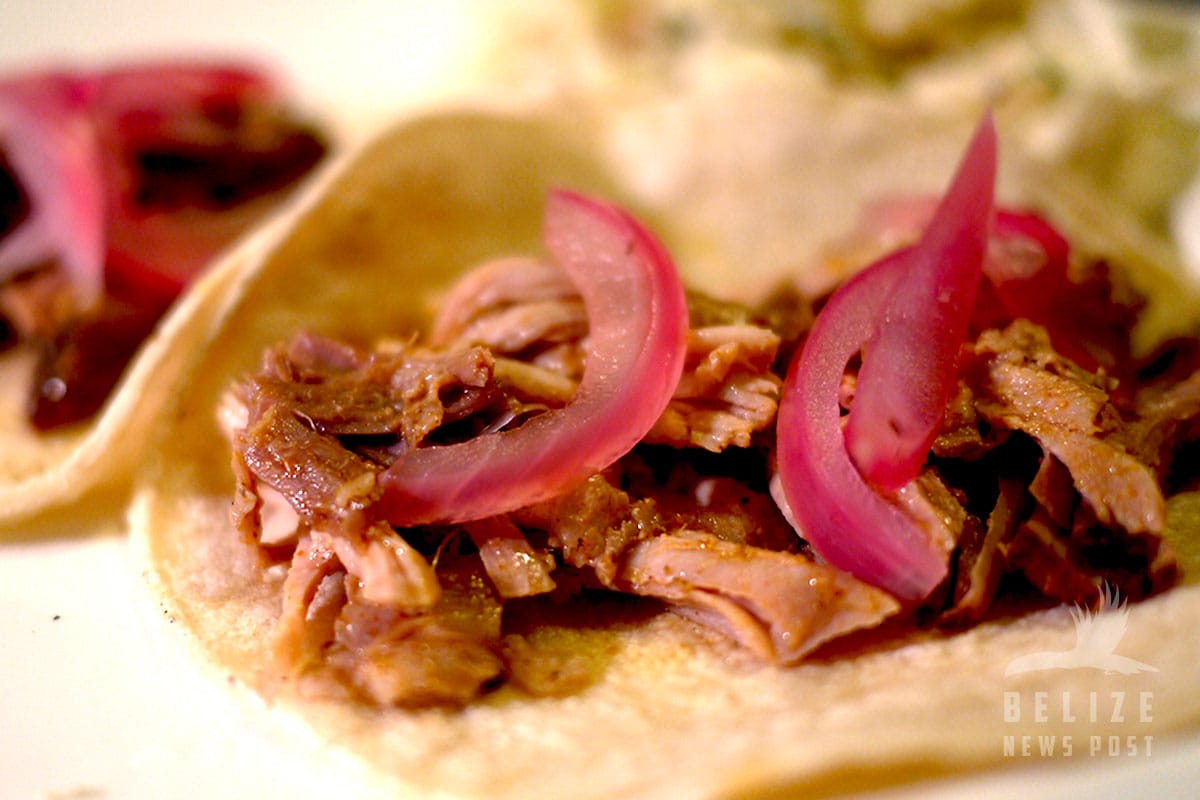
Pork marinated in red recado and sour orange, wrapped in banana leaf, and cooked long and slow in a pib, the earth oven. One of the two defining dishes of the Yucatán Peninsula, and the one that explains the whole cuisine: achiote, citrus, leaf, fire.
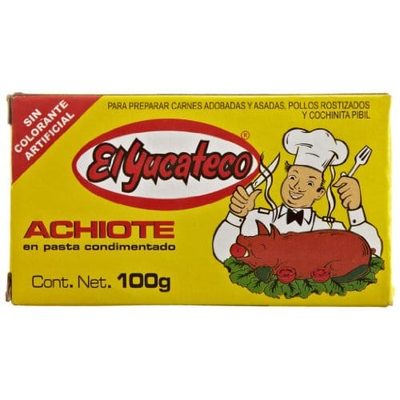
Cochinita pibil, poc chuc, and escabeche all start with red recado. A prepared achiote paste dissolves into sour orange in minutes instead of the hour it takes to grind annatto, oregano, and clove from seed.
Panuchos: the stuffed fried tortilla
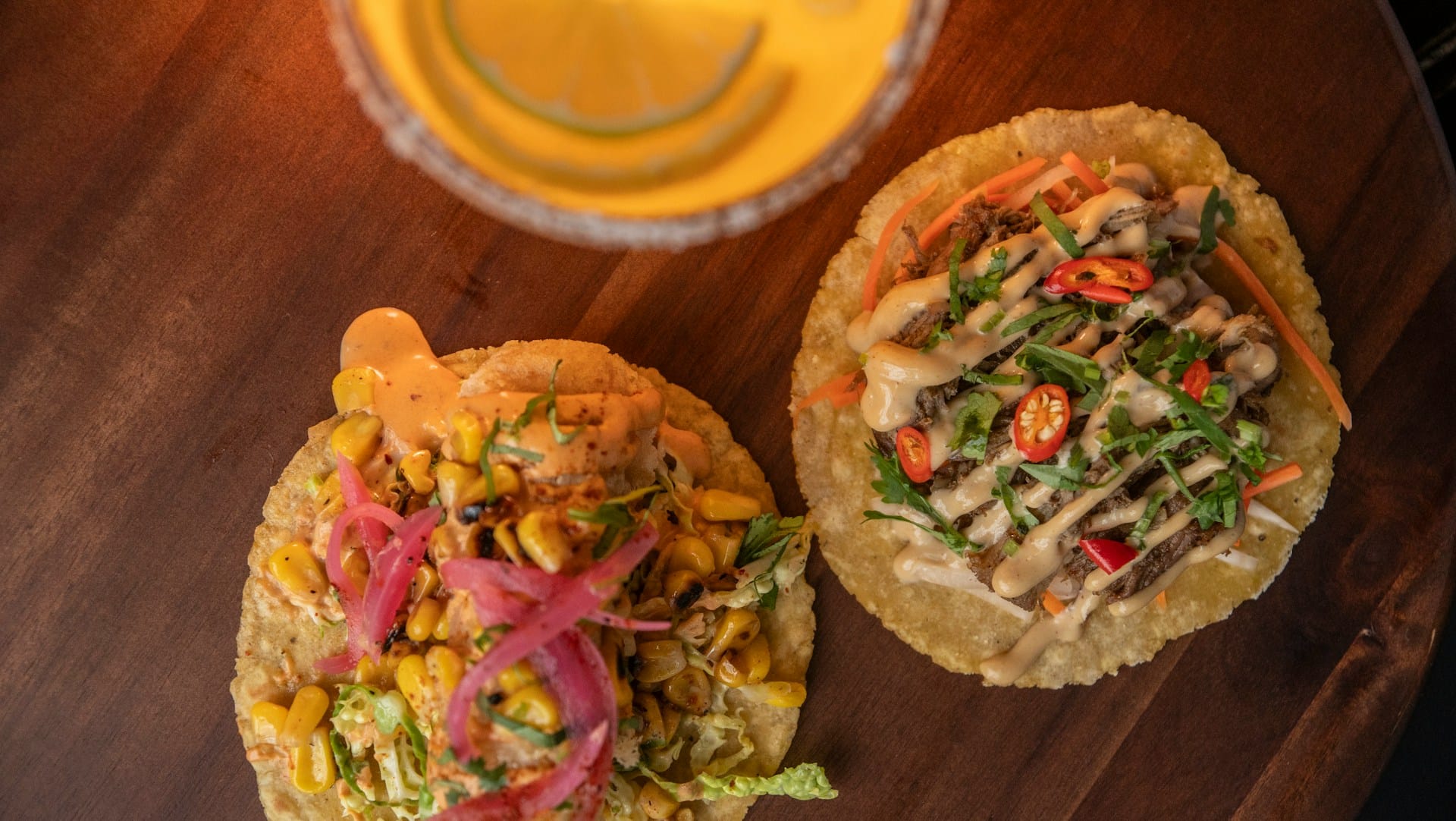
The difference from a salbute is the order of cooking. The tortilla goes dry onto the comal first; when it puffs, that pocket is split and filled with refried black beans, and only then does it fry. Two steps, not one. Topped with shredded meat, cabbage, pickled onion, and avocado. Street food from Mérida to Corozal.
Salbutes: the puffed fried tortilla
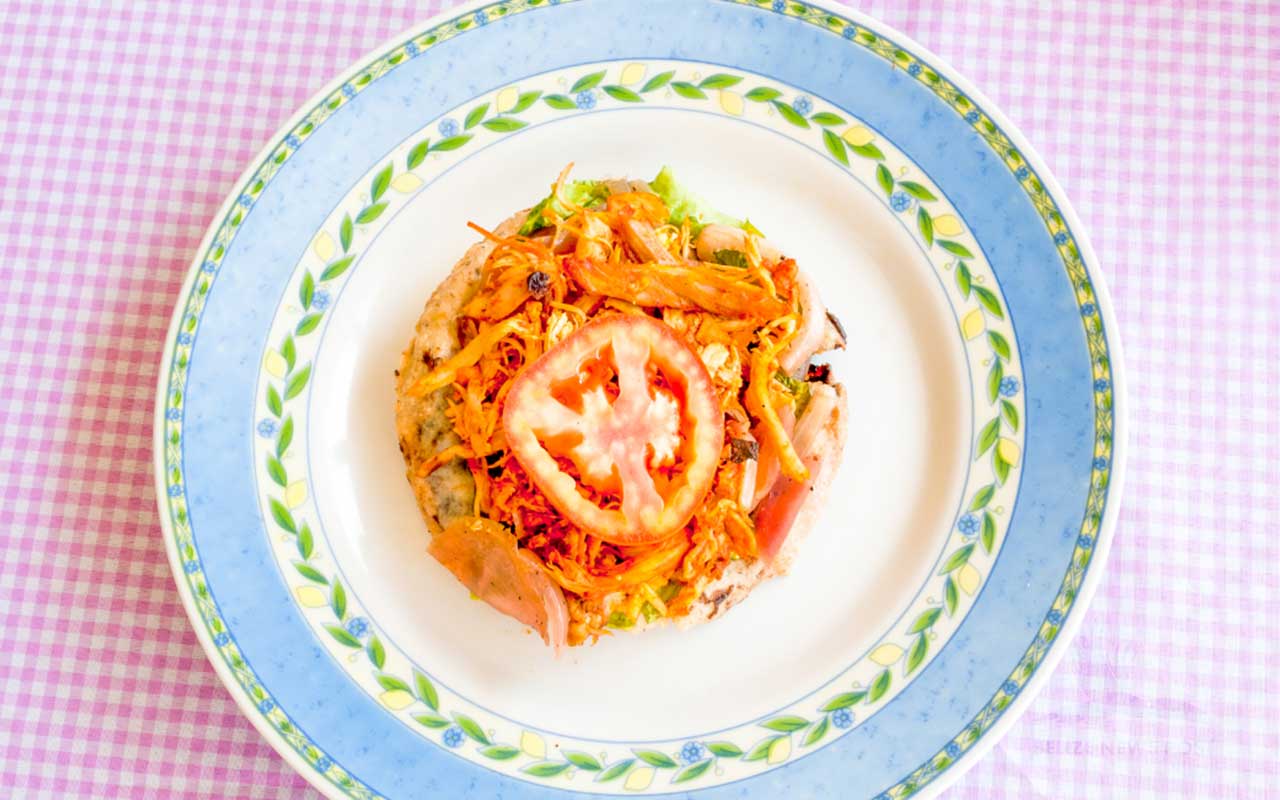
The panucho’s twin, minus the bean and minus the comal step. The tortilla goes straight into the oil raw and fries up puffed, golden, and crisp. Topped with shredded chicken, lettuce, tomato, red onion, cilantro, and avocado. Order both and you will taste the argument.
Poc Chuc: sour-orange grilled pork
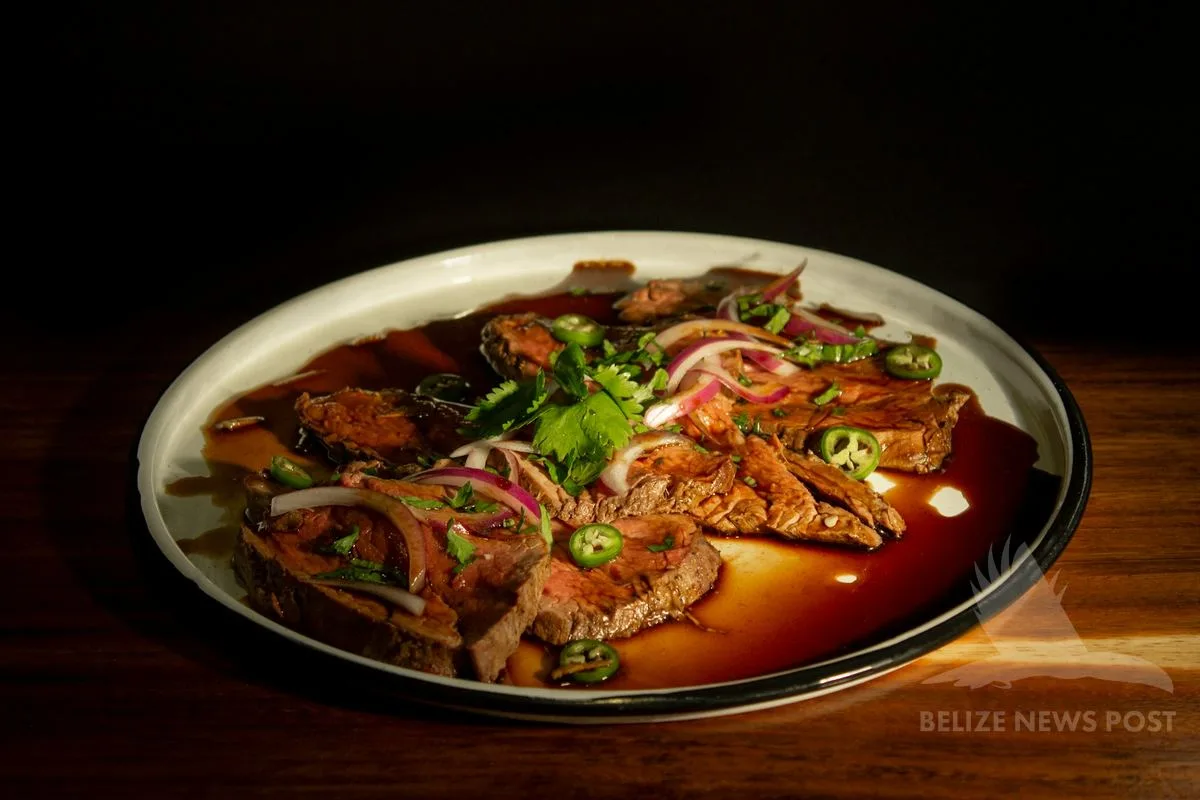
Thin pork steeped in sour orange and grilled hard, served with pickled red onion and charred tomato. Yucatec Maya, and the simplest great dish in the region. The citrus does the work that a marinade of twenty ingredients would do elsewhere.
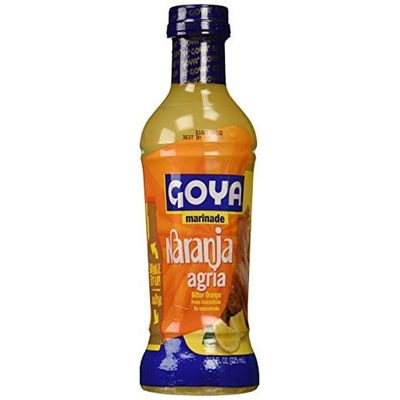
Goya Bitter Orange Naranja Agria
Sour orange carries the pickled onion on panuchos and the marinade under cochinita. Bottled and ready to pour, it beats the lime-and-vinegar fake most recipes fall back on.
Sopa de Lima: Yucatecan lime soup
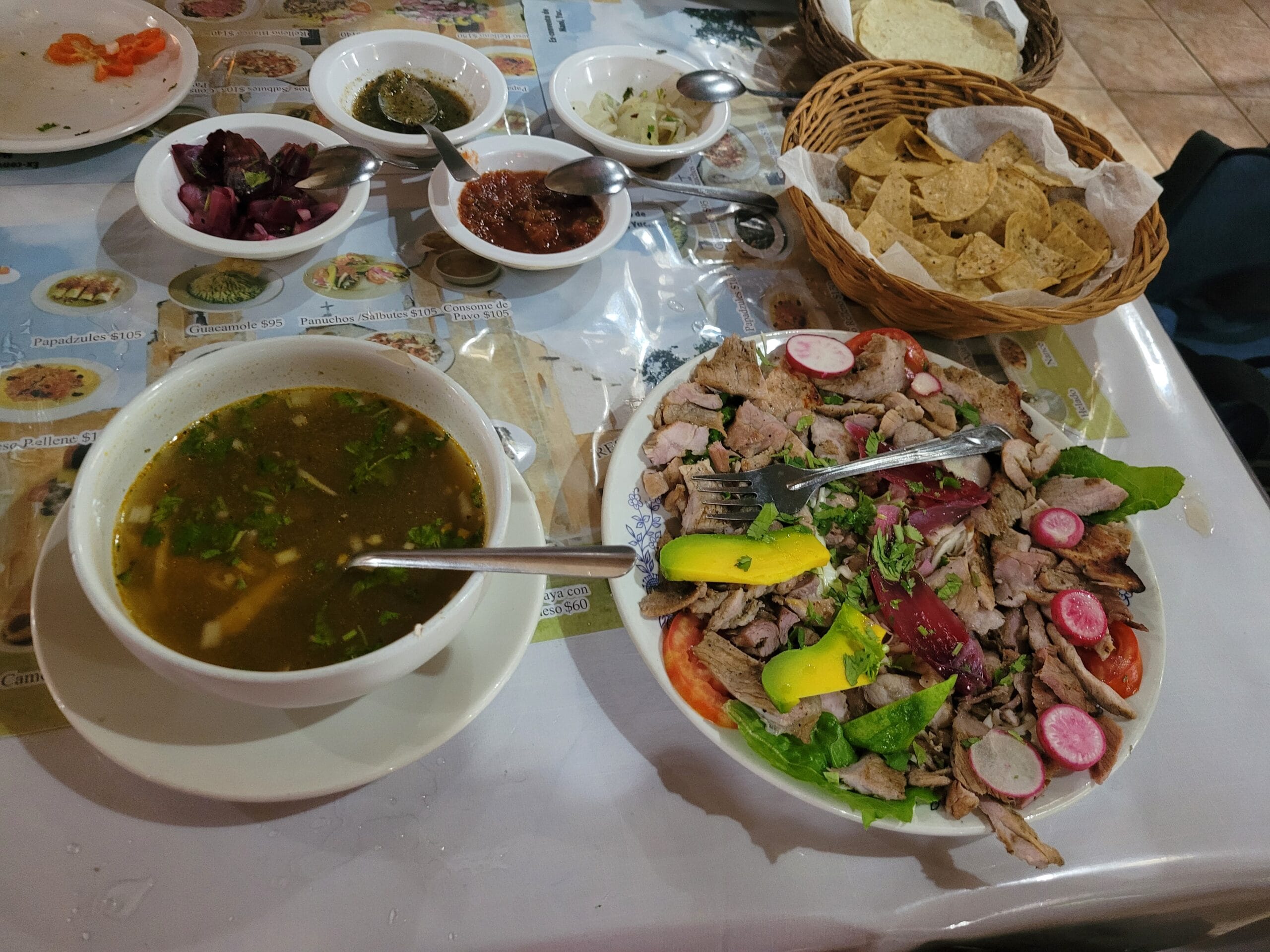
Chicken broth sharpened with lima agria, the Yucatecan sour lime, and finished with crisp tortilla strips. Not the lime you buy at the supermarket, and that is exactly why it tastes like nowhere else.
Tikin Xic: achiote grilled fish
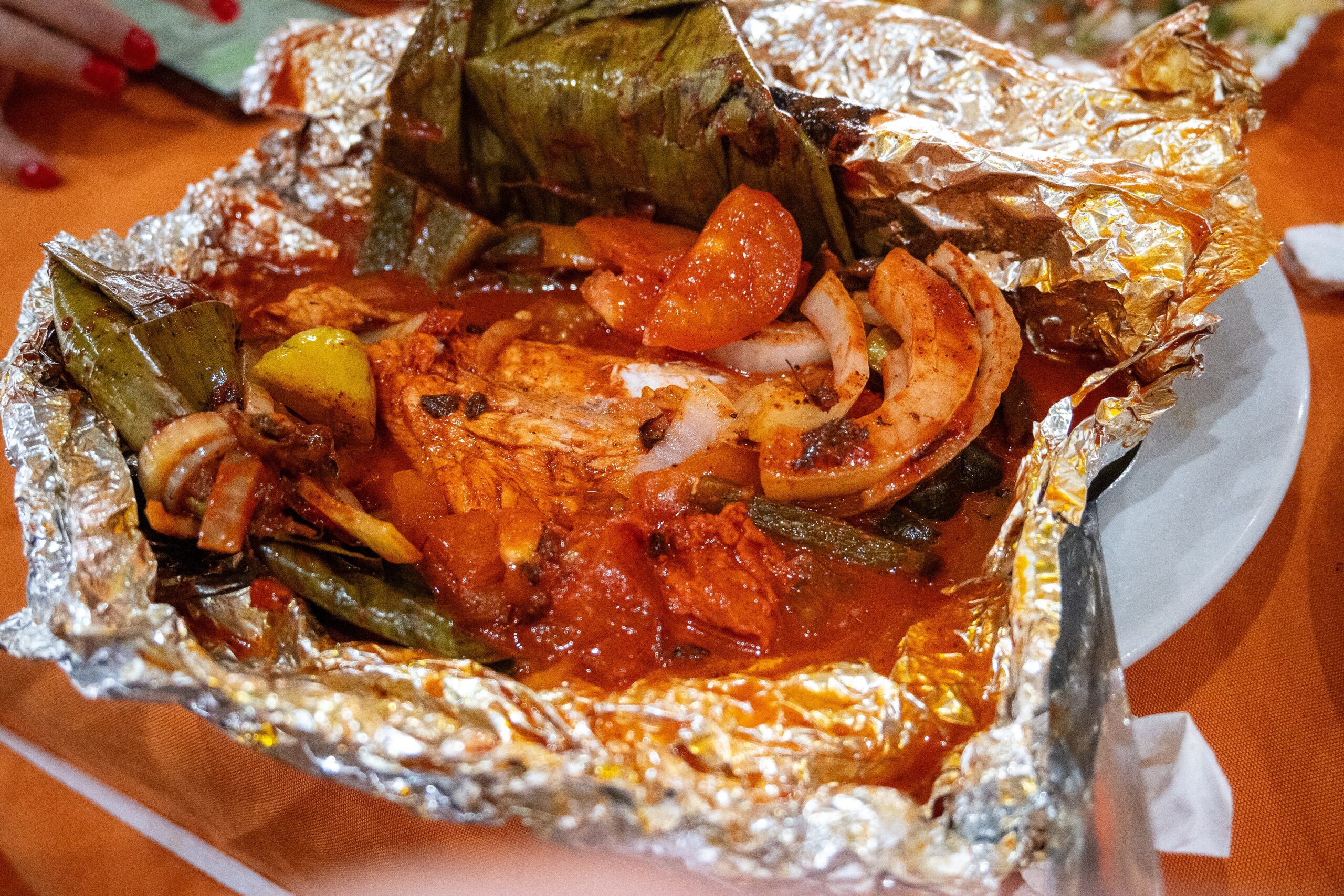
Whole fish butterflied, painted with red recado and sour orange, and grilled over wood in banana leaf. The coastal counterpart to cochinita pibil, and the same logic applied to the sea.
Queso Relleno: Edam cheese stuffed with pork
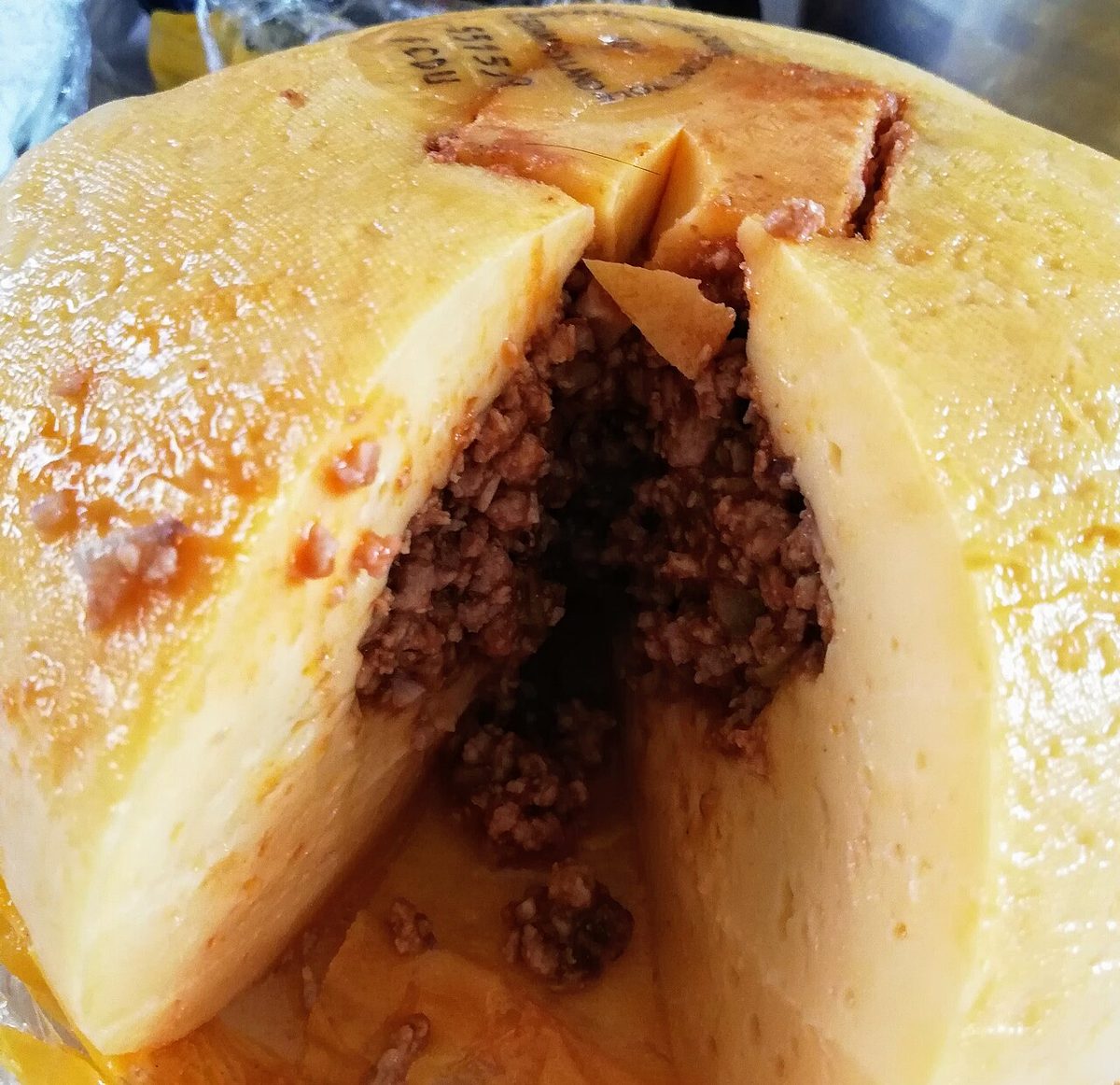
A whole ball of Dutch Edam hollowed out, stuffed with pork picadillo, steamed, and bathed in a white k’ol sauce and tomato. Dutch cheese in a Maya dish, because the ships came and the Yucatán kept the cheese. Strange, and superb.
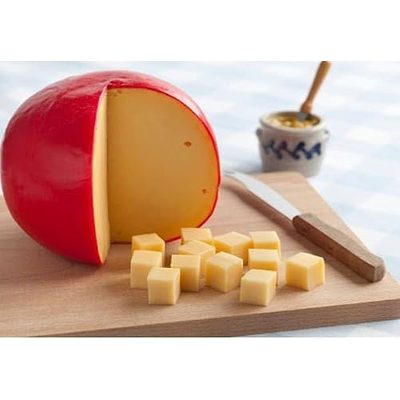
Dutch Edam Cheese Wheel, Traditional Red Wax
Dutch Edam cheese wheel in traditional red wax - a firm, dense cheese that holds its shape when stuffed or cubed into cooked dishes.
Papadzules: the pumpkin-seed and egg dish (Belize’s papak’sul)
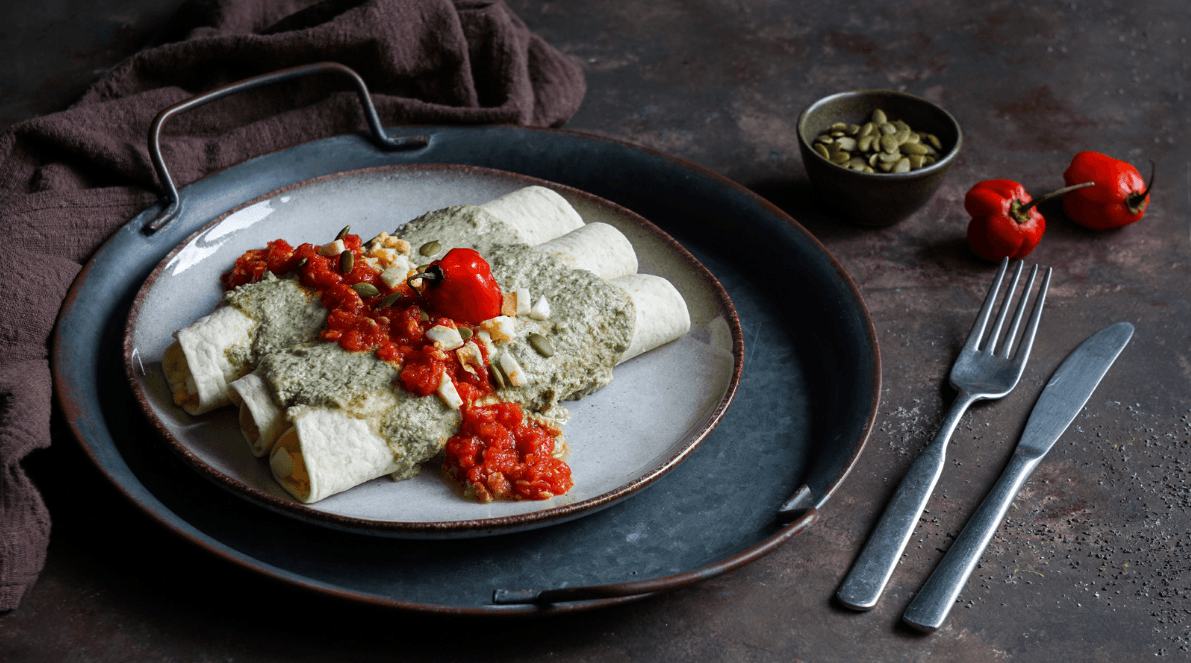
Tortillas rolled around chopped hard-boiled egg, spread with sikil, the ground pumpkin-seed sauce, and finished with a tomato and epazote sauce. The name reads either as papa ts’uul, food of the ts’uul, or, per Cherry Hamman, from papak’, to smear, and sul, to soak. In Belize the same seed sauce is made without the egg and rolled with chaya, and it is called papak’sul. Same dish, one border apart.
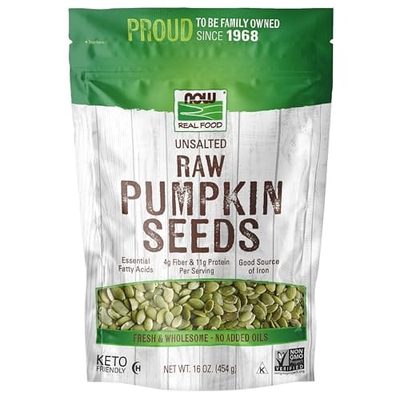
Pumpkin seeds (pepitas) that can be toasted as a garnish or ground into a paste to thicken and enrich sauces and stews.
Huevos Motuleños: the Yucatecan breakfast
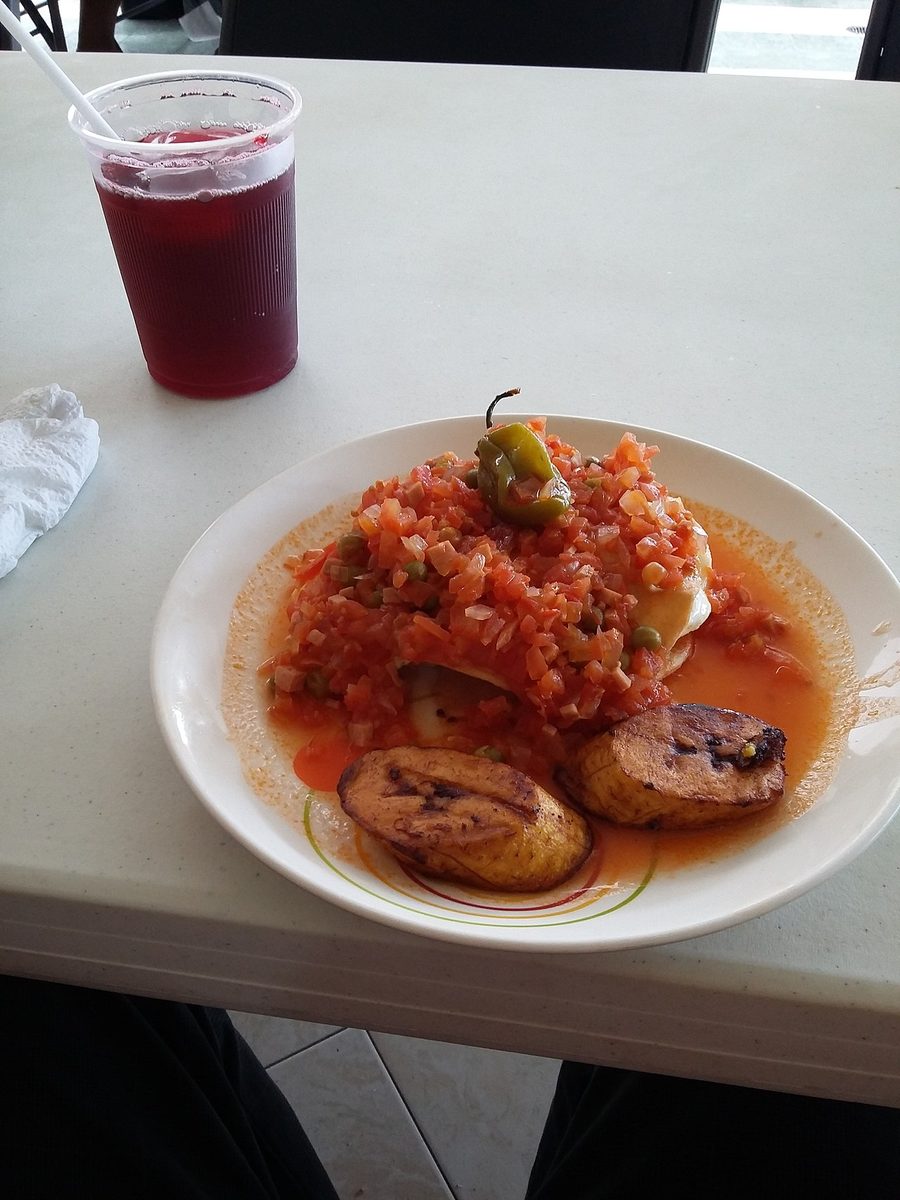
Fried eggs on a tortilla with black beans, tomato sauce, peas, ham, and fried plantain. From Motul, and it is a whole breakfast built on one plate. The plantain is not optional.
Mukbipollo: the Day of the Dead pib
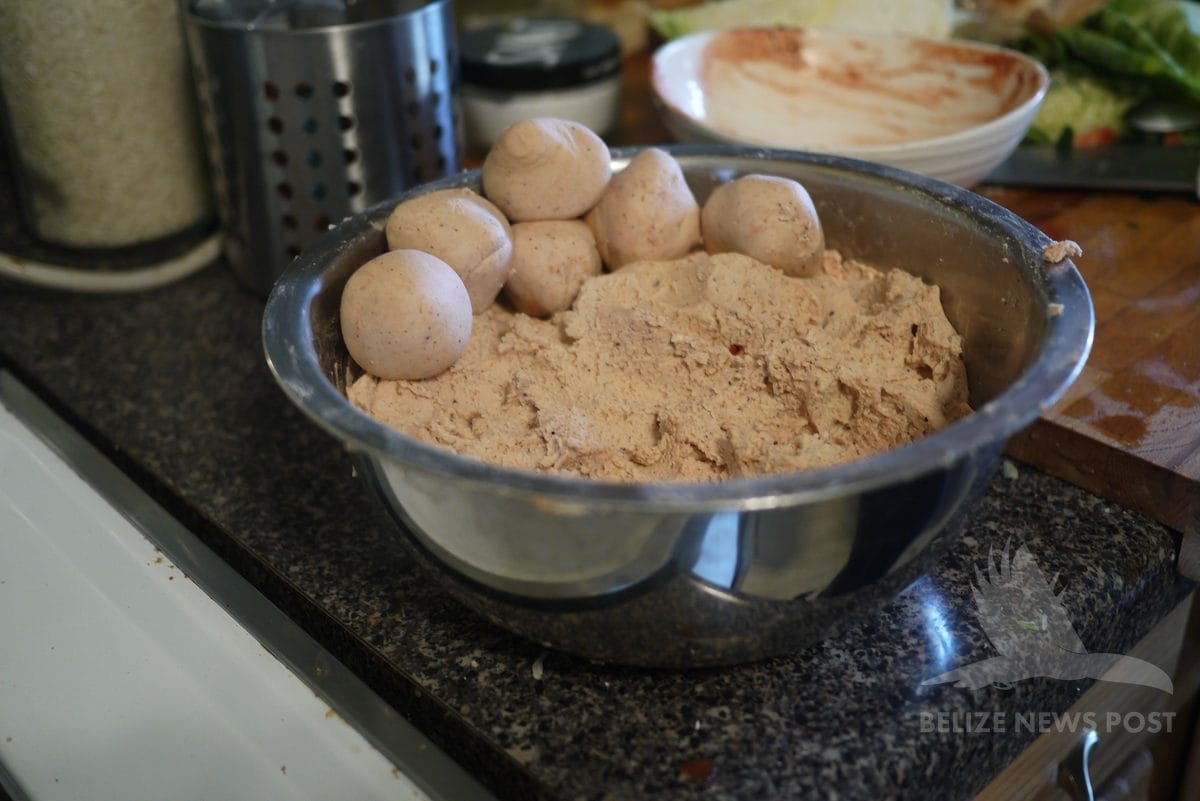
A single enormous tamal of achiote corn masa filled with k’ool and shredded chicken, wrapped in banana leaf and buried in the earth oven. Made for Hanal Pixán, the Maya Day of the Dead, and made for the dead to eat first.
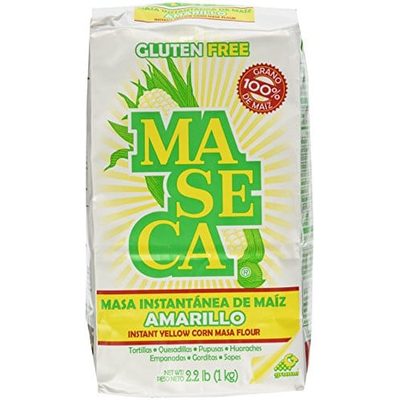
Maseca brand yellow corn masa harina, pre-ground and treated for immediate use in dough for tortillas, tamales, and other corn dough applications.
Tamales Colados: the strained-masa tamal
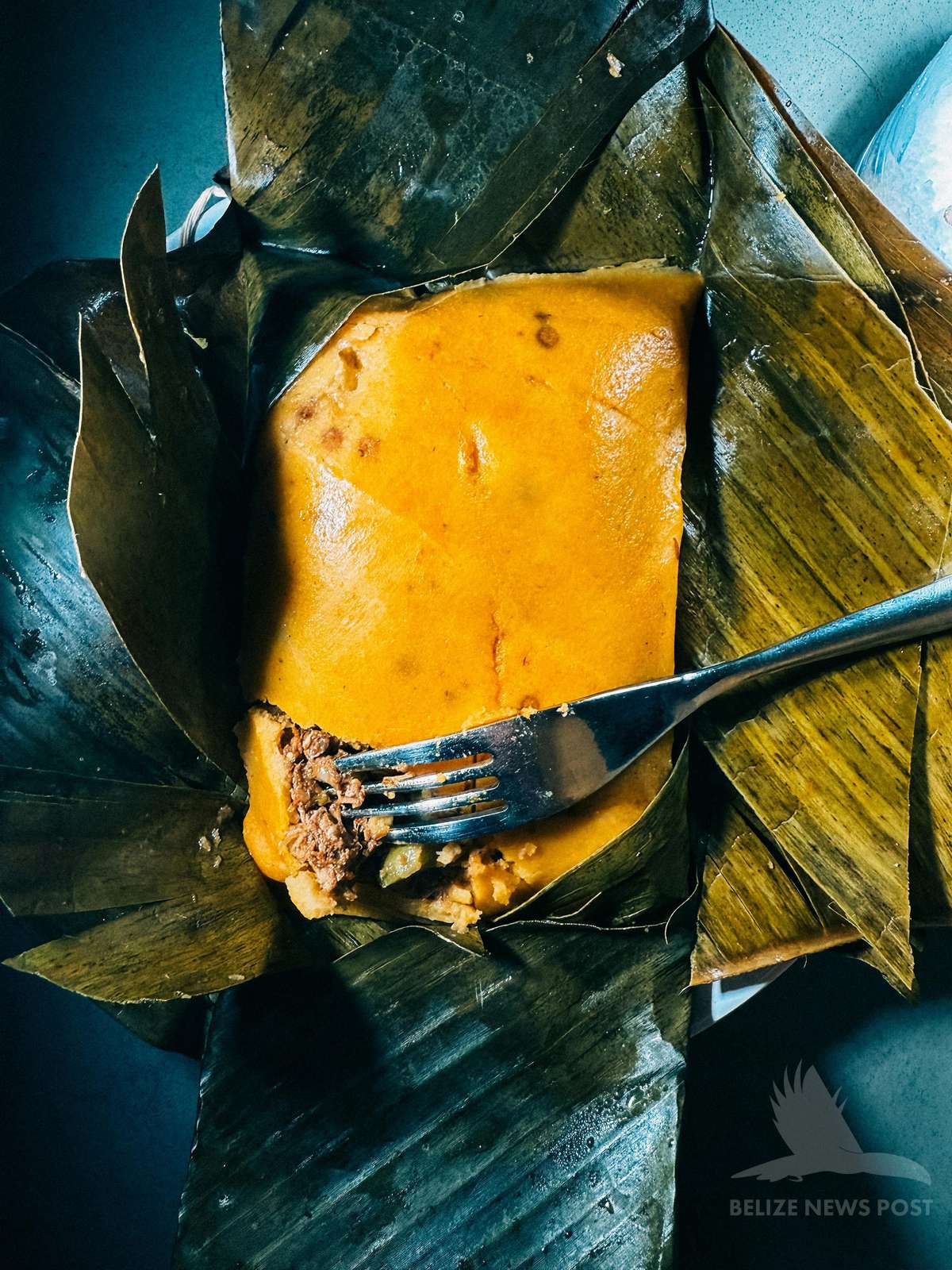
The masa is strained before it is cooked, which makes the tamal smooth and almost gelatinous rather than grainy. Achiote chicken inside, banana leaf outside. A dish of the Yucatán-Campeche-Belize corridor: we make them in Corozal the same way they make them across the border.
Dzotobichay: the chaya tamal
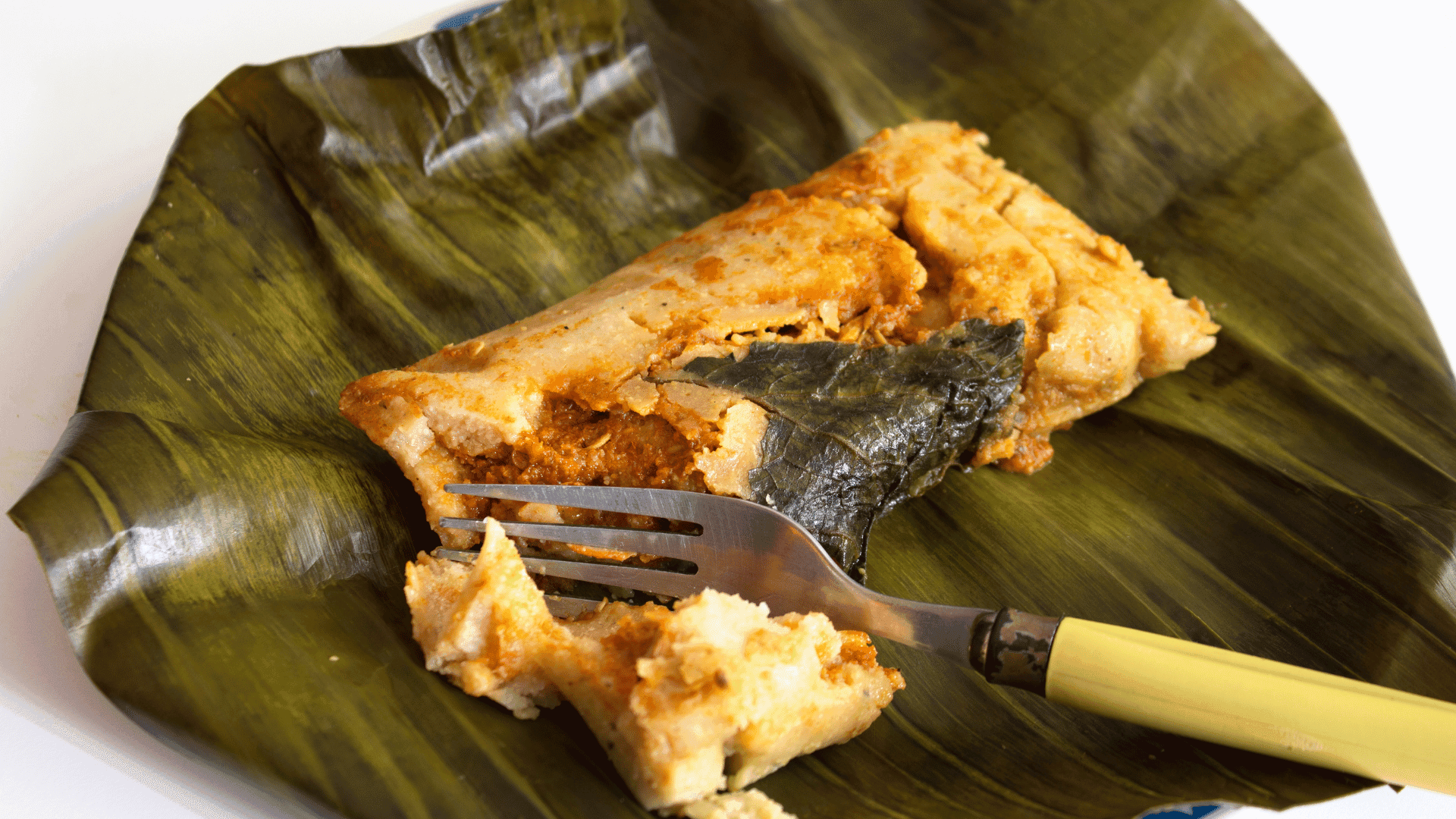
Chaya, the Maya tree spinach, mixed into the masa; ground squash seed (sikil) and hard-boiled egg go in as the filling. Steamed in banana leaf, green all the way through. This is the tamal to cook if you want to taste the Maya larder rather than the Spanish one.
Sikil Pak: pumpkin-seed dip
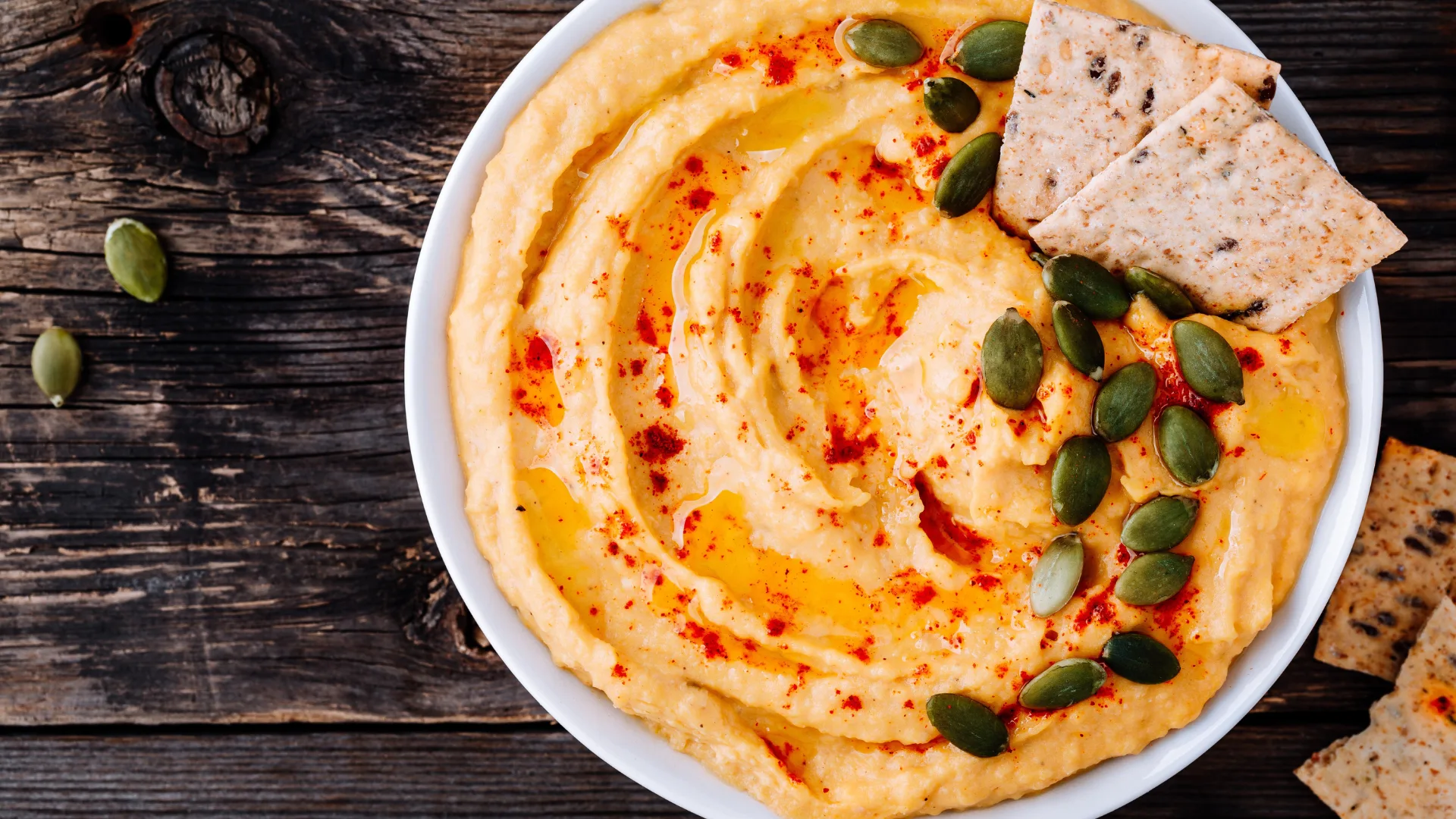
Toasted pumpkin seeds ground with charred tomato, sour orange, and habanero into a dip you eat with tortilla. Also good as a spread on sandwiches or a topping for grilled meats.
Ts’anchak: the Maya chaya soup
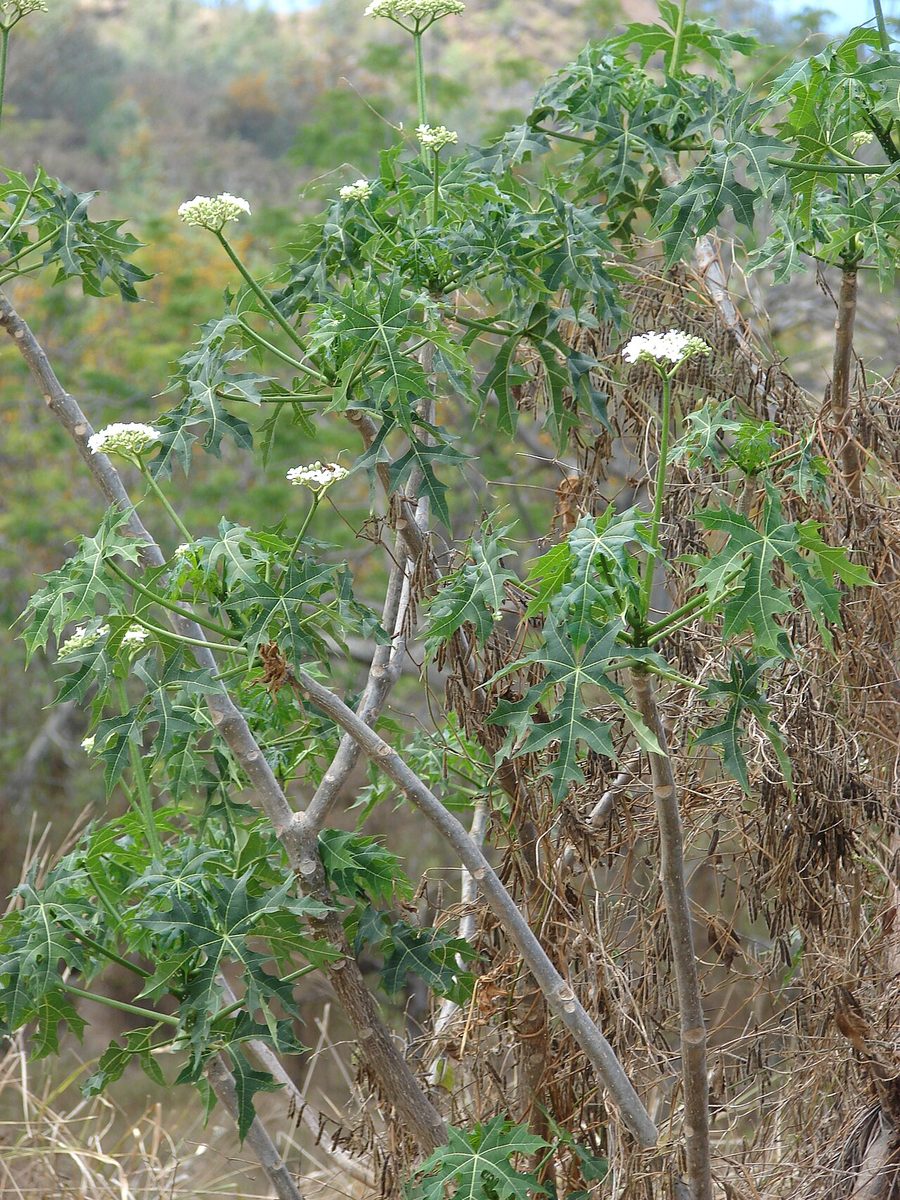
A clear white broth with chaya, pepita, egg, and charred chile. Chaya grows in every Yucatec yard, and it carries more iron and more vitamin than the spinach you buy in a bag. Yucatec Maya home cooking, the plain way to eat it.
Caldo Cax: the Maya chicken caldo
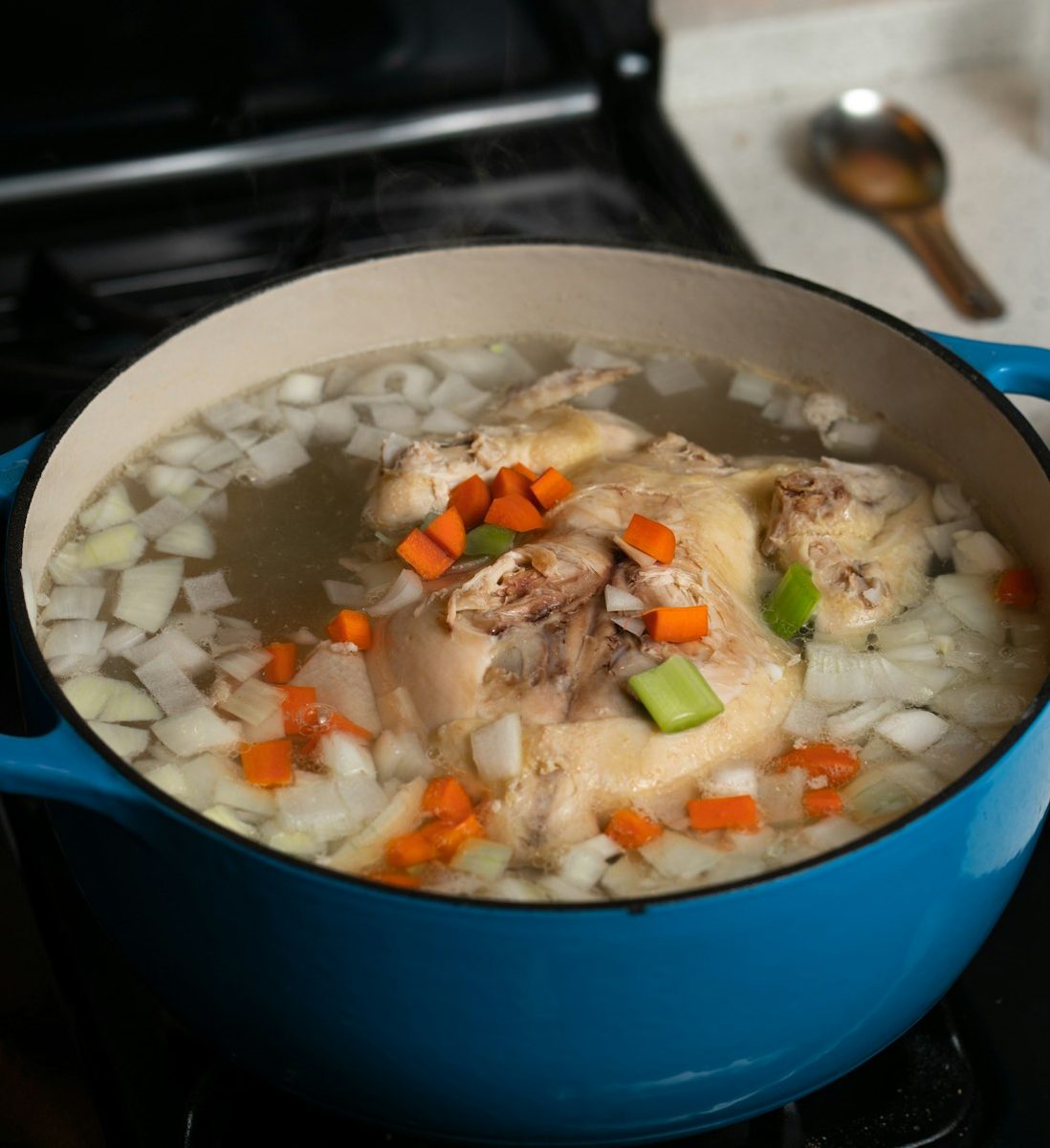
A hen simmered with achiote, squash, and plantain, served with white rice, lime, avocado, cilantro, charred habanero, and tostadas. An everyday pot and a special one both.
Dzic de Venado: shredded venison salad
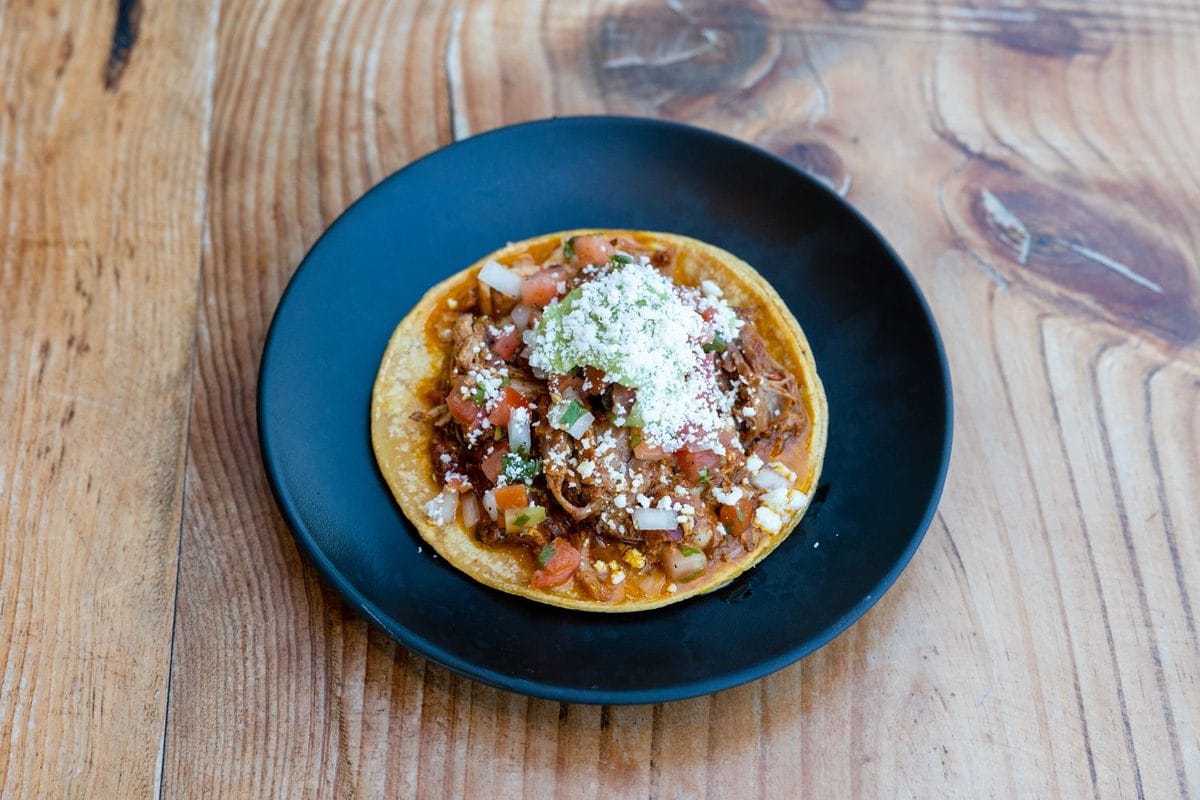
Venison cooked, shredded, and dressed cold with sour orange, radish, and cilantro. One of the oldest Maya dishes of the peninsula, and a reminder that this was a hunting cuisine long before it was a pork one.
Pirix P’aak: eggs with tomato and chile
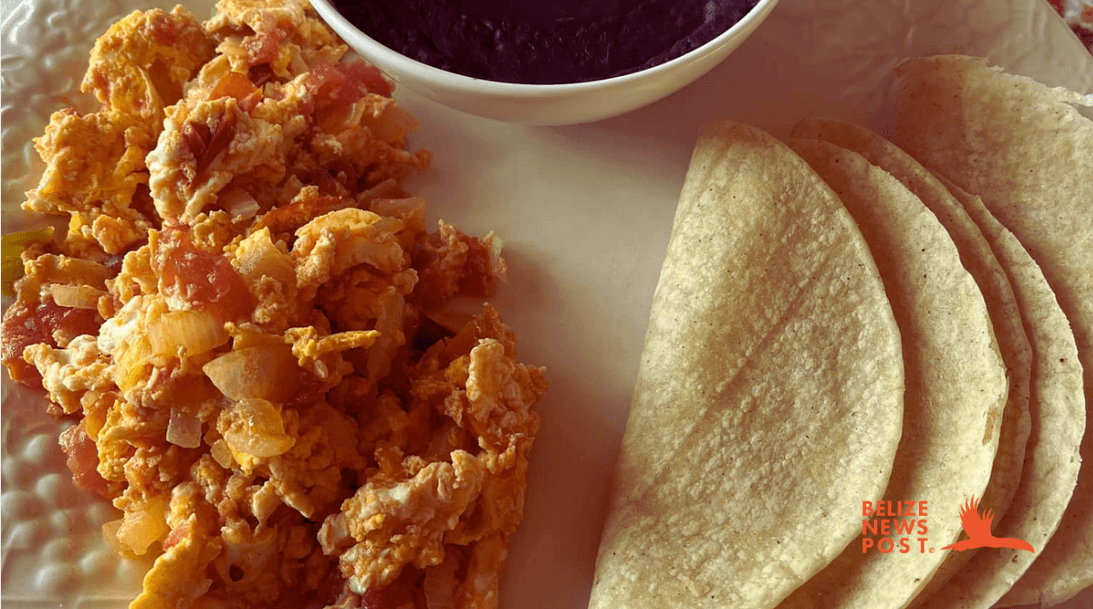
Eggs scrambled through tomato and pepper, eaten at breakfast with tortillas. Plain, fast, and the sort of thing nobody writes down, which is precisely why it is worth writing down.
Eggs with Chaya: the Maya green breakfast
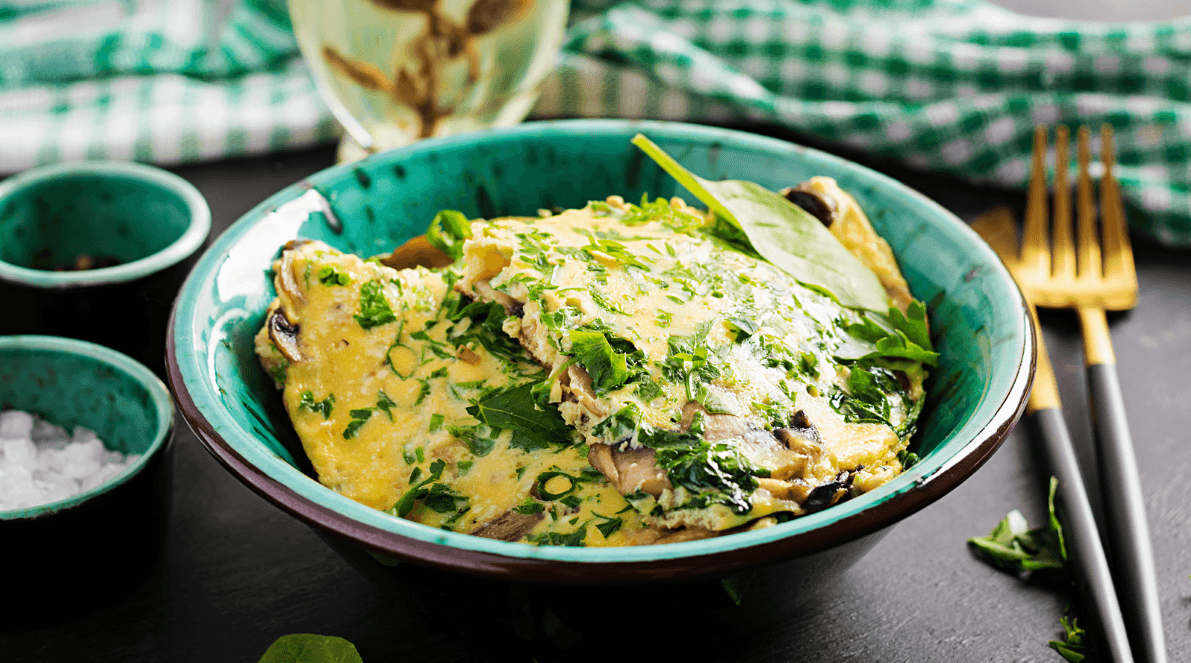
Chaya must be cooked before it is eaten, never raw, and then it is folded through eggs. Spinach will substitute if you cannot get it, though it is not the same thing.
Marquesitas: the crisp rolled street dessert
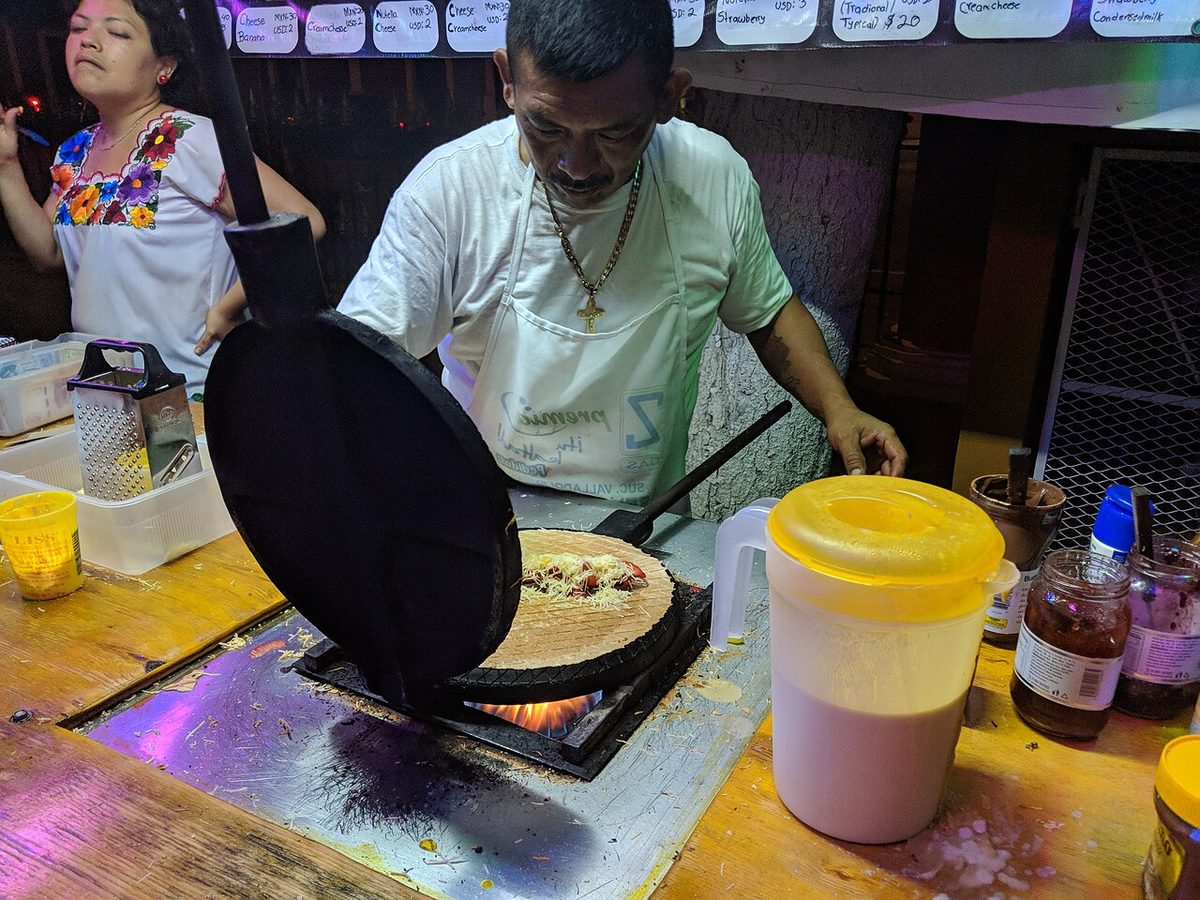
A thin crepe pressed on a round iron until it snaps, then rolled hot around Edam cheese and Nutella or cajeta. Salty and sweet at once. Created in Mérida in 1937 by Vicente Mena Muñoz, known as Polito, who had taken over his father’s ice cream business and needed something to sell in the cool months. The carts come out at night.
Mayan Atole: the ancient corn drink
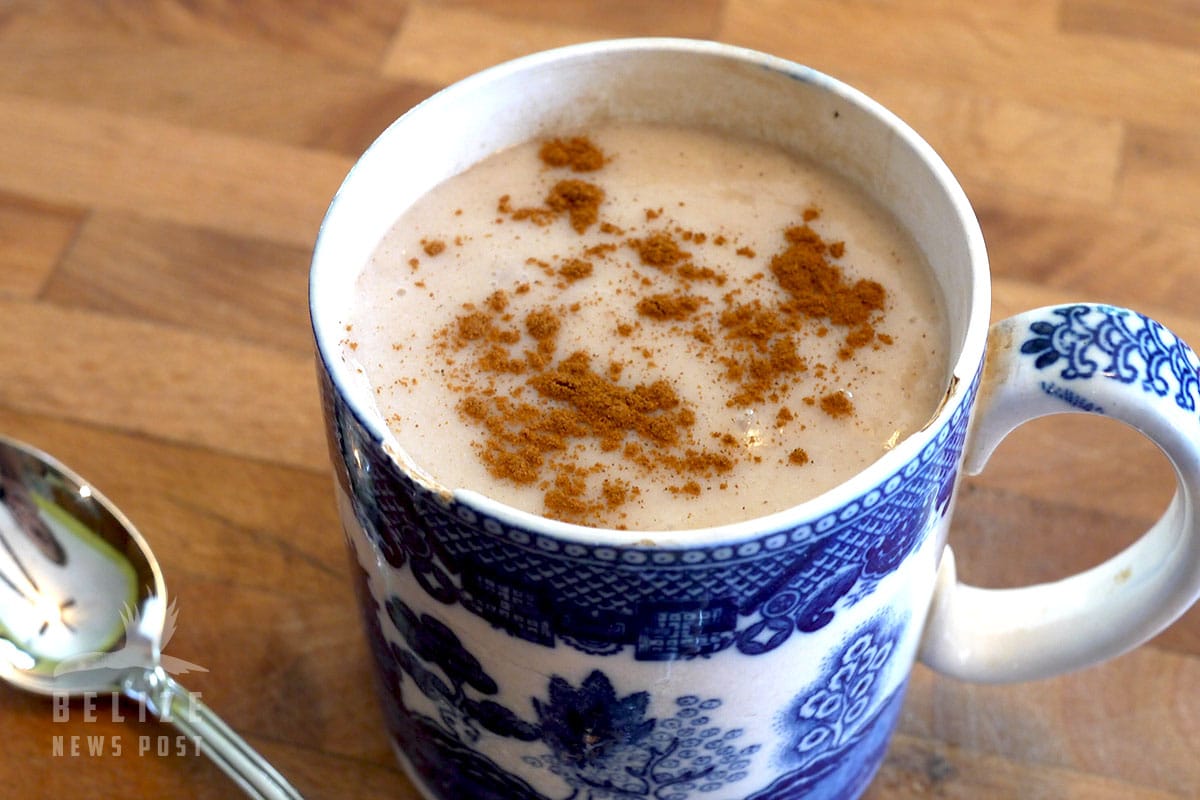
Corn masa cooked into a warm drink, made across Mexico, Guatemala, Belize, and Honduras for thousands of years, long before the Spanish arrived. Most popular in the cooler months and through tamale season.
The recados: the paste that carries everything
Almost every dish above starts with a recado, the ground paste of achiote, spice, and chile that colors and carries the meat. Red for cochinita and tikin xic, black for relleno negro. It is the same craft we keep alive in Belize, and it is the single most useful thing to learn from this kitchen.
- Mayan recado blanco, the white recado.
- Red recado, the achiote paste behind cochinita pibil.
- Black recado, the burnt-chile paste behind relleno negro.
- The whole Maya recipe collection is built on them.
The corridor: eating across the border
The Yucatán and northern Belize are one food region. The panuchos in a Corozal market come from the same tradition as the ones in Mérida, and the trip between them is short. If you are traveling it, see how to get from Cancún to Belize and the Chetumal border crossing. The Yucatecan food you eat in Mexico does not stop at the line.
Frequently asked questions
What food is the Yucatán known for?
Cochinita pibil, panuchos and salbutes, poc chuc, papadzules, sopa de lima, queso relleno, and the red and black recados, all built on corn, achiote, and sour orange. It is the Maya kitchen of southern Mexico.
Is Yucatecan food the same as Belizean food?
In northern Belize, largely yes. The Yucatec Maya kitchen spans the Yucatán Peninsula and northern Belize, so panuchos, salbutes, recados, and cochinita pibil belong to both. The Yucatec Maya are one people across the border.
Is Yucatecan food like the rest of Mexican food?
It is distinct. The Yucatán leans on achiote, sour orange, banana-leaf pit cooking, and its own recados rather than the dried-chile sauces of central Mexico. It is a regional Maya cuisine of its own.
What is the difference between a panucho and a salbute?
The difference is the order of cooking. A panucho is puffed dry on the comal first, then split, stuffed with refried black beans, and fried: two steps. A salbute goes straight into the oil raw: one step, no bean. Both come out crisp. The toppings differ by cook.