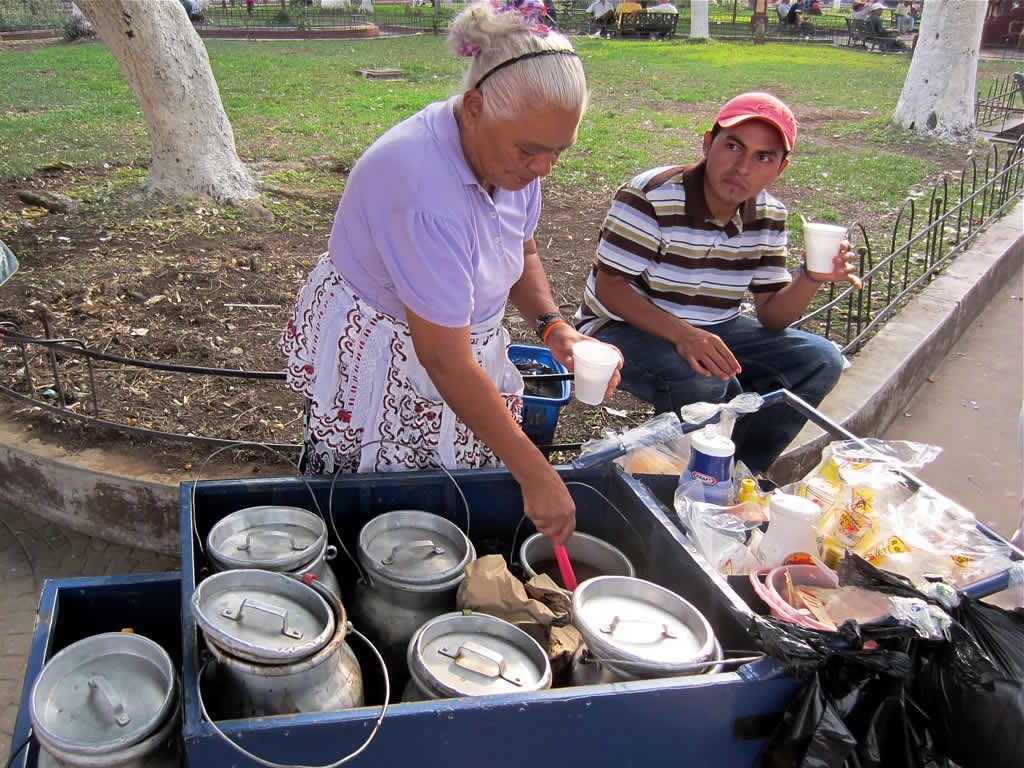
In El Salvador, “atol” is not one drink. It is a whole family of hot and cold drinks, most of them built on corn, and a few of them not corn at all. If you have seen a warm cup handed across a market stall and heard someone call it atol, chilate, or horchata, you were looking at cousins, not the same drink. This guide sorts the five you are most likely to meet, tells you the one thing that separates each from the rest, and points you to the full recipe for each.
The short answer: atol is the general word (from the Nawat ātōlli) for a warm, thickened corn drink. Under that umbrella, atol shuco is fermented and savory, chilate is unsweetened and spiced, and atol de elote is fresh sweet corn. Two more drinks share the family table but skip corn entirely: atol de semilla de marañón is made from cashew seed, and horchata de morro from the seed of the morro tree. Learn which is which by base and by temperature, and the whole family clicks into place.
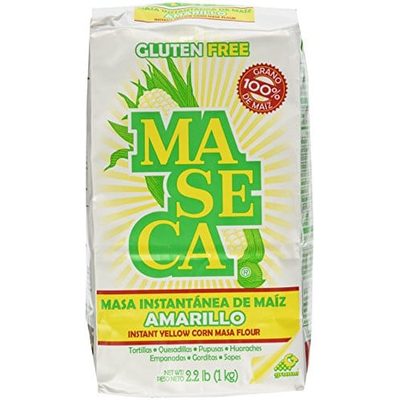
Maseca brand yellow corn masa harina, pre-ground and treated for immediate use in dough for tortillas, tamales, and other corn dough applications.
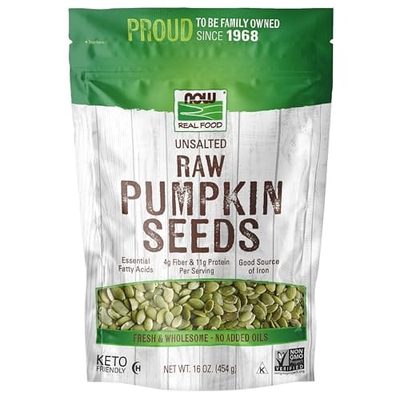
Pumpkin seeds (pepitas) that can be toasted as a garnish or ground into a paste to thicken and enrich sauces and stews.
The five at a glance
Read the table by the last column. That is the one-line tell that keeps each drink in its own lane, so you never confuse two of them again.
| Drink | Base | Sweet or savory | Hot or cold | The one-line tell |
|---|---|---|---|---|
| Atol shuco | Fermented dark corn (maíz negrito) | Savory, sour | Hot, thick | The fermented one, served in a gourd with beans, alguashte, and chile on top |
| Chilate | Toasted corn masa | Unsweetened | Hot, thick | The plain one: no sugar, spiced with ginger and allspice |
| Atol de elote | Fresh tender corn (elote) | Sweet | Hot, creamy | The fresh sweet-corn one, made with milk and cinnamon |
| Atol de semilla de marañón | Cashew kernel | Sweet | Hot, thick | Not corn at all: made from cashew seed |
| Horchata de morro | Toasted morro (jícaro) seed | Sweet | Cold | The cold one, and not corn either: it is built on toasted morro seed, not on rice alone the way Mexican horchata is |
What “atol” actually means
Atol is a corn drink, and it is old. The word comes from Nawat, the language of the Pipil people of central and western El Salvador, and versions of it run up and down Mesoamerica under names like atole and atol. At its simplest, atol is ground corn cooked with water until it thickens into something between a drink and a thin porridge. You drink it warm, usually from a cup you hold with both hands.
What throws people is that El Salvador uses “atol” loosely. A drink can carry the name whether it is sweet or savory, and in a couple of cases whether it contains corn at all. That is why a table helps more than a single definition. The family is real, but you sort it by base ingredient and temperature, not by the word on the sign.
Atol is the family name. The base ingredient and the temperature tell you which cousin you are drinking.
This is a corridor drink, not only a Salvadoran one. The same family of warm corn drinks runs across the Yucatán, Belize, Guatemala, and Honduras, which is why we cover it here. El Salvador is where this particular set of five comes together most clearly, so that is our home base for the comparison. Once you know the Salvadoran five, the versions you meet elsewhere in the region read easily.
The three corn drinks, and how they split
Three of the five are genuinely corn-based, and each takes the corn to a different place. If you can hold these three apart, you have the core of the family.
Atol shuco: the fermented, savory one
Atol shuco is the outlier that surprises people, because it is not sweet. “Shuco” means dirty or sour, and the name is honest. It starts from dark corn, often a purple or black landrace, and the corn base is allowed to ferment for a couple of days before cooking. That gives it a sour, slightly funky depth closer to a soured broth than a dessert drink.
The way it is served is its own signature. Atol shuco arrives hot in a guacal, a bowl made from the dried shell of the morro fruit, topped with a spoonful of cooked black beans, a dusting of alguashte (ground toasted pepita), and a little chile. That garnish is the tell. No other drink in this family comes with beans on top. It carries the strongest unbroken pre-Columbian case of the group, and it is genuinely shared across Pipil, Lenca, and Maya-Ch’orti’ communities, so it is not the property of any single one.
Chilate: the unsweetened, spiced one
Chilate is hot, thick, and, like atol shuco, not sweet, but it gets there a different way. It is made from nixtamalized corn masa with no fermentation and no sugar, spiced with ginger and allspice (pimienta gorda). The result is a warm, spiced corn drink that leans on aromatics rather than sweetness. In El Salvador you often meet it beside nuégados, the fried cassava fritters bathed in panela syrup, so the plain drink and the sweet fritter balance each other.
One important warning. Salvadoran chilate is not the Mexican chilate you may have read about. The Mexican version, from Guerrero, is a cold drink built on cacao and rice. They share a name and almost nothing else. Canonical Salvadoran chilate has no cacao, and the ginger in it is a post-contact addition, not an ancient ingredient. If a recipe hands you cacao and calls it Salvadoran chilate, it has crossed the wires with the Mexican drink.
Atol de elote: the fresh sweet-corn one
Atol de elote is the one most people picture when they hear “atol.” It is made from fresh, tender corn (elote) rather than dried corn or masa, cooked with milk and cinnamon into something creamy and sweet. It is a seasonal drink that shows up when the young corn is in, and across the corridor it is often framed as a Honduran favorite as much as a Salvadoran one. We keep it in the family here because it drinks like the sweet, milky counterpoint to chilate: same warm corn base, opposite end of the sweetness scale.
The two that are not corn at all
Here is where most confusion starts. Two members of this family carry the atol-and-horchata language but contain no corn. Both are seed drinks, and both are worth knowing precisely because their names mislead.
Atol de semilla de marañón: cashew seed
Atol de semilla de marañón is made from the cashew kernel, the seed that hangs off the bottom of the marañón (cashew apple). It is hot, thick, sweet, and usually made with milk and cinnamon, which puts it close to atol de elote in the cup. But it is the only atol in the everyday Salvadoran lineup with no maize in it at all. Because the cashew is a colonial-era introduction, this is a younger drink than the corn atoles, and it has a documented stronghold around Zacatecoluca in La Paz. If someone tells you every atol is a corn drink, this is the one that proves them wrong.
Horchata de morro: morro seed, and cold
Horchata de morro is the odd one out on two counts: it is served cold, and it is not corn or rice. Salvadoran horchata is built on the toasted seed of the morro tree (jícaro), ground with other seeds and spices into a powder that gets reconstituted with water and milk. If you know Mexican horchata as a rice drink, reset that expectation at the border. In El Salvador, horchata means morro seed first.
The morro tree is what quietly binds this whole family together. Its seed becomes horchata. Its dried, hollowed fruit becomes the guacal, the gourd bowl that atol shuco is traditionally served in. One tree, two ends of the family.
Two of the five are seed drinks wearing corn-drink names. Read the base ingredient, not the label.
How to tell them apart in one move
If you only remember one thing per drink, remember these.
- Beans and chile on top, sour taste: atol shuco.
- Hot, thick, no sugar, tastes of ginger: chilate.
- Sweet, creamy, made from fresh corn: atol de elote.
- Sweet and thick but no corn, made from cashew: atol de semilla de marañón.
- Served cold, no corn or rice, made from morro seed: horchata de morro.
Frequently asked questions
What is atol?
Atol is a warm, thickened drink from Mesoamerica, traditionally made from ground corn cooked with water until it reaches a drinkable, slightly porridge-like consistency. The word comes from the Nawat ātōlli. In El Salvador the term is used broadly, covering sweet, savory, and unsweetened versions, and a few drinks called atol are made from seeds rather than corn.
What is the difference between atol shuco and chilate?
Both are hot, thick, and not sweet, but atol shuco is fermented and chilate is not. Atol shuco uses dark corn soured over a couple of days and is served in a gourd bowl topped with black beans, alguashte, and chile. Chilate is made from toasted corn masa with no fermentation, spiced with ginger and allspice, and served plain.
Is atol de semilla de marañón made from corn?
No. Despite carrying the atol name, atol de semilla de marañón is made from cashew seed, not maize. It is the only atol in the everyday Salvadoran lineup with no corn in it, and because cashew arrived in the colonial era, it is a younger drink than the corn atoles.
Which Salvadoran corn drink is fermented?
Atol shuco is the fermented one. Its dark-corn base is soured for roughly two to three days before cooking, which gives it a savory, tangy character unlike the sweet or plain members of the family.
Is Salvadoran chilate the same as Mexican chilate?
No. They share a name only. Salvadoran chilate is a hot, unsweetened corn drink spiced with ginger and allspice, with no cacao. Mexican chilate, from Guerrero, is a cold drink built on cacao and rice. Treat them as separate drinks that happen to be near-cognates.
Which of these drinks is served cold?
Horchata de morro is the cold one. The other four are served hot. Horchata de morro is also one of the two that contain no corn, since it is built on toasted morro (jícaro) seed rather than corn or rice.
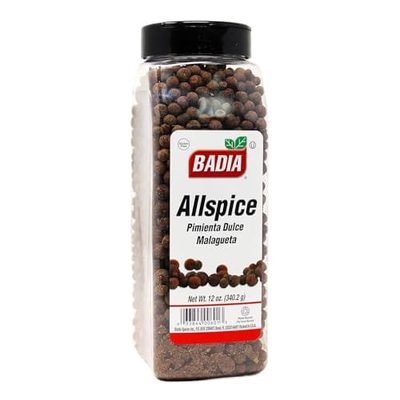
Whole allspice berries you grind fresh; the warm, complex spice flavor is strongest when ground right before use, unlike pre-ground powder.
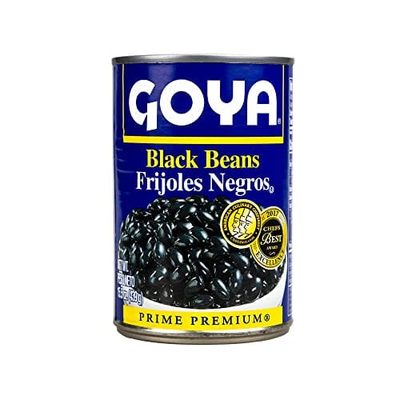
Goya Premium Black Beans, 15.5 oz
Premium black beans in a convenient 15.5 oz can, ready to heat and incorporate into any recipe calling for cooked beans.
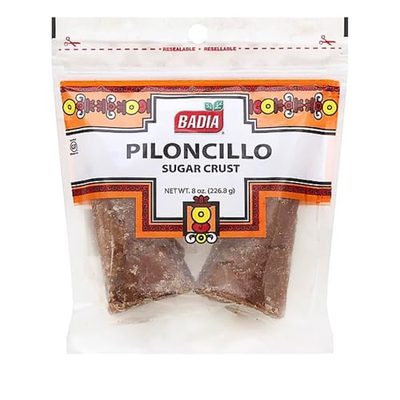
Unrefined cane sugar in cone form, the panela these syrups and sweets are built on.