Empanadas de platano are a traditional Salvadoran sweet made from mashed ripe plantain dough wrapped around a creamy milk custard filling, sealed, fried until golden, and rolled in sugar. Known also as empanadas de leche, they are a breakfast and afternoon snack across El Salvador.
What are empanadas de platano?
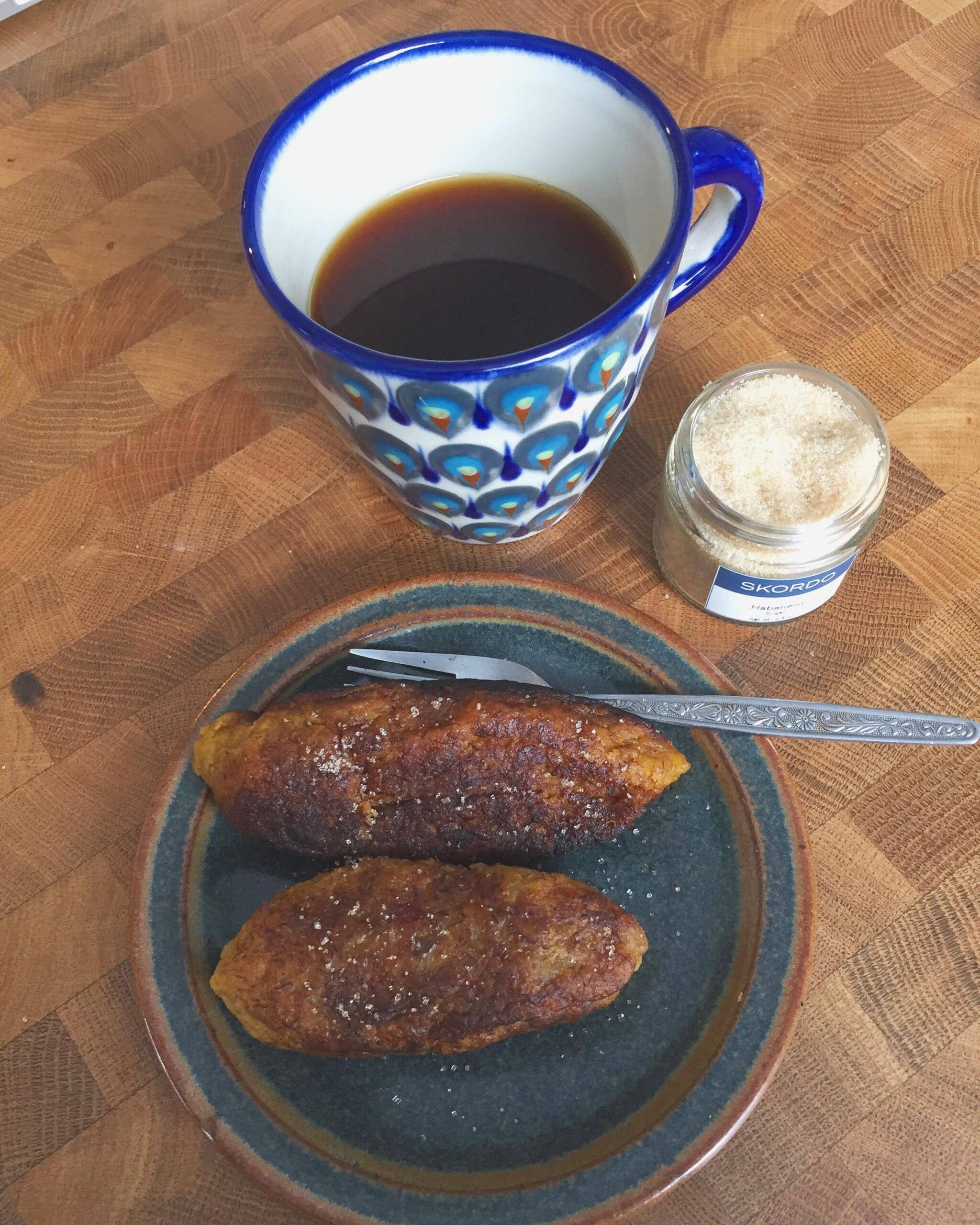
Empanadas de plátano are torpedo-shaped Salvadoran pastries made from very ripe plantain dough, filled with leche poleada (a thick sweet milk custard), fried, and rolled in white sugar. They are a sweet food, not savory. They are distinct from South American flour-dough empanadas and from Salvadoran pastelitos, which are savory. The plantain dough is the defining element.

1400S Spices Ceylon Cinnamon Sticks from Sri Lanka, 1lb (Canela Entera)
Ceylon cinnamon is sweeter and milder than cassia — the right choice for atole, conkies, and sweet drinks. These are whole dried sticks from Sri Lanka.
Maizena Corn Starch, 14.10 Ounces (14.1 Ounce (Pack of 3))
Cornstarch is what Belizean cooks reach for to thicken the meat pie filling.
Why El Salvador makes empanadas from plantains, not pastry
Long before I made my first batch in my own kitchen, I encountered these at a market stall in Guatemala on a trip through the corridor. The woman selling them had a rhythm to the whole operation: pressing the dough flat with damp hands, folding each one shut, dropping them into a low, steady oil. I bought two and ate them standing at the edge of the market. The outside was firm and sweet; the inside was a white custard that tasted faintly of cinnamon. The dough was not pastry. It was plantain, faintly sweet and slightly dense, nothing like flour.
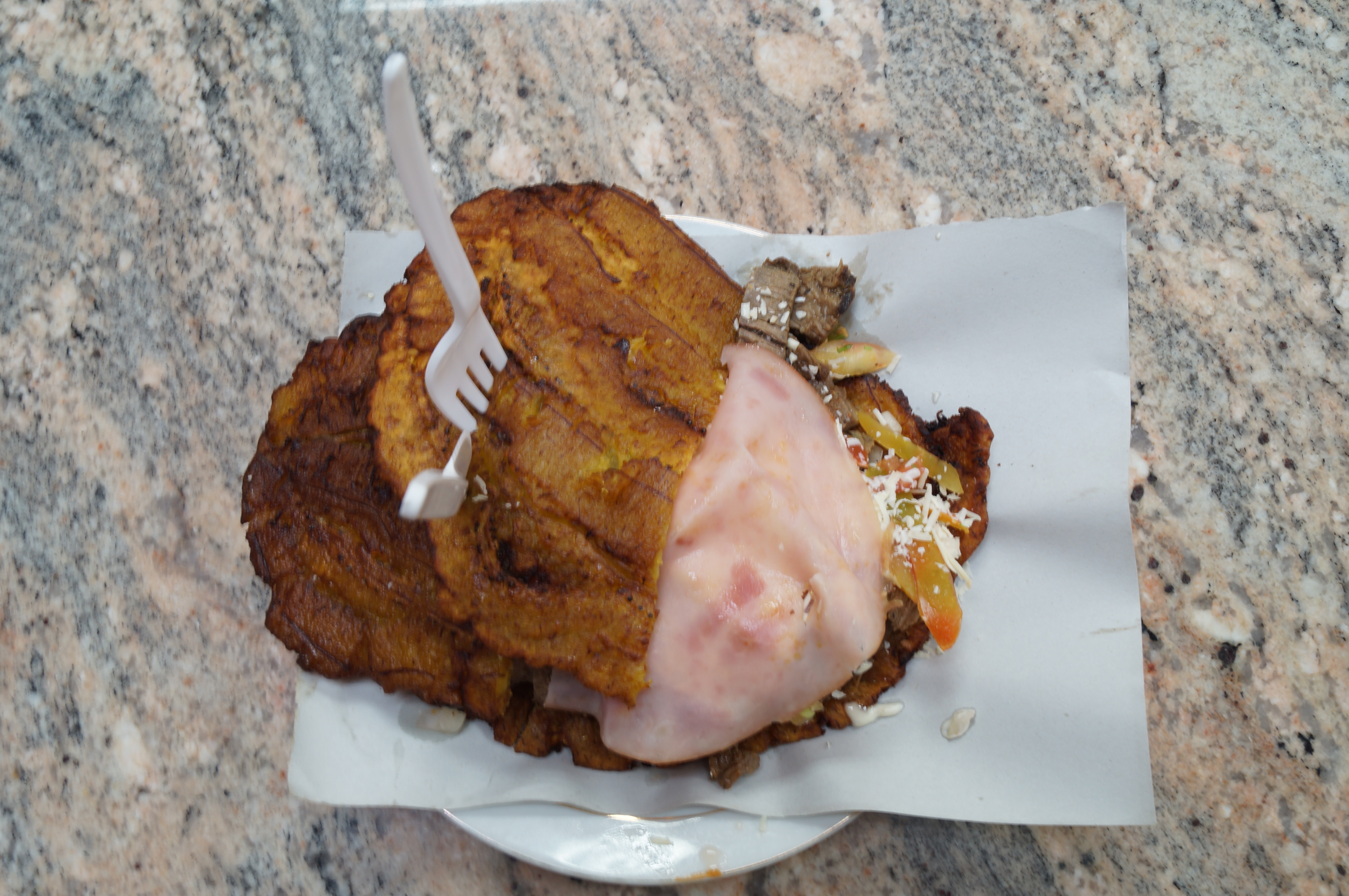
That combination is exactly the point. When Spanish empanada form arrived in Mesoamerica through colonial exchange, plantains, introduced to the Americas through Spanish trade networks by the early 1500s, were already becoming a dietary staple. What Salvadoran cooks did was splice the two: the folded, filled, fried shape of the Spanish empanada and the sweetness that ripe plantains carry on their own. No added flour, no lard-based pastry. The dough gets its structure from the starches in the fruit.
The dough gets its structure from the starches in the fruit — no flour, no lard-based pastry.
The result has been part of the Salvadoran food calendar for generations. Recetassalvador.com records that older women traditionally prepared and sold freshly made empanadas de plátano on street corners and in markets. It was never a special-occasion dish. It is a breakfast food or afternoon merienda, paired with coffee in the traditional way. The stalls that sell curtido and pastelitos often have these nearby. The everyday sweet of Salvadoran street food.
Unlike plátanos fritos con crema — the open, caramelized slices served with crema salvadoreña and bean puree that anchor the Salvadoran breakfast plate — empanadas de plátano are sealed, formed, and finished in sugar, a different dish entirely.
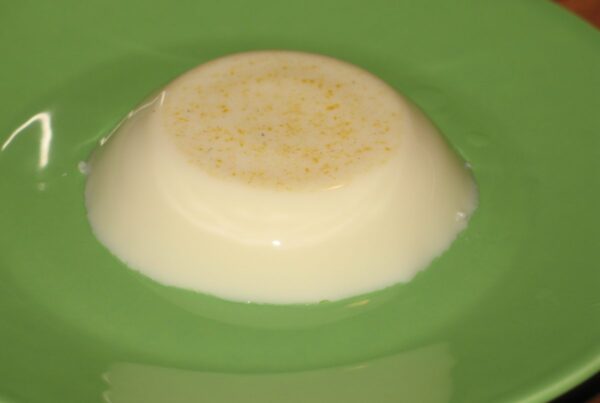
The leche poleada filling, also called manjar de leche in some households, is a separate preparation: milk thickened with cornstarch, sweetened with sugar, scented with vanilla and cinnamon. It is thickened to a stable custard consistency that holds its shape inside the dough during frying. This distinction matters. If the filling is warm when you fold the empanada, it will melt the dough from the inside and break the seal during frying. The custard must be fully chilled before assembly.
I know this dish from travel, not from my kitchen growing up. El Salvador is Salvadoran food. But I have made these enough times since that first market encounter to know the recipe well. The technique is worth learning precisely because the margin is thin: wrong ripeness in the plantain, filling too warm, oil too hot, and the whole thing falls apart.
Ingredients
For the plantain dough (makes approximately 12 to 14 empanadas)
- 4 large ripe plantains (yellow skin with heavy black spots, not green, not fully black and mushy)
- 4 cups water
- 3 cinnamon sticks
- 2 tablespoons sugar
- Neutral oil for frying (canola or vegetable)
- 1/4 cup white sugar for rolling
For the leche poleada (milk custard filling)
- 1 cup whole milk
- 1/2 teaspoon vanilla extract
- 3 tablespoons sugar
- 3 tablespoons cornstarch (or rice flour)
- 1/4 cup cold milk (for slurry)
- 1 cinnamon stick
Note on plantain ripeness: The sweet spot is heavy black spotting on yellow skin. Plantains that are too ripe (completely black and mushy throughout) will make a wet dough that is hard to shape. Add a tablespoon of cornstarch to the mashed plantain if this happens. Plantains that are still mostly yellow without spots will not have enough sweetness in the dough.
Instructions
- Make the leche poleada first. Pour 3/4 cup of the milk into a small saucepan with the cinnamon stick. Heat over medium heat until it begins to steam. Do not bring to a full boil.
- In a separate bowl, whisk the remaining 1/4 cup cold milk with the cornstarch until fully dissolved with no lumps remaining.
- Add the cornstarch slurry slowly to the hot milk, stirring constantly. Add the sugar and vanilla extract.
- Continue stirring over medium heat until the mixture thickens to a pudding consistency, thick enough to hold a trail when you drag the spoon across the bottom of the pan. Remove the cinnamon stick. Transfer to a shallow container and refrigerate for at least 30 minutes until completely cold. This step is not optional.
- Cut the tips off each plantain. Cut into 3-inch sections without peeling. Place in a pot with 4 cups water, the cinnamon sticks, and 2 tablespoons sugar. Bring to a boil and cook for 20 to 25 minutes until the peel edges begin to pull away.
- Drain and cool slightly until you can handle them. Peel the sections and remove the thin center seed row. Mash to a smooth paste using a potato masher or fork. The paste should hold together without sticking to your hands.
- Oil or dampen your hands. Take a golf-ball-sized portion of plantain dough. Flatten it into a thin round about 3 inches across.
- Place 1 tablespoon of the chilled leche poleada in the center. Fold the dough over the filling and press the edges firmly to seal. If any filling shows through, press a small piece of extra dough over the gap. The seal must be complete. Custard that leaks into the oil during frying will splatter.
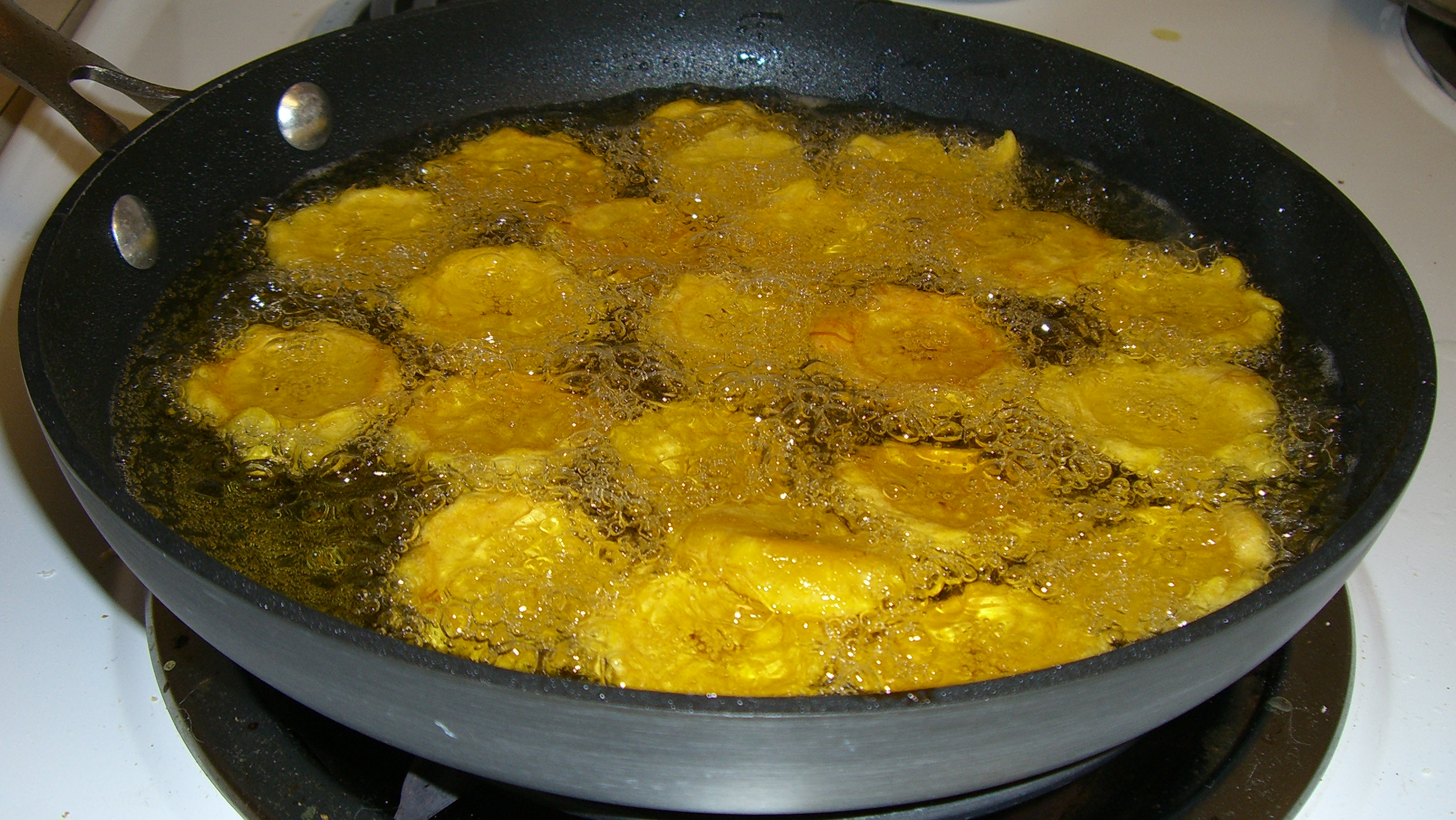
- Heat neutral oil to medium heat in a heavy pan, with enough oil to come halfway up the empanadas (about 1 to 1.5 inches of oil in the pan). Fry 3 to 4 minutes per side until deep golden brown. Work in batches to avoid crowding.
- Drain on paper towels briefly. While still warm, roll each empanada in the 1/4 cup white sugar. Serve immediately.
Timing: Leche poleada prep is 15 minutes active, then 30 minutes chilling. Plantain prep is 25 minutes cooking, 10 minutes mashing. Assembly and frying is 20 minutes. Total: approximately 1 hour 20 minutes.
What can go wrong (and how to fix it)
Plantains that are fully black and mushy will not hold a clean dough. Add 1 tablespoon of cornstarch to the mashed plantain before shaping. Plantains that are still mostly yellow and firm will not be sweet enough. Wait another day or two.
Never fill the empanadas with warm leche poleada. The custard expands when it heats during frying. Warm filling melts the dough from the inside and breaks the seal. Chilled filling holds.
A warm filling melts the dough from the inside and breaks the seal.
Go over every empanada before it goes in the oil. Any visible gap will let the custard leak. A custard leak in hot oil means splattering.
Refried beans (frijoles refritos) are an equally traditional filling. The flavor is less sweet and the technique is identical. This is a genuine alternative, not a compromise.
Empanadas de plátano keep in the refrigerator for up to 3 days. Reheat in a 375°F oven for 10 minutes. The microwave turns them soft and the sugar crust will not survive it.
Frequently asked questions
What are empanadas de platano made of?
Empanadas de platano are made from two components: a dough of mashed boiled ripe plantains, and a filling of leche poleada (a thick sweet milk custard made from whole milk, cornstarch, sugar, vanilla, and cinnamon). The formed dumplings are fried in neutral oil and rolled in white sugar while still warm. Some households use refried beans as an alternative filling.
Are empanadas de platano the same as South American empanadas?
No. South American empanadas use a flour-based pastry dough and are typically filled with savory ingredients like seasoned beef, chicken, or cheese. Empanadas de plátano use a dough made entirely from mashed ripe plantains, and the traditional filling is a sweet milk custard. They belong to a different food tradition, though the folded-and-fried shape has the same Spanish colonial origin.
Can I use refried beans instead of the milk custard filling?
Yes. Refried beans (frijoles refritos) are a traditional alternative filling for empanadas de plátano in El Salvador. The dough and frying technique are identical. The result is less sweet and more savory, which some people prefer for breakfast alongside eggs or black beans.
How ripe should the plantains be for empanadas de platano?
The plantains should have yellow skin with heavy black spots. Plantains that are completely black and mushy will make a wet dough; add 1 tablespoon of cornstarch to the mashed plantain if this happens. Plantains that are still mostly yellow and firm will not be sweet enough for the dough to work correctly.
Can empanadas de platano be baked instead of fried?
Yes, with modifications. Brush formed empanadas with egg wash and bake at 375°F (190°C) for approximately 20 minutes until golden. The result is drier than the fried version; the traditional sugar-rolled exterior will not form the same crust. Baking is valid for those avoiding fried food, but it is not the traditional preparation.
How are empanadas de plátano different from plátanos fritos con crema?
Empanadas de plátano are sealed, formed pastries: mashed plantain dough wrapped around a milk custard filling, fried until crisp, and rolled in sugar. Plátanos fritos con crema are open pan-fried plantain slices, caramelized and served with crema salvadoreña and pureed beans alongside. Both use ripe plantain, but the dish format, filling, and finish are completely different.