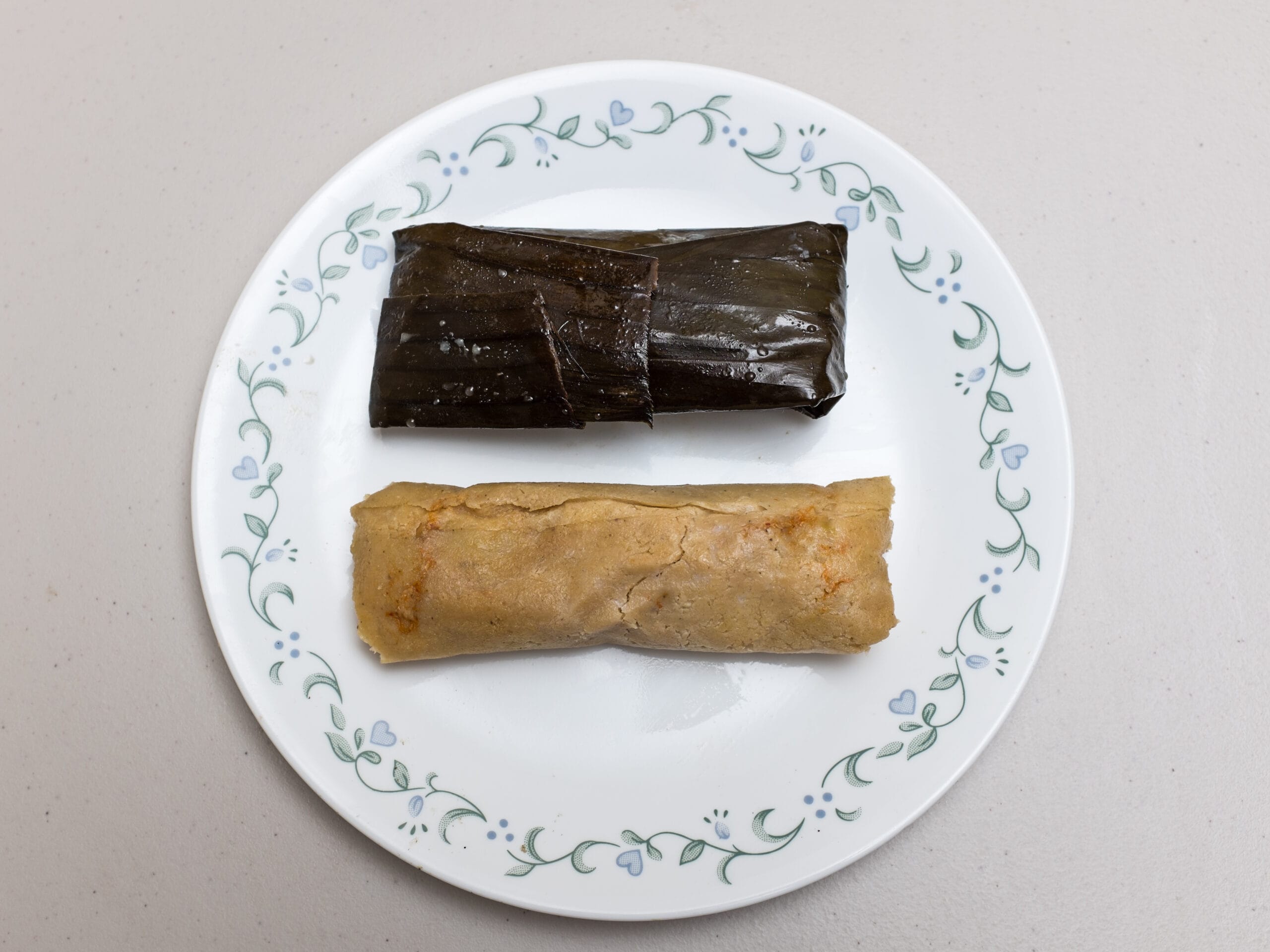
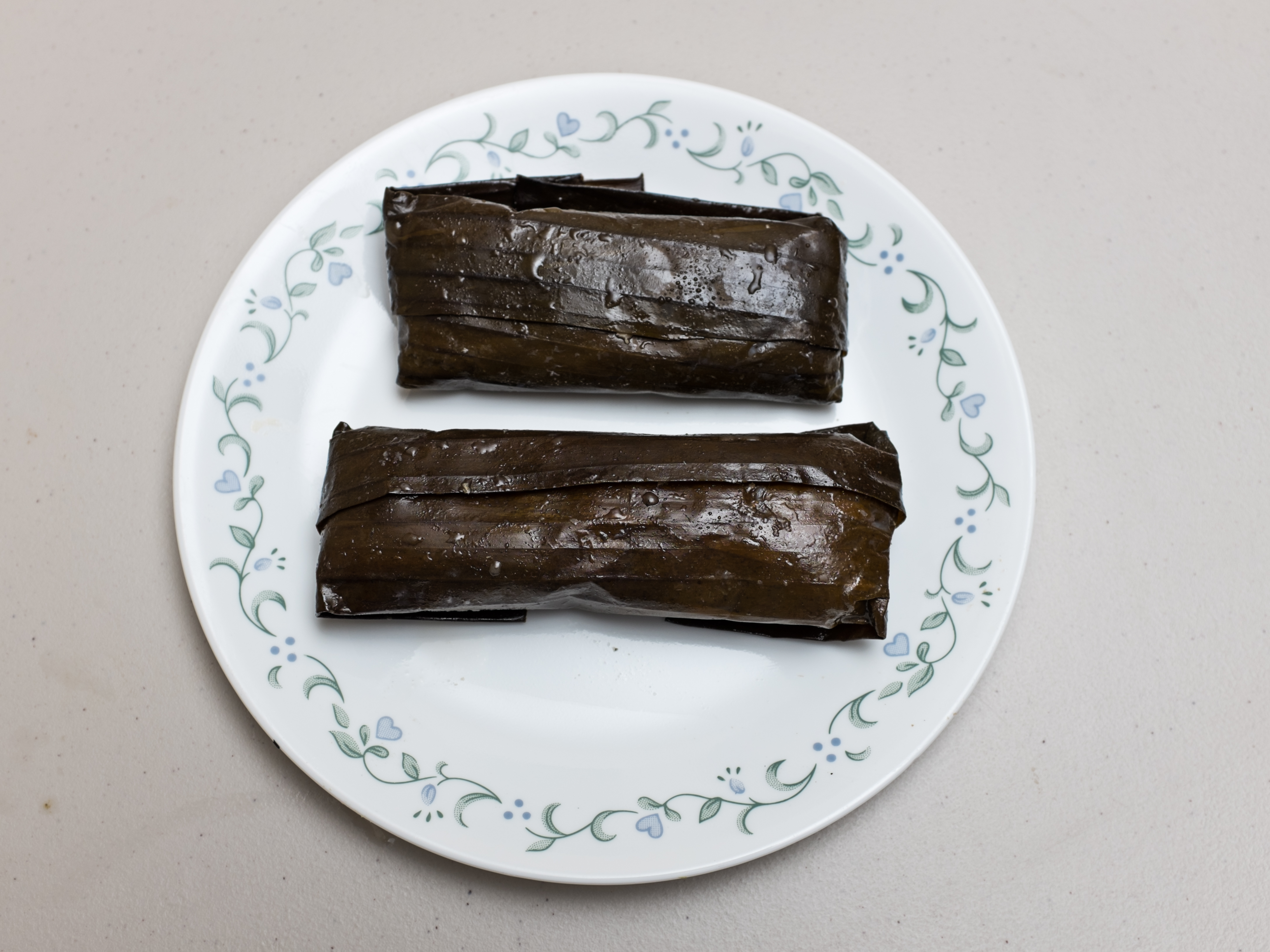
Tamales pisques are Salvadoran bean-masa tamales — corn dough worked with refried frijoles, wrapped in banana or plantain leaves, and steamed until firm. Meatless by design, they are the tamal of Lent and Holy Week across El Salvador, eaten warm with Salvadoran crema and queso duro. The bean-in-masa preparation sets them apart from meat-filled regional tamales.
What makes tamales pisques the tamal of Lent in El Salvador
The name says exactly what it is. “Pisque” comes from the Pipil-Nawat phrase pisqui tamal, meaning bean tamale. The Pipil people of El Salvador, whose indigenous heritage is Nawat and not Maya, carried these as portable sustenance on long journeys and during agricultural work. The bean version was the everyday form, the fasting form, the form you made when meat was unavailable or prohibited.
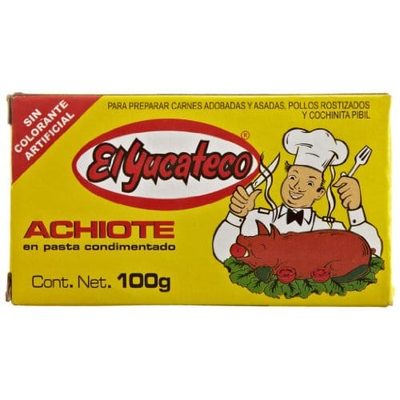
Cochinita pibil, poc chuc, and escabeche all start with red recado. A prepared achiote paste dissolves into sour orange in minutes instead of the hour it takes to grind annatto, oregano, and clove from seed.
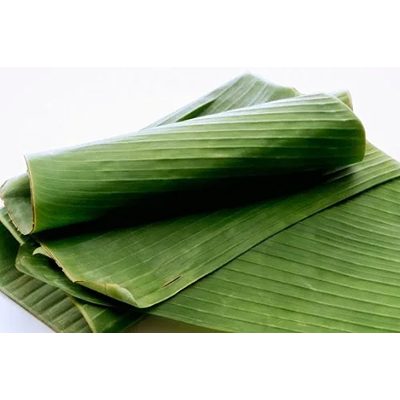
Frozen banana leaves for tamales, mukbil pollo, pibil, conkies, dukunu, and the Garifuna wrappers on hudut and bundiga — pass over a flame to make them pliable before wrapping; far easier than chasing fresh leaves outside the tropics.
Two theories compete for the deeper etymology. The first traces “pisque” directly to the Pipil word for the dish itself. The second links it to pizquitl, a Nahuatl word for a small amount, suggesting the bean filling was once a modest addition to plain masa. Some popular sources also connect it to nizquesado, the Salvadoran term for nixtamalization, the ashing process that treated corn before grinding. All three point toward the same origin: a tradition rooted in corn, beans, and the Pipil/mestizo culture of El Salvador.
The bean saturates every bite. Whether worked into the dough or layered as a paste at the center, no mouthful escapes it.
Corn and beans have been the twin staples of Mesoamerican diet for thousands of years. In El Salvador, the Pipil-Nawat tradition worked the bean not alongside the masa but into it. That is the defining move that separates tamales pisques from all other Central American bean tamales. El Salvador’s indigenous heritage runs through the Lenca and Pipil peoples, shaped further by Spanish colonial culture, as documented in the broader history of Salvadoran cuisine. The tamale culture that emerged is Pipil/mestizo, distinct from the Maya tamale traditions of Guatemala and the Yucatán.
During Cuaresma (Lent) and Semana Santa (Holy Week), El Salvador’s predominantly Catholic population observes no-meat Fridays, and often the restriction extends across the whole week. Tamales pisques fill this role: the fasting tamal, made in large batches at the start of Holy Week, sold from street carts, carried to work, eaten with black coffee in the early morning. They persist year-round for the same reasons they were originally made: portable, filling, cheap, and made from two things that are almost always on hand.
Ingredients
For the masa
- 500g (about 4 cups) masa harina (corn flour for tamales)
- 150ml (about ⅔ cup) vegetable oil or lard (manteca)
- 1–1½ cups warm chicken or vegetable broth (caldo de pollo o verduras)
- 1 packet (about 2 tsp) achiote seasoning (recado rojo or achiote paste), which gives the dough its characteristic reddish-orange color
- 1 tsp salt
For the bean filling (frijoles pisques)
- 500g (about 2½ cups) cooked red or black beans (frijoles rojos o negros)
- ½ medium white onion, finely diced
- 2 garlic cloves, minced
- 1 Roma tomato, diced
- 2 tbsp vegetable oil
- Salt and black pepper to taste
For assembly
- Banana or plantain leaves (hojas de plátano), cut into roughly 12-inch (30cm) squares, briefly passed over a flame or dipped in boiling water to make pliable
Optional additions
- A strip of queso duro (hard dry cheese) inside each tamal
- A handful of fresh chipilin leaves added to the masa
To serve
- Salvadoran crema (slightly sweet, thicker than Mexican crema)
- Queso duro (or queso fresco as a substitute), grated
- Black coffee
Makes 12 tamales.
Instructions
- Prepare the banana leaves. Pass each leaf briefly over an open flame or dip in boiling water for 10 seconds until glossy and pliable. Wipe clean with a cloth. Cut into 12-inch (30cm) squares. Set aside.
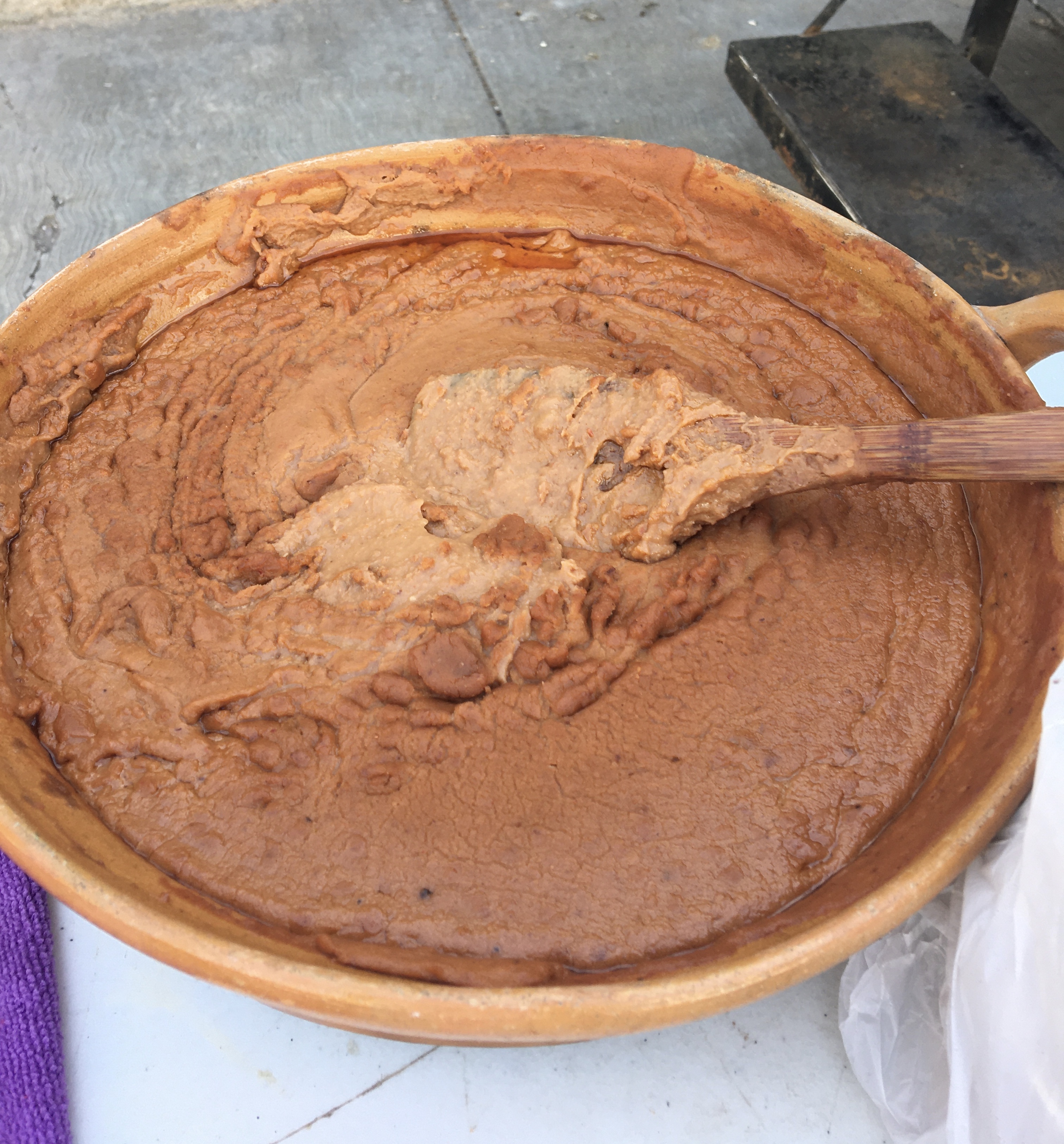
- Make the bean filling. Heat 2 tbsp oil in a skillet over medium heat. Add onion and garlic, cook 3 minutes until soft. Add tomato, cook 2 more minutes. Add the cooked beans with a splash of water. Mash or blend until a smooth, spreadable paste forms. It should hold its shape and not be runny. Season with salt and pepper. Allow to cool slightly before assembling.
- Make the masa. In a large bowl, combine masa harina, achiote, and salt. Add the oil (or softened lard) and work into the flour with your hands until crumbly. Gradually add warm broth, mixing until a soft, pliable dough forms. The dough should not stick to your hands. Taste for salt. If using chipilin, fold the leaves in now.
- Assemble. Place one banana leaf square smooth side up on a flat surface. Spread about 3 tablespoons of masa into a thin rectangle in the center, roughly 6×4 inches. Spoon 2 tablespoons of bean filling down the center. Add a small strip of queso duro if using. Fold the sides of the leaf over so the masa wraps around the filling, then fold the ends under to form a neat rectangle package.
- Steam. Place tamales seam-side down in a steamer basket or large pot with a rack, layered snugly. Add water to the pot below, making sure it does not touch the tamales. Bring to a boil, reduce to a steady simmer, cover tightly, and steam for 90 minutes. Check the water level at 45 minutes and add more if needed.
- Rest and serve. Remove from heat and rest 10 minutes before unwrapping. The tamales firm as they cool. Open one to check: the masa should pull cleanly from the leaf. Serve with Salvadoran crema, grated queso duro, and black coffee.
Why tamales pisques are the meatless tamal of Cuaresma
In El Salvador, there are two kinds of tamales. Meat tamales, filled with pork or chicken and sometimes olives and peppers, belong to celebrations: Christmas, New Year’s Eve, baptisms, quinceañeras. The pisque belongs to Lent, to ordinary weekday meals, to the early morning before work. This division is not arbitrary. It reflects how Salvadoran Catholic households have organized their food calendar for generations.
Meat tamales belong to celebration. The pisque belongs to Lent, to ordinary mornings, to the days when celebration is set aside.
During Cuaresma, families make tamales pisques in large batches, sometimes 30 to 50 at a time, at the beginning of Holy Week. The bean-masa form made this practical: no expensive protein to source, no elaborate filling to prepare. Corn and beans, worked together, produce a tamal that holds for days and reheats cleanly.
The bean worked into the masa is the signature distinction. Guatemala has its own Lenten tamales — tamales de elote, tamalitos de frijol — but the Guatemalan tradition, which traces to Maya origins, typically places the bean beside the masa, not inside it. The same is true of Honduras, where ticucos are corn and bean tamales wrapped in corn husks: related in spirit, but different in technique and presentation. Nicaragua has comparable forms. None of them are the same as tamales pisques. The bean-in-masa preparation is the Salvadoran/Pipil signature.
The traditional plate is simple: two tamales, Salvadoran crema spooned over the top, grated queso duro, and black coffee. Some households add curtido on the side, the pickled or fermented cabbage slaw that accompanies many Salvadoran dishes. The coffee is not optional. It is part of the meal.
How to get the masa right and what to do with leftovers
Masa consistency. The dough should feel like Play-Doh: soft, slightly tacky, but not sticking to your hands. Add broth a little at a time. Too-wet masa produces tamales that don’t firm up after steaming; they stay pasty and separate from the leaf. Too-dry masa cracks when you try to fold it. If the dough cracks at the edges when you press it flat, add a tablespoon more broth. If it sticks to your palm, let it rest 5 minutes; the masa harina will absorb more moisture as it hydrates.
Leaf prep is not optional. Banana leaves crack when cold. A few seconds over a gas flame or in boiling water changes the cell structure, making the leaf pliable and glossy so it folds without splitting. Frozen banana leaves, available at most Latin American markets, work exactly as well as fresh ones. Thaw them first and heat them the same way.
The chipilin variation. Fold a handful of fresh chipilin leaves into the masa before assembling. The herb adds a slightly bitter, grassy note that cuts through the richness of the bean paste. This is a regional household variation, more common in some areas than others. If you can find chipilin at a Latin market, it is worth trying.
Queso duro inside. A small strip of hard, dry queso duro pressed into the bean paste before folding adds a salty contrast that reads against the soft masa. It is optional — the tamale is complete without it — but recommended.
Storage. Cooked tamales keep refrigerated for up to 5 days, still in their leaves. To reheat, re-steam for 15 minutes. Microwaving works but makes the masa slightly denser.
Batch size. This recipe makes 12. Tamales pisques are almost always made at scale, 30 to 50 at a time, because the work of preparing the leaves and the masa does not change much whether you make a dozen or four dozen. The effort-to-yield ratio improves considerably in larger batches. If you are planning for Holy Week or a family gathering, double or triple this recipe. Your first time making these, allow 45 to 60 minutes for prep — the assembly slows until you find a rhythm with the leaves.
Frequently Asked Questions
What are tamales pisques?
Tamales pisques are Salvadoran bean-masa tamales made from corn dough mixed with refried beans, wrapped in banana leaves, and steamed. The beans are worked into the masa itself, not added as a separate filling, giving the tamale its distinctive dark, dense texture. They are meatless, eaten year-round but especially during Lent and Holy Week in El Salvador.
How are tamales pisques different from regular tamales?
Most tamales have a plain corn masa with a filling inside: meat, cheese, peppers, or beans placed at the center. Tamales pisques work the beans directly into the dough. The result is a tamal that is bean all the way through, with no separate filling pocket. They are also wrapped in banana leaves rather than corn husks, giving the exterior a slightly different texture. For a broader look at Salvadoran food traditions, see the El Salvador food guide. Other Salvadoran dishes that pair well alongside them include pupusas.
Why are tamales pisques eaten during Lent?
El Salvador is predominantly Catholic, and Cuaresma (Lent) involves abstaining from meat on Fridays, and often more broadly across Holy Week. Tamales pisques are meatless by construction, making them the natural choice for fasting periods. They are filling, cheap to make in large quantities, and keep well in the refrigerator. Families typically make large batches at the start of Holy Week to last through Semana Santa.
What does pisque mean in Salvadoran Spanish?
“Pisque” derives from the Pipil-Nawat phrase pisqui tamal, meaning bean tamale. The Pipil people are one of the primary indigenous groups of El Salvador, and their Nawat language shaped many Salvadoran food terms. An alternate theory traces the word to the Nahuatl pizquitl (a small amount), and some popular sources also connect it to nizquesado, the Salvadoran term for the corn-ashing process used in nixtamalization. All three etymologies point to a word rooted in indigenous Mesoamerican food culture.
Can I make tamales pisques without banana leaves?
Yes, with a trade-off. Corn husks are the most common substitute; soak them in hot water for 30 minutes to make them pliable, then use them the same way. The texture and flavor of the finished tamal will be slightly different because banana leaves impart a faint grassy note to the masa during steaming. Parchment paper works in a pinch, though it produces a tamal that tastes purely of the masa and filling with none of the leaf character. For the most accurate result, use banana leaves, available frozen at most Latin American markets.
How are tamales pisques different from tamales de elote?
Tamales de elote are made from freshly ground sweet corn and wrapped in corn husks — they taste of fresh, sweet corn and are eaten as a snack or side, not a fasting food. Tamales pisques use nixtamal masa (dried corn treated with lime or ash) and are wrapped in banana leaves; they taste of earth and beans, not sweet corn. The corn husk versus banana leaf is the quickest visual tell between the two.
Are tamales pisques the same as Guatemalan or Honduran tamales?
No. Guatemalan tamales, including colorados, negros, and chuchitos, trace to Maya origins, and the bean is typically a separate filling rather than worked into the masa. Honduran ticucos are corn and bean tamales wrapped in corn husks, the closest cousin to tamales pisques, but different in wrapping, technique, and presentation. Tamales pisques are specifically Salvadoran/Pipil in origin. The bean-in-masa preparation, the banana leaf wrap, and the Lenten context belong to El Salvador’s Pipil/mestizo food culture.
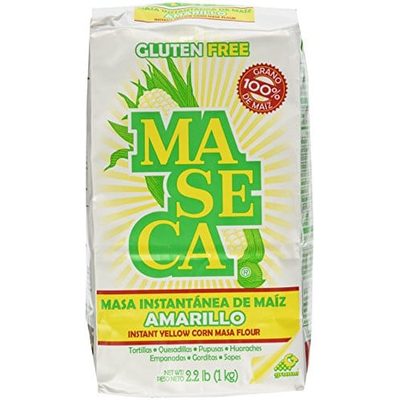
Maseca brand yellow corn masa harina, pre-ground and treated for immediate use in dough for tortillas, tamales, and other corn dough applications.