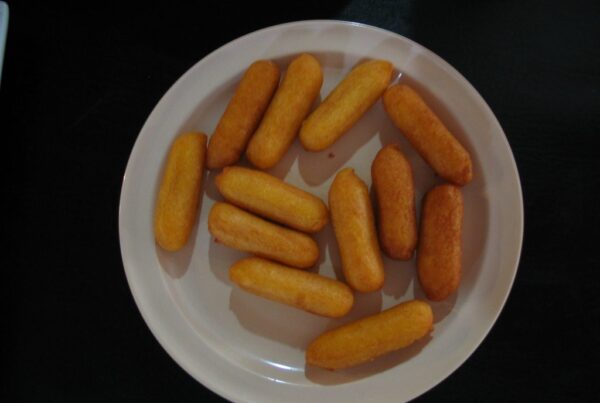
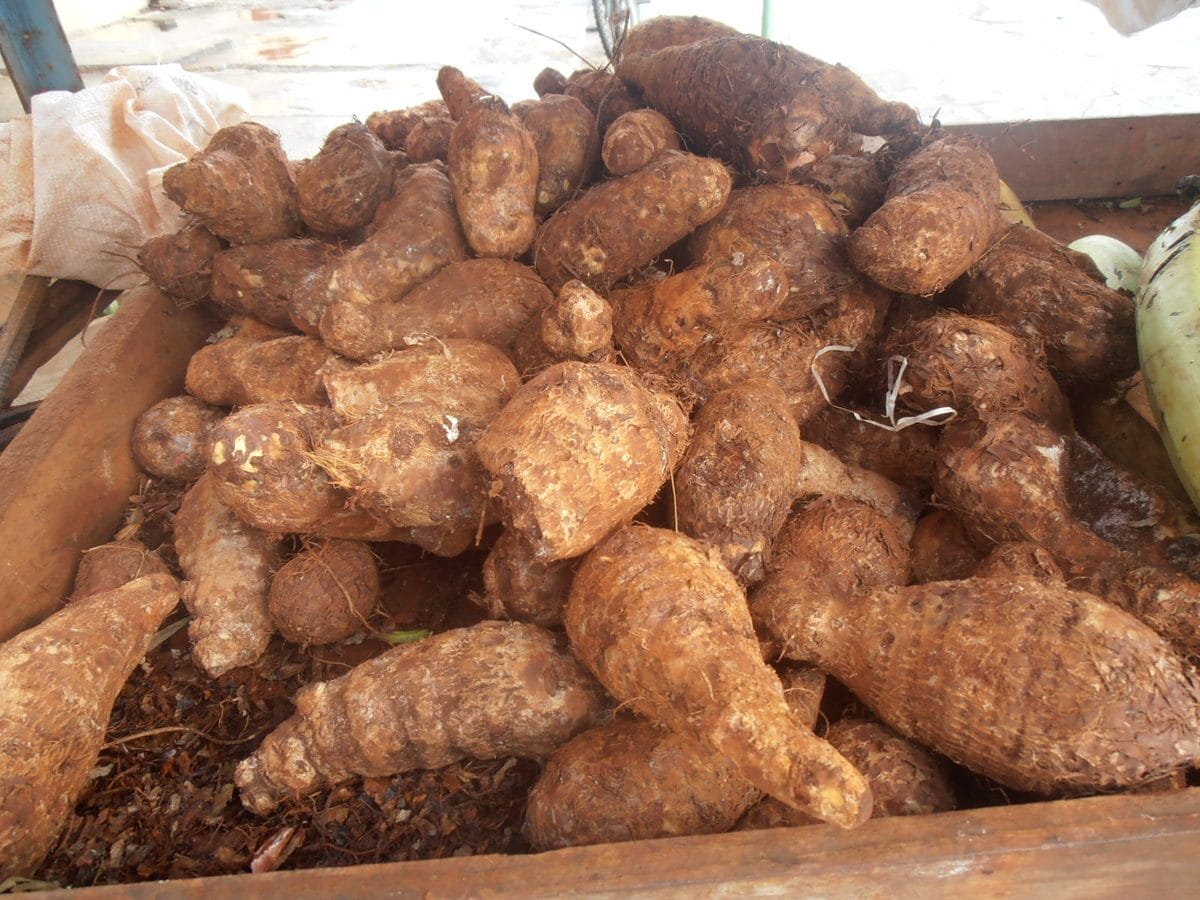
Haitian akra is a fritter of grated malanga root mixed with garlic, onion, parsley, and scotch bonnet pepper, then deep-fried until golden brown. It belongs to the family of malanga fritters Haitians call accra. Home cooks shape the batter into the dish’s traditional long shape before frying. Some versions add cassava and flour; others keep the batter to malanga alone.
Ingredients
Akra starts with one root vegetable, grated fine, and a handful of seasonings that go straight into the same bowl. Two real variants exist among home cooks, and both stay in this recipe rather than getting flattened into one invented “standard” version.
Granulated chicken bouillon for seasoning broth, rice and stews. A tablespoon goes into the pot before anything else does.
For the base
- Malanga root, about three medium malangas, grated.
- Cassava, grated (in the malanga-and-cassava variant only, roughly equal in amount to the malanga).
For the seasonings (both variants)
- Onion and green onion.
- Fresh garlic.
- Black pepper.
- Kosher salt.
- Onion powder and garlic powder.
- Non-MSG Maggi bouillon, or one bouillon cube.
- Scotch bonnet pepper, chopped or mashed, red and/or green to taste.
- Fresh parsley, chopped.
For the epis variant (malanga + cassava)
- Epis, about 1/4 cup, a pre-made Haitian seasoning puree.
- One red seasoning cube or packet, for flavor and for color.
- Flour, about 1/4 cup, for texture and to help the batter hold together.
Optional, malanga-only variant
- A small spoonful of Haitian hot sauce, stirred in for extra flavor.
For frying
- Oil, enough to deep-fry the shaped batter.
A note on quantities: only the malanga-and-cassava variant gives a stated flour and salt amount, about 1/4 cup flour and about 1/2 teaspoon salt total. The onion, garlic, pepper, and herb amounts are not measured in either source. Home cooks season to taste rather than to a fixed measurement, and this recipe follows that lead rather than inventing cup figures the sources don’t give.
Instructions
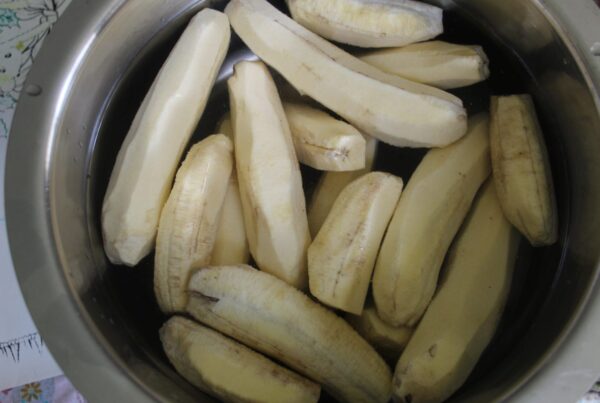
- Peel the malanga (and cassava, if using that variant) fully, removing all the skin, including any hairy or reddish patches, and trim the top and bottom.
- Rinse the peeled vegetable. Check for soft black spots and cut them out. The vegetable is still good once you remove the bad spot.
- Grate on the coarse side of the grater, holes pushing upward, until the vegetable turns mushy. Grate carefully, and stop before a piece gets too small to hold safely.
- Mix the grated vegetable with a spoon, pressing down until it forms one mass.
- Add the seasonings: onion, green onion, garlic, black pepper, salt, onion powder, garlic powder, Maggi, chopped or mashed scotch bonnet pepper, and parsley.
- If making the epis variant, also add the epis, the red seasoning cube, and the flour.
- Mix thoroughly until the seasoning spreads evenly. Taste and adjust the salt to your preference.
- Check the batter’s consistency: it should be thick enough to hold together on its own. Do not add liquid. A wet batter needs flour to compensate, which is not the malanga-only method.
- Move the batter into a deep, narrow bowl or small bucket rather than a wide, shallow one. The deep container makes the traditional long shape much easier to form.
- Shape the batter by hand, or with a spatula or knife against the side of the bowl, into the traditional long shape.
- Heat the oil for deep frying (one source uses a deep fryer set to 350°F). Fry the shaped fritters in batches, keeping them from touching, until golden brown, about 2 to 3 minutes. Do not fry longer than that.
- Drain the fritters on paper towels or napkins to absorb the oil, then serve.
Unfried batter keeps in the refrigerator for about a week, so you can fry it in smaller batches instead of all at once.
What Makes Akra Different from Marinad
One cook draws a direct line between Akra and marinad, the Haitian flour fritter. Marinad calls for flour. Akra, made correctly, does not.
The test is texture, not a recipe card. A properly made Akra batter holds together on its own, without any added liquid. Add liquid, and the batter turns loose. A loose batter then needs flour to firm it back up, which pushes the result toward marinad territory instead of Akra.
That said, real variation exists in home kitchens. The malanga-and-cassava version in this recipe does use flour, plus a pre-made epis and a red seasoning cube for color. Both cooks still call their dish Akra. The identity marker both agree on isn’t flour one way or the other. It’s the malanga base and the traditional long shape, which every batch of Akra shares regardless of which seasoning path a cook takes.
Why Cooks Shape Akra Long and Fry It Hot
Home cooks form the batter long, not round, and a deep, narrow bowl or small bucket makes that shape far easier to pull off than a wide, shallow one. Scrape the batter up the side of the container, and the long shape follows almost on its own.
Grating the malanga takes patience too. Cooks work carefully and stop before a piece gets too small to hold safely. They discard the last stub rather than risking a cut. It’s slow going. One cook describes the process as a lot of work, but says the result is worth it.
Frying rewards restraint. The oil needs to run hot, and the fritters need only a few minutes, about 2 to 3 at 350°F, until they turn golden brown. Cooks are explicit that overfrying is a mistake, not a safety margin. Done right, the outside turns crisp while the inside stays moist.
One more traditional detail: Akra carries a little heat from scotch bonnet pepper. A cook can leave the pepper out to taste, but that’s a personal call, not the traditional version.
Tips and Variations
Two real versions of Akra show up across home cooks, and neither is more “correct” than the other. The malanga-only version keeps the batter simple: grated malanga, the seasoning list above, and no flour, since a properly thick batter doesn’t need it. The malanga-and-cassava version adds grated cassava alongside the malanga, plus a pre-made epis, a red seasoning cube for color, and flour to help everything bind.
Cooks elsewhere in the Caribbean work the same batter logic with whatever the coast gives them. Belizean conch fritters hold together on a thick seasoned batter for the same reason Akra does. Scotch bonnet pepper is a to-taste ingredient. One cook used both a red and a green pepper in the same batch, because the red alone wasn’t spicy enough on its own.
If you don’t want to fry the whole batch at once, refrigerate the extra batter. It holds for about a week, so you can fry smaller batches as you want them, instead of committing to frying everything the same day.
Frequently Asked Questions
What is Akra?
Akra is a Haitian fritter made from grated malanga root, seasoned with garlic, onion, parsley, and scotch bonnet pepper, then shaped long by hand and deep-fried until golden brown.
Does Akra need flour?
Not in the malanga-only version. A properly thick batter holds together without added liquid, so it doesn’t need flour to bind it. A separate variant that adds cassava does use a small amount of flour alongside a pre-made epis and a red seasoning cube.
What is the difference between Akra and marinad?
One home cook draws the line at flour: marinad, the Haitian flour fritter, calls for it, and a correctly made Akra batter does not need it, because the batter is already thick enough to hold its shape on its own.
Why do cooks shape Akra long instead of round?
The long shape is traditional, and a deep, narrow bowl or small bucket makes it far easier to form than a wide, shallow one. Cooks scrape the batter up the side of the container to build the shape.
How long does Akra fry?
About 2 to 3 minutes in hot oil, roughly 350°F, until golden brown. Cooks are explicit that frying longer overcooks the outside before the inside finishes.
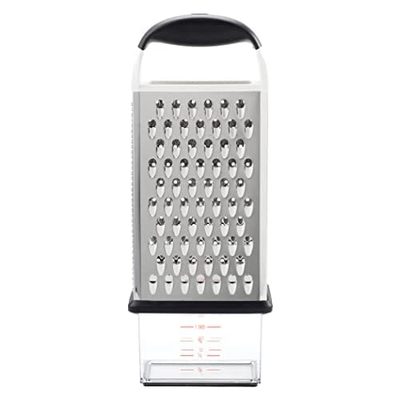
Fresh coconut and hard cheese both want a four-sided box grater: finer than a rasp for cheese, coarser than a food processor for coconut.
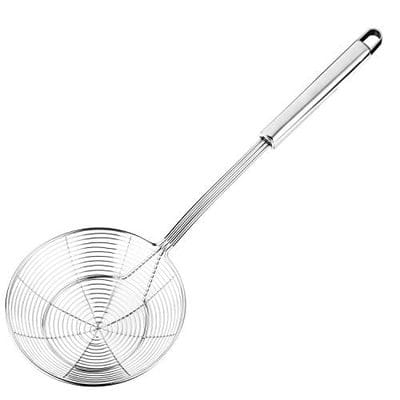
Hiware Solid Stainless Steel Spider Strainer Skimmer 5.4-Inch
Lifts panades, panes, and fry jacks out of hot oil without dragging grease back into the pan. A solid-wire spider with a long handle is the correct tool; a slotted spoon traps too much oil in the bowl.

CRAFT911 Candy Thermometer with Pot Clip – Deep Fry Oil Thermometer for Frying and Candle Making
Fry jacks puff at 350°F and soak grease at 320°F, and there is no way to see the difference. A clip-on probe holds position off the pot bottom so the number you read is the oil.
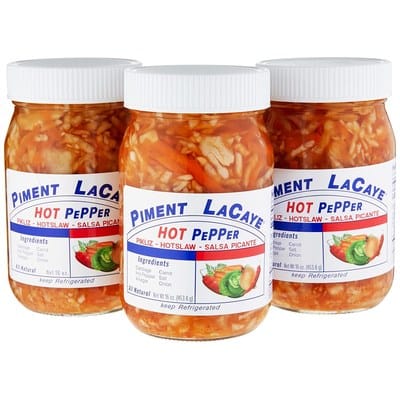
Pikliz is the coarse pickled slaw of cabbage, carrot and scotch bonnet that goes on the plate beside fried food, and griot without it is only half the dish. Packed in glass rather than plastic.