This riguas recipe delivers Salvadoran fresh-corn griddle cakes made from young elote ground to a coarse paste, wrapped in banana leaf or corn husk, and cooked on a hot comal until golden with crisp edges. A Pipil and mestizo street snack tied to corn harvest season, they are eaten warm with crema and cheese or refried beans.
What makes riguas a corn-harvest dish, not an everyday one
Riguas exist only when the corn exists. That is not a romantic claim about seasonality — it is a practical one. The dish requires maíz tierno, fresh young white corn whose kernels are still milky and soft enough to grind into a wet paste. Once the corn matures and dries, you cannot make riguas from it. You cannot substitute masa harina. You cannot use canned corn. The window is the harvest, and the dish marks it.
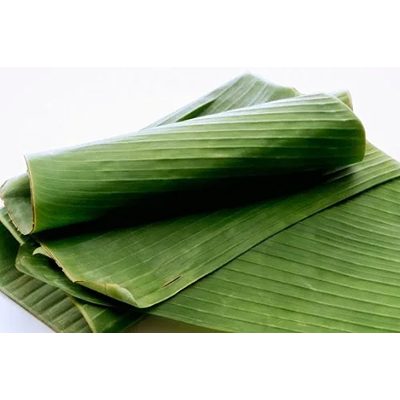
Frozen banana leaves for tamales, mukbil pollo, pibil, conkies, dukunu, and the Garifuna wrappers on hudut and bundiga — pass over a flame to make them pliable before wrapping; far easier than chasing fresh leaves outside the tropics.
Maizena Corn Starch, 14.10 Ounces (14.1 Ounce (Pack of 3))
Cornstarch is what Belizean cooks reach for to thicken the meat pie filling.
The Pipil, a Nawat-speaking people who founded the civilization of Cuzcatlán (now El Salvador), cultivated corn as their primary crop long before the Spanish arrived. Nawat is its own language, related to but distinct from the Nahuatl of central Mexico. Riguas trace to that pre-Columbian kitchen, and Salvadoran sources attribute the dish to the Pipil. This is not Maya food, and it is not Belizean food. It is Salvadoran, specifically Pipil and mestizo in origin, and it belongs to that tradition without apology. Our El Salvador food guide covers the full table if you want to understand where riguas sit among the country’s other corn dishes.
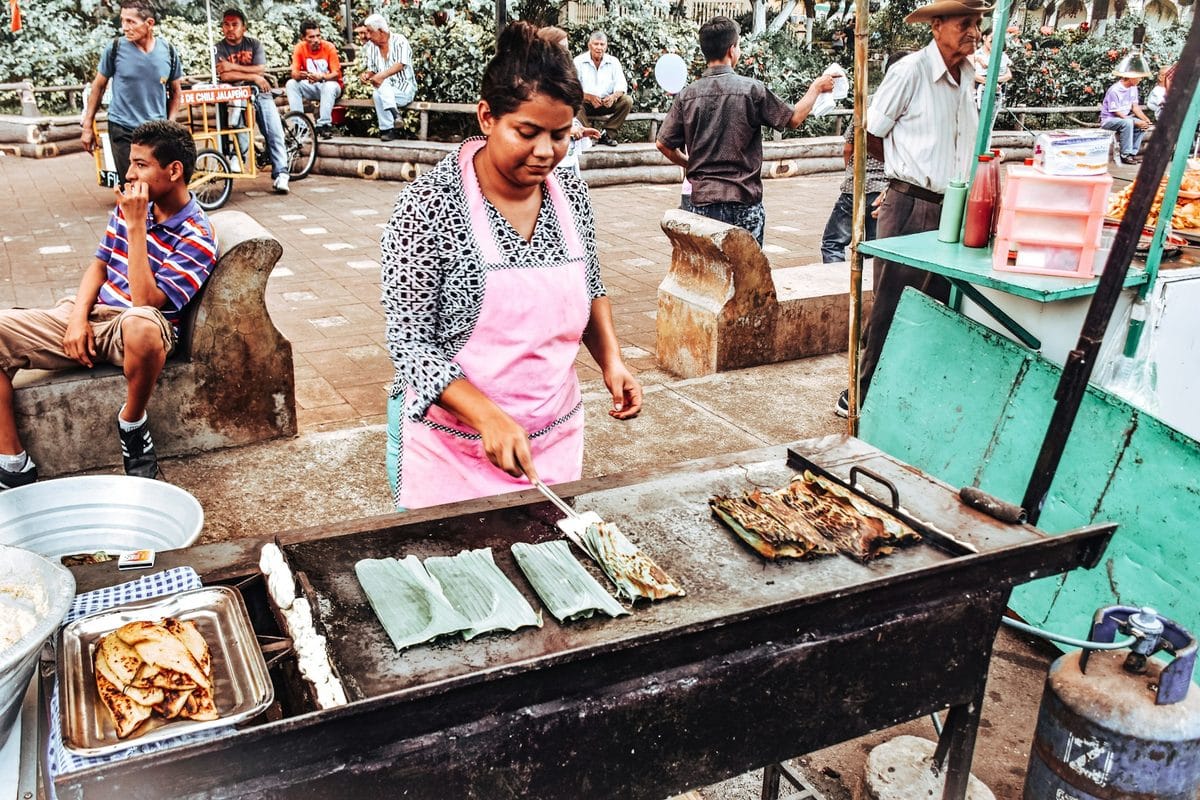
I first ate riguas at a market in Sonsonate, on a weekday morning when the griddle carts were already going at the road’s edge. A vendor wrapped each one in a banana leaf right off the comal and handed it over with a small container of crema. The griddle marks showed through the leaf. I stood there and ate two. They tasted like sweet corn had been persuaded to become bread.
They tasted like sweet corn had been persuaded to become bread.
Today riguas appear at markets and roadside stands during harvest months across El Salvador, and in the kitchens of Salvadoran families wherever they have settled. Karla Tatiana Vásquez included the dish in her SalviSoul cookbook (Ten Speed Press, 2024), the first mainstream Salvadoran cookbook published in the United States, placing riguas alongside pupusas as an essential of the national table.
Why riguas are not tamales and not pupusas
The confusion is understandable. All three use corn. All three are associated with Salvadoran cooking. But the distinctions are structural, not subtle.
Pupusas are always filled. Cheese, beans, loroco, chicharrón. The filling is integral to the form. A pupusa without filling is not an underfilled pupusa; it is not a pupusa at all. Pupusas are also made from masa harina or dried-corn dough, never from fresh elote. If you want to understand pupusas in detail, the papusas recipe covers the full method and variations. The two dishes share a comal but nothing else in their technique.
The two dishes share a comal but nothing else in their technique.
Tamales de elote are the closer relative. Both use fresh sweet corn, and both use a leaf wrapper. Tamales de elote use a corn-husk wrapper and are steamed inside it; riguas are traditionally wrapped in banana leaf and griddled — the leaf and the method together define the form. The steaming gives tamales de elote a tender, moist, almost custardy interior. Riguas are griddled. The heat comes from below, through the leaf and into the batter, which sets and browns. The edges crisp. The surface gets griddle marks. A rigua has texture that a tamale does not.
The traditional wrapper for riguas is banana leaf. During griddling, it releases a faint, slightly grassy-sweet steam that perfumes the batter from the inside. When you unwrap a rigua that just came off the comal, that aroma arrives first. During harvest season, corn husks (tusa) are a common traditional variant — the husks are right there when the corn is being shucked — and they work well, though they give the rigua a drier, starchier perfume than banana leaf. Both are authentic. Outside El Salvador, banana leaves are the easier find at Latin and Asian grocery stores.
Ingredients
- 4 ears fresh young white corn (elote tierno), kernels cut from the cob, about 3 cups
- 1 tablespoon sugar
- 1/2 teaspoon salt
- 2 tablespoons unsalted butter, softened (or crema salvadoreña or heavy cream for a richer version)
- 1/4 cup grated queso fresco or quesillo, optional, folded into the batter or served on top
- 4 to 6 banana leaf squares cut to 12 x 12 inches, wiped clean (or tusa — fresh corn husks — the traditional harvest-season variant); if using banana leaf, pass each square briefly over a gas flame or warm burner to make it pliable before folding
- Optional: 1 to 2 tablespoons rice flour or cornstarch, if the batter is too loose to hold shape
Instructions
- Shuck the corn and cut the kernels from the cob with a sharp knife, running the blade downward along each cob. Scrape the cob afterward with the back of the knife to release the starch-rich liquid; this goes into the batter.
- Blend the kernels in two or three batches until a coarse, wet paste forms. The texture should be rough, not smooth. Some small pieces of corn should still be visible. Do not over-blend.
- Transfer the paste to a bowl. Add the sugar, salt, and softened butter. Mix until fully combined. The batter should be thick enough to mound slightly when spooned onto a leaf; it should not run flat. If the corn is especially juicy and the batter spreads too easily, stir in 1 to 2 tablespoons of rice flour or cornstarch to bind it.
- Prepare the banana leaf squares or corn husks. If using banana leaf, wipe each square with a damp cloth and pass it briefly over a gas flame or warm electric burner — 2 to 3 seconds per side — to make it pliable and prevent cracking when you fold. If using corn husks (tusa), rinse them and pat dry; if stiff, soak in warm water for 10 minutes, then drain and pat dry before using.
- Spoon 2 to 3 tablespoons of batter onto the center of a leaf or husk. Fold the leaf over the batter, pressing it lightly into a rough oval shape about 1/2 inch thick.
- Heat a cast iron comal or heavy griddle over medium heat. No oil is needed; the leaf prevents the batter from sticking directly to the pan surface.
- Place the folded packets on the comal. Cook for 5 minutes per side, pressing each packet gently with a spatula. You are looking for the leaf to become well-marked and darkened on the contact side, and for the batter inside to feel set, not soft and yielding, when you press through the leaf.
- Open one packet to check doneness. The rigua should be golden-brown on both faces and dry to the touch, with slightly crisp edges where the batter contacted the leaf. If the interior is still pale and soft, fold it back up and cook 2 more minutes per side.
- Serve immediately. Riguas are best eaten straight off the comal. Unwrap them at the table and top with crema salvadoreña (thicker than Mexican crema; sour cream works as a substitute) and crumbled queso fresco, or serve alongside refried black beans. For a full Salvadoran spread, curtido — the fermented cabbage slaw — is a natural companion.
Riguas recipe tips: what to do when corn husks or fresh elote are unavailable
Outside El Salvador and Central America, fresh young white corn is seasonal and often unavailable. The dish is still worth making with substitutes, though you lose some of the original flavor.
For the wrapper: corn husks (tusa) work well and give the finished rigua a slightly starchier, drier aroma than banana leaf. Parchment paper, folded double and creased at the edges, will hold the batter through cooking without imparting any flavor. It is the most neutral substitute, useful when you want the corn taste alone.
For the corn itself: frozen white sweet corn, thawed and drained thoroughly, produces a workable result. Drain it well. Excess moisture makes the batter loose and difficult to shape. The flavor is sweeter and less complex than fresh elote, but the texture after griddling is close enough to be recognizable. One adjustment that helps — add 1 tablespoon of extra butter to compensate for what frozen corn lacks in natural fat content. Never use canned corn. It is too wet and too sweet, and it will not hold together.
What you must not do is substitute masa harina. That is pupusa dough, and the texture it produces is completely different: denser, drier, and chewier. A rigua made with masa is not a rigua.
For storage: riguas are best eaten immediately. If you must store them, wrap the cooked riguas in foil while still hot, and reheat on a dry skillet over medium-low heat for 3 minutes per side. They do not reheat well in a microwave. The steam makes them soggy. If you plan to store them, undercook them slightly on the first round so there is room to finish them on the skillet.
Frequently Asked Questions
What are riguas?
Riguas are fresh-corn griddle cakes from El Salvador, made from young elote ground to a coarse paste, wrapped in banana leaf or corn husks, and cooked on a comal. They are a Pipil and mestizo Salvadoran dish tied to the corn harvest season, eaten warm with crema and queso fresco.
How are riguas different from pupusas?
Pupusas are made from dried-corn masa and are always filled with cheese, beans, or meat before griddling. Riguas are made from fresh young corn ground into a paste, are not filled, and are cooked inside a banana leaf or corn-husk wrapper. The two dishes use the same comal but different doughs and different techniques.
How are riguas different from tamales de elote?
Both use fresh sweet corn, but they cook by entirely different methods. Tamales de elote are wrapped in corn husks and steamed, which gives them a soft, moist, almost custardy interior. Riguas are wrapped in banana leaf (or corn husks during harvest season) and griddled on a comal, producing golden-brown faces and slightly crisp edges. The griddling is what defines a rigua; steaming is what defines a tamal de elote.
What kind of corn do you use for riguas?
Riguas require maíz tierno, fresh young white corn that is still milky and soft. Dried corn, masa harina, or canned corn cannot substitute for fresh elote in an authentic rigua. Outside corn season, frozen white sweet corn (thawed and well-drained) is the closest practical substitute.
Can I make riguas without banana leaf or corn husks?
Yes. If you have neither banana leaf nor corn husks (tusa), parchment paper folded double works as a neutral substitute. What you cannot omit is the wrapper itself. Riguas cook inside their wrapper, and the leaf holds the batter in shape while the comal works from below. Banana leaves are widely available at Latin and Asian grocery stores and are the traditional wrapper; corn husks are the common harvest-season variant.
What do you eat with riguas?
The classic accompaniment is crema salvadoreña (thicker than Mexican crema; sour cream is a workable substitute) and crumbled queso fresco. Refried black beans are also a common pairing. Some families mix quesillo directly into the batter before griddling.
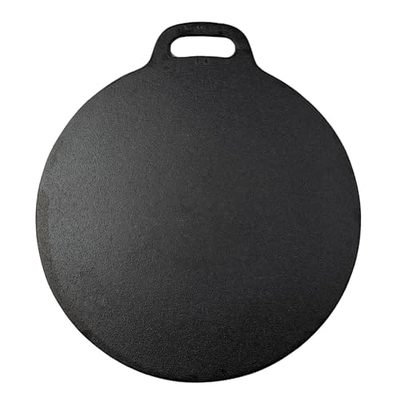
Victoria 12-Inch Cast Iron Tawa Comal Pan (Made in Colombia)
A pre-seasoned cast iron comal is what Latin American home cooks reach for. Twelve inches is sized for corn tortillas, johnnycakes, and toasting pepitas, and the weight holds heat a thin griddle can't.
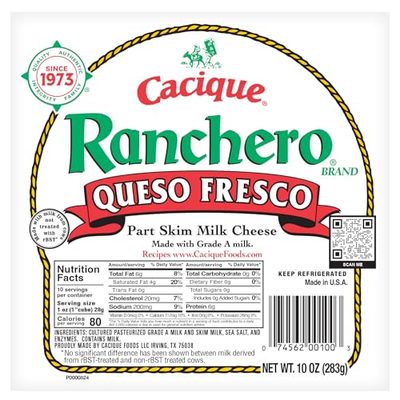
Cacique Queso Fresco Ranchero, 10 oz
A fresh crumbling queso fresco in 10 oz size, ready to sprinkle on cooked dishes or incorporate into recipes without shredding.