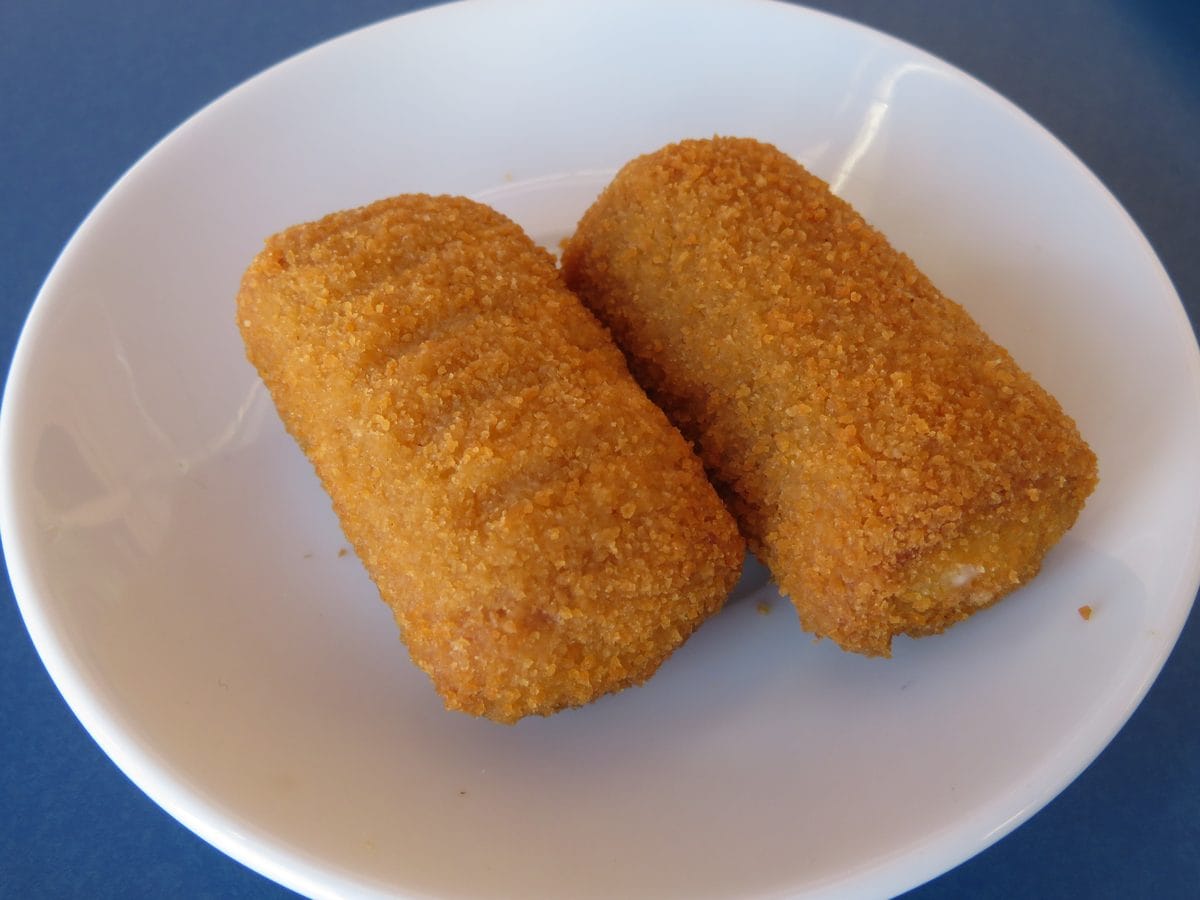
Cuban croquetas de jamon are small fried rolls of finely minced ham bound in a thick milk sauce, chilled until firm, then breaded and fried. The shell is crisp and the center stays creamy. Cuban croquetas run drier and more heavily seasoned than the Spanish version.
The ham is already salty. Cook around that fact instead of fighting it.
What are croquetas de jamon?
Cooked ham, minced as fine as the machine will take it, folded into a thick milk sauce and cooked until the mass pulls away from the pan. It chills hard, gets rolled into short logs, breaded and fried. The filling is fully cooked before it goes near the oil, so the fry is only about the shell.
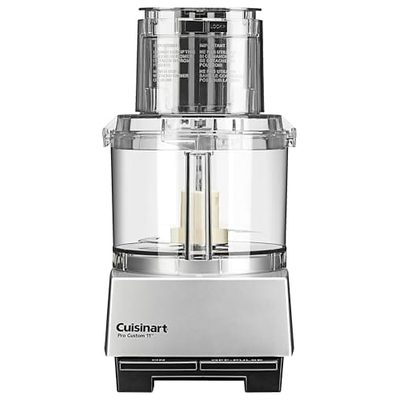
The ham and onion have to be ground fine enough to disappear into the bechamel. A processor does in half a minute what a knife cannot do evenly at all.
Nordic Ware Naturals Half Sheet — USA Made Aluminum Commercial Quality Sheet Pan, 2-Pack
Half-sheet aluminum is the right size for sheet-pan chicken, roasted plantains, or toasted cassava bread. Commercial-weight aluminum doesn't warp under the long roast.
Cuban and Puerto Rican croquettes commonly use ham or chicken (source). The Cuban version is drier and more seasoned than the Spanish one, which runs creamier and plainer. Sazon with culantro and achiote, nutmeg, paprika and parsley are what carry that difference.
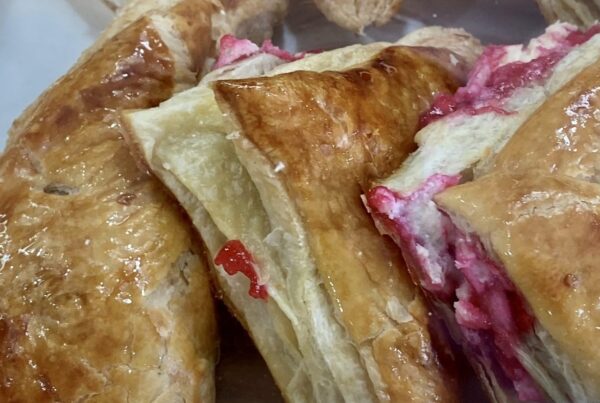
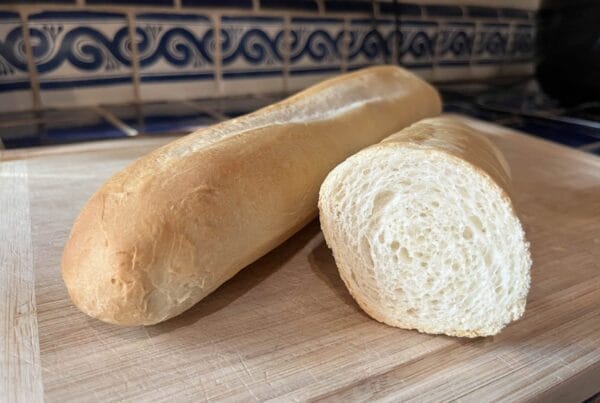
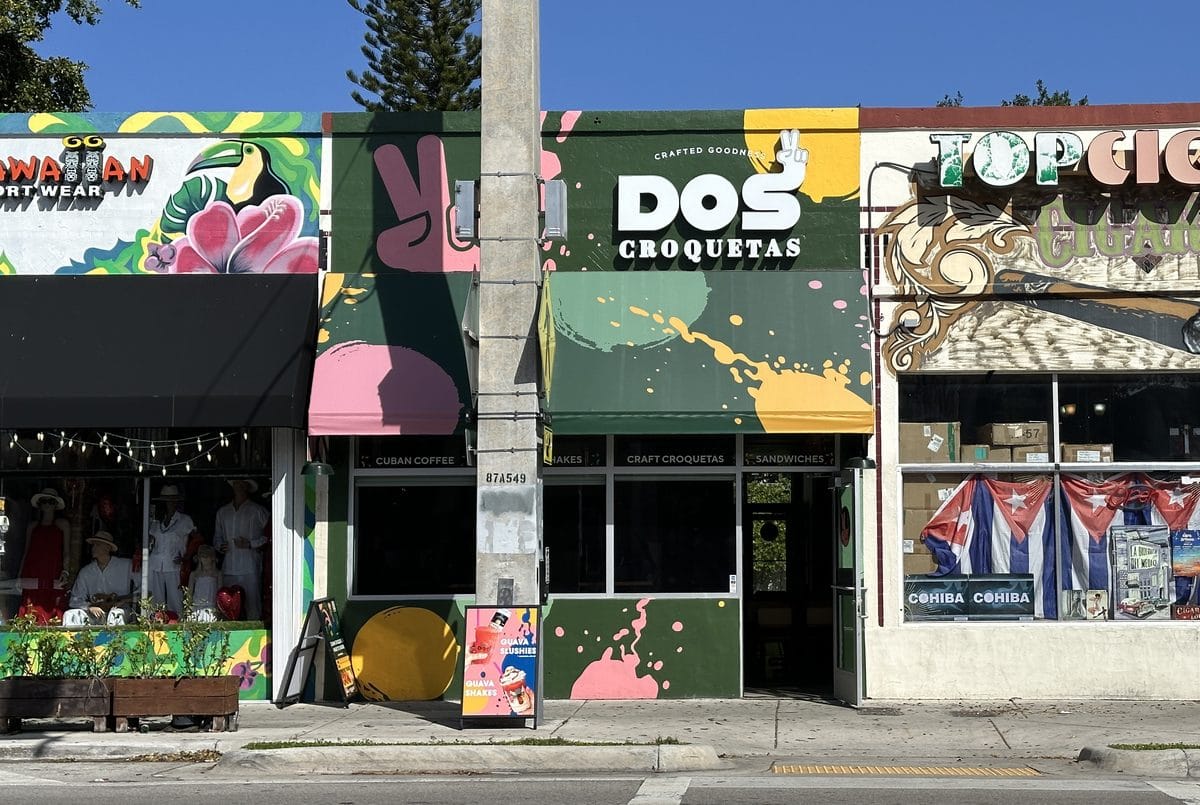
They are counter food. Croquetas are sold at the walk-up window at Versailles in Little Havana alongside cafecito and pastries (source). Two of the other things on that counter have their own recipes here: pastelitos de guayaba, guava paste baked in puff pastry, and pan cubano, the lard loaf a Cuban sandwich is built on.
Cold dough, or it will not hold a shape
This is the step the dish turns on. Warm dough will not roll, and what will not roll will not survive hot oil. One hour in the refrigerator is the floor. Overnight is better, and it costs nothing but planning.
Spread the mixture thin on a tray so it cools evenly, and press the plastic wrap onto the surface of the dough rather than across the top of the bowl. That keeps a skin from forming. It is the cheapest real technique in the recipe.
Three more things decide whether these come out right. Cook the flour in the fat for a full minute before any milk goes in, or the finished croqueta tastes raw and pasty. Add the milk warm and slowly, whisking, because warm milk breaks up lumps that cold milk sets. And cook the mass until it pulls cleanly off the bottom of the pan: a loose mass never firms up in the refrigerator, no matter how long you leave it.
Mince everything very fine. Chunky ham is the tell of a careless croqueta, not a rustic one, and the texture inside should be uniform enough that the bite reads as one thing.
What you need for Cuban croquetas de jamon
For the croqueta dough
- 9 oz (250 g) cooked ham, cut into chunks
- 1/3 cup (50 g) white onion, cut into chunks
- 1 clove garlic (3 g)
- 3 1/2 tbsp (50 g) unsalted butter
- 1/3 cup plus 1 tbsp (50 g) all-purpose flour
- 2 cups plus 2 tbsp (500 ml) whole milk, warmed
- 1 tsp (6 g) fine salt, or to taste
- 1/2 tsp (1 g) ground black or white pepper
- 1/4 tsp (0.5 g) freshly grated nutmeg
- 1 tsp (2 g) sazon seasoning with culantro and achiote
- 1/2 tsp (1 g) sweet paprika
- 2 tbsp (7 g) chopped fresh parsley, or 2 tsp dried
For breading and frying
- 1 cup (125 g) all-purpose flour, for dredging
- 2 large eggs (about 100 g shelled), beaten
- 1 1/2 cups (150 g) plain dried breadcrumbs
- 4 cups (about 1 liter) neutral oil for frying, such as canola or vegetable
To serve
- 1 lime (about 65 g), cut into wedges
- 12 saltine crackers (about 35 g)
Cooked ham of almost any kind works: deli ham, sliced ham, or what is left from a roast. If your refrigerator is holding leftover holiday ham, this is the best thing to do with it.
Unsalted butter is a decision, not a default. Salted butter plus cured ham is how this dish goes wrong. There is no cheese, tomato or sofrito in this filling; those belong to other croquettes.
How long croquetas de jamon take
| Prep | 30 minutes |
| Cooking the dough | about 20 minutes |
| Chilling | 1 hour minimum, overnight better |
| Shaping and breading | about 20 minutes |
| Frying | about 15 minutes in batches |
| Total | about 2 hours 15 minutes |
| Makes | 18 croquetas, 6 servings of three |
How to make Cuban croquetas de jamon
- Mince everything fine. Process the ham, onion and garlic separately until very finely minced, in a food processor or a small chopper, or chop by hand as fine as you can manage.
- Warm the milk until lukewarm, about 30 seconds in a microwave, and whisk in the nutmeg.
- Soften the aromatics. Melt the butter in a wide skillet over medium heat, add the onion and garlic and cook 3 to 5 minutes until soft, without browning.
- Add the ham and cook 2 minutes, stirring, so it takes on the fat and the aromatics.
- Season, but not with salt yet. Stir in the sazon, paprika, pepper and parsley.
- Cook the flour. Add it all at once and stir it through. It will look dry and crumbly, which is correct. Keep it moving about a minute to cook out the raw taste, and do not walk away from the pan.
- Add the warm milk slowly, whisking constantly, letting each addition disappear before the next goes in. Use a hand whisk until the lumps are gone.
- Cook it down. Drop to medium-low and stir until the mass thickens and pulls cleanly away from the bottom of the pan, holding the line a spoon draws through it. Do not leave it loose.
- Taste, then salt. The ham has already done most of the work.
- Cool it flat. Spread the mixture thin on a tray, press plastic wrap directly onto the surface so no skin forms, and let it come to room temperature.
- Refrigerate at least 1 hour, overnight if you can. The dough has to be cold and firm or it will not roll.
- Set up three bowls: flour, beaten eggs, breadcrumbs.
- Shape. Scoop portions of the cold dough, a cookie scoop keeps them even, and roll each into a short log with flattened sides. Oil your palms lightly if the dough sticks.
- Bread each one: flour, shake off the excess, egg, then press lightly into the breadcrumbs.
- Set the coating. Freeze the breaded croquetas 10 minutes, or refrigerate them, so the crumbs grip before they meet oil.
- Heat 2 inches (5 cm) of oil to 375°F (190°C).
- Fry in small batches, about six at a time, 2 to 3 minutes, until deep golden. A crowded pan drops the oil temperature and that is when croquetas split open.
- Drain on paper towels and season with a small pinch of salt while they are still hot.
- Serve hot with lime wedges to squeeze over and saltine crackers alongside.
Tips and variations
- A firmer, easier-to-roll dough. Equal volumes of flour and milk, rather than the looser bechamel above, give a stiffer mass that shapes without fuss. The croqueta comes out denser and drier, which is a legitimate Cuban style rather than a compromise.
- Vino seco and red pimento. A teaspoon of dry cooking wine and some chopped red pimento in with the aromatics adds depth and a little color.
- Galleta molida instead of breadcrumbs. Ground cracker meal gives a finer, paler crust. Seasoned breadcrumbs and a panko-plain blend both work just as well.
- Party size or bakery size. One scoop of dough makes a small croqueta for a tray. Two scoops make the larger bakery-counter shape, which needs an extra minute in the oil.
- Oil your hands before rolling. Cold croqueta dough sticks to skin more than it sticks to itself.
- Fried, not baked. An air fryer is for reheating croquetas that were already fried. Raw ones come out pale and dry.
Where they sit on the table
Lime squeezed over the top, saltine crackers alongside, and a cafecito. That is the standing order, and it is as much a snack eaten at a counter as a plated appetizer.
Elsewhere in the Caribbean the same idea, shaped cold and fried, turns up as Puerto Rican rellenos de papa, though those start from potato rather than a milk sauce. The idea travels between the islands. The dough underneath it does not.
Nutrition
Estimated, for one of 6 servings of three croquetas, based on the amounts above and standard ingredient labels. It includes the oil absorbed during frying. The sodium is honest rather than flattering: this is a cured-ham dish.
| Calories | 395 kcal |
| Protein | 15 g |
| Fat | 24 g |
| Saturated fat | 10 g |
| Carbohydrates | 25 g |
| Sugar | 4 g |
| Fiber | 1 g |
| Cholesterol | 90 mg |
| Sodium | 950 mg |
Storing croquetas de jamon
The dough keeps a day covered in the refrigerator, which makes this a good make-ahead for a party. Cook it the night before and shape on the day.
Breaded and unfried, they freeze well and fry straight from frozen. Give them an extra minute or two in slightly cooler oil so the center heats through before the shell overbrowns. Freezing half a batch at this stage is the single best thing to do with this recipe.
Fried croquetas keep 3 days refrigerated. Reheat in a 375°F (190°C) oven or an air fryer for 6 to 8 minutes. A microwave heats them through and turns the shell soft, which undoes the entire point.
Equipment you will want
- A food processor or small chopper.
- A wide skillet or saucepan, a hand whisk and a silicone spatula.
- A shallow tray or baking sheet and plastic wrap.
- Three shallow bowls for breading, and a cookie scoop for even sizing.
- A heavy pot or deep fryer and a clip-on oil thermometer.
- A spider strainer and a paper-towel-lined plate.
Croquetas de jamon questions, answered
What is the difference between Cuban croquetas and Spanish croquetas?
Seasoning and moisture. The Cuban ones are drier and more heavily seasoned, with sazon, nutmeg, paprika and parsley in the dough. The Spanish ones are creamier and plainer, letting the ham carry it. Both are bechamel-based and both are fried.
Why do my croquetas fall apart when I fry them?
Three usual causes. The dough did not chill long enough to hold a shape in hot oil. The pan was crowded, which drops the oil temperature and lets the shell split. Or the breading never had time to set in the refrigerator or freezer, so it could not grip.
How long does croqueta dough need to chill?
One hour is the minimum and overnight is better. Spread the dough thin on a tray so it cools evenly, and press plastic wrap onto the surface so no skin forms. A short chill is the most common reason a batch goes wrong.
Can you freeze croquetas de jamon before frying them?
Yes, and it is the best way to handle a batch. Bread them, freeze them raw, and fry straight from frozen with an extra minute or two at a slightly lower oil temperature so the center heats through before the shell overbrowns.
What kind of ham do you use for croquetas de jamon?
Cooked ham, minced very fine. Deli ham, sliced ham or leftover roast ham all work. Because the ham already carries salt, use unsalted butter and hold the added salt until you have tasted the finished dough.
What do you serve with croquetas de jamon?
Lime wedges to squeeze over, saltine crackers alongside, and coffee. They are also a standard party tray on their own, served hot straight out of the oil.
How many croquetas per person?
Three of the party size as a starter, which is where the 18 from this batch and 6 servings come from. Double that if they are the only thing on the table with drinks.

Croquetas fry at 350F and the oil drops every time a batch goes in. A thermometer that clips to the pot rim lets you watch it recover without holding a probe over hot fat.
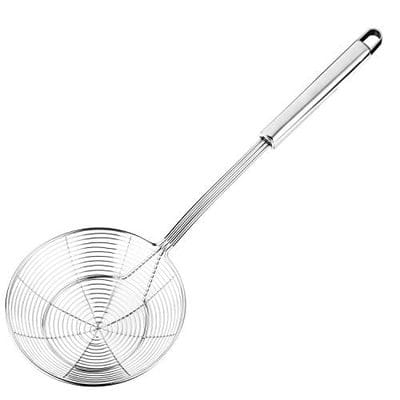
Breaded croquetas are fragile going into the oil and coming back out of it. A wide spider lifts several at once and lets the oil drain straight back into the pot.