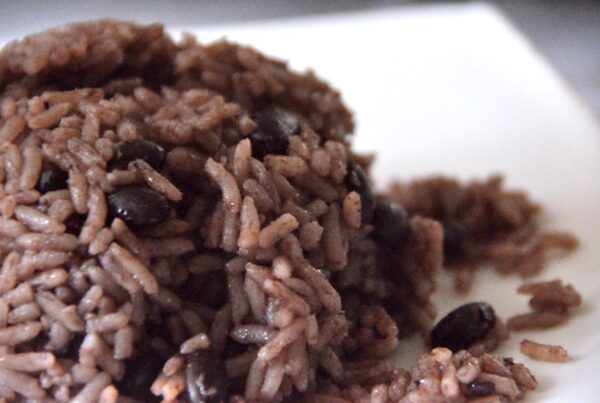
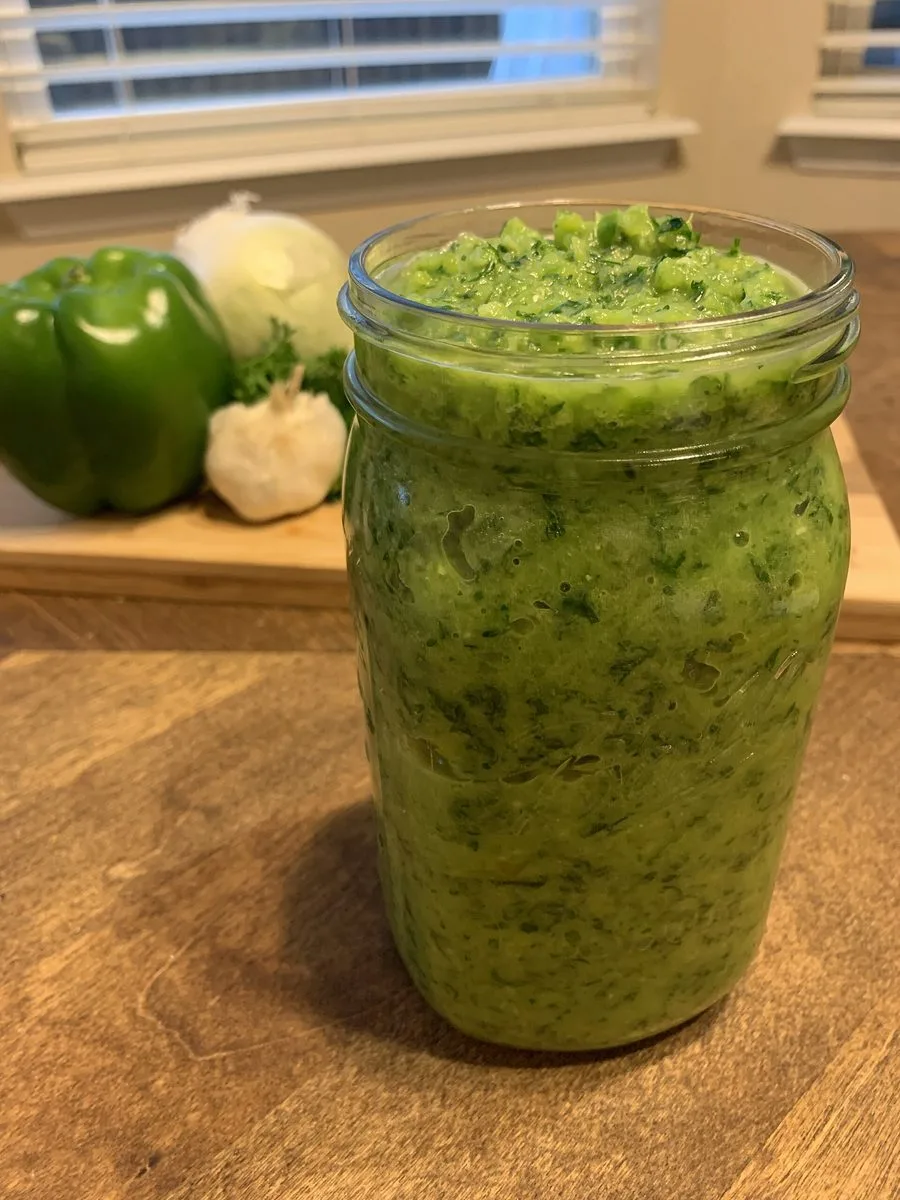
Diri ak djon djon is a Haitian black rice: jasmine rice cooked in the dark liquid of djon djon mushrooms over a homemade epis base with peas and butter. The mushrooms turn the rice deep black and give it its signature flavor. Haitians call it, simply, everybody’s favorite rice.
Ingredients
Diri ak djon djon comes together in stages: a homemade epis base, a mushroom liquid that turns the rice black, and legumes that go in before the rice itself. Native names come first, with common alternatives in parentheses.
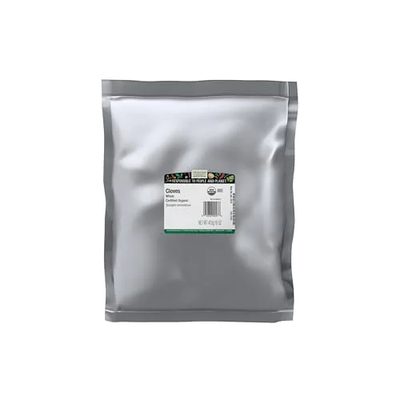
Frontier Co-op Whole Cloves, Organic, Hand Select, 16 oz
Spice pastes, dark stews and braised meats all call for whole cloves ground or simmered into the dish. Whole cloves keep their volatile oils far longer than ground.
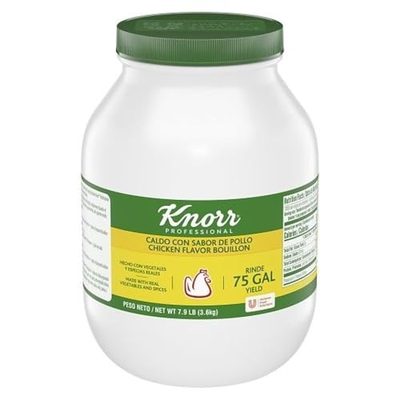
Granulated chicken bouillon for seasoning broth, rice and stews. A tablespoon goes into the pot before anything else does.
For the rice
- Jasmine rice, the variety Haitian cooks reach for.
For the djon djon
- Djon djon (dried black mushrooms), in one of three forms: whole mushrooms steeped for their black water, pre-extracted liquid djon djon, or djon djon bouillon cubes.
For the epis
- Bell peppers, assorted colors.
- Green onions.
- White or yellow onion.
- Scotch bonnet (or bonnette) pepper.
- Garlic cloves.
- Fresh parsley.
- Oil, about a tablespoon, for blending the epis into a puree.
For the legumes
- Frozen sweet peas, rinsed, or lima beans, or pigeon peas (skip canned beans, since cooks say they stink in the pot).
For the aromatics
- Parsley and thyme, tied together with butcher’s twine.
- Whole cloves.
- Garlic, minced.
For the seasonings
- Chicken bouillon (Maggi).
- Complete seasoning.
- Salt.
- Black pepper.
- A non-MSG chicken base, optional.
To finish
- Oil, any type, for sautéing.
- Unsalted butter.
A note on quantities: djon djon rice is measured by feel more than by the cup. Only the water has a sourced amount, about 3.5 to 4 cups. Cooks add and adjust the djon djon itself until the rice reaches the deep black color it needs. They add more djon djon liquid or another bouillon cube if a pot comes out too pale. Use the amount of rice your pot calls for. Then work the epis, legumes, and djon djon to that color, not to a fixed measurement.
Instructions
- Blend the epis: puree the bell peppers, onions, garlic, and parsley with the oil and a bouillon cube.
- Sauté several tablespoons of the epis in oil, scraping the bottom of the pot so it doesn’t burn.
- Stir in the peas or beans, along with the tied herb bundle, whole cloves, and minced garlic.
- Add the liquid djon djon or djon djon bouillon cubes, and let them dissolve into the pot.
- Pour in the water (about 3.5 to 4 cups) and bring it to a rolling boil.
- While the water heats, wash the rice two or three times by hand, scrubbing the grains under running water.
- Add the rice only once the water reaches a full boil.
- Boil the rice on medium-high heat until the water reduces and the rice “peeks at the top like a mountain.”
- Once the liquid has mostly evaporated but the rice still looks moist, add chunks of butter and turn the heat to low.
- Tofey the rice: cover it with foil, plastic wrap, or a plastic bag, then seat the lid on tight and leave it undisturbed for 15 to 30 minutes to steam.
Why Haitian Cooks Wash the Rice Only After the Water Boils
Haitian cooks time the rice wash to the boil, not the other way around. They never rinse the rice until the pot already holds a rolling boil. Wash it earlier, and the grains soak up water before they hit the heat. The rice turns to pasty, mushy porridge instead of the dry, separate grains diri ak djon djon calls for.
Once the rice goes into the pot, cooks leave it alone. They do not stir it, because stirring releases starch from the grains and turns the dish gummy. Instead, cooks loosen the rice gently from the sides of the pot. They work around the edges rather than through the center.
To check the ratio of rice to water, cooks use a simple test: they stand a spoon upright in the center of the pot. If the spoon holds its position without falling, the ratio is right. If there is too much water, they scoop some out before the rice finishes cooking, so the grains don’t turn mushy. Cooks give the same attention earlier in the process too. They scrape the bottom of the pot while they sauté the epis and legumes, working the browned bits at the bottom back into the dish instead of losing that flavor to a burnt spot.
What Makes Diri ak Djon Djon Authentic
A few details separate diri ak djon djon made the traditional way from a shortcut version. The epis has to be homemade. Cooks consider a recipe that leans on dry seasoning powders alone incomplete, because epis is the base for nearly every Haitian rice dish except plain white rice.
Color is the other tell. The rice needs to reach a deep, almost black shade, what cooks call “really black black.” If a pot comes out pale, cooks add more djon djon liquid or another bouillon cube. They do not serve it under-colored.
The steam seal at the end, foil or plastic pressed under the lid, is another hallmark cooks look for. Some cooks describe it as putting a foot on the neck of the rice. The seal keeps steam in, so the grains finish cooking through without losing moisture to the air. Tying the parsley and thyme into a bundle with butcher’s twine, rather than dropping the herbs in loose, is a smaller authentic touch that shows up across cooks’ videos. Many home cooks also steer away from MSG-heavy seasoning blends. They favor cleaner, non-MSG seasoning bases instead.
Ways Cooks Vary Diri ak Djon Djon
The real variation in diri ak djon djon comes from the mushroom, not the rest of the recipe. Cooks choose from three forms: whole dried mushrooms they steep themselves for the black water, pre-extracted liquid djon djon, or djon djon bouillon cubes that dissolve straight into the pot. What goes on top of the rice varies less: fried fish, griot, or a ladle of legim are the standard company.
Legume choice varies too. Some cooks use frozen sweet peas; others reach for lima beans or pigeon peas, depending on what’s in the kitchen. Menus and cooks also spell the dish differently: Diri ak Djon Djon, Diri Djon Djon, or the shortened “de jjo” in conversation. All three name the same Haitian black rice, also called mushroom rice. Haitians treat it as a celebrated dish, one they often serve with fried fish and sauce. The suffocation step at the end has its own name: tofey, or tofi, meaning to suffocate. The same lid-and-steam discipline runs through Belizean rice and beans, where the pot also goes untouched once the liquid drops below the grain.
Frequently Asked Questions
What is diri ak djon djon?
Diri ak djon djon is Haitian black rice: jasmine rice cooked in the dark liquid of djon djon mushrooms over a homemade epis base, with peas or beans and butter stirred through. The mushrooms turn the rice a deep black and give it its signature flavor.
What is djon djon?
Djon djon is a black, dried mushroom Haitian cooks use in one of three forms: whole mushrooms steeped for their black liquid, pre-extracted liquid djon djon, or djon djon bouillon cubes. All three color and flavor the rice.
Why do cooks wait until the water boils to wash the rice?
Washing the rice before the water boils lets the grains soak up water too early, and the rice turns into pasty, mushy porridge instead of separate, dark grains. Cooks wash the rice only once the pot is already at a rolling boil.
What does “tofey” mean?
Tofey, or tofi, means to suffocate. It names the final step, when cooks cover the rice with foil, plastic wrap, or a plastic bag, seal the lid on tight, and let the rice steam undisturbed for 15 to 30 minutes.
What legumes go in diri ak djon djon?
Frozen sweet peas, lima beans, or pigeon peas all work. Cooks rinse frozen peas first and skip canned beans, which they say stink in the pot.
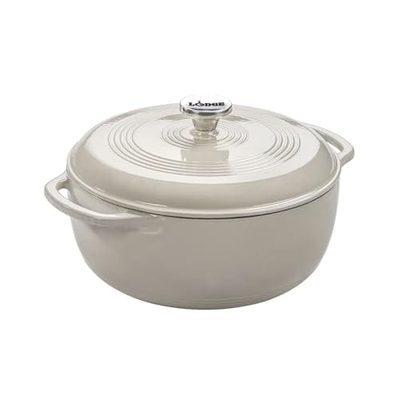
Boil-up, stew beans, and cow-foot soup want a heavy pot that holds a low simmer for hours. The enamel interior skips seasoning entirely and won't strip when acid, tomato, or citrus goes in.
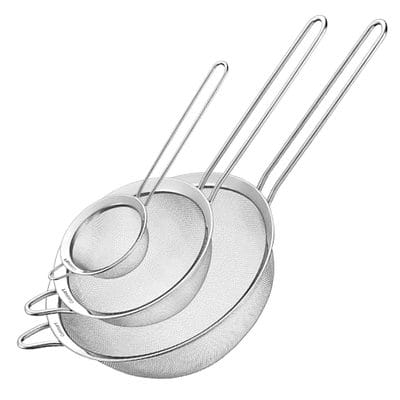
Cuisinart Stainless Steel Fine Mesh Strainer Set 3-Count
Three sizes cover every straining task in a working kitchen: tamarind through the small, beans through the medium, rice through the large.
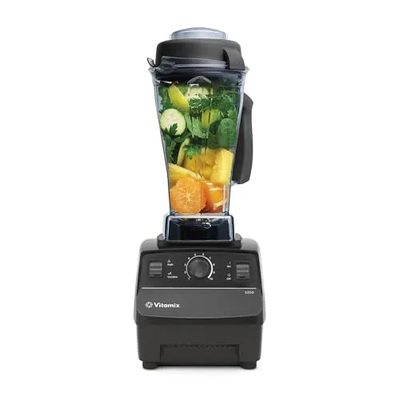
High-powered Vitamix 5200 blender - grinds, purees, and emulsifies at speeds standard home blenders don't reach.

Pikliz is the coarse pickled slaw of cabbage, carrot and scotch bonnet that goes on the plate beside fried food, and griot without it is only half the dish. Packed in glass rather than plastic.