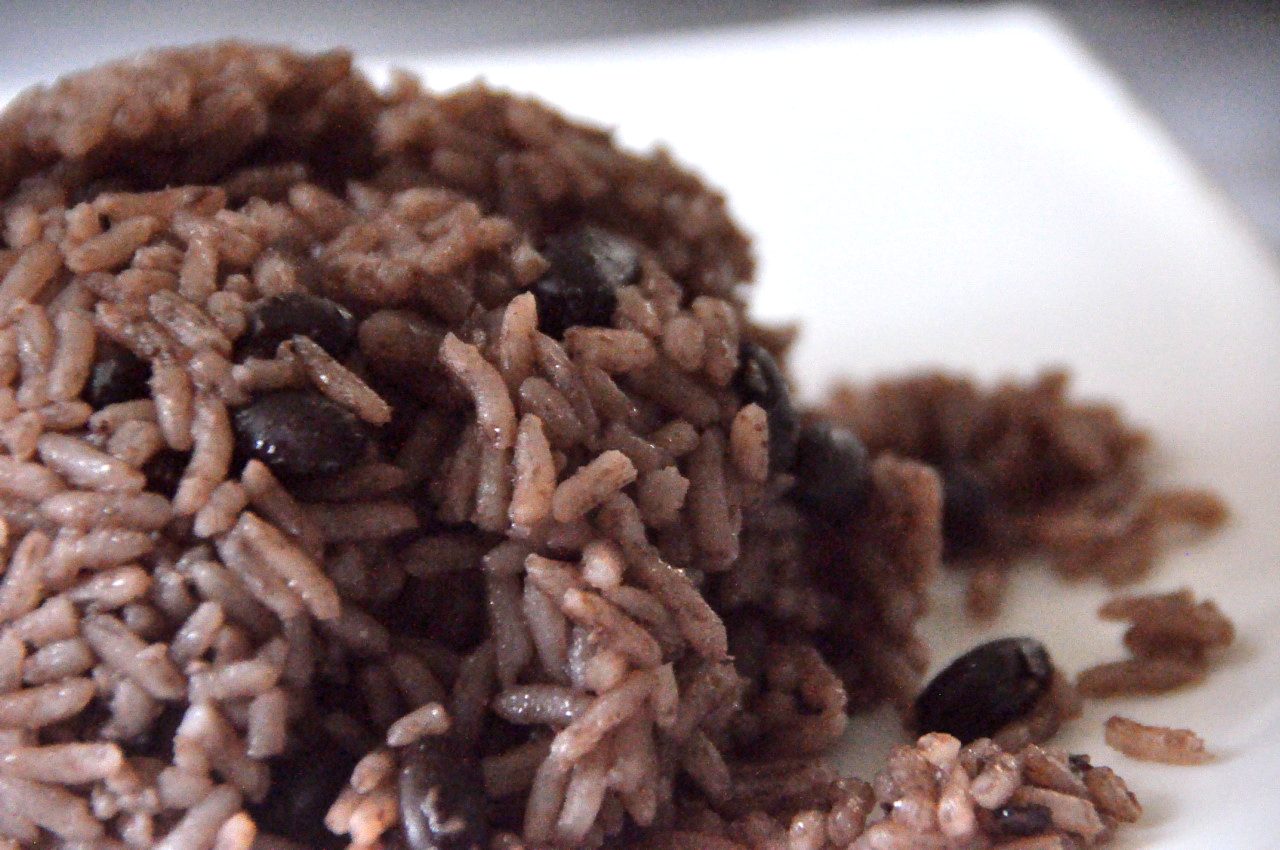
Cuban moros y cristianos is black beans and white rice cooked together in one pot, in the dark broth the beans were boiled in. The rice fries in the seasoning first and finishes dry and separate. Congri is the everyday Cuban name for it.
If the rice comes out sticky, the beans were too soft. Not the heat, not the rice.
What is moros y cristianos?
Black beans and white rice cooked in the same pot, in the beans’ own dark broth. That single pot is the whole definition. Moros y cristianos differ from plain arroz con frijoles “in that the beans and rice are cooked in the same pot instead of separately” (source). The name is a straightforward pairing: moros for the black beans, cristianos for the white rice (source).
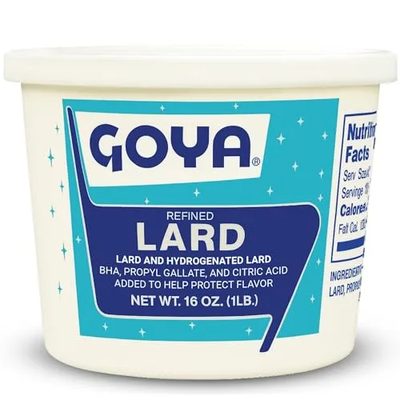
Lard is what carries the sofrito into the rice before any liquid touches the grains. Neutral oil works, but the dish loses the roundness that makes moros taste like moros.
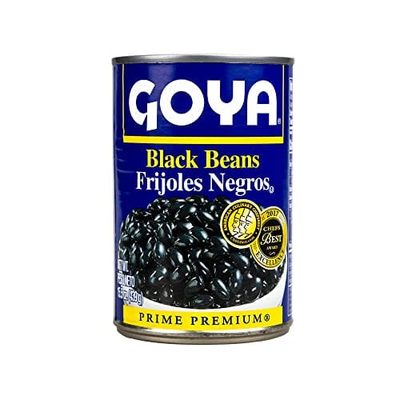
Goya Premium Black Beans, 15.5 oz
Premium black beans in a convenient 15.5 oz can, ready to heat and incorporate into any recipe calling for cooked beans.
Most Cubans call it congri in daily speech. The word originally meant the red-bean version from the eastern end of the island, western Cuba’s moros y cristianos being the black-bean one (source). The Diccionario de americanismos, the reference dictionary of the pan-Hispanic language academies, now defines congri in Cuba as rice with black or red beans (source). Both names are correct. Use whichever you grew up with.
It is not the same dish as beans in one pot and rice in another. BNP has that arrangement twice over: Belizean stewed black beans served beside separately cooked rice, and the Cuban version, frijoles negros, a soupy potaje ladled over white rice. There the beans stay wet and the rice stays white. Here they never separate.
Stop the beans early, and never add tap water
Two rules decide whether this comes out dry and grain-separate or sticky and gray.
The beans stop short of fully soft. Cook them as soft as you would for a bean stew and they burst in the rice pot. What spills out of a burst bean thickens everything around it, and the rice sets into a paste instead of falling apart. Test one against the roof of your mouth. It should give, not collapse.
The liquid is the beans’ own dark broth, hot, and nothing else. All the color in this dish lives in that broth. Top the pot up from the tap and the rice goes pale. Keep a second pot of broth warm on a back burner so the temptation never arises, and add it hot, since cold broth hitting hot rice stalls the cook.
One more thing separates this from ordinary rice and beans: the rice goes into the hot fat dry, before any liquid, and stays there two or three minutes until every grain is coated and starting to color. That is where the seasoning gets inside the grain rather than sitting around it.
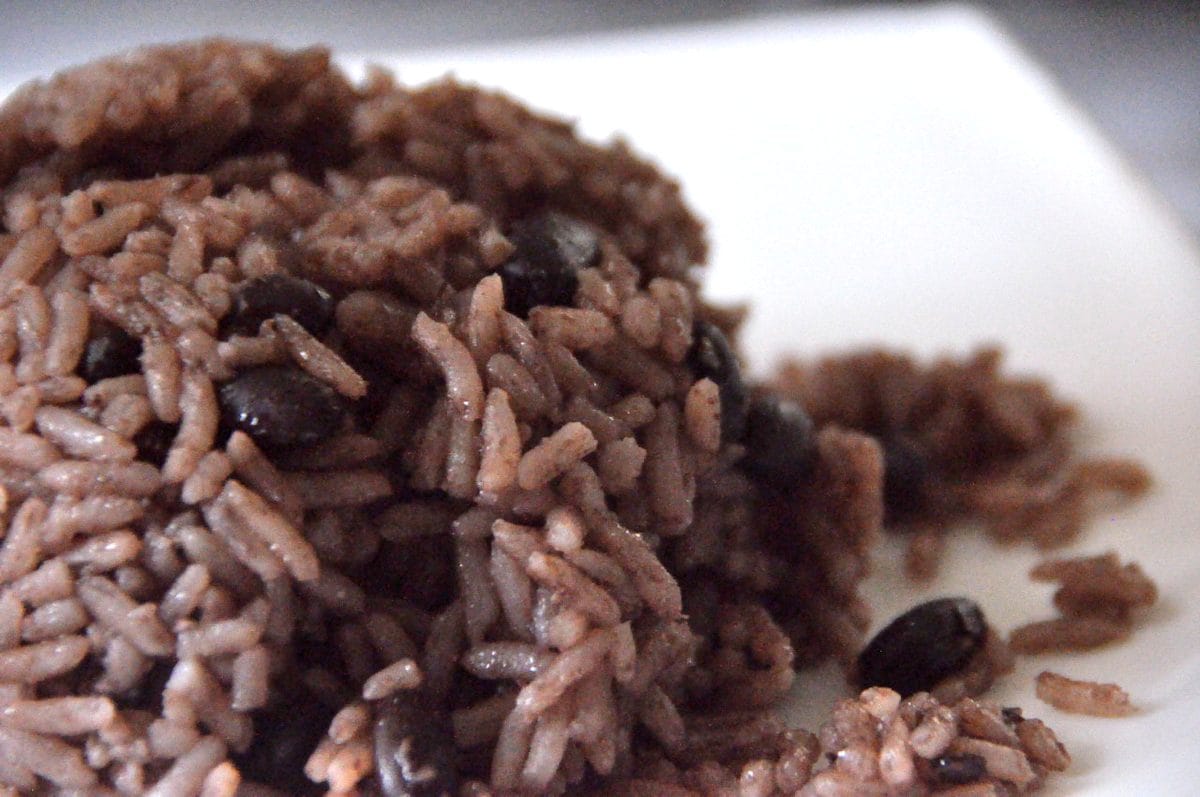
What you need for Cuban moros y cristianos
For the beans and broth
- 1 cup (200 g) dried black beans
- 8 cups (1.9 L) water, for cooking, plus more for soaking
- 1 bay leaf (about 0.2 g)
For the pot
- 3 tablespoons (45 g) lard (manteca de cerdo), or 3 tablespoons (45 ml) neutral oil
- 1 large yellow onion (about 300 g), finely chopped
- 1 medium green bell pepper (about 150 g), finely chopped, or 5 aji cachucha peppers
- 5 cloves garlic (about 15 g), finely chopped
- 2 teaspoons (4 g) whole cumin seed, lightly crushed
- 1 bay leaf (about 0.2 g)
- 1 1/2 teaspoons (9 g) fine sea salt, plus more to taste
- 2 cups (370 g) parboiled long-grain white rice
- 3 cups (720 ml) hot black bean cooking broth, plus up to 1/2 cup (120 ml) more if needed
- 1 1/2 cups (about 260 g) cooked black beans, lifted out of the broth
- 2 teaspoons (10 g) lard, to finish
Bay leaf goes in twice, once with the beans and once in the rice pot. It matters more here than in most Cuban dishes, and leaving it out is noticeable.
Parboiled rice is the safe choice because it resists overcooking through the long covered steam. Basmati works too and cooks up beautifully separate. Regular long-grain is the one to avoid, since it goes soft in the middle of the steam.
How long moros y cristianos takes
| Soaking the beans | 4 hours to overnight, not counted below |
| Prep | 20 minutes |
| Cooking the beans | 45 to 60 minutes |
| The rice pot | about 40 minutes |
| Total | about 1 hour 55 minutes |
| Serves | 6 |
With the beans already cooked and their broth in the refrigerator, the dish itself takes about 45 minutes.
How to make Cuban moros y cristianos
- Soak the beans overnight, or at least 4 hours, covered by three inches of cold water.
- Boil them in fresh water. Drain the soaking water, put the beans in a pot with 8 cups (1.9 L) of fresh water and one bay leaf, bring to a boil, then drop to a simmer.
- Simmer 45 to 60 minutes, until just tender and still whole. This is the step the dish turns on. Cook them further and they burst, the pot thickens, and the rice sets sticky. Test one against the roof of your mouth: it should give, not collapse.
- Separate beans from broth. Lift out 1 1/2 cups (about 260 g) of beans and set them aside. Keep every drop of broth hot on a low burner. You need 3 cups, and the rest should stay within reach. Leftover beans freeze well.
- Soften the sofrito. Melt the lard in a heavy pot or caldero over medium heat and cook the onion and green pepper about 8 minutes, until the onion turns translucent.
- Garlic last. Add the garlic with the crushed cumin seed and the second bay leaf and cook one minute more. Burnt garlic turns the whole pot bitter, so watch it.
- Fry the rice dry. Stir the rice straight into the seasoning and keep it moving two to three minutes, until every grain is coated and starting to color. No liquid yet, and keep stirring, because dry rice in hot fat catches fast.
- Check the ratio. Tip the reserved beans onto the rice and look at the pot before any liquid goes in. Too few beans, add a spoonful. Too many, take some out. This is the last moment you can fix it.
- Add the hot broth. Pour in 3 cups (720 ml) and stand back; it reacts hard against the hot rice. Add the salt and stir once.
- Boil hard, uncovered, about 8 to 10 minutes, until the surface liquid has nearly gone and the rice sits level with it. Stir occasionally so nothing catches.
- Steam 20 minutes on the lowest heat, covered, without lifting the lid. If the pot looks short of liquid before you cover it, add a splash more hot broth. Never water.
- Stir in the last lard. Uncover, check a grain, and fold the final 2 teaspoons through the hot rice. It comes out glossy and carries the seasoning better.
- Rest 5 to 10 minutes covered, off the heat, then fluff and serve. The grains should fall apart dry and separate.
Tips and variations
- Pressure-cook the beans and skip the soak. Twenty minutes at pressure, 25 if they are stubborn. They do not need to be as soft as for a bean stew, so err on the short side.
- Chicharrones in the pot. Pork cracklings cooked into the sofrito are a common addition and, to plenty of Cuban cooks, the version worth making. Rendered bacon works the same way: keep the fat for the base and crumble the crisp bacon over the finished platter.
- Aji cachucha instead of bell pepper. The small Cuban pepper is neither hot nor sweet and gives a rounder background than green bell. Five of them replace one bell pepper.
- Canned beans for a weeknight. One can of black beans plus a can and a half of water gets you there in half the time. The cost is color, since canned beans carry no dark broth, and the rice comes out gray rather than near-black.
- Lard or oil, both fine. Lard is the traditional fat and gives more flavor and shine. Oil works and nobody at the table will send it back.
- Keep lime off the rice. Citrus belongs on the pork beside it, not in this pot.
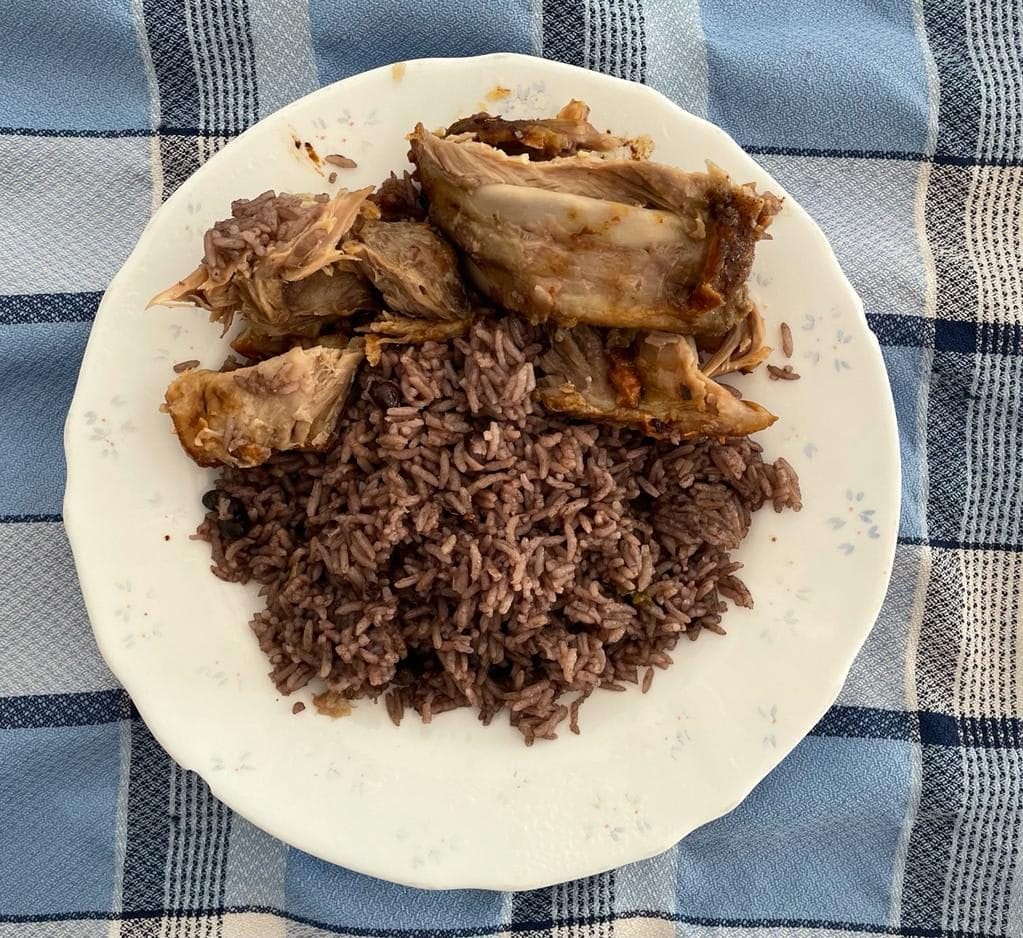
Where it sits on the table
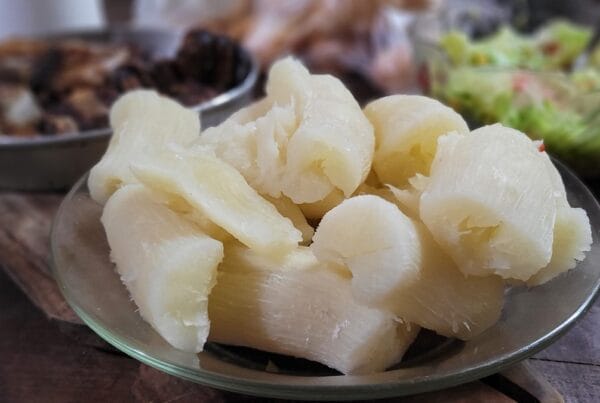
This is a side, and the main beside it is usually pork. Lechon asado, a shoulder marinated in sour orange mojo and roasted, is the pairing at Christmas Eve and at most celebrations. Yuca and a plate of sliced avocado fill out the rest.
Belize cooks its own one-pot rice and beans, simmered together in coconut milk rather than bean broth. Different liquid, different flavor, same underlying question about what happens when the rice and the beans share a pot.
Nutrition
Estimated, for one of 6 servings, based on the amounts above and standard ingredient labels. Calculated for the lard version.
| Calories | 355 kcal |
| Protein | 8 g |
| Fat | 8 g |
| Saturated fat | 3 g |
| Carbohydrates | 61 g |
| Sugar | 2 g |
| Fiber | 4 g |
| Cholesterol | 7 mg |
| Sodium | 580 mg |
Storing moros y cristianos
Cool the rice, cover it and refrigerate up to 4 days. Reheat covered with a tablespoon of water per cup so the grains steam back apart. Rice reheated dry from cold turns hard and chalky, so the splash under the lid is not optional.
It freezes in portions for up to 3 months. Thaw overnight in the refrigerator and reheat covered.
The real make-ahead is the beans. Cook them a day or two before and keep the beans and their broth in separate containers. Any beans you do not use freeze well in their broth.
Equipment you will want
- A heavy lidded pot or caldero, 5 to 6 quarts, wide enough that the rice sits in a shallow layer. A thin pot scorches during the covered steam.
- A second pot for the beans and their broth, kept hot on a back burner.
- A ladle, for moving hot broth into a hot pot without wearing it.
- A wooden spoon.
- A pressure cooker, optional, for the beans.
Skip the rice cooker. The rice has to fry in the seasoning before any liquid touches it, and a rice cooker cannot do that step.
Moros y cristianos questions, answered
What is the difference between congri and moros y cristianos?
Congri originally meant the red-bean version made in eastern Cuba, and moros y cristianos the black-bean one from the west (source). The Diccionario de americanismos now defines congri in Cuba as rice with black or red beans, so the two names have effectively merged. Either is correct for this dish.
Why did my moros y cristianos come out sticky?
The beans were cooked too soft. Past just tender, black beans burst and release starch that thickens the pot and sets the rice into a paste. Stop them at just tender and still whole, testing one against the roof of your mouth.
Why is my Cuban black beans and rice pale instead of dark?
Plain water went into the pot somewhere instead of the bean broth. All the color in this dish comes from that broth, so any water in its place leaves the rice gray. Keep every drop, use it hot, and top up with broth rather than water.
Can you make moros y cristianos with canned black beans?
Yes, with one can of beans and a can and a half of water. It halves the time. The trade is color, since canned beans bring no dark broth, so the rice comes out gray rather than near-black. Flavor holds up better than appearance.
What can you use instead of lard in moros y cristianos?
Neutral oil, at the same quantity. Lard gives more flavor and a better shine on the finished grains, but oil makes a good pot. Rendered bacon fat is the third option and adds smoke along with the fat.
How do you make moros y cristianos ahead of time?
Cook the beans a day or two ahead and refrigerate them and their broth separately. The rice pot then takes about 45 minutes. Reheat leftovers covered with a tablespoon of water per cup of rice.
How much moros y cristianos per person?
Two cups of raw rice with a cup and a half of beans feeds 6 as a side, so figure about a third of a cup of raw rice each. Scale up by half again if it is the main starch at a party rather than one of several dishes.
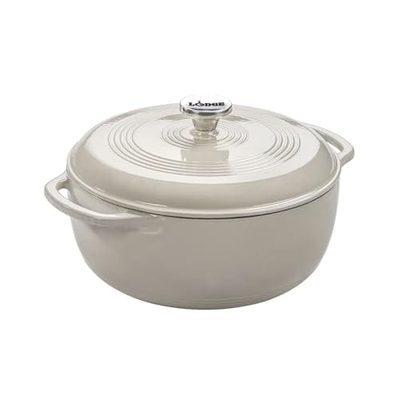
The rice and beans finish together under a lid, and that 20-minute covered steam is where a thin pot scorches. A heavy 5- to 6-quart pot keeps the rice in a shallow layer and the heat even across it.

Three cups of hot bean broth has to move from one pot into another that is already hot and already seasoned. A deep ladle does it in a few passes instead of wearing it.