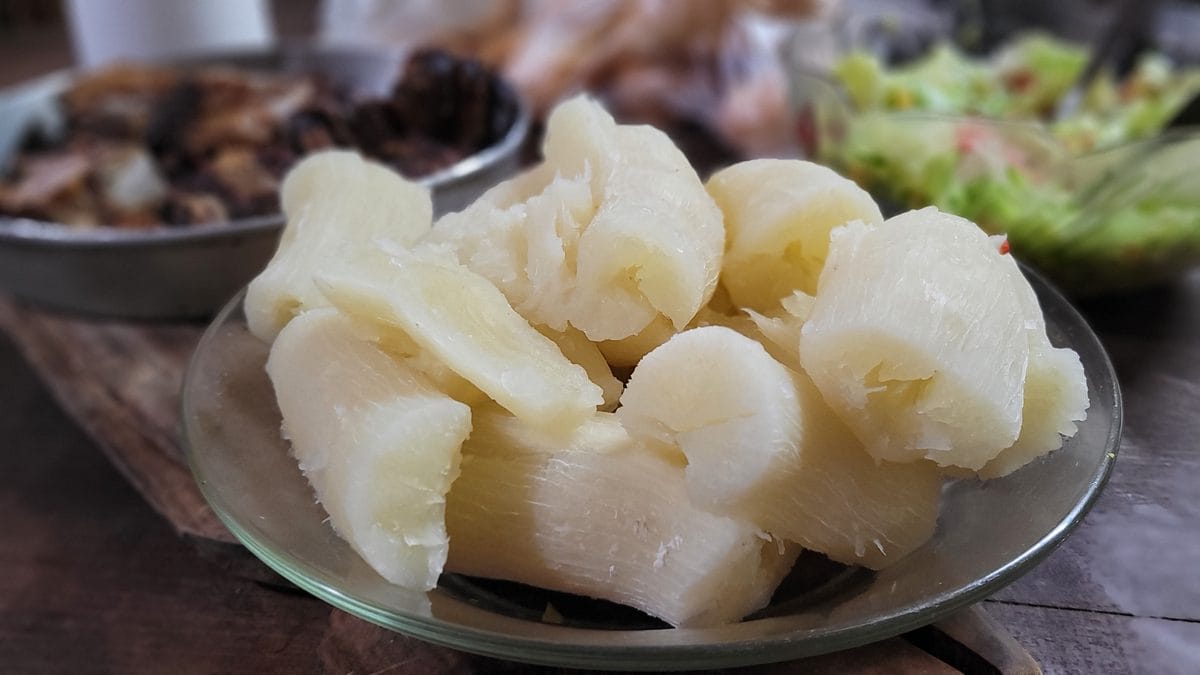
Cuban yuca con mojo is cassava root boiled in salted water until it flakes, then dressed with a hot garlic sauce. The mojo is olive oil, garlic mashed to a paste with salt, sliced onion, and sour orange or lime. The woody cord running down the center is pulled out before serving.
What makes Cuban yuca con mojo is the dressing, not the boiling
Boiled yuca by itself carries almost no flavor. The dish is not the boiling. The dish is what goes on top once the pot comes off the fire.
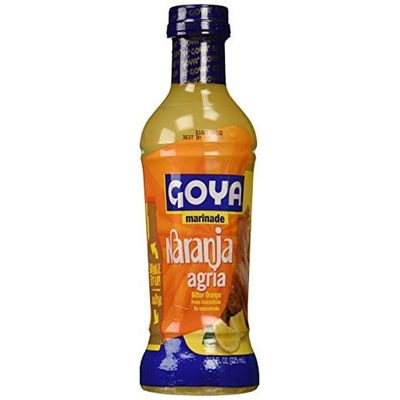
Mojo is garlic, oil and sour orange, so the citrus is carrying a third of the dish on its own. Naranja agria is bitter rather than sweet, and that bitterness is the point of it.
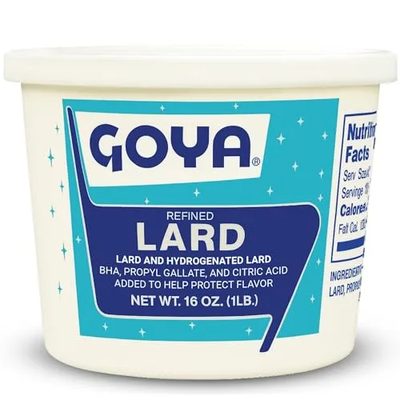
Pure lard (manteca) for making masa dough and frying - the fat traditional recipes rely on for texture and flavor.
Anitas Delights calls that top layer “kind of like a you could say like a dressing” (source), built from “sour orange, a little bit of olive oil, some garlic, oregano” (source). The sour orange gives the sour, the garlic carries the rest. It is made separately, poured on hot. Yuca and cassava are the same root under two names, and Cocinera Lele, cooking from Cuba, confirms it: “also known as cassava in many countries” (source).
Anitas Delights says it herself: “especially on Nochebuena, if you have your congrí and your lechón and you don’t have yuca, that’s it.” (source) Roast pork, yuca con mojo, and congrí do sit together at the Cuban Christmas Eve meal too (source). Even so, this is not only a holiday plate. Cocinera Lele calls it “a dish typically eaten in Cuba it can be found on any Cuban table” (source).
The dish is not the boiling. The dish is what goes on top once the pot comes off the fire.
Cassava bread is grated and baked. This one is boiled and dressed.
Cassava is one root, and it goes two ways here. Belizean cassava bread takes the grated root and presses it into cassava grated and baked into a flat bread, and cassava pone carries the same grated base into the sweet baked version of the same root. Yuca con mojo handles it the opposite way: whole pieces, boiled until soft, dressed instead of grated or baked.
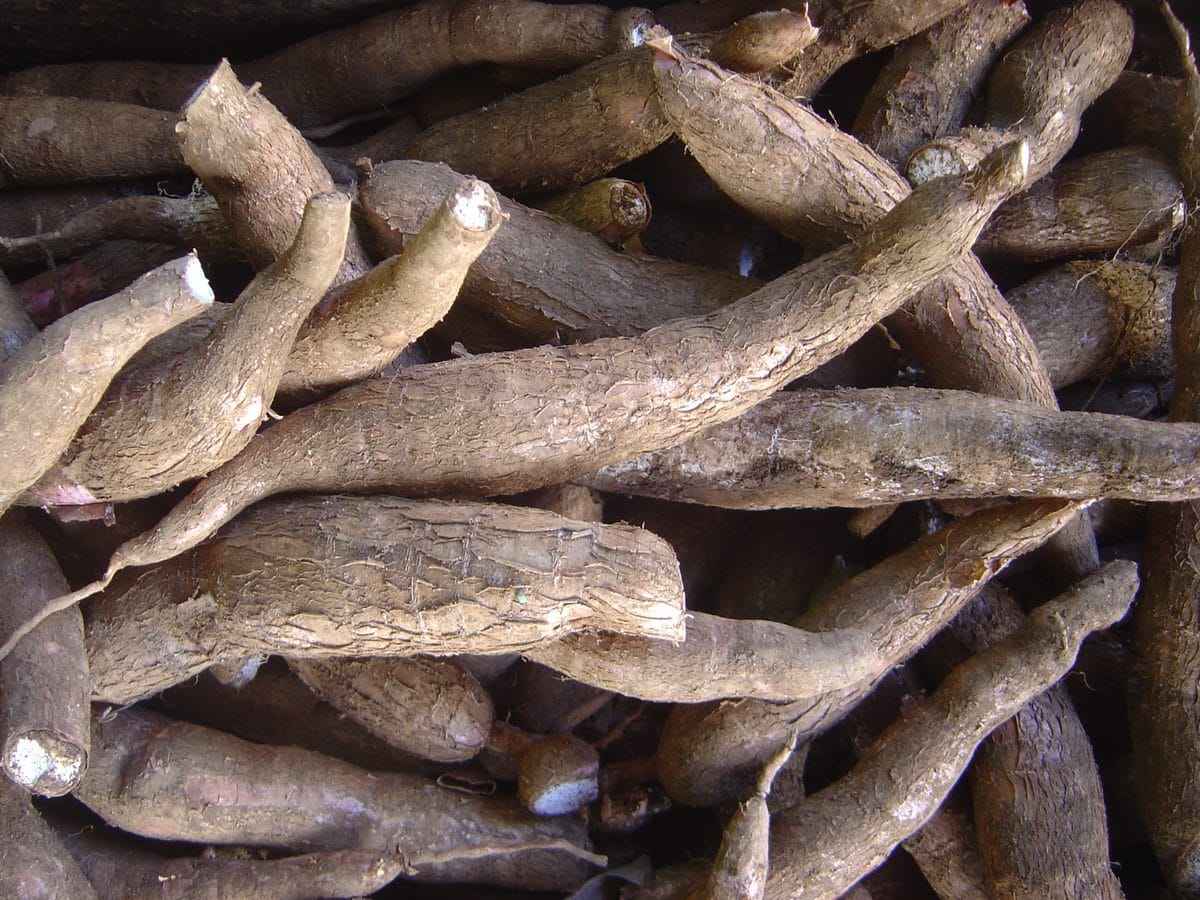
Cassava, Manihot esculenta, is a New World root, domesticated in South America and grown across pre-Columbian tropical America (source). That is what the plant record shows.
Fili knows the root, not the dish. She has peeled the waxy skin off it many times, and she knows what under-salted cassava tastes like no matter which country boiled it. The dish on this page belongs to Cuba.
Why the garlic is mashed with salt and the citrus goes in off the heat
The garlic gets crushed to a paste here, salt and all, in a mortar, not chopped. Cocinera Lele explains the mechanism herself: “the salt is gonna help me make the garlic into a paste” (source). The salt is grit, breaking the clove down instead of leaving pieces that brown unevenly. NydiasMiamiKitchen mashes seven cloves with salt in her mortar (source); Cocina Con Fujita uses nine (source). All four mash. None mince.
All four mash. None mince.
The oil is not a drizzle either. NydiasMiamiKitchen measures three quarters of a cup and defends it on camera: “it looks like I have a lot of olive oil but remember this oil is the sauce that is going to coat all that Yuka” (source). That much oil is the point. It is also why every cook takes the pan off the heat before the citrus goes in: hot oil and juice spatter. The woody cord comes out the same way, only after the boil, once the yuca softens enough to release it.
Cocinera Lele lets her garlic go longer than the rest, 4 to 5 minutes on medium-low (source), for a rounder mojo. A minute or two on higher heat gets a sharper one. Three of four pour the mojo over plated yuca. NydiasMiamiKitchen returns hers to the skillet instead, turning it through the sauce two to three minutes (source). Neither way is the only way.
Ingredients
Yield: 6 servings.
- 2 lb (900 g) yuca (cassava), fresh or frozen, peeled and cut into 3-inch (7 cm) pieces
- 1 tbsp (18 g) salt, for the boiling water, plus more to taste
- 1/2 cup (120 ml) extra-virgin olive oil
- 7 cloves garlic (about 25 g), peeled
- 1/2 tsp (3 g) salt, for mashing with the garlic
- 1 medium onion (about 150 g), halved and sliced thin
- 1/3 cup (80 ml) sour orange juice (naranja agria), or equal parts fresh orange and fresh lime juice
- 1/2 tsp (1 g) dried oregano (optional)
- 2 tbsp (8 g) chopped fresh parsley or cilantro, to finish (optional)
- 1/2 cup (40 g) chicharrón, crumbled over the top (optional)
Sour orange versus lime is a real split. Anitas Delights (source) and Cocina Con Fujita (source) reach for sour orange. Cocinera Lele (source) and NydiasMiamiKitchen (source) prefer lime. No sour orange on the shelf? Anitas Delights’ fix: “use equal parts orange, equal parts lime juice” (source).
The oregano here is Mediterranean, not Mexican, a different plant that tastes different in this sauce.
Instructions
- Peel the yuca. Cut it crosswise into 3-inch (7 cm) pieces, stand each piece on end, slit the skin, and lift it away in strips. Frozen yuca comes already peeled; skip to step 2.
- Put the yuca in a large pot, cover with cold water by 2 inches (5 cm), and add 1 tablespoon of salt.
- Bring to a boil, then simmer 25 to 30 minutes, until a fork slides in with no resistance and the pieces start to flake.
- While the yuca boils, mash the garlic with 1/2 teaspoon of salt in a mortar until it forms a paste.
- Warm the olive oil in a small skillet over medium-low heat.
- Add the sliced onion and cook until it softens, about 4 minutes.
- Add the garlic paste. Cook 1 to 2 minutes for a sharper mojo, or 4 to 5 minutes on low for a rounder one. Do not let it take on color.
- Take the pan off the heat. Pour in the sour orange juice carefully; it spatters. Add the oregano and a pinch of salt, then return to low heat for 1 minute.
- Drain the yuca and pull the woody cord from each piece with a fork.
- Taste the yuca and salt it.
- Arrange the yuca on a platter and pour the hot mojo over it. This is how three of the four cooks finish the dish. NydiasMiamiKitchen’s minority variation: return the drained yuca to the skillet and turn it through the mojo for 2 to 3 minutes instead.
- Finish with parsley or cilantro, and chicharrón if using. Serve hot.
Nutrition
Estimated per serving, for a recipe that yields 6 servings.
- Calories: 410 kcal
- Fat: 18 g
- Saturated fat: 3 g
- Cholesterol: 0 mg
- Carbohydrates: 60 g
- Fiber: 3 g
- Sugar: 3 g
- Protein: 3 g
- Sodium: 600 mg
Most of the boiling salt leaves with the water. These numbers reflect what remains.
Yuca dries out fast, so leave it in its water
Anitas Delights explains why you should not drain yuca made ahead: “if you make your yuca ahead of time, make sure you don’t drain the yuca and you leave it in that water because the yuca dries out very, very quickly” (source).
Refrigerate leftovers, covered, up to 3 days, and reheat gently with a spoonful of mojo or a little water. NydiasMiamiKitchen turns extra yuca into fried bites the next day (source), a different dish entirely.
Equipment
- A large pot, 6 to 8 quarts
- A mortar and pestle (pilón) for the garlic, the tool the dish turns on. A mortar earns its place on a counter well beyond this recipe.
- A small skillet for the mojo
- A sharp paring knife for the skin
- A citrus press, for juicing by hand
Lard, frozen yuca, and chicharrón are all fair game
Anitas Delights says lard is traditional, though she uses olive oil because it works just as well (source). Cocina Con Fujita uses rendered pork fat instead (source). Treat both as choices, not history.
Frozen yuca, it is not a compromise. All four cooks work with it. Anitas Delights (source), Cocinera Lele (source), and Cocina Con Fujita (source) all allow it. NydiasMiamiKitchen buys hers frozen, and says many home cooks in Miami do the same (source).
Red onion is Cocina Con Fujita’s preference (source). NydiasMiamiKitchen finishes hers with chicharrón (source). The same root also turns up as cassava cut up and fried, with chicharrón over it. A different dish, same root.
Frequently Asked Questions
What is Cuban yuca con mojo?
Cuban yuca con mojo is cassava boiled until it flakes, then dressed with hot olive oil, garlic mashed with salt, onion, and sour orange or lime. The woody cord is pulled out first. Cocinera Lele calls it a dish typically eaten in Cuba, found on any Cuban table (source). It is also served alongside roast pork and congrí at the Cuban Christmas Eve table (source).
Can I use frozen yuca instead of fresh?
Yes. All four Cuban cooks behind this recipe accept frozen yuca, and two prefer it. NydiasMiamiKitchen buys hers frozen and says many home cooks in Miami do the same (source).
What do I use if I cannot find sour orange?
Use equal parts fresh orange juice and fresh lime juice. Anitas Delights gives this exact fix when sour orange is not on the shelf (source).
Why is the woody cord in the middle of the yuca removed?
The cord is the fibrous, woody core running through the root. Every cook here removes it after boiling, once it lifts free with a fork.
Why does my yuca taste bland?
Bland yuca almost always means too little salt in the boiling water. Anitas Delights describes under-salted yuca directly: it “kind of tastes like nothing” (source). Salt the water generously, then taste and add more before the mojo goes on.
What is served with yuca con mojo at a Cuban table?
At the Cuban Christmas Eve table, yuca con mojo sits alongside roast pork and congrí (source).
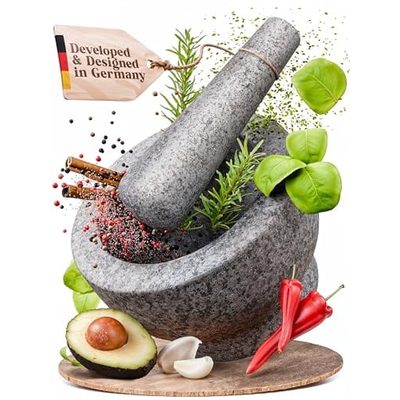
The pilon is the tool this dish turns on. Seven cloves mashed with salt into a paste give up far more than chopped garlic does, and the mojo tastes different for it.
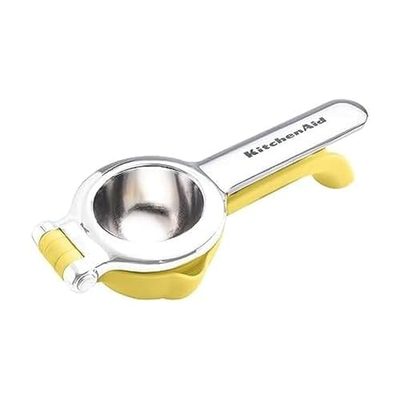
If you use the orange-and-lime substitute you are juicing several pieces of fruit for a third of a cup. A press does it quickly and keeps the seeds out of the mojo.