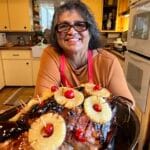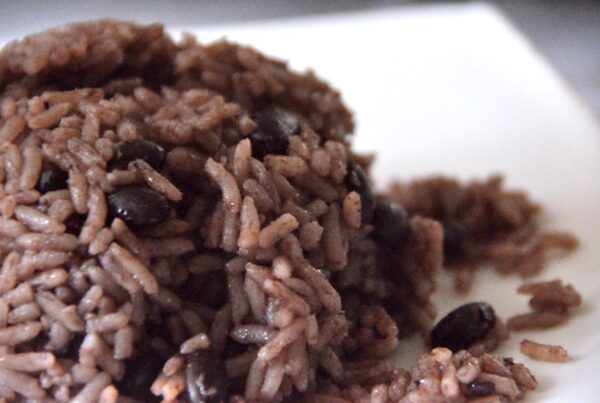
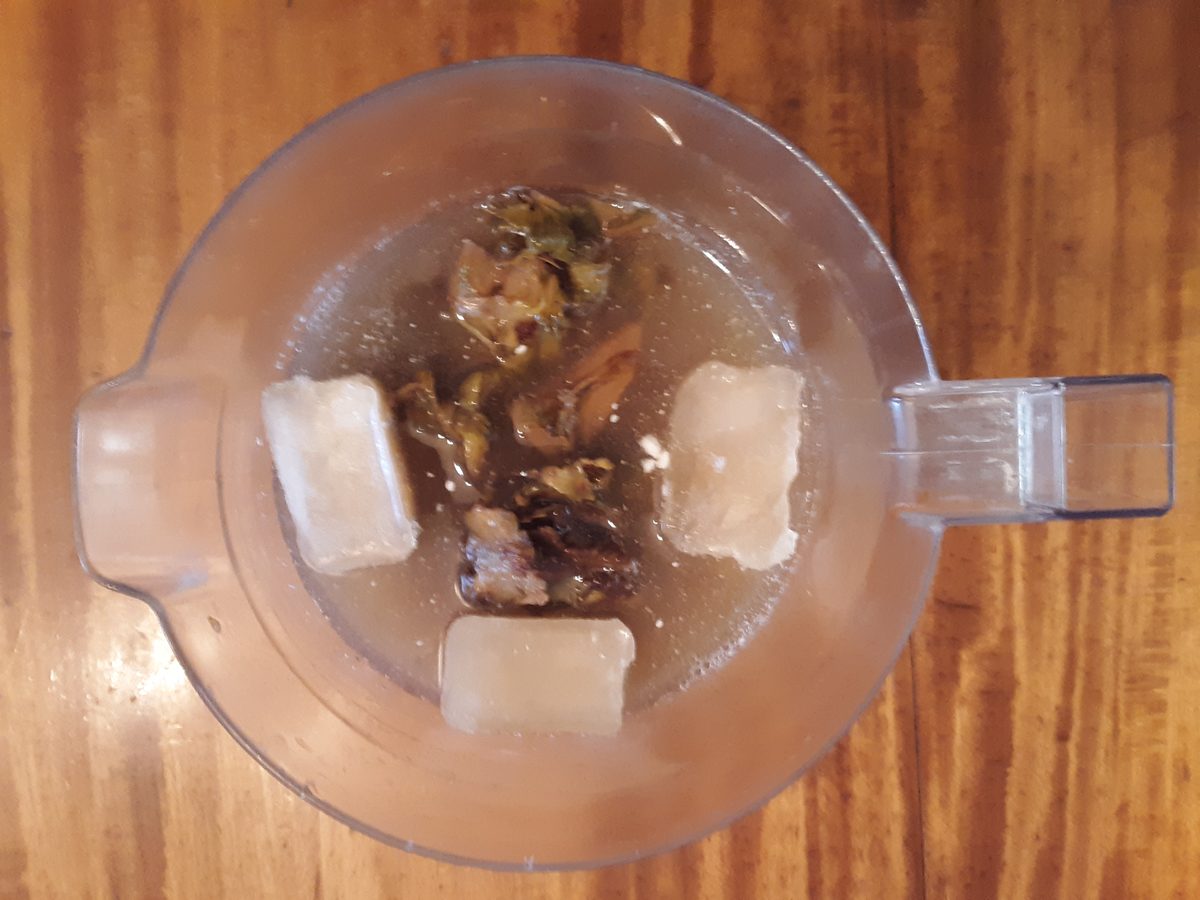
Gallo en chicha is a Salvadoran celebration stew made from rooster or hen pieces slow-braised in chicha — a fermented drink of panela, pineapple, and spices — simmered with tomato, prunes, raisins, and cinnamon until the sauce turns dark and sweet-tangy. Pipil and mestizo families in El Salvador make it for Semana Santa (Holy Week) and major celebrations.
What Is Gallo en Chicha and Why Do Salvadorans Make It for Semana Santa and Celebrations?
The smell hits you before you see the pot. Cinnamon and cloves, something fruity underneath, something dark that you cannot name right away but that your body already knows is a long-cooked braise. The first time I ate gallo en chicha in El Salvador, the cook set it on the table like she was placing something valuable. Because she was.
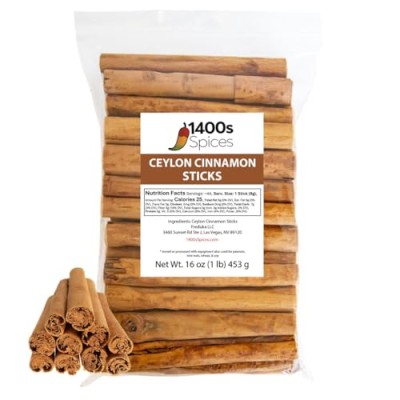
1400S Spices Ceylon Cinnamon Sticks from Sri Lanka, 1lb (Canela Entera)
Ceylon cinnamon is sweeter and milder than cassia — the right choice for atole, conkies, and sweet drinks. These are whole dried sticks from Sri Lanka.
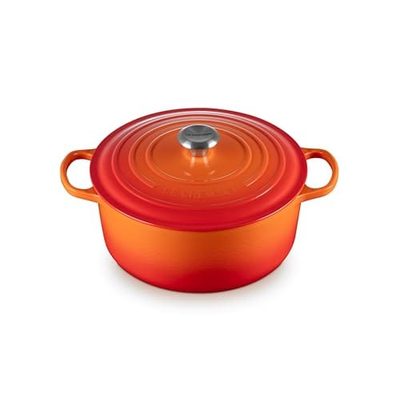
Cast iron dutch oven (Le Creuset)
Heavy cast iron Dutch oven with enamel coating - distributes heat evenly for long, low-temperature cooking and braising without losing liquid to evaporation.
Gallo en chicha is Salvadoran in origin, a dish that comes out of the meeting between Pipil indigenous traditions and Spanish colonial cuisine. The Pipil are a Nahua-descended people of El Salvador who have been fermenting corn and making chicha since long before any European arrived with their prunes and cinnamon. What the Spanish brought landed on top of what was already there. The result is a stew unlike anything you will find in Belize or Guatemala, though you can find versions of it across the region.
The rooster in the name is not decorative. Historically, a gallo was a prized animal, and slaughtering one for the pot was a commitment. Wikipedia notes that the dish was traditionally made on Mondays, with the losers of weekend cockfights used as the ingredient. That is a footnote today, but it explains why the dish carries the weight it does: a rooster was not everyday protein. You cooked it when the occasion demanded.
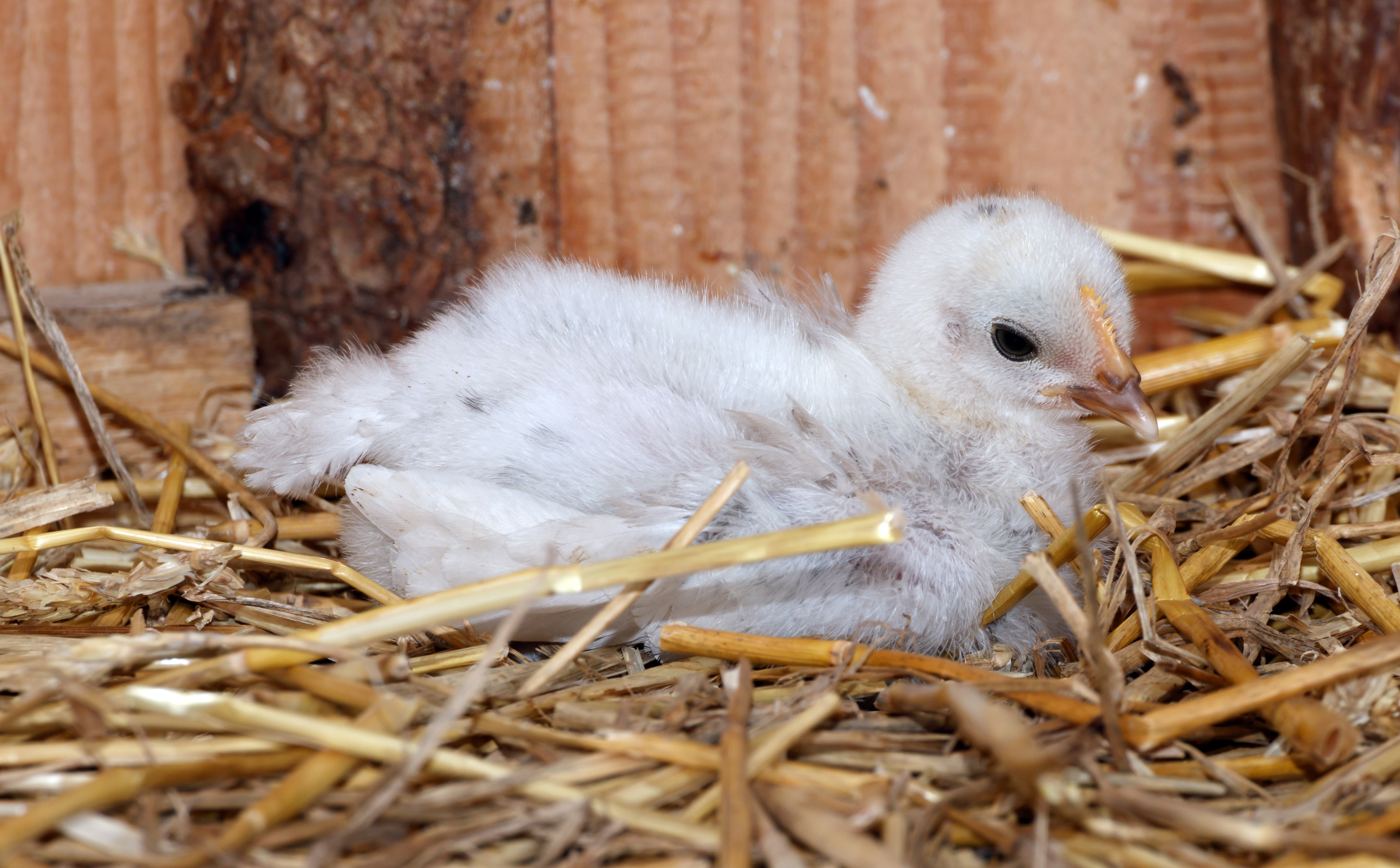
A rooster was not everyday protein. You cooked it when the occasion demanded.
What makes gallo en chicha the celebration dish of El Salvador — made above all for Semana Santa (Holy Week), and also at Christmas, births, baptisms, New Year’s, and reunions — is exactly this: the time the dish requires signals the value of the occasion. You do not braise a gallo in chicha for a Tuesday. Across El Salvador, every family matriarch carries her own recipe, passed from her to her daughters and granddaughters. That is not a recipe; that is a transmission.
For a fuller picture of the Salvadoran table, the El Salvador food guide covers the full festive calendar, and the Salvadoran gallo en chicha recipe sits at the center of it.
What Goes Into Salvadoran Chicha, and Why It Changes the Stew
The braising liquid is where the Salvadoran gallo en chicha recipe becomes itself.
Chicha, in this context, is a fermented drink made from corn, pineapple skins, panela (the raw pressed sugarcane block that tastes nothing like refined sugar), and a spice bundle: ginger, allspice berries, cloves, cinnamon. The mixture ferments in a clay pot for eight to ten days, until it turns foamy and tangy and lightly alcoholic. That is the real chicha, the chicha of ancestors and ceremonies, documented in the Salvadoran food traditions at elsalvadorinfo.net.
For this stew, many cooks use chicha that has fermented for only two or three days, lighter and less alcoholic. The fermentation is doing two things at once: it tenderizes the meat over the long braise, and it carries complex sweet-tart-spiced notes that no other liquid can replicate. If you are cooking outside El Salvador and cannot source or make chicha, the substitute that works is one and a half cups of pineapple juice mixed with two tablespoons of apple cider vinegar. It will not be identical, but it will be in the right register. The cooks at thekitchencommunity.org confirm this is the standard diaspora workaround.
The full stew builds on this braising base: chicken or rooster pieces, tomato, white onion, garlic, green bell pepper, panela, cinnamon stick, whole cloves, allspice berries, bay leaf, prunes, and raisins. Some recipes add olives and carrots in the last twenty minutes.
The prunes and raisins are not a Salvadoran quirk. They trace back to Moorish and Arabic influence on Spanish colonial cuisine, brought to the Americas from Spain via four centuries of culinary borrowing, as documented in the ingredient research at 196flavors.com and amigofoods.com.
The sauce cooks down to something dark and syrupy, thick enough to coat a spoon. It is simultaneously sweet from the panela, tangy from the chicha and pineapple, fruity from the prunes and raisins, and warm-spiced throughout. There is nothing like it in the Belizean kitchen. The closest comparison in the corridor is Yucatecan mole negro, and even that is not close.
Ingredients
For the chicha braising liquid (or substitute):
- 2 cups Salvadoran chicha (see notes on fermented vs. fresh) OR 1½ cups pineapple juice plus 2 tablespoons apple cider vinegar
- 1 tablespoon apple cider vinegar (if using chicha, adds brightness)
For the stew:
- 1 whole rooster (gallo), cut into pieces; OR 2½–3 lbs bone-in chicken thighs and drumsticks
- Salt and black pepper to taste
- 3 tablespoons vegetable oil
- 4 Roma tomatoes, roughly chopped
- 1 medium white onion, diced
- 4 garlic cloves, minced
- 1 green bell pepper, diced
- 3 oz panela (piloncillo / rapadura), grated or broken; or substitute ¼ cup packed dark brown sugar
- 1 cinnamon stick
- 4 whole cloves
- 4 allspice berries (pimienta gorda)
- 2 bay leaves
- ½ cup pitted prunes, halved
- ¼ cup raisins
- Salt to taste
- Fresh cilantro to finish
Optional additions (traditional in some families):
- ½ cup green olives, pitted
- 1 medium carrot, sliced into rounds (added in last 20 minutes)
Instructions
- Season the chicken or rooster pieces generously with salt and black pepper. Let them sit for 20 minutes while you prep the vegetables.
- Heat the oil in a large heavy pot or Dutch oven over medium-high heat. Working in batches, brown the pieces on all sides until golden, about 4 minutes per side. Do not crowd the pan; the browning matters here. Remove and set aside.
- Reduce heat to medium. In the same pot, sauté the onion until soft and translucent, about 5 minutes. Add the garlic and green pepper and cook 2 more minutes.
- Add the tomatoes, stirring and scraping up the browned bits from the bottom of the pot. Cook until the tomatoes break down and the mixture looks like a rough sauce, about 8 minutes.
- Return the chicken to the pot. Add the chicha (or pineapple juice substitute), panela, cinnamon stick, cloves, allspice berries, and bay leaves. Stir everything together.
- Bring to a gentle boil, then reduce heat to low. Cover and simmer for 45 minutes if using chicken thighs, or 1.5 hours if using rooster, until the meat is very tender.
- Add the prunes, raisins, and olives if using. Continue cooking uncovered for 20–25 minutes, until the sauce reduces and darkens to a deep brown, thick enough to coat a spoon.
- If using carrots, add them in the last 20 minutes of the uncovered simmer. Taste and adjust salt.
- Remove the cinnamon stick, bay leaves, and whole spices. Finish with fresh cilantro. Serve with white rice, pan francés (Salvadoran bread), or fresh corn tortillas.
The Chicha Tradition That Gives This Stew Its Character
Chicha is one of the oldest fermented drinks in Mesoamerica. The Pipil people of El Salvador were fermenting corn long before the Spanish arrived, as part of both daily life and ritual, documented in the Salvadoran food history preserved at elsalvadorinfo.net. What the Spanish colonial period did was layer onto that tradition: the cinnamon and cloves from the spice trade, the prunes from Moorish-Iberian dried fruit culture, the panela from colonial sugarcane agriculture.
Gallo en chicha sits at the exact point where those two histories meet. It is not a Spanish dish adapted for a Salvadoran table. It is a Salvadoran dish that absorbed Spanish ingredients without becoming Spanish. That is a meaningful distinction.
The dish belongs to the Salvadoran festive calendar. Semana Santa (Holy Week) is the primary occasion, with Christmas (Navidad) and New Year’s (Año Nuevo) following close behind, along with quinceañeras, births, and baptisms. What these occasions share is that they require a demonstration of effort. The fermentation time for chicha alone, eight to ten days in a clay pot, is a commitment. When someone makes gallo en chicha for you, they started planning weeks before you arrived.
When someone makes gallo en chicha for you, they started planning weeks before you arrived.
The dish also shows up in Guatemala, though the Salvadoran version is the primary reference. Wikipedia describes it as similar to coq au vin, the French dish of chicken braised in wine. The comparison is structurally accurate (long braise in an acidic liquid with aromatics) and flavor-wise entirely wrong. There are no lardons, no mushrooms, no Burgundy. The panela and the pineapple take the sauce somewhere the French never went.
Unlike pavo en relajo — El Salvador’s other great celebration bird, built on a toasted seed-and-spice dry blend called relajo — gallo en chicha contains no relajo at all. The chicha ferment and panela are the entire flavor engine, which is why the two dishes taste nothing alike despite sharing a festive occasion.
If you want to explore the broader context of this cuisine, the El Salvador food guide covers the full arc of the festive table. And if you are building a Salvadoran meal, consider pupusas as a companion dish: the corn-and-masa stuffed rounds that are the other cornerstone of the Salvadoran kitchen.
How to Make Gallo en Chicha Without a Rooster
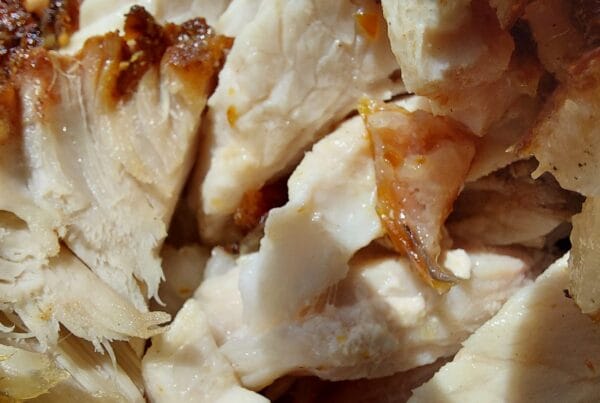
The most common substitution: bone-in chicken thighs and drumsticks. They have the fat and collagen the long braise needs to produce the right sauce consistency. Boneless chicken breast will dry out. Chicken thighs also cook significantly faster, about 45 minutes versus the rooster’s one and a half hours, which matters on a weeknight.
On the chicha question: the fully fermented chicha contains alcohol, which reduces substantially during the long braise. If you are cooking for children or simply want to avoid it, use fresh pineapple juice with a teaspoon of brown sugar or grated panela. The flavor will be sweeter and less tangy, but the dish will still be good. The acidity from the pineapple does most of the work.
For panela, piloncillo is the closest widely available substitute. You will find it in Mexican and Latin grocery stores as a cone of dark pressed sugar. Colombian stores may carry it labeled as panela. Whole Foods and most large Latin markets in the US stock it. Dark brown sugar works in a real emergency, but the mineral depth of panela is not something brown sugar replicates.
Make-ahead note: gallo en chicha is better the next day. The sauce firms up overnight, the spices settle into the meat, the sweetness from the prunes distributes more evenly. Refrigerate it and reheat gently with a splash of water. It also freezes well up to three months.
When serving, consider curtido alongside: the bright pickled cabbage relish makes a natural accompaniment. The acidity cuts the sauce and resets the palate between bites.
Not sure how this compares to the other festive braises? See what relajo actually is.
Frequently Asked Questions
What is gallo en chicha?
Gallo en chicha is a traditional Salvadoran stew made from rooster or chicken pieces braised in chicha, a fermented drink made from corn, pineapple skins, panela, and spices. The sauce slow-cooks down with tomato, prunes, raisins, cinnamon, and cloves until it is dark, thick, and sweet-tangy. Pipil and mestizo families in El Salvador make it for Semana Santa (Holy Week) and major celebrations, including Christmas.
What is chicha and where does it come from?
Chicha is a fermented drink with pre-Columbian roots across Mesoamerica. The Salvadoran version used in this stew is made from corn, pineapple skins, panela, ginger, allspice, cloves, and cinnamon, fermented in a clay pot for eight to ten days. Different countries make different styles of chicha, but the Salvadoran pineapple-and-panela chicha is specific to this tradition.
Can I substitute regular chicken for rooster in gallo en chicha?
Yes. Bone-in chicken thighs and drumsticks are the standard substitute. They have enough fat and collagen to hold up to the long braise and produce the thick sauce the dish requires. Avoid boneless chicken breast, which dries out. Chicken cooks in about 45 minutes; rooster takes one and a half hours.
What does gallo en chicha taste like?
The flavor profile is sweet from the panela, tangy from the chicha and pineapple, fruity from the prunes and raisins, and warm-spiced throughout from cinnamon, cloves, and allspice. The sauce is dark and syrupy, not brothy. There are no fresh chiles and no dried chile heat. It is unlike any Central American dish most people outside El Salvador have eaten.
Is gallo en chicha alcoholic?
The chicha used in cooking is lightly fermented and contains some alcohol, but it reduces substantially during the long braise. The finished stew contains negligible residual alcohol. If you use the pineapple juice substitute, there is no alcohol at any point in the process.
What do you serve with gallo en chicha?
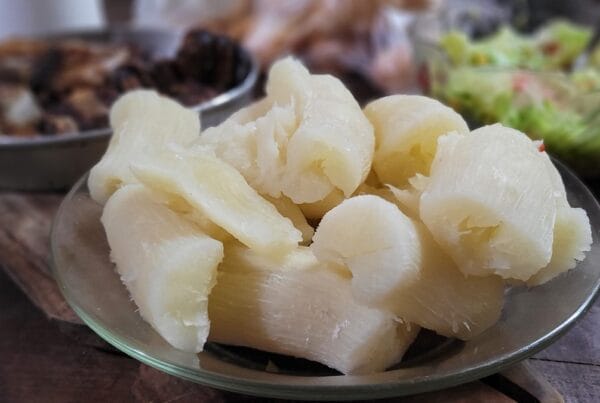
White rice is the standard base, absorbing the dark sauce. Pan francés, the soft Salvadoran French-style bread, is traditional alongside. Fresh corn tortillas also work. Curtido, the pickled cabbage relish, is a classic accompaniment: its acidity cuts through the sweetness of the sauce and balances each bite.
How is gallo en chicha different from pavo en relajo?
Both are Salvadoran celebration dishes, but they have completely different flavor engines. Pavo en relajo is turkey braised in relajo, not roasted built around relajo, a toasted dry blend of pumpkin seeds, sesame, peanuts, dried chiles, and spices ground into a sauce. Gallo en chicha uses no relajo at all — the flavor comes entirely from the chicha ferment and panela, giving the sauce a sweet-tangy-fruity character that relajo-based dishes do not have. Pavo en relajo is also more closely associated with Christmas specifically; gallo en chicha centers on Semana Santa.
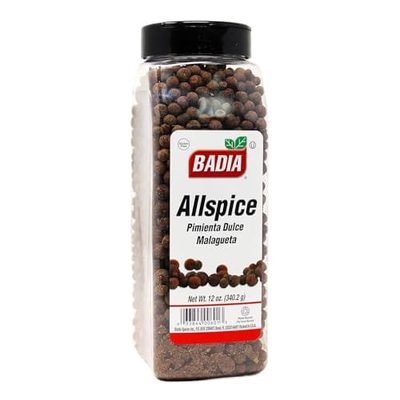
Whole allspice berries you grind fresh; the warm, complex spice flavor is strongest when ground right before use, unlike pre-ground powder.
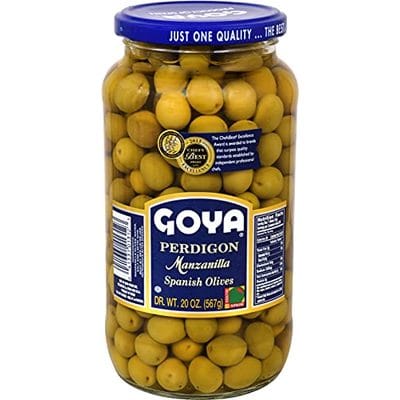
Goya Perdigon Manzanilla Spanish Olives
Queso relleno picadillo needs olives, capers, and raisins working against the pork. Manzanillas are the small, firm grade that hold their shape through the stuffing and the steam.
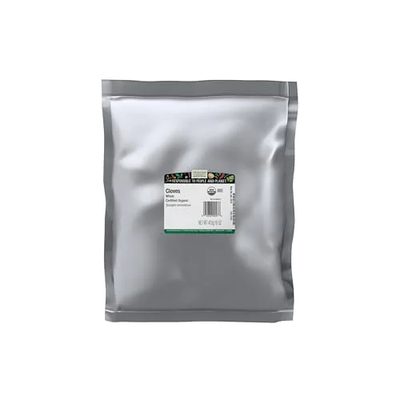
Frontier Co-op Whole Cloves, Organic, Hand Select, 16 oz
Spice pastes, dark stews and braised meats all call for whole cloves ground or simmered into the dish. Whole cloves keep their volatile oils far longer than ground.

Pineapple juice with no added sugar. The pantry staple when a recipe calls for real pineapple flavor, in cans sized to use up without waste.