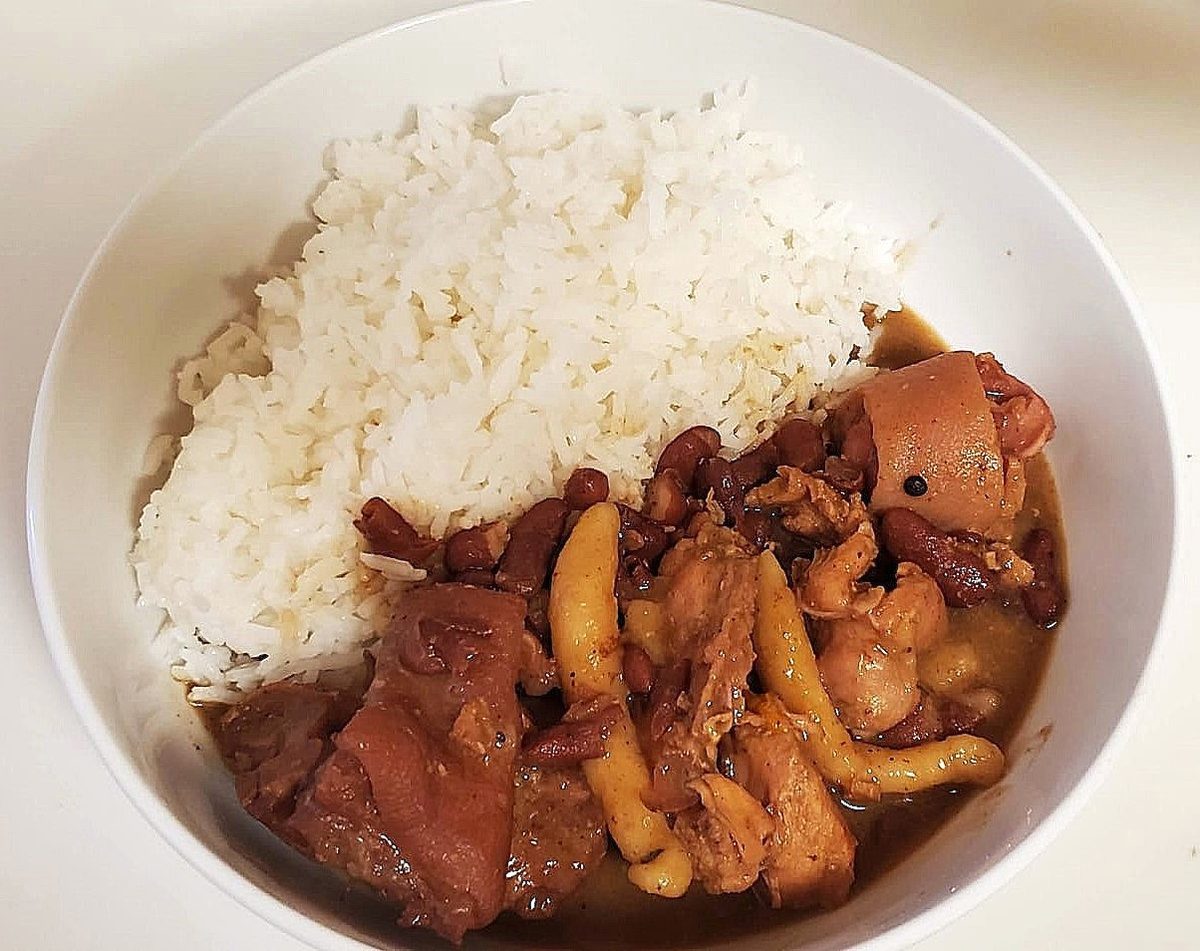
Jamaican stew peas is red kidney beans simmered with salted meat and coconut milk until the pot goes thick and deep red, with hand-rolled dumplings called spinners dropped in near the end. The name confuses people: red peas is what Jamaicans call red kidney beans, so stew peas is a bean stew.
Ingredients
Amounts here feed six. Dry peas, not canned, and salted meat that needs handling before it goes anywhere near the pot. The coconut milk is what separates this from every other bean stew in the region.
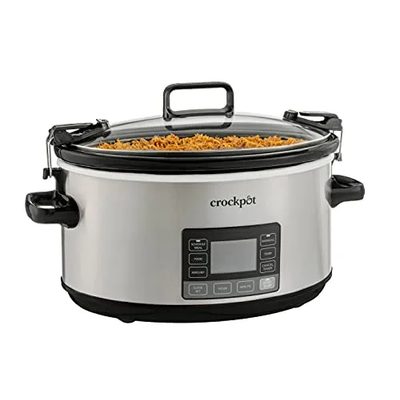
Stewed beans, cow foot soup, pigtail stews, anything that wants four to eight hours of low simmer, works cleanly in a 7-quart programmable slow cooker. The size handles family-batch cooking that smaller models can't.
WECK Canning Jars 742 Mold Jars, 1/2 Liter Tall Jar Set (2 Jars)
Spice pastes, ground spices and toasted seeds all keep longer in glass with a silicone seal than in plastic. Tall gasket-sealed glass jars are the editorial pick for paste and spice storage.
The base
- 1 lb (450 g) dry red kidney beans, called red peas in Jamaica.
- 2 cups (475 ml) coconut milk, freshly squeezed from dry coconut if you can.
The meat
- 1 lb (450 g) salted pigtail.
- 1 lb (450 g) oxtail.
- 1 lb (450 g) salt beef or cured beef.
Not all three at once, necessarily. Cooks pick and combine: pigtail with oxtail, pigtail alone, or salted beef on its own are all standard. If you want the oxtail treated as the centrepiece rather than as seasoning, that is Jamaican oxtail.
Aromatics and seasoning
- 4 garlic cloves, minced.
- 1 tbsp pimento seeds (allspice berries).
- 3 scallions, chopped.
- 4 sprigs fresh thyme.
- 1 to 2 pimento peppers.
- 1 whole Scotch bonnet pepper.
- 1 tbsp all-purpose seasoning, 1 tsp black pepper, 1 tsp seasoning salt.
For the spinners
- 1 cup (125 g) flour.
- 1/2 tsp salt.
- About 1/3 cup (80 ml) water.
Instructions
- Soak the salted meat overnight, then boil it for about 15 minutes and pour that water off. Salted pigtail and salt beef carry far more salt than the finished dish should.
- Boil the dry peas with garlic and pimento until they are tender.
- Add the pre-boiled meat to the peas and let them cook together so the flavors merge.
- Once the meat and peas are almost soft, pour in the coconut milk.
- Make the spinners: mix flour, salt, and water, pinch off marble-sized pieces, and roll each between your palms into a long dumpling. Drop them into the pot.
- Add the fresh aromatics and set the whole Scotch bonnet on top, unburst.
- Simmer until the liquid is thick and rich. Taste for salt only at this point, since the cured meat has been seasoning the pot the whole time.
Spinners Are Not a Garnish
The dumplings do structural work. Rolled thin and long between the palms, they release starch as they cook and that starch is a good part of what thickens the stew. A pot without them is thinner, and no amount of simmering makes up the difference.
Shape matters more than size. Marble-sized dough, rolled long and tapered, not patted into rounds. That is the shape that gives the stew its texture.
The Scotch bonnet goes in whole. Cooks set it on top and let it burst in the pot on its own, which seasons the stew without turning it fiery. Chopping it in does the opposite.
Where Jamaican Cooks Split
The pressure cooker is the live argument. Some cooks pressure the peas to get the dish done faster. Others refuse on the grounds that the long stove-top cook is what produces the rich red color, and that speed costs you exactly the thing the stew is judged on.
Salt timing splits the same way. One school salts the peas early for flavor. The other waits until the end, on the argument that cured beef and pigtail are already salting the pot and you cannot take it back out.
Proteins are cook’s choice rather than a rule: oxtail and pigtail together, pigtail alone, or salted beef by itself. What is not optional is cleaning and boiling off the salted meat first. Jamaican cooks are firm that it does not go straight into the pot.
Red Peas, Coconut Milk, and What to Serve It With
Red peas means red kidney beans. That naming is the source of most of the confusion around this dish, and it is why stew peas reads to outsiders like a vegetable stew when it is a bean and salted-meat stew.
Coconut milk is the other half of its identity, and fresh milk squeezed from dry coconut is what cooks call the original way. Canned works. It is just measurably not the same pot.
Serve it over hot buttered white rice. Not rice and peas, which Jamaican cooks point out is redundant when the stew is already full of peas. That is a useful distinction for us in Belize, where rice and beans is the default plate. Stew peas asks for plain rice instead. Stew peas with cured meats is grouped among the Spanish-influenced dishes (source), alongside escovitch fish and brown stew.
Pressure Cooker and Slow Cooker
This is the appliance the Jamaican cooks actually argue about. Some pressure the peas for speed; others refuse, on the grounds that the long stove-top cook is what builds the rich red colour. Both camps are cooking stew peas.
If you pressure it: soak and boil out the salted meat as usual, then cook the peas and meat together on high pressure for about 25 to 30 minutes with a natural release. Add the coconut milk and the spinners afterwards and simmer 15 minutes uncovered, because dumplings need open-pot cooking and coconut milk can split under pressure.
In a slow cooker, give the peas and meat 6 to 8 hours on low. Add the coconut milk in the last hour and the spinners in the last 30 minutes.
Either way you lose some of the colour depth the stove-top cooks are after. That is the trade being made, and it is worth knowing you are making it.
Tips and Variations
If peas float while they boil, a pour of cold water sinks them so they cook evenly. Small trick, and it saves you a pot where half the beans are done and half are not.
The salted-pigtail habit will look familiar to anyone who cooks Belizean food. It is the same cut that anchors our boil up, cured and salty, used to season a whole pot rather than to be the centerpiece. Different dish, same instinct about what salt pork does for a one-pot meal.
Storage and Make-Ahead
The salted meat has to be soaked overnight regardless, so the first stage of this recipe already happens the day before. Boiling it out can happen then too.
Cooked stew peas keeps three to four days in an airtight container in the refrigerator, and it thickens considerably as it cools because of the starch from the peas and the spinners.
Reheat gently with a splash of water to loosen it. Add the spinners fresh if you are reheating a large batch, since dumplings that sit in liquid overnight go soft.
Frequently Asked Questions
What are the peas in Jamaican stew peas?
Red kidney beans. Jamaicans call them red peas, which is how the dish got its name. It is a bean stew, not a green-pea dish.
What are spinners?
Hand-rolled dumplings of flour, salt, and water. You pinch off marble-sized pieces and roll them long between your palms. They add texture and their starch helps thicken the stew.
Do I have to soak the salted meat?
Yes. Soak it overnight, then boil it about 15 minutes and throw that water away. Salted pigtail and salt beef would otherwise make the finished stew inedible.
Can I use a pressure cooker?
Some Jamaican cooks do, for speed. Others refuse, arguing that the long stove-top simmer is what gives the stew its rich red color. Both approaches are in use.
What do you serve with stew peas?
Hot buttered white rice. Jamaican cooks specifically warn against serving it with rice and peas, since the stew is already full of peas.
How much dry peas and meat does this need?
1 lb (450 g) of dry red peas and about 1 lb (450 g) of salted meat feeds six. Dry beans roughly double in weight once cooked, so do not judge the pot by how little it looks at the start.
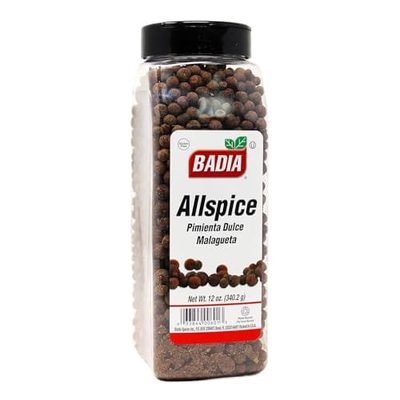
Whole allspice berries you grind fresh; the warm, complex spice flavor is strongest when ground right before use, unlike pre-ground powder.
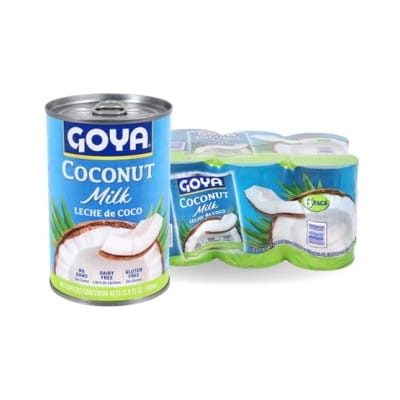
Goya Coconut Milk 13.5 oz (6-pack)
Creole bread's richness is two full cups of coconut milk kneaded into the dough. A six-pack means the next bake is already covered.
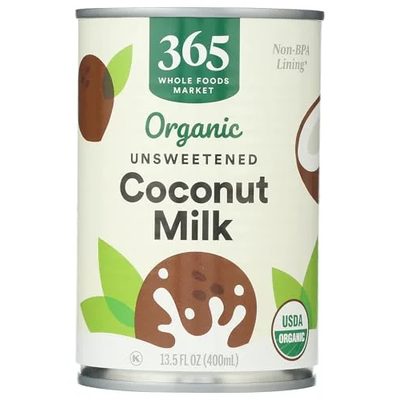
Full-fat coconut milk with nothing added - the choice for recipes where fat carries flavor and texture matters, from soups to baking.