Arroz con dulce is Puerto Rican coconut rice pudding: medium-grain rice soaked, then simmered in a spice tea of cinnamon, clove, star anise and fresh ginger with coconut and evaporated milk, sweetened with white and brown sugar, studded with raisins and set cold in a tray. It is one of the dishes shared at Christmas in Puerto Rico (source), and it is made in quantities meant to leave the house.
It is not a stirred-once dessert. You stand over it for an hour and that is the recipe.
What is arroz con dulce?
A rice pudding built on coconut instead of dairy alone, spiced with whole spices rather than powders, and eaten cold rather than warm. It sets in the pan as it chills, firm enough to cut into squares, and it gets a dusting of ground cinnamon on top before it goes to the table.

1400S Spices Ceylon Cinnamon Sticks from Sri Lanka, 1lb (Canela Entera)
Ceylon cinnamon is sweeter and milder than cassia — the right choice for atole, conkies, and sweet drinks. These are whole dried sticks from Sri Lanka.
Frontier Co-op Whole Cloves, Organic, Hand Select, 16 oz
Spice pastes, dark stews and braised meats all call for whole cloves ground or simmered into the dish. Whole cloves keep their volatile oils far longer than ground.
Two things separate it from a generic rice pudding. The rice is medium or short grain, never long grain, because long grain will not give up the starch that makes the texture. And the spice comes from a strained tea of cinnamon sticks, cloves, star anise and fresh ginger, boiled until the water changes color, not from a spoon of ground cinnamon.
A Christmas dessert made by the trayful
Arroz con dulce is named among the foods shared at Christmas in Puerto Rico, alongside pasteles, coquito, tembleque and lechon asado (source). The batch below fills a large tray, which is the point. Puerto Rican cooks describe making it for the whole street, and it travels well because it is meant to be eaten cold.
Cooks who make it the old way talk about it as an inherited recipe rather than one they chose. That shows up in the method more than in the ingredients: the whole spices, the long soak, the constant stirring, and the wood stove where anyone still has one.
What you need for Puerto Rican arroz con dulce
For the spice tea
- 3 cups (720 ml) water
- 3 cinnamon sticks
- 8 whole cloves
- 2 star anise pods
- 2 inch (5 cm) piece fresh ginger, sliced
For the rice
- 2 cups (400 g) medium-grain rice, soaked at least 2 hours
- 1 can (13.5 oz / 400 ml) full fat coconut milk
- 1 can (12 oz / 354 ml) evaporated milk
- 1/2 cup (120 ml) cream of coconut, optional
- 3/4 cup (150 g) white sugar
- 1/2 cup (100 g) dark brown sugar
- 3/4 cup (110 g) raisins
- 2 tbsp (28 g) butter
- 1 tsp (5 ml) vanilla extract
- 1/2 tsp (3 g) fine salt
- Ground cinnamon, for dusting
The brown sugar is doing more than sweetening. It is what gives the pudding its color, and a batch made on white sugar alone comes out pale in a way Puerto Rican cooks will notice immediately.
How long arroz con dulce takes
| Soaking the rice | 2 hours minimum, overnight is common |
| Steeping the spice tea | 15 minutes |
| Simmering and stirring | About 1 hour |
| Chilling to set | 3 hours or more |
How to make Puerto Rican arroz con dulce
- Soak the rice. Cover the rice with cold water and leave it at least 2 hours, or overnight. Drain it when you are ready to cook. Skipping this gives you a grainy pudding.
- Make the tea. Boil the water with the cinnamon sticks, cloves, star anise and ginger for about 15 minutes, until the liquid darkens and smells strongly of spice. Strain it and keep the liquid. Throw the spices away.
- Cook the rice in the tea. Put the drained rice and the strained tea in a heavy pot and simmer, uncovered, until most of the liquid is gone and the grains have started to soften.
- Add the milks. Pour in the coconut milk, the evaporated milk and the cream of coconut if you are using it. Bring it back to a low simmer.
- Stir, and keep stirring. This is the part that cannot be rushed or walked away from. Keep the heat low and move the spoon across the bottom of the pot constantly, or the rice catches and burns.
- Sweeten once the rice is tender. Add both sugars only after the grains are soft, along with the salt. Sugar added too early slows the rice down and it stays hard.
- Finish it. Stir in the raisins, butter and vanilla. Cook until it looks like thick, creamy oatmeal and a spoon dragged through the pot leaves a track that closes slowly.
- Set it cold. Pour into trays or a shallow dish, spread it level, and refrigerate at least 3 hours. It firms as it chills.
- Dust and serve. Ground cinnamon over the top just before it goes out, cut into squares or spooned into bowls, cold.
Tips and variations
- Fresh coconut, if you have the patience. Some cooks refuse canned entirely, grating fresh coconut and pressing the milk themselves. It tastes cleaner. It also adds an hour of work before the pot goes on.
- Coconut water instead of plain water for the tea. One traditional approach steeps the spices in coconut water so nothing is diluted. Worth doing if you are already opening coconuts.
- Keep the coconut shreds. Cooks working from fresh coconut sometimes stir the pressed shreds back into the pot for texture rather than discarding them.
- The pegado is the prize. The layer that sticks and caramelizes at the bottom of the pot is treated as a delicacy, not a mistake. Scrape it out and serve it to whoever stood at the stove.
- Raisins are optional in practice, standard in tradition. Nearly every Puerto Rican version has them. Leave them out if you must, but know what you are leaving out.
Where it sits on the Christmas table
It comes out after the plates are cleared, next to coquito, at the end of a meal built on pernil, pasteles and arroz con gandules. Cold, in small squares, with coffee.
Sweetened rice puddings turn up across the region with completely different spicing. The cardamom rice pudding on this site is the same family, built on dairy and cardamom instead of coconut, clove and ginger.
Nutrition
Estimated, for one of 12 servings, based on the amounts above and standard ingredient labels.
| Calories | 390 kcal |
| Protein | 5 g |
| Fat | 13 g |
| Carbohydrates | 63 g |
| Sugar | 33 g |
| Sodium | 135 mg |
Storing arroz con dulce
Covered in the refrigerator, it keeps four or five days and the texture firms up further as it sits. That is normal. If it goes stiffer than you want, stir a spoon of evaporated milk through the portion you are serving.
Do not freeze it. Rice pudding turns grainy on thawing and no amount of stirring brings the creaminess back. Make a smaller batch instead of planning to freeze half.
Equipment you will want
- A heavy pot with a thick base. Thin pans scorch rice pudding.
- A wooden spoon long enough to reach the bottom comfortably.
- A fine strainer for the spice tea.
- Shallow trays or a glass dish for setting it.
Arroz con dulce questions, answered
What rice should I use for arroz con dulce?
Medium or short grain. Long grain rice does not release enough starch and the pudding stays loose and separate instead of creamy. This is the single most common reason a batch comes out wrong.
Why do I have to soak the rice?
Soaked grains cook evenly in a thick, sugary liquid that would otherwise leave the centers hard. Two hours is the floor. Overnight is what most cooks actually do.
Is arroz con dulce served warm or cold?
Cold. It is poured into trays and refrigerated until it sets firm enough to cut. Warm from the pot it is a different dish and it has not thickened yet.
When do I add the sugar?
After the rice has softened. Sugar added at the start slows the grains from cooking through, and you end up simmering much longer with hard rice in a sweet liquid.
What is the pegado?
The caramelized layer stuck to the bottom of the pot. It is prized rather than scraped into the bin, and in many households it goes to whoever did the stirring.
Can I make it without cream of coconut?
Yes. Coconut milk and evaporated milk are enough. The cream of coconut makes it richer and a little sweeter, so if you skip it, taste before you decide the sugar is finished.
How is it different from arroz con leche?
Arroz con leche is a dairy rice pudding, usually eaten warm. Arroz con dulce is built on coconut milk, spiced with a whole-spice tea including fresh ginger, and served cold and set.
How far ahead can I make it?
A day or two ahead is ideal, because it needs the fridge time anyway. It keeps four or five days covered, which is why it gets made in one enormous batch during the Christmas season.
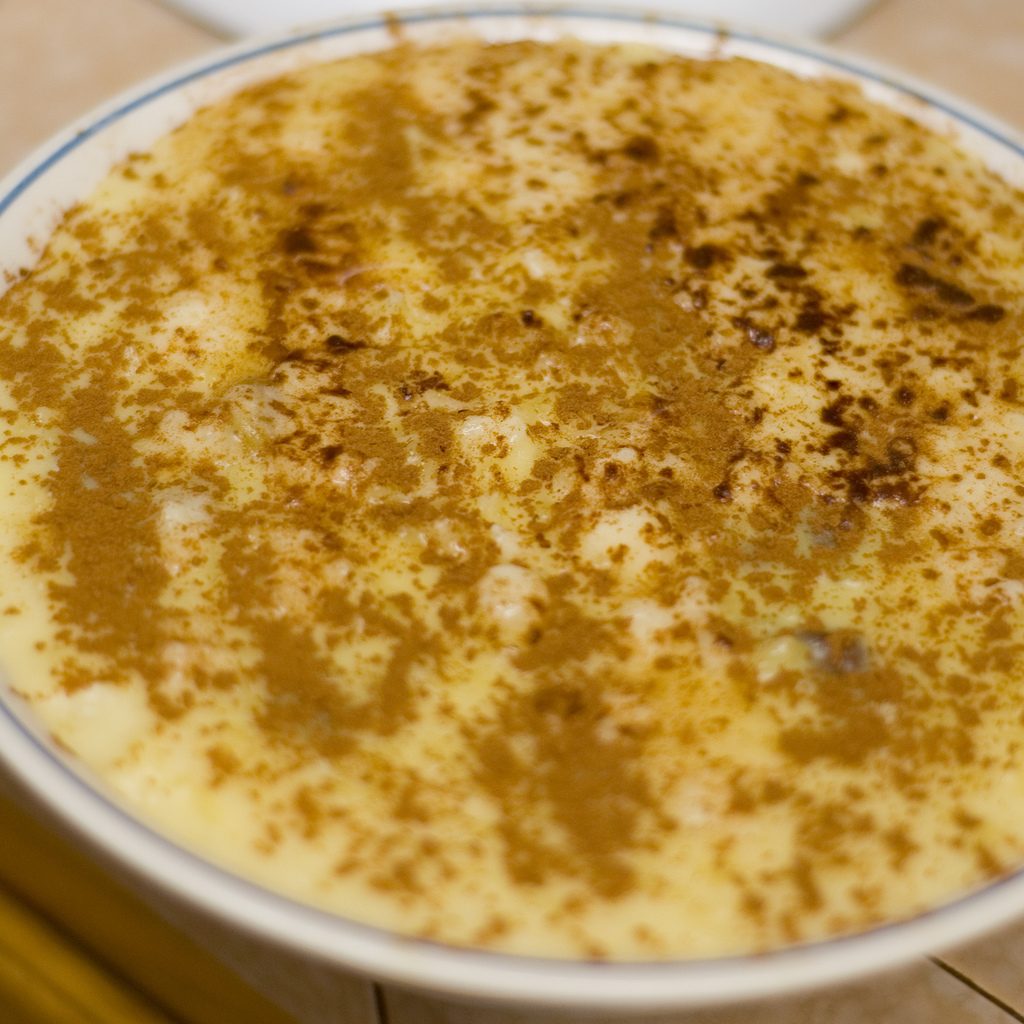
Photograph by Ross Berteig, CC BY 2.0, via Wikimedia Commons. It shows a cinnamon-dusted rice pudding rather than this exact recipe. No photograph of Puerto Rican arroz con dulce is available under a licence we can use, and we would rather say so than pass off a picture as something it is not.
Goya Coconut Milk 13.5 oz (6-pack)
Creole bread's richness is two full cups of coconut milk kneaded into the dough. A six-pack means the next bake is already covered.

Nestlé Carnation Evaporated Milk, 12 fl oz, 4-Pack
Flan, custard, and Belizean coconut tart filling all build on evaporated milk's reduced water content. The 12oz can is the diaspora pantry standard.
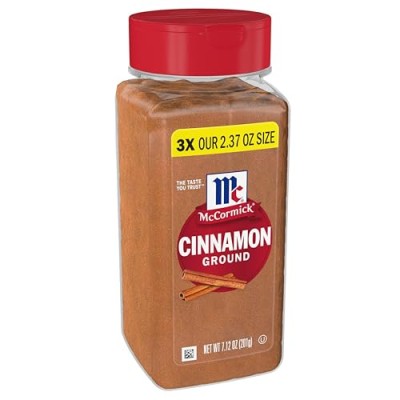
McCormick Ground Cinnamon, 7.12 oz
Pantry-staple ground cinnamon for southern-style montucas and sweet corn tamales.