Haitian legim is a vegetable stew that layers meat with chayote, eggplant, green papaya, and cabbage over a homemade epis base, mashed until creamy and finished with butter. It is the dish Haitians mean by légume, a thick mashed vegetable stew served over rice. Haitian cooks call it a beloved Sunday classic, one of the dishes that intimidates first-time cooks the most.
Ingredients
Legim comes together from a base of meat and a set of hard vegetables the cook steams and mashes. Add an epis and a short list of herbs, spices, and pantry staples. This list gives native names first, with common alternatives following in parentheses.
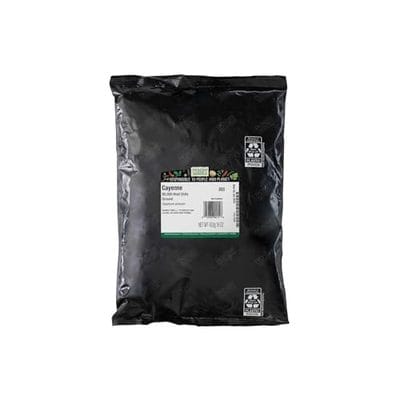
Frontier Co-op Ground Cayenne Chili Pepper 90,000 HU, 1-Pound Bulk
Cayenne is the dry-heat backbone of stewed dishes when fresh habanero isn't to hand. A bulk bag of ground cayenne stays consistent across batches in a way grocery-store jars don't.
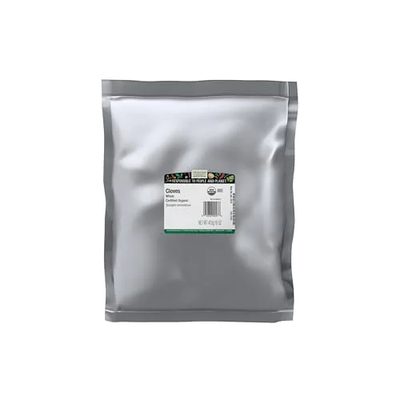
Frontier Co-op Whole Cloves, Organic, Hand Select, 16 oz
Spice pastes, dark stews and braised meats all call for whole cloves ground or simmered into the dish. Whole cloves keep their volatile oils far longer than ground.
For the meat
- Stew beef, goat meat, or pork, depending on what a cook has on hand.
- Meat on the bone, like turkey neck, neck bones, or crab, adds more flavor to the pot.
For the vegetables
- Eggplant, chosen with a green top, since a green top means fewer seeds.
- Chayote (also called militon, mirliton, or milito).
- Cabbage.
- Baby carrots.
- Roma tomatoes.
- Watercress.
- Spinach, frozen or fresh.
- Green papaya, not ripe.
For the epis
- Bell peppers, assorted colors.
- Green onions.
- White or yellow onion.
- Scotch bonnet or jalapeño pepper.
- Garlic.
- Fresh parsley.
- Oil, for blending the epis into a base.
For the herbs and spices
- Parsley and thyme, tied together.
- Whole cloves.
- Salt.
- Black pepper.
- Maggi cubes (bouillon).
- Complete seasoning.
- Cayenne pepper.
For the liquid and pantry staples
- Tomato paste.
- Olive oil.
- Lime or lemon juice.
- Unsalted butter.
- Coconut milk, optional (one cook’s own addition, not a standard ingredient in legim).
A note on quantities: the Haitian home cooks this recipe follows give no cup, tablespoon, or pound figures for any ingredient. They give only timing. Rather than invent unsourced amounts, use enough meat and vegetables to fill your pot in the layers described below. Season the epis and marinade to taste. This recipe gives sourced quantities only for time. The lime soak for the meat takes 3 to 10 minutes. Steaming takes 30 to 60 minutes, the sauté about 10 minutes, and the final simmer 15 to 20 minutes.
Instructions
- Clean the meat: wash it with lime, salt, and water (or vinegar). Then let it sit for at least 3 to 10 minutes.
- Season the meat: marinate it with several tablespoons of epis and a Maggi cube. Then add dry spices like black pepper and seasoned salt.
- Prepare for steaming: add a small amount of oil and water to the pot. Then add the seasoned meat along with the aromatics: onions, tomatoes, and a pepper poked with whole cloves.
- Layer the vegetables: peel and slice them. Then set the harder vegetables (chayote, eggplant, papaya) at the bottom closest to the heat, with the cabbage on top.
- Steam: cover the pot tightly, often with foil under the lid. Then cook on medium-high heat for 30 to 60 minutes, until the vegetables turn very soft.
- Mash the vegetables: remove them from the pot, leaving the meat behind. Then mash them with a wooden masher (the mush pilon) or a glass bottom, until smooth and creamy.
- Do the wussian: add oil and tomato paste to the pot with the meat. Then fry on high heat for about 10 minutes to develop color and flavor. Meanwhile, loosen the paste with a little of the reserved vegetable liquid.
- Recombine: stir the mashed vegetables, and the frozen spinach if using, back into the pot. Then let the mixture cook down.
- Finish: add fresh onions, bell peppers, and carrots for texture. Then stir in a generous amount of butter, and simmer on low heat for another 15 to 20 minutes.
Why Legim Is Haiti’s Sunday Stew
Every Haitian cooking calendar has its anchors. January 1st belongs to soup joumou. Sunday belongs to legim. Legim holds a specific place in the Haitian week. Home cooks describe it as a beloved classic, one of the dishes most identified with Sunday cooking in Haiti. Sunday is when a cook has the time the dish demands. It takes hours of steaming, a full mash, a separate sauté, and a slow simmer before anything reaches the table.
That time investment is also why cooks warn beginners the dish can feel intimidating. Nothing about legim moves quickly. The multi-step process asks more patience than a straightforward one-pot stew. It means steaming the vegetables, mashing them, sautéing the meat separately, then recombining and simmering. So cooks tell first-timers to expect that going in.
Legim rarely appears alone on a Haitian table. Haitians almost always serve it with white rice and a bean stew called Sos Pwa. Plan for both when you plan the meal, not just the stew by itself.
The Wussian: Why Haitian Cooks Sauté the Meat Separately
Legim asks a cook to do two things a simpler vegetable stew never would. It steams the vegetables into a mash, then sautés the meat on its own, before recombining the two. Haitian cooks call that second step the wussian.
Frying the meat in oil and tomato paste on high heat, about 10 minutes, does real work. It burns off the raw taste of the tomato paste. Then it leaves the meat with a deep, stained color the finished dish depends on. The cook adds reserved liquid from the steamed vegetables back in small amounts, to loosen the paste as it fries.
The mash matters just as much as the sauté. Authentic legim requires manual work. Cooks mash the vegetables with a wooden masher, the mush pilon, or the base of a drinking glass. They work it until smooth and creamy. A generic vegetable stew leaves everything in rough chunks. Legim does not.
Legim turns into a thick stew once the mash goes back into the pot with the sautéed meat. Cooks warn against walking away from it: stir carefully and reduce the heat once the mash and meat come together. If the mixture burns at the bottom, it ruins the whole batch. There’s no rescuing it.
Before any of this starts, the meat needs its own prep. A soak in lime, salt, and water (or vinegar) for at least three to ten minutes cleans it properly. Then it sets up the flavor for everything that follows.
What Changes From Cook to Cook in Legim
The protein is where legim changes the most from kitchen to kitchen. Some cooks reach for stew beef, others for goat or pork. Many prefer a cut that still has the bone in it, like turkey neck or neck bones. So the bone itself adds flavor to the pot.
Two ingredient details separate a well-made pot from an average one. The papaya has to be green, not ripe, since that is what gives legim its identifying flavor. An eggplant with a nice green top is worth choosing over one without. A green top means fewer seeds inside.
A couple of smaller habits are worth adopting too. Poking whole cloves into a whole pepper, rather than dropping them into the pot loose, keeps them from getting lost. It also makes them easy to fish back out later. While the vegetables are steaming, go easy on added water. They release plenty of their own juice, and too much extra water waters down the eventual mash.
Most tables serve it over rice, white or diri ak djon djon, with griot on the side when the Sunday pot is a big one. The vegetables themselves are corridor staples: chayote and green papaya do the same work in Belizean kitchens. One cook adds coconut milk to her pot. That is her own addition, not a standard ingredient in legim. The dish’s name changes too, depending on who is cooking: some spell it Legim, others Legume.
Frequently Asked Questions
What is Haitian legim?
Legim is a Haitian vegetable stew. Cooks steam hard vegetables like chayote, eggplant, and green papaya until soft, then mash them until creamy. They reunite the mash with a separately sautéed meat and tomato base and finish with butter.
What is the wussian in legim?
In the wussian, a cook fries the meat with oil and tomato paste on high heat for about 10 minutes. Then the cook recombines it with the mashed vegetables. It burns off the raw taste of the tomato paste and gives the meat a rich, stained color.
Why do cooks mash the vegetables separately from the meat?
Cooks remove the steamed vegetables from the pot, leaving the meat behind. Then they mash the vegetables with a wooden masher or the base of a glass until smooth. Removing the vegetables first lets the meat get its own separate sauté, the wussian, before the two come back together. That sequence produces legim’s characteristic creamy texture, unlike a generic stew that boils everything in one pot.
What is legim served with?
Haitian cooks almost always serve legim with white rice and a bean stew called Sos Pwa.
What vegetables go into legim?
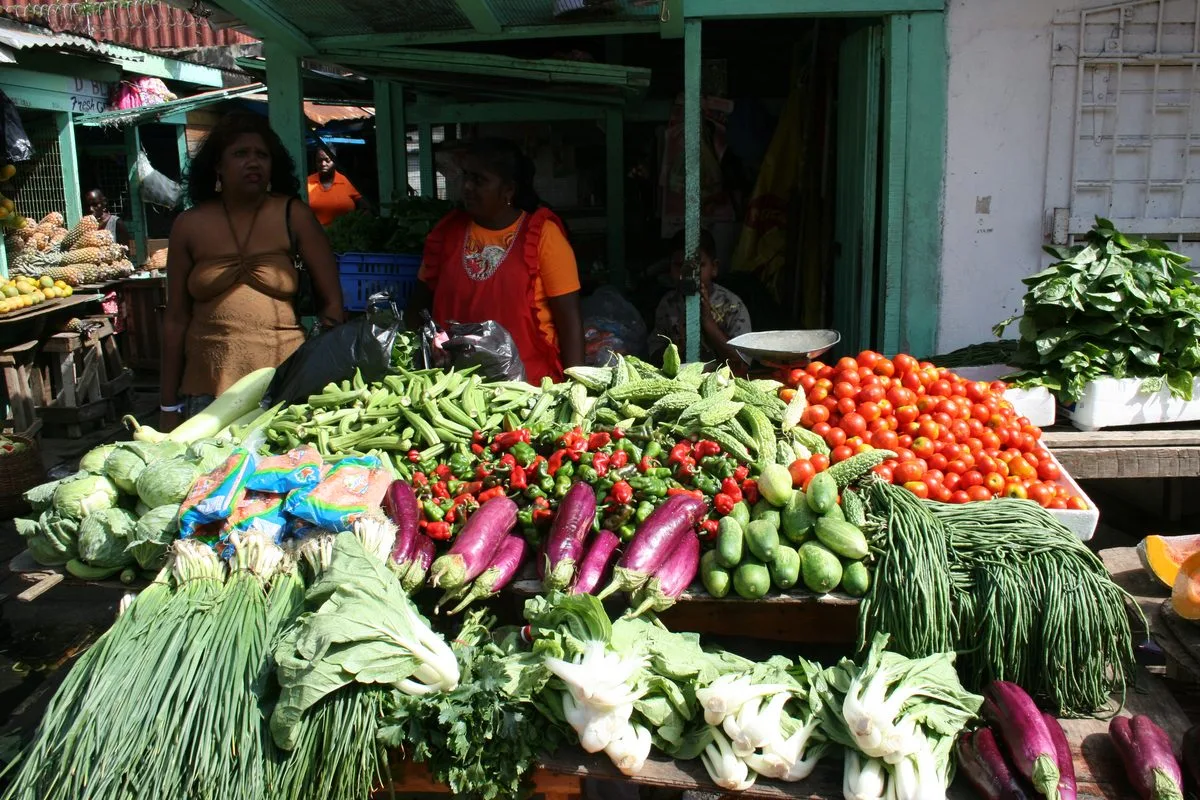
Eggplant, chayote (also called militon, mirliton, or milito), cabbage, baby carrots, roma tomatoes, watercress, spinach, and green, unripe papaya.
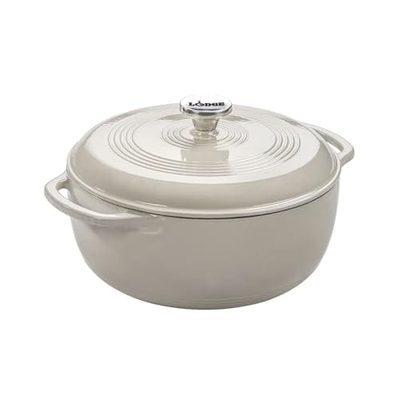
Boil-up, stew beans, and cow-foot soup want a heavy pot that holds a low simmer for hours. The enamel interior skips seasoning entirely and won't strip when acid, tomato, or citrus goes in.
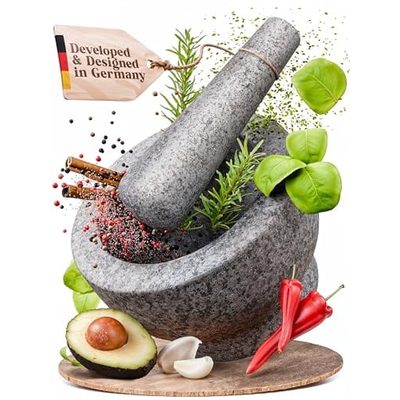
ChefSofi Mortar and Pestle Set 6-Inch Unpolished Granite
Whole allspice, peppercorns, dried chiles and toasted cumin all grind down by hand into pastes and rubs. Unpolished granite grips dry spices the way a polished bowl cannot.

Pikliz is the coarse pickled slaw of cabbage, carrot and scotch bonnet that goes on the plate beside fried food, and griot without it is only half the dish. Packed in glass rather than plastic.