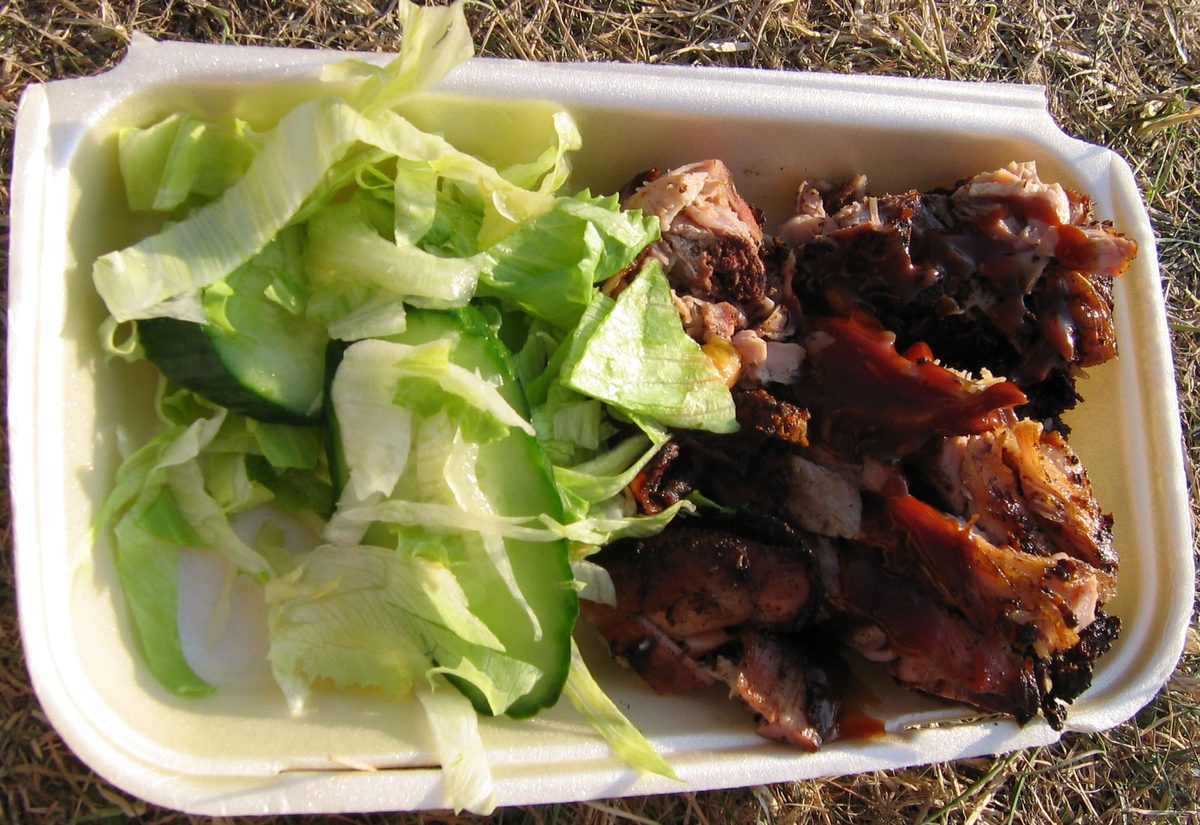
Jamaican jerk chicken is chicken marinated in a wet paste of Scotch bonnet, pimento, scallion, and thyme, then smoked slowly over pimento wood until the skin turns dark. Jerk is a cooking method before it is a flavor. The seasoning does half the work and the pimento smoke does the other half.
Ingredients
Jerk is built in two layers, a wet marinade blended to a paste and a dry seasoning, and cooks differ on which goes on first. The Jamaican cooks this recipe follows treat the wood as an ingredient rather than equipment, so it is listed here with everything else.
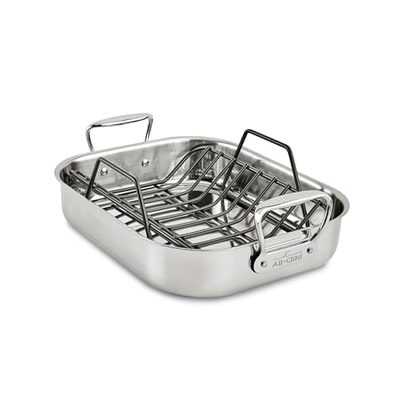
All-Clad Specialty Stainless Steel Roaster with Nonstick Rack 11×14 Inch Oven Broiler Safe 600F
Roasting a whole bird or a pork shoulder needs a heavy pan with a rack that lifts the meat off the rendered fat. An 11x14 with a nonstick rack handles anything big enough to fill a Sunday table.
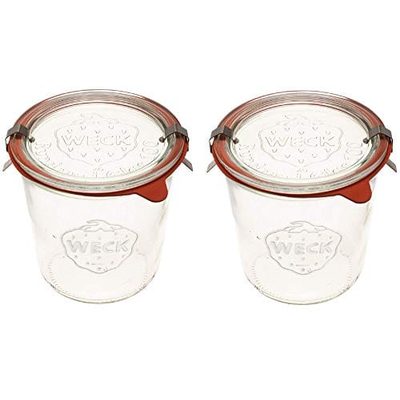
WECK Canning Jars 742 Mold Jars, 1/2 Liter Tall Jar Set (2 Jars)
Spice pastes, ground spices and toasted seeds all keep longer in glass with a silicone seal than in plastic. Tall gasket-sealed glass jars are the editorial pick for paste and spice storage.
For the chicken
- 4 lb (1.8 kg) chicken leg quarters, or a whole chicken cut down.
For the wet marinade
- 2 Scotch bonnet peppers, stems removed (1 for a milder plate).
- 2 tbsp (14 g) ground pimento (allspice), or 2 tbsp whole berries, ground.
- 1 bunch scallions (green onions), about 6, roughly chopped.
- 1 tbsp fresh thyme leaves, or 2 tsp dried.
- 6 garlic cloves.
- 2 in (5 cm) fresh ginger, peeled.
- 1 tsp grated nutmeg.
- 1 tsp ground cinnamon.
- 3 tbsp (40 g) brown sugar.
- 3 tbsp (45 ml) soy sauce.
- 3 tbsp (45 ml) white vinegar.
- 3 tbsp (45 ml) oil.
- 2 tsp black pepper and 2 tsp salt.
For the dry rub
- 1 tbsp coarse salt and 2 tsp black pepper.
- 1 tbsp (7 g) ground pimento (allspice).
- 2 tsp dried thyme.
- 2 tsp garlic powder and 2 tsp onion powder.
- 1 tsp cayenne pepper.
- 1 tsp ground ginger.
- 2 tbsp (27 g) brown sugar.
For the fire
- Hardwood lump charcoal, enough for a 2-hour fire.
- 2 to 3 handfuls pimento wood chips, or 3 to 4 sticks.
A note on the amounts. The Jamaican cooks these instructions follow work by feel, not by measuring cups, so the quantities here are a worked starting point for 4 lb (1.8 kg) of chicken rather than a rule handed down. What the cooks do hold to are two checkpoints: blend the marinade thick and pasty instead of runny, and give the chicken 24 to 48 hours in it. Scale everything else with the meat.
Instructions
- Blend the wet marinade ingredients until they come together thick and pasty. A runny marinade slides off the chicken instead of clinging to it.
- Work the marinade into the chicken. Get it under the skin and as deep into the meat as you can, massaging for several minutes. Some cooks cut into the thicker parts and push marinade inside.
- Cover and marinate in the refrigerator for 24 to 48 hours. This is the window the cooks call the sweet spot, and it is the step most home versions cut short.
- Apply the dry seasoning. Cooks split on when: some rub the dry jerk seasoning on before the wet marinade goes anywhere near the meat, others add it to already-marinated chicken and work it into the marinade so it coats rather than sitting dry.
- Build the fire with hardwood lump charcoal and a generous amount of pimento wood, using the vents and the breeze to control the smoke and heat.
- Cook it over the coals and wood, keeping the chicken off direct flame so it colors from smoke rather than scorching. Take it to at least 165°F internal, the minimum the cooks name; some go further, to the 175°F to 185°F range.
- Chop the chicken with a cleaver, straight through the bone, and serve.
Pimento Wood Is the Ingredient Most Recipes Leave Out
The Jamaican cooks this recipe follows name the smoke, not the spice blend, as the thing that defines jerk. Pimento wood comes from the same tree that gives us allspice, Pimenta dioica, a tree native to the Greater Antilles, southern Mexico, and Central America, whose wood was traditionally used to smoke jerk in Jamaica (source). Burning the wood puts the same aromatic compounds into the meat from the outside that the ground berry puts in from the marinade.
Pimento wood is the traditional standard, not an absolute requirement. The cooks in these sources work around it when they have to: one cooks jerk in an oven for people without a drum, another puts pimento seeds into hardwood lump charcoal to carry the same flavor. Chips and sticks ship internationally, and a bag of them over charcoal gets you closest.
Jerk Began as Maroon Survival Cooking
Jerk traces back to the Jamaican Maroons, Africans who escaped enslavement and held out in the island’s interior. The technique was practical before it was cultural: to conceal their whereabouts, the Maroons cooked spiced pork underground so the smoke would not be seen (source). A cooking method that hides you from a search party is a very different thing from a barbecue style.
The Maroons learned from the people already there. Jerking meats over pimento wood traces to the Taíno term barabicu or barbacoa, meaning a framework of sticks (source), and that word is the ancestor of the English word barbecue. The heat, meanwhile, comes almost entirely from Scotch bonnet, the same pepper that runs through Belizean cooking in our habanero sauce.
The pit came aboveground eventually. Around the 1960s, cooks began splitting oil barrels lengthwise, adding vent holes and hinged lids, which is the jerk pan you see on roadsides across the island today. It started with wild hog. Chicken came later, and it is now the version most people meet first.
Marinate 24 to 48 Hours, and Get It Under the Skin
The marinade is the step home versions cut short most often. The cooks give it 24 to 48 hours and work it under the skin by hand rather than pouring it over the top. Chicken that sat for an hour tastes seasoned on the surface and plain underneath.
The dry seasoning is where cooks part ways. Some put it on first and let the wet marinade go over it. Others add it once the chicken has already soaked, working it into the marinade so it coats rather than sitting dry. Either way, dark color is the goal and burnt is not. One cook makes the point that jerk which looks charred usually is not: that is the seasoning, not the meat.
Fire management is the other half. Cooks warn against letting direct flame touch the chicken, because the smoke is meant to do the cooking. Vents and breeze are the controls. The same overnight-paste logic shows up in Belize, where our recado BBQ chicken takes a marinade of a completely different character.
No Grill? The Oven Route
One of the cooks here makes jerk in an oven for people without a drum, so this is not a compromise invented for convenience. It is how plenty of jerk gets cooked.
Marinate exactly as above, then roast at 350F (175C) for about an hour and a quarter for leg quarters, until the internal temperature clears 165F. Finish under the broiler for a few minutes to darken the skin, watching it closely, because the sugar in the marinade colours fast.
Put pimento wood chips or whole pimento berries in a foil packet on the oven floor, or a handful of berries in the roasting pan, to get some of the smoke character back. It is not a drum pan, but it is much closer than a bare oven.
The one thing an oven cannot give you is the pimento smoke itself. If you have a charcoal grill, use it and add the wood there.
Tips and Variations
Serve it chopped through the bone with a cleaver, the way it comes off a jerk pan in Jamaica. Festival, the lightly sweet fried bread, is the standard partner, and pickled escovitch vegetables turn up alongside it often enough to count as a pairing.
Soy sauce is worth a note because it surprises people. It is in the marinade in most of these versions, used for color and for the body a thicker mushroom soy brings. Jerk is a method rather than a fixed ingredient list, and the cooks vary the seasoning shelf more than the technique.
Storage, and Cooking It Over Two Days
Jerk is already a two-day recipe, since the chicken wants 24 to 48 hours in the marinade. That is the make-ahead step: season it Friday, cook it Sunday. The marinating is not the part to compress.
Cooked jerk keeps in an airtight container in the refrigerator for three to four days. Reheat it gently and covered so the meat does not dry out, since a leg quarter that has already been over a fire has little moisture left to lose.
The dry rub and the wet marinade can both be made ahead on their own. Blend the marinade and keep it refrigerated until the chicken is ready for it.
Frequently Asked Questions
What is Jamaican jerk chicken?
Jerk chicken is chicken marinated in a thick paste of Scotch bonnet, pimento (allspice), scallion, thyme, garlic, and ginger, then grilled slowly over charcoal and pimento wood until dark. Jerk is a cooking method, not a bottled sauce.
How long should jerk chicken marinate?
24 to 48 hours in the refrigerator. Jamaican cooks call that window the sweet spot, and they work the marinade under the skin and into the meat by hand rather than pouring it over the surface.
Can I make jerk chicken without pimento wood?
You can. Pimento wood is the traditional standard, but the cooks in these sources work around it: one cooks jerk in an oven for people without a drum, another puts pimento seeds into hardwood lump charcoal for the same flavor. Pimento chips and sticks also ship internationally.
What temperature should jerk chicken reach?
At least 165°F internal, which is the minimum the cooks name. Some take it higher, into the 175°F to 185°F range. Keep the chicken off direct flame while it colors so the smoke does the work rather than the fire.
Where does jerk come from?
From the Jamaican Maroons, who cooked spiced pork underground so the smoke would not give away their position, drawing on Taíno pimento-wood technique. The word barbecue descends from the Taíno barabicu, a framework of sticks. Jerk moved to split oil-drum pans around the 1960s.
How much jerk marinade do I need per pound of chicken?
The batch here covers 4 lb (1.8 kg) of leg quarters with enough to coat under the skin as well as over it. Scale it with the meat. The measure that matters more than volume is consistency: blend it thick and pasty so it clings, because a runny marinade slides off in the fridge and again on the grill.
Frontier Co-op Ground Cayenne Chili Pepper 90,000 HU, 1-Pound Bulk
Cayenne is the dry-heat backbone of stewed dishes when fresh habanero isn't to hand. A bulk bag of ground cayenne stays consistent across batches in a way grocery-store jars don't.
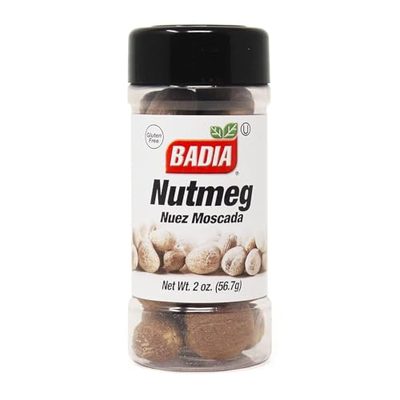
Whole seeds you grate fresh; the recipes that call for grated nutmeg mean this, not the pre-ground jar.
McCormick Ground Cinnamon, 7.12 oz
Pantry-staple ground cinnamon for southern-style montucas and sweet corn tamales.