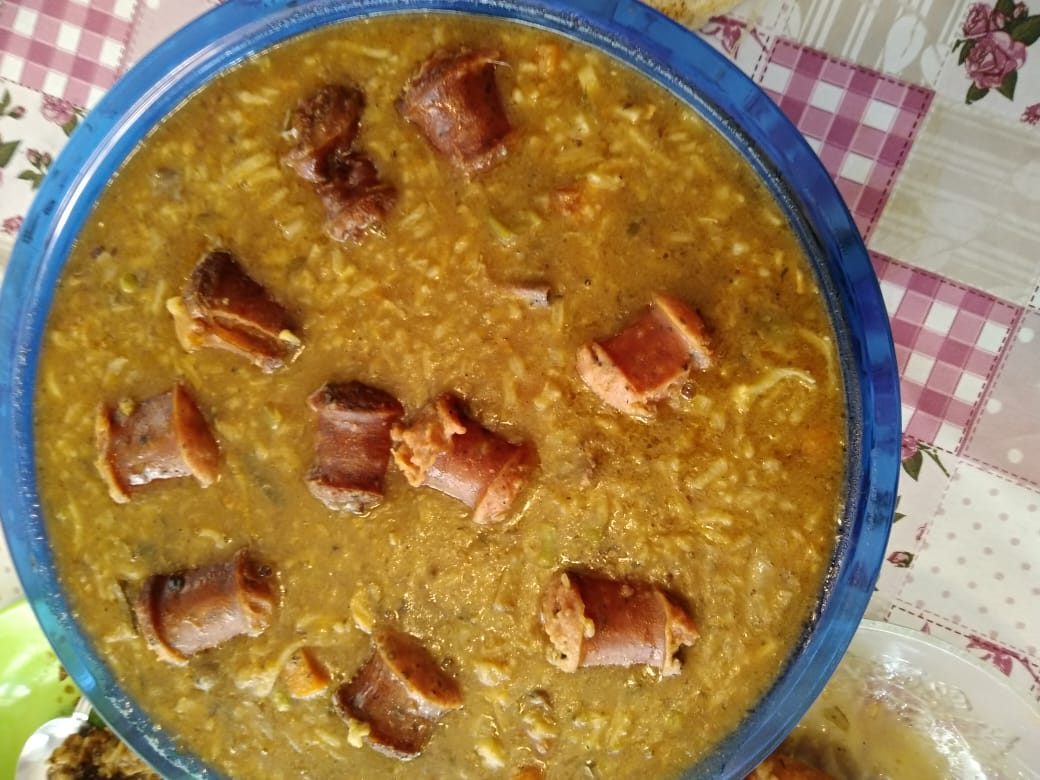
Asopao is Puerto Rico’s national soup: a rice stew somewhere between a soup and a paella, built on sofrito, sazon and bone-in chicken, thick enough to hold a spoon up but still soup. It is a family of stews rather than a single recipe, made with chicken, pork, beef, shrimp, vegetables, or any combination (source). This is the chicken version, asopao de pollo.
Serve it the minute it is done. Asopao does not wait, it thickens.
What is asopao?
Rice cooked in a seasoned broth until the grains give up enough starch to thicken the liquid around them. Not a rice dish with soup poured over it, and not a soup with rice added at the end. The rice and the broth finish together and the result is somewhere in the middle.
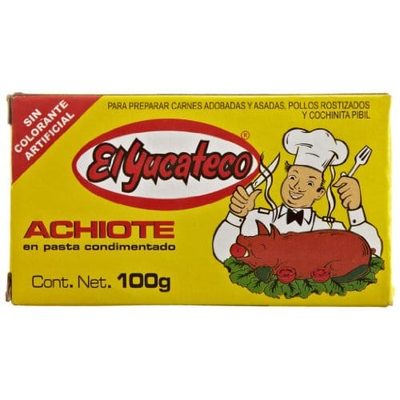
Asopao takes its colour from annatto, and a prepared achiote paste dissolves into the sofrito in a minute instead of the hour it takes to grind and steep the seed at home. One spoonful colours a whole pot.
Full-fat coconut milk with nothing added - the choice for recipes where fat carries flavor and texture matters, from soups to baking.
It is Puerto Rico’s national soup and one of the best known recipes on the island (source). Versions appear across the Caribbean; the Dominican one is characterised by chicharrones de pollo, or by coconut milk and shrimp (source).
There is a grander version too, said to descend from the Spanish arroz a la valenciana, with chicken, rabbit and seafood cooked in sherry (source). Nobody makes that on a Tuesday. Chicken thighs are what the pot usually gets.
The rice decides everything
Medium-grain rice releases the starch that gives asopao its body. The problem is that it also drinks broth, and a pot left standing turns into a rice casserole within twenty minutes.
Cooks handle it two ways. Some soak the rice for 45 minutes to an hour first, so it absorbs less of the broth in the pot. Others wash it and add it straight in, and simply serve fast. Soaking is the safer route if you are cooking for people who arrive when they arrive.
What you need for Puerto Rican asopao
For the chicken
- 3 lb (1.4 kg) bone-in, skin-on chicken thighs
- 2 tsp (10 g) adobo seasoning
- 1 tsp (2 g) dried oregano
- 1/2 tsp (1 g) ground cumin
For the pot
- 3 tbsp (45 ml) annatto oil, or olive oil
- 3/4 cup (180 ml) sofrito
- 1 can (8 oz / 227 g) tomato sauce
- 1 packet sazon con culantro y achiote
- 2 bay leaves
- 8 cups (1.9 L) chicken stock
- 1 cup (200 g) medium-grain rice, soaked 45 minutes and drained
- 1 cup (150 g) calabaza, peeled and cut into 1/2 inch dice
- 1 medium potato, diced, and 1 carrot, sliced
- 1/2 cup (85 g) pitted green olives with pimiento, plus 1 tbsp capers
- Salt and black pepper, and cilantro to finish
Bone-in chicken is not a preference here. The bones are where the broth gets its body, and a pot built on boneless breast tastes thin no matter how much sofrito goes in.
How long asopao takes
| Soaking the rice | 45 minutes to 1 hour |
| Seasoning and browning the chicken | 20 minutes |
| Building the broth | 25 minutes |
| Rice and vegetables | 25 minutes |
How to make Puerto Rican asopao de pollo
- Soak the rice. Cover it with cold water and leave it 45 minutes while you do everything else, then drain.
- Season the chicken. Cut a few shallow slits in each thigh so the seasoning reaches past the surface, then rub with adobo, oregano and cumin.
- Brown it. Heat the annatto oil in a heavy pot and brown the thighs on both sides. They do not need to cook through. Take them out.
- Build the base. Into the same fat, the sofrito. Cook it three or four minutes until it stops smelling raw, then the tomato sauce, sazon and bay leaves, and let that fry together another two minutes.
- Return the chicken and add the stock. Bring it up, then simmer covered about 25 minutes until the chicken is soft and giving.
- Add the hard vegetables. Calabaza, potato and carrot go in and cook about 10 minutes.
- Rice last. Stir in the drained rice and simmer uncovered 15 to 20 minutes, stirring now and then, until the grains are done and the broth has thickened around them.
- Finish. Olives and capers, then taste for salt. The stock and the adobo have both brought some, so taste before you reach for the shaker.
- Serve immediately. Cilantro over the top, in deep bowls. It should pour, not scoop.
Tips and variations
- Asopao de camarones. Shrimp instead of chicken, added in the last four minutes so they do not turn to rubber. Use a seafood or light chicken stock.
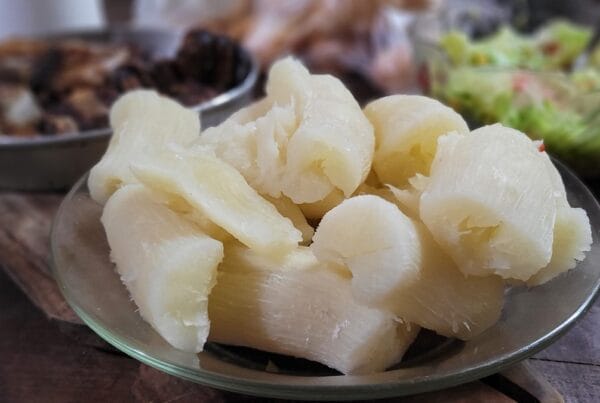
- Yuca and corn on the cob both go in some households in place of the potato. Cut the corn into rounds and add it with the calabaza.
- A splash of white vinegar in the cooking liquid is a real variation and it sharpens a broth that tastes flat.
- Make your own sofrito if you can. Cooks are blunt about supermarket jars, and this is a dish where the sofrito is most of the flavour rather than a background note.
- Annatto oil over plain oil. It costs nothing to make, colours the broth properly, and adds a faint smokiness that plain olive oil does not.
When people make it
Rain, mostly. Asopao is the pot that comes out on a cold wet day or when somebody in the house is coming down with something, and Puerto Rican cooks talk about it the way other people talk about chicken soup, because that is what it is.
It is a full meal in a bowl, so it does not need much beside it. Bread, maybe alcapurrias beforehand if you are feeding a crowd. The same sofrito base runs through arroz con gandules and pernil, and it is worth making a big batch of sofrito once and freezing it.
Nutrition
Estimated, for one of 6 bowls, based on the amounts above and standard ingredient labels.
| Calories | 430 kcal |
| Protein | 30 g |
| Fat | 20 g |
| Carbohydrates | 33 g |
| Fiber | 3 g |
| Sodium | 890 mg |
Storing asopao
It keeps three days in the refrigerator and it will be a different dish by then. The rice keeps drinking, so what you reheat is closer to a thick rice stew. Loosen it with stock, not water, and it comes back most of the way.
Freezing works badly for the same reason. If you know you are cooking for two days, cook the broth and chicken in full and add rice only to the portion you are serving.
Photograph by Franchesca TS, CC BY-SA 4.0, via Wikimedia Commons. It shows a home-made asopao built on sausage rather than the chicken version in this recipe.
Equipment you will want
- A caldero or a heavy stockpot, at least 6 quarts.
- Tongs for the browning.
- A wooden spoon long enough to stir a full pot.
- Deep bowls. Asopao in a flat plate is a sad thing.
Asopao questions, answered
Is asopao a soup or a rice dish?
Both, deliberately. It belongs to a family of stews (source) and the rice thickens the broth as it cooks. Served correctly it pours off the ladle rather than sitting in a mound.
What rice should I use?
Medium grain. It gives up the starch that thickens the broth. Long grain stays separate and leaves you with soup and rice rather than asopao.
Do I have to soak the rice?
No, and cooks split on it. Soaking 45 minutes means the rice absorbs less of the broth in the pot, which keeps the dish loose for longer. Adding washed rice straight in works if you are serving immediately.
Why did my asopao turn into a solid mass?
It sat. Rice keeps absorbing after the heat goes off, so a pot that was perfect at the stove is a casserole twenty minutes later. Add hot stock to loosen it, and next time serve straight from the pot.
Can I use boneless chicken?
You can, and the broth will be noticeably weaker. The bones are where the flavour comes from, and thighs hold up to a long simmer in a way breast meat does not.
What is the difference between Puerto Rican and Dominican asopao?
Versions exist across the Caribbean. The Dominican one is characterised by the addition of chicharrones de pollo, or by coconut milk and shrimp (source). The Puerto Rican pot leans on sofrito, sazon and bone-in chicken.
Can I make asopao with seafood?
Yes. Asopao is made with chicken, pork, beef, shrimp, seafood, vegetables or any combination (source). For shrimp, add them in the last few minutes only.
Can asopao be made ahead?
Not really, not as asopao. Make the seasoned broth and chicken ahead, then add rice to whatever you are about to serve. Leftovers are good, they are simply thicker.
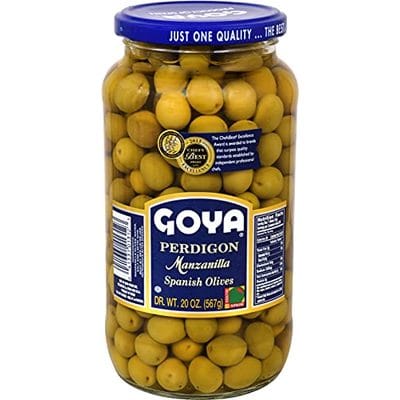
Goya Perdigon Manzanilla Spanish Olives
Queso relleno picadillo needs olives, capers, and raisins working against the pork. Manzanillas are the small, firm grade that hold their shape through the stuffing and the steam.
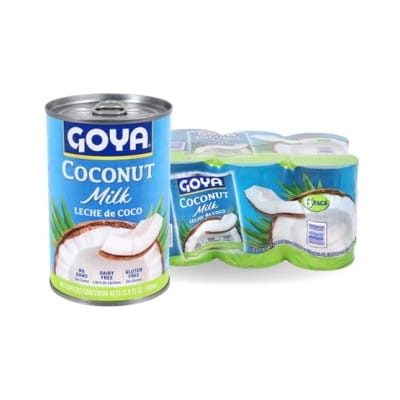
Goya Coconut Milk 13.5 oz (6-pack)
Creole bread's richness is two full cups of coconut milk kneaded into the dough. A six-pack means the next bake is already covered.
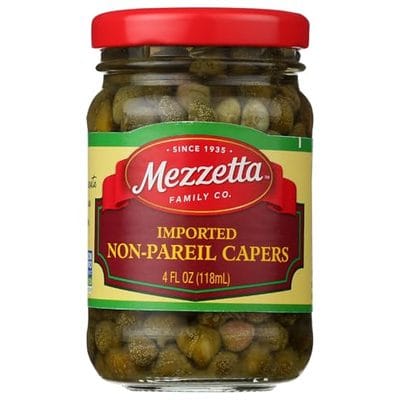
The smallest caper grade, and the one queso relleno picadillo calls for. Bigger capers turn to mush in the filling; non-pareils keep their brine-sharp bite against the raisins.