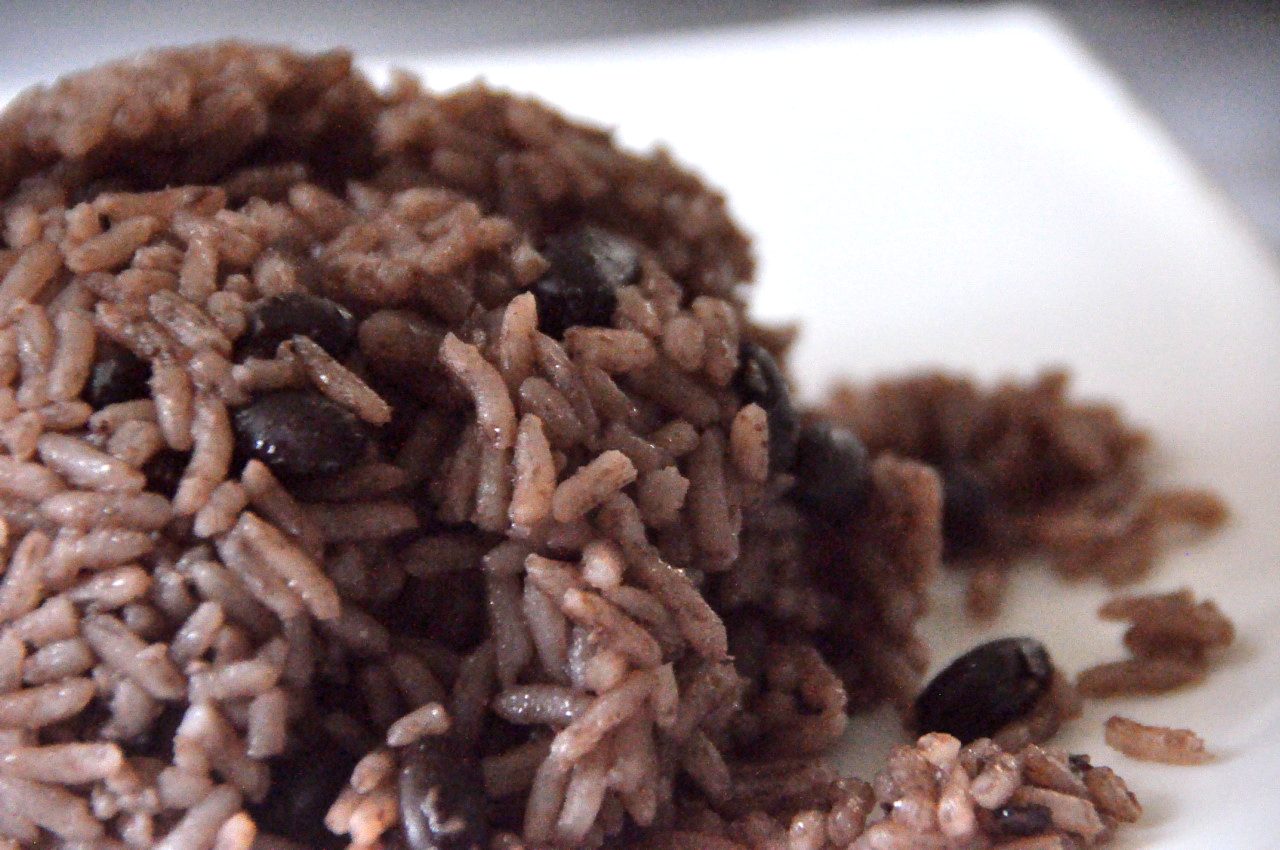
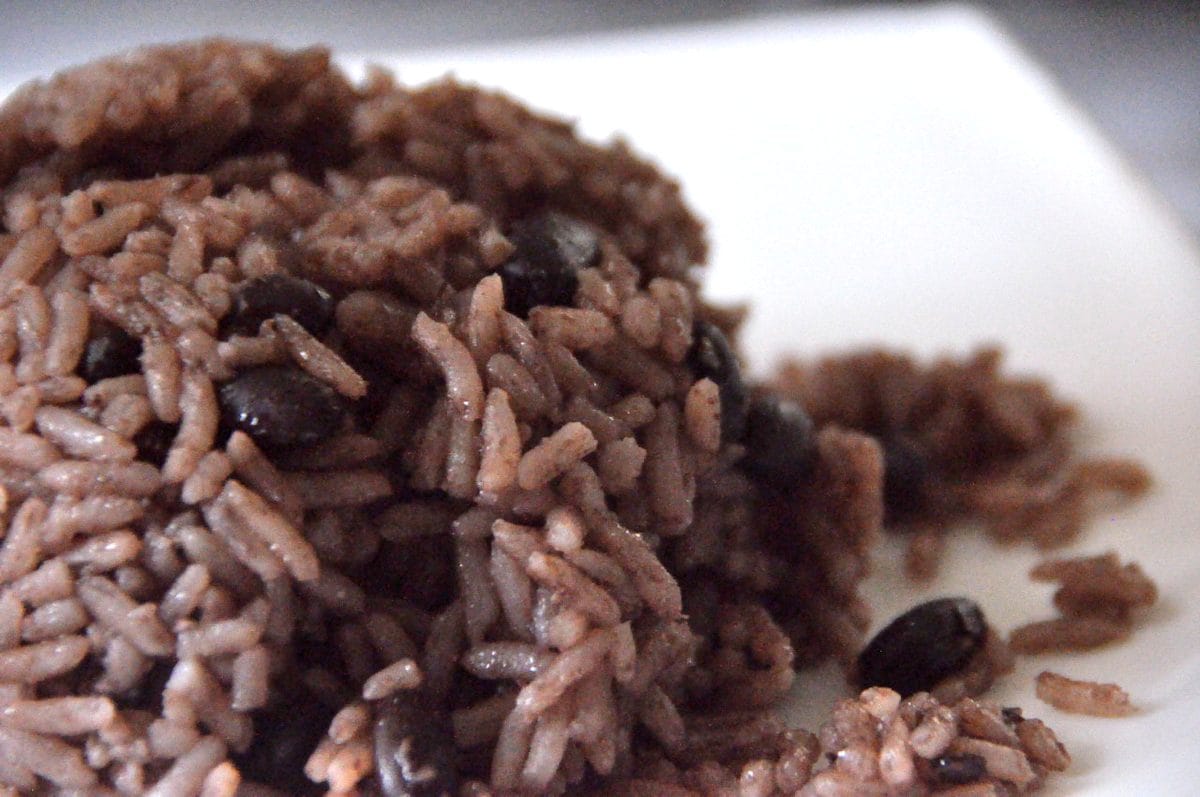
Cuban moros y cristianos is black beans and white rice cooked together in one pot, in the dark broth the beans were boiled in. The rice fries in the seasoning first and finishes dry and separate. Congrí is the everyday Cuban name for it, though congrí originally meant the red-bean version from eastern Cuba.
Why Cubans Call This Congrí, and Why One Cook Says That Is an Error
Moros y cristianos is black beans and white rice, cooked together in one pot, in the dark broth the beans left behind. It is not beans in one pot and rice in another, served side by side on the same plate. An encyclopedia entry draws that line directly. Moros y cristianos differ from plain arroz con frijoles “in that the beans and rice are cooked in the same pot instead of separately” (source).
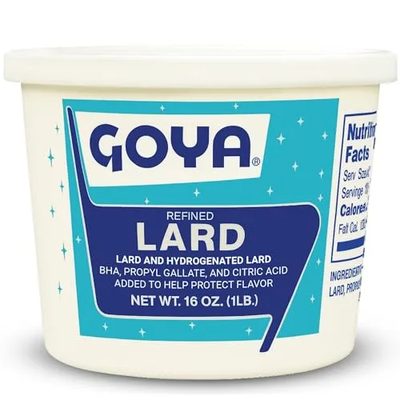
Lard is what carries the sofrito into the rice before any liquid touches the grains. Neutral oil works, but the dish loses the roundness that makes moros taste like moros.
Goya Coconut Milk 13.5 oz (6-pack)
Creole bread's richness is two full cups of coconut milk kneaded into the dough. A six-pack means the next bake is already covered.
BNP has that other dish too, as black beans stewed in their own pot. It is cooked Belizean style and served beside rice from a separate pot. The Cuban version of the same arrangement is frijoles negros, a soupy black bean potaje ladled over white rice that was cooked on its own. In that dish the beans stay wet, the rice stays white, and the two only meet on the plate. Moros y cristianos is neither of those. The beans and the rice go into the same pot, the rice takes its color from the bean broth, and it stays one pot from there to the table.
The name itself is a straightforward pairing: moros, the black beans, and cristianos, the white rice (source) (source). An academic paper on Caribbean rice-and-bean dishes calls the name “etymologically transparent” (source). It puts the pairing the same way: “black beans being the Moors and the white rice the Christians.” A Cuban cook says almost the same thing on camera: “pero es moros y cristianos, o sea, negros y blancos”. In English: but it’s moros y cristianos, that is, black and white. Three independent sources agree on what the name means. None explains where it came from, and neither does this post.
Where the sources disagree is what to call the dish day to day. Alty y Ramón are a Cuban home-cooking channel filming in Europe. They open one of their videos calling it “el mal llamado arroz congrí, que realmente se llama moros y cristianos”. In English: the wrongly named arroz congrí, which is really called moros y cristianos. They give the reason in the next breath. Their words: “Si fuera arroz congrí es con frijoles colorados, pero el procedimiento es el mismo”. In English: if it were arroz congrí it would be made with red beans, though the method is the same either way. They have a name for that red-bean version too: congrí oriental, the eastern one.
Luli’s Cuban Kitchen cooks in English with her sister-in-law Denise. She makes the same point in English: “congrí is technically the red beans and rice”. Alty y Ramón have their own name for the everyday habit: “le llamamos congrí por un error que está masificado en Cuba”. In English: we call it congrí because of an error that has spread across the whole of Cuba.
The same cook keeps using the everyday name anyway. His words: “pero yo sigo diciendo que es arroz congrí. No importa, no pasa nada”. In English: but I keep saying it’s arroz congrí. It doesn’t matter, nothing happens.
But I keep saying it’s arroz congrí. It doesn’t matter, nothing happens.
He is not wrong to call the usage loose. He is not going to stop using it, and neither is anyone else in Cuba.
The scholarship backs him up on both counts. Anthony Buccini, writing in the Dublin Gastronomy Symposium, studied the word’s history (source). His finding: congrí “with red beans, seems at least originally to have been eastern Cuba’s analogue to western Cuba’s moros y cristianos, though use of the name ‘congrí’ appears to be less geographically restricted now than it once was.” The Diccionario de americanismos is the reference dictionary of the pan-Hispanic language academies. It already defines congrí in Cuba as “Arroz con frijoles negros o colorados” (source). In English: rice with black or red beans, no longer restricted to the eastern version.
Cuban cuisine as a whole draws on Spanish cooking, with input from Amerindian, African and other Caribbean traditions (source). This naming habit is one more thing that has moved and settled since congrí was a strictly eastern word.
The dictionary already sides with everyday Cuban usage. Nobody needs correcting.
Two of the cooks in this research also put the dish on the calendar, each in their own words. Luli’s Cuban Kitchen opens her Christmas video with this line: “nothing is more traditional on a Cuban table than moros y cristianos on Christmas Eve” (source). Alty y Ramón, separately, call it “uno de los platos más típicos que hay cubanos, el que no puede faltar en ninguna fiesta” (source). In English: one of the most typical Cuban dishes there is, the one that cannot be missing from any celebration.
Why Cuban Black Beans and Rice Come Out Dry and Separate, Not Sticky
The liquid is the beans’ own dark broth, never tap water. Alty y Ramón keep a second pot of that broth hot on a back burner for the entire cook. That way they are never tempted to reach for the tap: “no utilizar agua a la llave”. In English: never use tap water. Add plain water instead and the color drops out of the rice. The broth is the only thing carrying it.
The beans stop short of fully soft. Alty y Ramón are the only cook in this research who explain why. Cook the beans as soft as a bean stew and they burst: “el frijol tiende a romperse”. In English: the bean tends to break. Beans that burst release what is inside them. The pot then thickens into something closer to a stew than a plate of grain-separate rice. Test one against the roof of your mouth. It should give, not collapse.
The rice goes into the hot fat dry, before any liquid, and stays there long enough to color. Alty y Ramón describe the point of it plainly. First: “Para sofreír el arroz y que nos coja todo lo que tiene”. In English: to fry the rice so it takes in everything it has to take. Then: “Ese arroz coge todo el sabor de la sazón”. In English: that rice takes in all the flavor of the seasoning. Nano Sabores does the same thing in his own video. He adds parboiled rice to the softened onion and pepper, then lets it take heat before the bean broth goes in.
Alty y Ramón also judge the ratio by eye before adding any liquid. Their line: “Le agregamos los granos ahí para saber la proporción de grano con arroz”. In English: we add the beans there so we can see the proportion of beans to rice. Too few beans, add a spoonful. Too many, take some back out. Then the hot broth goes in, and the pot reacts hard when it lands on the hot rice. It still has to go in hot. Cold broth is its own way to ruin the dish.
Nano Sabores calls lard non-negotiable for the real version. His words: “el auténtico congrí cubano lleva manteca”. In English: the authentic Cuban congrí has lard. The same cook says oil works fine too. “Muchas veces me toca hacerlo con aceite y queda bueno”. In English: many times he has to make it with oil, and it comes out good. At the end, he stirs two more teaspoons of lard through the finished rice. It gives it shine: “brillosito y con buen sabor”, shiny and with good flavor. Nobody without a tub of lard is shut out of this recipe, on the word of the cook who prefers it.
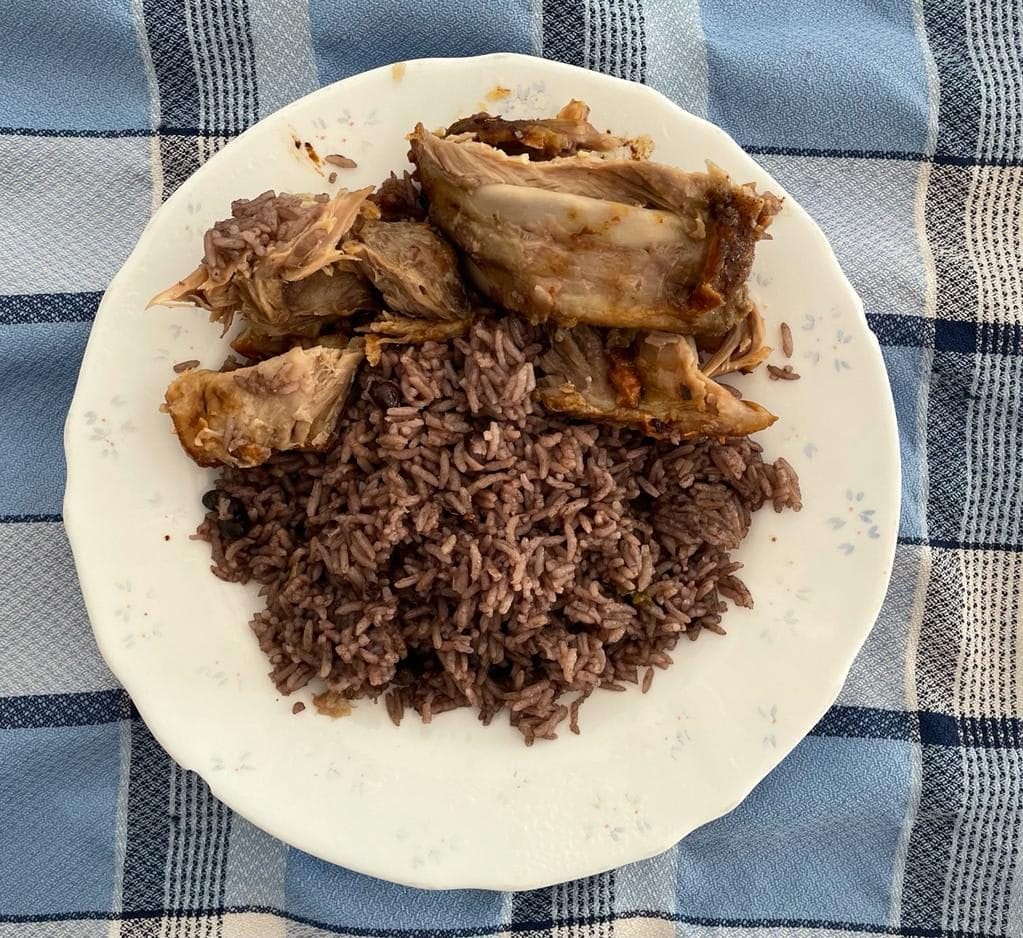
Belize already has its own one-pot rice and beans. It is the Belizean pot where the rice and the beans cook together in coconut milk. The liquid is different, and no source in this research traces a historical line between the two dishes. But the practical question is the same one. What happens when the rice and the beans share a single pot instead of two? BNP is building out its Caribbean coverage dish by dish, and this is the Cuban answer to that question. This rice goes to the table as a side, next to a main like lechon asado, a pork shoulder marinated in sour orange mojo and roasted.
Ingredients
The route below follows Nano Sabores start to finish (source). His is the only transcript in this research that runs the whole dish with usable quantities. Alty y Ramón’s refinements sit inside that same route and are attributed by name in Instructions and Tips.
Their own ratio, for reference: two cups of rice to three cups of broth, with roughly a cup of beans. Their words: “Utilizamos dos tazas de arroz y de caldo le vamos a echar tres tazas”. In English: we use two cups of rice, and we’re going to add three cups of broth. The amounts below follow Nano Sabores’ proportions, scaled to this yield. They are estimates and carry no citation. Alty y Ramón’s ratio above is set beside them for comparison, not blended into them. Only two numbers are a cook’s own words rather than an estimate: five cloves of garlic, and two teaspoons of lard at the finish.
Bay leaf appears twice in this list, once with the beans and once in the pot. Alty y Ramón say so specifically for this dish: “en el arroz congrí o el arroz moro y cristiano sí es imprescindible”. In English: in arroz congrí or arroz moro y cristiano, it really is essential. They skip bay in most of their other recipes. Not this one.
For the beans and broth:
- 1 cup (200 g) dried black beans
- 8 cups (1.9 L) water, for cooking, plus more for soaking
- 1 bay leaf (about 0.2 g)
For the pot:
- 3 tablespoons (45 g) lard (manteca de cerdo), or 3 tablespoons (45 ml) neutral oil
- 1 large yellow onion (about 300 g), finely chopped
- 1 medium green bell pepper (about 150 g), finely chopped, or 5 ají cachucha peppers
- 5 cloves garlic (about 15 g), finely chopped
- 2 teaspoons (4 g) whole cumin seed, lightly crushed
- 1 bay leaf (about 0.2 g)
- 1 1/2 teaspoons (9 g) fine sea salt, plus more to taste
- 2 cups (370 g) parboiled long-grain white rice
- 3 cups (720 ml) hot black bean cooking broth, from the pot above, plus up to 1/2 cup (120 ml) more if needed
- 1 1/2 cups (about 260 g) cooked black beans, lifted out of the broth
To finish:
- 2 teaspoons (10 g) lard
Instructions
- Soak the beans overnight, or at least 4 hours, covered by three inches of cold water. Nano Sabores gives this as his own rule for a stovetop pot. His words: “Si lo vas a hacer en un caldero, aconsejable dejarlo en remojo desde la noche antes”. In English: if you’re going to make it in a caldero, it’s best to leave the beans soaking the night before.
- Drain the soaking water. Put the beans in a pot with 8 cups (1.9 L) of fresh water and one bay leaf, bring to a boil, then drop to a simmer.
- Simmer 45 to 60 minutes, until the beans are just tender and still whole. This is the step the whole dish turns on. Alty y Ramón are the only cook in this research who explain the failure. Cook the beans further, toward a stew, and they burst. Their word for it: “el frijol tiende a romperse”. In English: the bean tends to break. What spills out of a burst bean thickens the pot, and the rice sets sticky instead of dry. Test one against the roof of your mouth. It should give, not collapse.
- Lift 1 1/2 cups (about 260 g) of beans out of the broth and set them aside. Keep every drop of the broth hot on a low burner. You will need 3 cups of it, and the rest should stay within reach. Alty y Ramón keep a spare pot going for exactly this reason. That way they never have to top up from the tap. Their rule: “no utilizar agua a la llave”. In English: never use tap water. The leftover beans freeze well.
- Melt the lard in a heavy pot or caldero over medium heat, then soften the chopped onion and green pepper in it for about 8 minutes, until the onion turns translucent.
- Add the garlic last, with the crushed cumin seed and the second bay leaf, and cook one minute more. Alty y Ramón are specific about the order. Their reason: “Si el ajo se nos quema, no quieran ustedes saber el sabor amargo que da”. In English: if the garlic burns, you don’t want to know the bitter flavor it gives the pot. Burnt garlic sours the whole dish.
- Stir the dry rice straight into the seasoning and keep it moving for two or three minutes, until every grain is coated and starting to color. No liquid yet. Alty y Ramón explain the point of the step. First: “Para sofreír el arroz y que nos coja todo lo que tiene”. In English: to fry the rice so it takes in everything it has to take. Then: “Ese arroz coge todo el sabor de la sazón”. In English: that rice takes in all the flavor of the seasoning. Keep stirring. Dry rice in hot fat catches fast.
- Tip the reserved beans onto the rice and look at the pot before adding any liquid. This is Alty y Ramón’s way of getting the ratio right while there is still time to fix it. Their line: “Le agregamos los granos ahí para saber la proporción de grano con arroz”. In English: we add the beans there so we can see the proportion of beans to rice. Too few beans, add a spoonful more. Too many, take some back out.
- Pour in 3 cups (720 ml) of the hot bean broth and stand back. Hot broth hitting hot rice reacts hard, and it still has to go in hot. Add the salt and stir once.
- Boil hard, uncovered, until the surface liquid has nearly gone and the rice sits level with it, about 8 to 10 minutes. Stir occasionally so nothing catches on the bottom.
- Drop the heat to the lowest setting, cover, and steam 20 minutes without lifting the lid. If the pot looks short of liquid before you cover it, add a splash more hot broth. Never water.
- Uncover, check a grain, and stir the last 2 teaspoons of lard through the hot rice. This is Nano Sabores’ finish. His reason: the rice comes out “brillosito y con buen sabor”, shiny and with good flavor.
- Cover again off the heat, rest 5 to 10 minutes, then fluff and serve. The grains should fall apart dry and separate, not clump.
A soaking note on timing: the 4-hour-to-overnight soak in step 1 happens well before active cooking starts. It is not counted in the times below. Budget for it the night before, or at least four hours ahead.
Nutrition
These values are estimated from the ingredient list above, for the lard version. They are not a lab analysis. Per serving, one of six from this pot:
- Calories: 355 kcal
- Fat: 8 g (3 g saturated)
- Cholesterol: 7 mg
- Carbohydrates: 61 g
- Fiber: 4 g
- Sugar: 2 g
- Protein: 8 g
- Sodium: 580 mg
Storage and Make-Ahead
Cool the rice, cover it, and refrigerate it up to 4 days. Reheat covered with a tablespoon of water per cup so the grains steam back apart instead of drying out.
Freeze in portions for up to 3 months. Thaw overnight in the fridge and reheat covered.
The real make-ahead here is the beans. Cook them a day or two before, and keep them and their broth in the fridge in separate containers. From there, the dish itself takes about 45 minutes. Nano Sabores freezes whatever beans he does not use.
Rice reheated straight from cold turns hard and chalky. The splash of water under the lid is not optional.
Equipment
- A heavy lidded pot or caldero, 5 to 6 quarts, wide enough that the rice sits in a shallow layer. The 20-minute covered steam is where a thin pot scorches.
- A second pot for the beans and their broth, kept hot on a back burner.
- A ladle, for moving hot broth into a hot pot without wearing it.
- A wooden spoon.
- A pressure cooker or electric multicooker, optional, for the beans. Nano Sabores cooks his unsoaked under pressure in 20 to 25 minutes; see Tips.
- A mortar and pestle, if you make the garlic-lime finish described in Tips.
Skip the rice cooker. The rice fries in the seasoning before any liquid touches it, and no source in this research uses one.
Tips and Variations
- Pressure-cooker beans. Nano Sabores skips the soak entirely when he uses a pressure cooker. Twenty minutes at pressure, 25 if the beans are stubborn. He says outright that they do not need to be as soft as for a bean stew.
- Basmati instead of parboiled. Alty y Ramón use basmati for this dish specifically. Their reason: “Es un arroz que cocina bien desgranado”, it is a rice that cooks up well separated. Nano Sabores and Denise both use parboiled instead. Nano gives his own reason: “Lo bueno del arroz vaporizado este es que no se pase”. In English: the good thing about parboiled rice is that it does not overcook. Neither cook is wrong. Use whichever of the two you can find.
- Ají cachucha instead of green pepper. Alty y Ramón use this small Cuban pepper for this dish specifically. They describe it plainly: “Ese ají no es picante, no para nada. Tampoco es dulce”. In English: that pepper is not hot, not at all, and it is not sweet either.
- Pork, three ways, three cooks. Alty y Ramón cook pork cracklings into the pot. They go further, saying a good version needs them: “buen arroz congrí tiene que llevar chicharrones”, a good arroz congrí has to have pork cracklings. Denise renders a pound of bacon, keeps the fat for the sofrito, and crumbles the crisp bacon over the finished platter. Nano Sabores uses lard alone, with no meat in the pot. None of these three routes is the correct one.
- The canned-bean weeknight version. Denise uses a can of black beans and a can and a half of water instead of cooking dried beans. She is direct about why: “I typically cook it in the morning before I go to work”. Canned beans carry none of the dark broth, so she adds a couple of drops of black food coloring rather than, in her words, “just eat gray rice”, “since I’m cheating if you don’t like the rice color”. This is her shortcut, reported here as hers. It is not offered as equal to cooking the beans from dry.
- Denise’s garlic-lime finish. Garlic and salt worked to a paste in a mortar, the juice of two limes, an equal amount of olive oil, and half a teaspoon of cumin, drizzled over the finished rice and given 15 minutes in a 300°F (150°C) oven. Luli’s Cuban Kitchen is clear this is not standard practice. She had never seen it done before her sister-in-law showed her, and says so on camera: “nobody knew about this until I said buy me limes”. Alty y Ramón go the other way entirely: “el limón antes de cocinar no se le echa”. In English: lime does not go in before cooking. To them it belongs on the pork, not the rice.
- If the rice comes out sticky, the beans were too soft. Not the heat, not the rice itself. Go back to step 3, and stop the beans earlier next time.
Frequently Asked Questions
What is the difference between congrí and moros y cristianos?
Moros y cristianos is black beans and white rice cooked together in one pot. Congrí originally meant a specific version of that same idea: the red-bean dish traditionally made in eastern Cuba, and Cuban cooks say as much themselves. But the Diccionario de americanismos, the reference dictionary of the pan-Hispanic language academies, now defines congrí in Cuba as rice with black or red beans, no longer limited to the eastern version. Everyday Cuban usage already covers both, and the dictionary has caught up to it.
Why did my moros y cristianos come out sticky?
The beans were almost certainly cooked too soft. Cooked past just tender, black beans burst and release what is inside them, which thickens the pot and turns the finished rice sticky instead of dry and separate. Stop the beans at just tender and still whole, testing one against the roof of your mouth. It should give, not collapse. This one step decides whether the dish comes out right.
Why is my Cuban black beans and rice pale instead of dark?
Plain water went into the pot somewhere instead of the beans’ own dark cooking broth. The broth carries all of the color in this dish, so any water added in its place leaves the rice pale. Keep every drop of the broth from cooking the beans and use it, hot, for all of the liquid the rice needs. One cook who works from canned beans reaches for a couple of drops of black food coloring instead, precisely because canned beans give her no dark broth to work with.
Can you make moros y cristianos with canned black beans?
Yes. One of the cooks behind this recipe uses a can of black beans and a can and a half of water instead of cooking dried beans, and does it specifically to save time on a weeknight. The trade-off is color: canned beans do not leave behind the dark broth that dried beans do, so she adds a couple of drops of black food coloring to make up for it. It is a real shortcut, not the main route this recipe follows.
What can you use instead of lard in moros y cristianos?
Oil. The same cook who calls lard the authentic fat for this dish says plainly that he often makes it with oil instead, and it comes out good. Two other named routes in this research use pork fat differently: one cook renders bacon and keeps the fat for the base, another cooks pork cracklings into the pot. Any of these works. Lard is simply the fat one cook prefers.
How do you make moros y cristianos ahead of time?
Cook the beans a day or two ahead and keep them and their broth in the refrigerator in separate containers. From there, the dish itself takes about 45 minutes: soften the aromatics, toast the rice, add the beans and broth, and cook it down. Reheat leftovers covered, with a tablespoon of water per cup of rice, so the grains steam back apart instead of drying out.
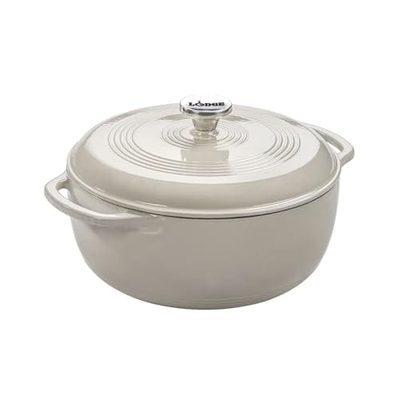
The rice and beans finish together under a lid, and that 20-minute covered steam is where a thin pot scorches. A heavy 5- to 6-quart pot keeps the rice in a shallow layer and the heat even across it.

Three cups of hot bean broth has to move from one pot into another that is already hot and already seasoned. A deep ladle does it in a few passes instead of wearing it.