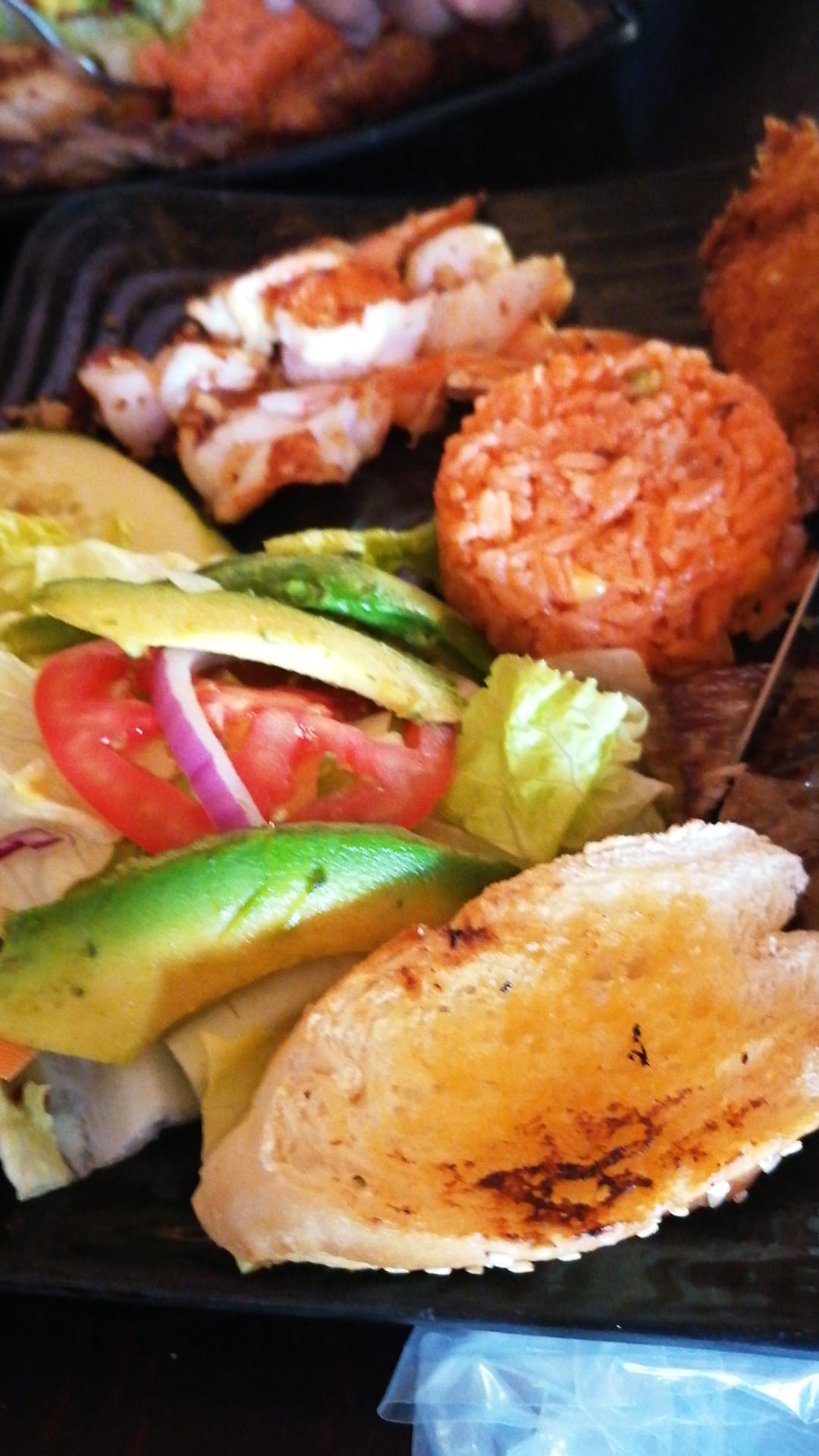
This mariscada recipe is El Salvador’s creamy mixed-seafood soup, built around shrimp, white fish, crab, mussels, and clams simmered in a broth enriched with heavy cream, achiote, garlic, sweet pepper, and tomato. Born in the fishing communities of La Libertad and the Pacific coast, it is a celebration dish from the country’s coastal comedores.
Why La Libertad’s beach comedores built a soup around everything in the net
The fishing villages along El Salvador’s Pacific shore did not set out to make a signature dish. They made what the day gave them. At Puerto La Libertad, the boats came in with shrimp and corvina and whatever else the nets held. The small comedores along the beach took that catch, built a sofrito with onion and bell pepper and garlic, stirred in achiote for color and warmth, then added cream at the end to bring it all together. That is mariscada: resourceful cooking that became a Sunday ritual.
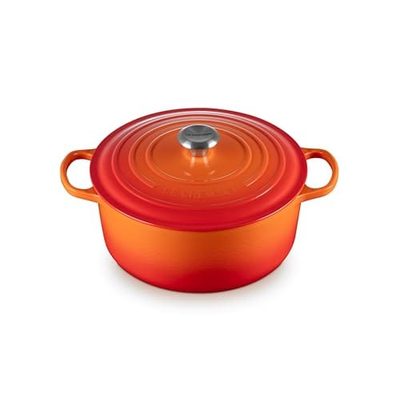
Cast iron dutch oven (Le Creuset)
Heavy cast iron Dutch oven with enamel coating - distributes heat evenly for long, low-temperature cooking and braising without losing liquid to evaporation.
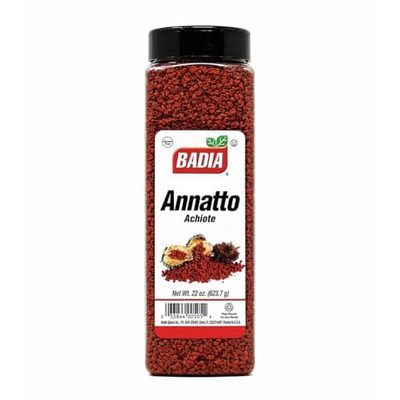
Whole achiote seeds you grind fresh for homemade seasoning pastes; the vibrant red color and earthy flavor come through best when prepared this way.

Mariscada is resourceful cooking that became a Sunday ritual.
The dish is rooted in the Pipil and mestizo communities of El Salvador’s Pacific littoral. It is not a Garifuna dish and not a Maya dish. The contrast matters, because the region’s other famous seafood soups work differently. Sopa de caracol, Honduras’s Garifuna conch soup, is built on coconut milk and yuca. The Garifuna tapado costeño uses coconut milk and plantain. Mariscada uses cream and achiote and tomato. The broths are not interchangeable, and the culinary traditions behind them are not related.
Coastal Salvadorans do not eat this dish on a Tuesday. It comes out for Sunday family gatherings, quinceñeras, the kind of occasion where a large pot makes sense. The restaurant “La Mariscada del Muelle” in Puerto La Libertad built its reputation on this soup. El Tunco, the beach town further west, draws both locals and travelers to its seafood restaurants for the same reason. The dish earned its place not because someone invented it but because the Pacific coast kept producing the ingredients and the cooks kept improving the method.
For anyone following El Salvador’s coastal cooking through this site, mariscada is the dish that anchors the Pacific shore in a way that no single-protein soup can match.
What makes Salvadoran mariscada different from other seafood soups
The achiote broth is the defining feature. Achiote paste, made from ground annatto seeds, gives mariscada its characteristic golden-orange color and an earthy, slightly sweet undertone that other aromatics do not replicate. It goes in early, stirred into the sofrito so the fat carries the flavor before any liquid is added.
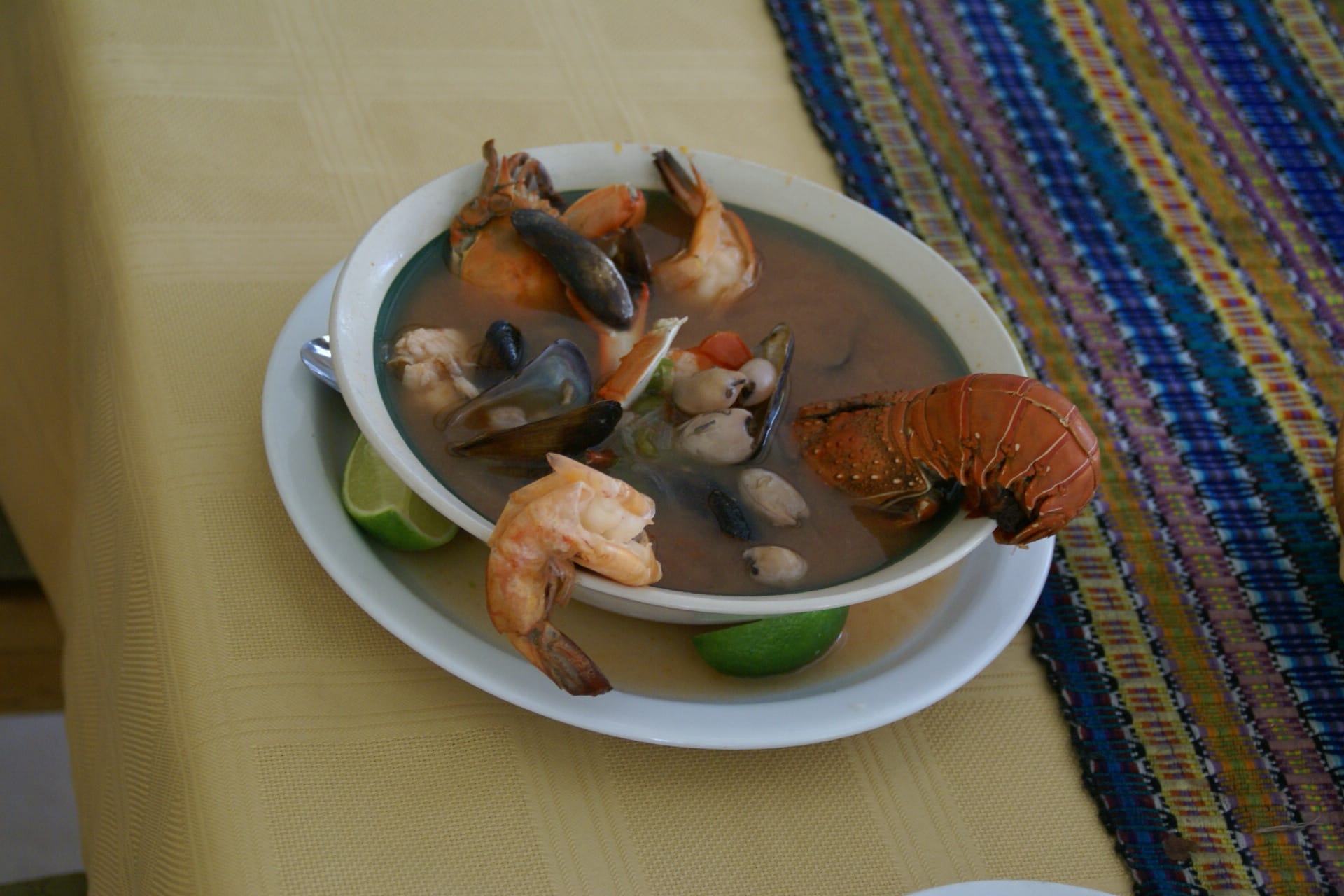
The cream comes last. Heavy cream or Salvadoran crema goes in off the heat. This matters: cream added to a boiling liquid breaks. Removed from heat and stirred in slowly, it integrates into the broth without separating, giving the soup its richness without curdling.
The cream comes last. Removed from heat and stirred in slowly, it integrates into the broth without separating.
The seafood is deliberately mixed. Traditional mariscada includes jumbo shrimp, firm white fish (corvina is the preference on the Salvadoran coast; snapper or grouper work well elsewhere), crab, and mussels or clams. Squid appears in some versions. The point of the combination is the variety of textures: the firm bite of fish against the softness of shrimp, the brininess of shellfish against the cream.
Each protein has a different cook time, and they go in the pot in a specific order. Crab and mussels go first because they need the most time and their shells open to signal when they are done. Fish goes next, just a few minutes. Shrimp go last. Two to three minutes in a hot broth is all they need. Add them too early and they become rubber.
The sofrito base is garlic, white onion, red and green bell pepper, and tomato. Fresh lime comes at the table. Cilantro finishes the bowl. White rice or warm corn tortillas are the standard accompaniments.
Ingredients
Seafood:
- 1 lb (450 g) large shrimp, shell-on or peeled and deveined
- 1 lb (450 g) firm white fish (corvina, snapper, or grouper), cut into 2-inch pieces
- ½ lb (225 g) blue crab pieces or crab legs, cracked
- ½ lb (225 g) mussels or clams, scrubbed
- ½ lb (225 g) squid (optional), cleaned and sliced into rings
Broth and Base:
- 2 tbsp vegetable oil or olive oil
- 1 medium white onion, finely diced
- 4 cloves garlic, minced
- 1 red bell pepper, diced
- 1 green bell pepper, diced
- 2 ripe tomatoes, diced (or 1 cup canned diced tomato)
- 1 tsp achiote paste (recado rojo) or 1 tsp ground annatto
- 4 cups fish stock or clam juice and water
- 1 cup heavy cream (or Salvadoran crema, stirred in off heat)
- Salt and freshly ground black pepper to taste
To Serve:
- Fresh cilantro, chopped
- Fresh lime wedges
- Cooked white rice or warm corn tortillas
- Salvadoran crema (extra, for the table)
Instructions
- Heat the oil in a large, heavy stockpot or Dutch oven over medium heat. Add the diced onion and bell peppers. Sauté 5 to 7 minutes until softened and starting to turn translucent.
- Add the minced garlic and achiote paste. Stir 1 to 2 minutes until fragrant and the paste coats the vegetables. The sofrito should deepen in color here.
- Add the diced tomatoes. Cook 3 to 4 minutes, stirring occasionally, until they break down and release their liquid into the base.
- Pour in the fish stock or clam juice and water. Bring to a simmer. Add salt and pepper. Let the broth cook uncovered for 15 to 20 minutes to concentrate. Do not rush this step. The flavor builds in the simmer.
- Add the crab pieces and mussels or clams. Cover and simmer 4 to 6 minutes until the shells open. Discard any that remain closed.
- Add the fish pieces and squid if using. Simmer 4 to 5 minutes until the fish is just opaque throughout.
- Add the shrimp. Cook 2 to 3 minutes until pink and firm. Pull the pot from the heat the moment the shrimp are done.
- With the pot off the heat, stir in the heavy cream or Salvadoran crema slowly. Pour it in while stirring so it incorporates evenly.
- Taste and adjust salt, pepper, and a squeeze of lime. Ladle into deep bowls and finish with fresh cilantro.
- Serve immediately with white rice or warm corn tortillas and extra lime wedges on the side.
How to adapt mariscada for your kitchen
On the seafood: Frozen mussels work well; thaw and drain them before adding. Canned clams are an acceptable substitute when fresh shellfish is unavailable — use the juice from the can in place of some of the stock. Do not use imitation crab. It will not hold up in the broth and the texture will be wrong.
To make it richer: Some cooks add a spoonful of tomato paste alongside the achiote. This deepens the color and adds sweetness to the base. A splash of dry white wine added before the stock is another variation.
Cream or coconut milk: The Pacific coast version uses heavy cream or Salvadoran crema, stirred in off the heat. In El Salvador’s Eastern Zone, coconut milk is the traditional base — a distinct regional form, not a substitution or a foreign approximation. Both are authentically Salvadoran; the choice of base reflects where along the coast the cook learned the dish. If you use coconut milk, add it the same way: off the heat, stirred in slowly.
Storage: Mariscada does not keep well. The cream breaks when reheated and the seafood overcooks. Make what you will eat.
Cilantro sensitivity: Substitute flat-leaf parsley or chives as a finishing herb.
On the side: Some coastal comedores serve mariscada with chilaquiles, which in the Salvadoran tradition are fried corn tortillas filled with cheese, closer in texture to a hard tostada than to the Mexican version of chilaquiles. They are worth making if you want the full coastal experience. Curtido, the Salvadoran pickled cabbage slaw, is another common accompaniment that cuts through the richness of the broth.
Frequently Asked Questions
What is mariscada?
Mariscada is a creamy mixed-seafood soup from El Salvador, made with shrimp, white fish, crab, mussels, and clams in a broth enriched with heavy cream, achiote, garlic, sweet pepper, and tomato. It is a celebration dish rooted in the fishing communities of La Libertad on El Salvador’s Pacific coast.
What seafood goes in mariscada?
Traditional mariscada includes shrimp, firm white fish (corvina, snapper, or grouper), crab, and mussels or clams. Squid is optional. The mixed-seafood combination is the point: the dish was built around the varied daily catch of Pacific coast fishing communities.
Is mariscada from El Salvador or Honduras?
Mariscada is a Salvadoran dish. While the name appears in several Latin American cuisines, the cream-enriched version from La Libertad and the Pacific coast is the form most associated with El Salvador. The country’s Eastern Zone also makes a traditional coconut-milk version. Both are authentically Salvadoran. The Honduran equivalent is sopa de caracol — a different dish built on conch and coconut milk.
What is the difference between mariscada and sopa de caracol?
Sopa de caracol is a Honduran Garifuna soup made specifically with conch (caracol) in a coconut milk broth. Mariscada is Salvadoran, uses mixed seafood (not just conch), and is built on a cream and achiote base rather than coconut milk. They are distinct dishes from different culinary traditions.
Can I make mariscada without fresh seafood?
Yes. Frozen shrimp, thawed mussels, and frozen fish fillets work well. Use clam juice to strengthen the broth when fresh shellfish is unavailable. Avoid imitation crab. It will not survive the simmer.
What do you serve with mariscada?
Mariscada is traditionally served with white rice or warm corn tortillas to soak up the broth. Salvadoran crema, fresh lime wedges, and chopped cilantro are the standard table condiments. Some coastal comedores serve it with chilaquiles, which are fried corn tortillas filled with cheese.
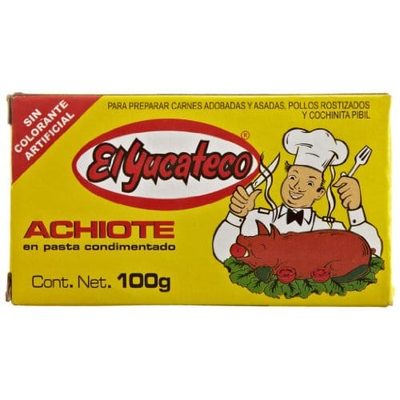
Cochinita pibil, poc chuc, and escabeche all start with red recado. A prepared achiote paste dissolves into sour orange in minutes instead of the hour it takes to grind annatto, oregano, and clove from seed.