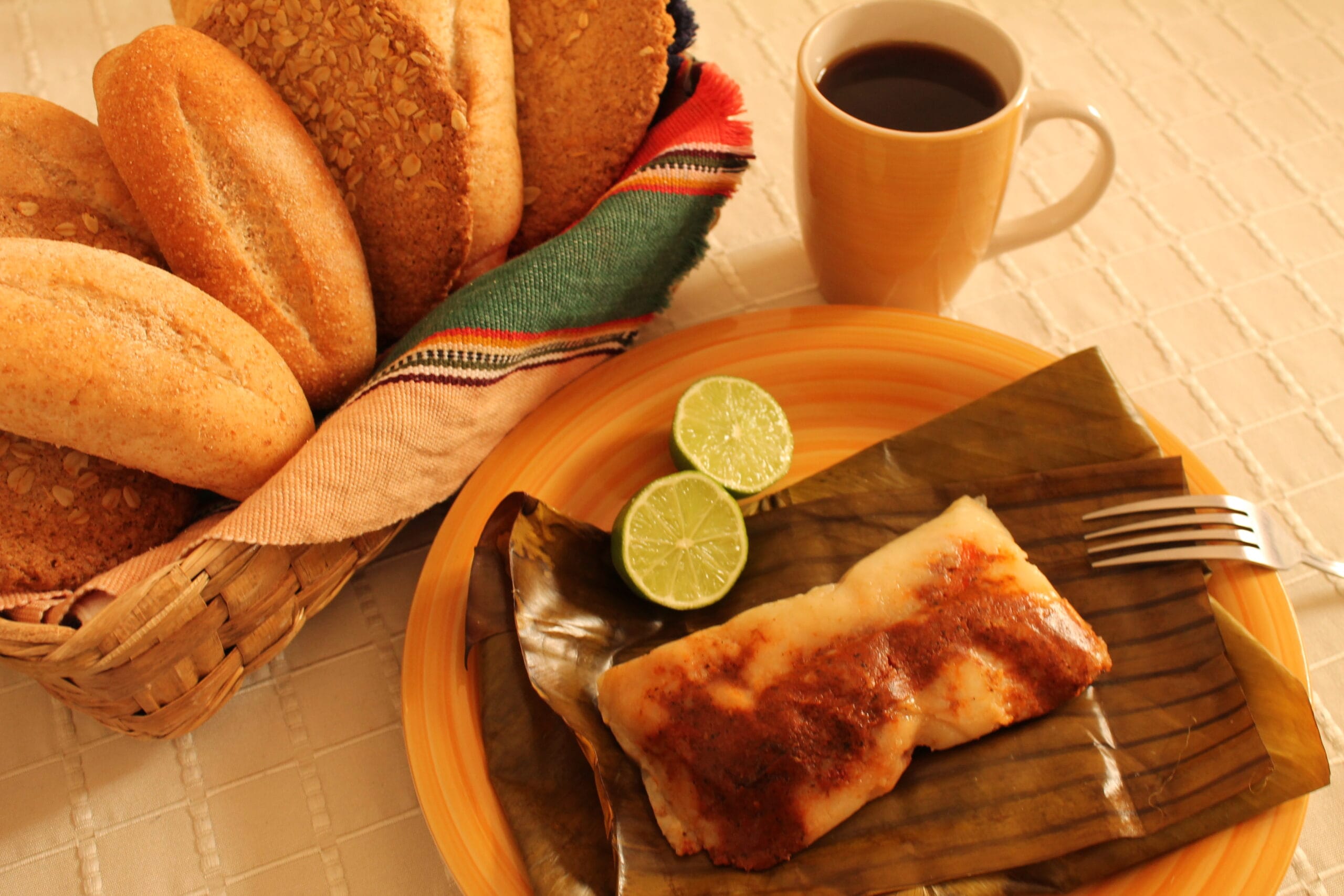
Tamales colorados are Guatemala’s red tamal: soft corn masa sauced with a recado of tomato, tomatillo, guaque and pasa chiles, achiote, and toasted pepitoria and sesame, wrapped around pork or chicken with an olive and a strip of roasted red pepper, then steamed in banana leaf.
What Makes a Tamal Colorado the Guatemalan Saturday Tamal
In Guatemala, Saturday is tamale day. A small red lantern hung outside a tienda signals that the tamales colorados are ready that evening. This is not a special-occasion food in the way an outsider might assume. It is weekly, ordinary, and loved precisely because it is both.
1400S Spices Ceylon Cinnamon Sticks from Sri Lanka, 1lb (Canela Entera)
Ceylon cinnamon is sweeter and milder than cassia — the right choice for atole, conkies, and sweet drinks. These are whole dried sticks from Sri Lanka.
Regency Wraps Butchers Cooking Twine, Natural Cotton
Food-safe natural cotton twine for trussing whole birds and tying roasts, holding a stewed chicken or holiday turkey together through long cooking.
The “colorado” means red, and the red comes from the recado, not from heat. A recado is a sauce, closer to a mole than to a salsa, built on tomato and tomatillo with a base of dried chiles that are mild rather than fiery. So the tamal is rich and savory, tinted deep red through the masa, but it does not burn. That distinction matters when you are cooking it for the first time.
The “colorado” means red, and the red comes from the recado, not from heat.
It is a ladino-Maya Guatemalan staple, built on a Maya tamal base and layered with Spanish-introduced pork, olives, and tomatoes. Tamales themselves belong to all of Mesoamerica. Mexico has hundreds of versions. Honduras has the nacatamal, also wrapped in banana leaf, with its own filling and its own logic. The Yucatán has its soupy tamales colados, thinned and poured rather than packed. What makes this one part of Guatemalan food is the combination: the pre-cooked sauced masa, the banana-leaf wrap, and that specific recado of tomato, tomatillo, achiote, and toasted seeds. It sits inside the wider Maya world but it is its own thing.
It is also worth saying what a tamal colorado is not. It is not a chuchito. Chuchitos are smaller and firmer, wrapped in corn husks, made from raw masa with a simple tomato sauce, and sold by street vendors as a snack you eat standing up. The tamal colorado is larger, softer, banana-leaf wrapped, built from pre-cooked masa with a complex recado, and eaten as a meal with a fork. And it is not the tamal negro. Tamales negros are darker, sweet-savory, built on chocolate and dried fruit rather than red chile, and made strictly for Christmas. Colorados are the red tamales you find every Saturday of the year. Guatemalans keep them straight, and so should you.
If the colorado, chuchito, pache, and negro still run together in your head, our guide to how the four Guatemalan tamales differ lays them out side by side.
Ingredients
Traditional names come first, with substitutions you can actually find in a US grocery store in parentheses. This recipe makes about 12 tamales.
For the Masa
- 1.5 lb masa de maíz (fresh corn masa; or masa harina prepared per package, made slightly looser than for tortillas)
- 8 oz manteca (pork lard), or a mix of lard and reserved pork broth
- About 2 cups reserved pork broth, for cooking and loosening the masa, plus more as needed
- Salt (start with about 2 teaspoons beaten into the masa; season assertively, it fades in cooking)
For the Recado Rojo (the Red Sauce)
- 1 lb plum tomatoes
- 8 oz tomatillos (miltomate), husked
- 2 chile pimiento (red bell peppers), for the recado
- 3 chile guaque (dried guaque chiles; substitute guajillo)
- 2 chile pasa (dried pasa chiles; substitute ancho or pasilla)
- 2 oz pepitoria (hulled raw pumpkin seeds), toasted
- 2 oz ajonjolí (sesame seeds), toasted
- 1 small piece of canela (cinnamon)
- 1 tablespoon achiote (annatto), for color
- 1 small stale tortilla or slice of bread, for body
- Salt
For the Filling and Wrap
- 1.5 lb pork shoulder (or bone-in chicken pieces), simmered until tender
- 1 chile pimiento (red bell pepper), roasted and cut into about 12 strips, reserved for the filling
- About 12 green olives (one per tamal)
- Hoja de plátano (banana leaves), plus hoja de maxán if you can find it; otherwise plan on a double layer of banana leaf
- Kitchen twine, for tying
Instructions
While the pork simmers in step 1, make the recado and prepare the banana leaves so everything comes together in about two and a half hours.
- Simmer the pork in salted water until tender, about an hour. Lift out the meat, cut it into pieces, and reserve the broth.
- Roast the filling pepper: char one red bell pepper over a flame or under a broiler until blistered, then peel it, cut it into about 12 strips, and set it aside for the filling. Do not put this pepper in the recado.
- Stem and seed the guaque and pasa chiles. Toast them lightly in a dry pan, then soak in hot water until soft.
- Toast the pepitoria and sesame seeds in a dry pan until fragrant and just golden. Toast the cinnamon piece briefly with them.
- Char the tomatoes, tomatillos, and the remaining 2 red bell peppers directly over a flame or under a broiler until blistered.
- Blend the soaked chiles, charred tomatoes, charred tomatillos, the 2 recado peppers, toasted seeds, cinnamon, achiote, and the stale tortilla or bread into a smooth recado. Add a little broth if it needs help moving.
- Fry the recado down in a spoon of lard over medium heat, stirring, until it darkens and thickens, about 10 minutes. Season with salt. Set aside about a quarter of it for topping inside each tamal; the rest goes into the masa.
- Cook the masa: combine the corn masa with about 2 cups of broth in a heavy pot, add the lard, and cook over medium heat, stirring constantly, until the masa thickens, pulls from the sides, and is cooked through, 15 to 20 minutes. Add more broth as needed to keep it soft. Beat in the larger portion of recado and about 2 teaspoons of salt. The masa should be soft and glossy, not stiff. This pre-cooking step is what gives tamales colorados their distinct silky texture and makes them a double-cooked tamal: the masa cooks once here, then steams again inside the leaf.
- Prepare the banana leaves: pass each one over an open flame until the color shifts and it turns pliable. Wipe clean and cut into squares about 12 inches across.
- Assemble each tamal: lay down a banana-leaf square (top it with a piece of hoja de maxán where available, or use a second banana-leaf square if not). Spread about a half cup of red masa in the center, an even layer roughly the size of your palm. Add a piece of pork, a spoon of the reserved recado, one olive, and a strip of roasted pepper.
- Fold the leaf over the filling into a sealed packet, fold the ends, and tie with twine.
- Stand the tamales upright in a deep pot lined with extra leaves. Add water to about an inch below the tamales, cover with more leaves and a cloth, and steam at a low boil for about 1.5 hours, checking and replenishing hot water as needed. Let them rest a few minutes before unwrapping.
Why the Recado Is the Whole Dish
If you take one thing seriously, take the recado seriously. A flat tamal colorado almost always traces back to a rushed sauce. Three steps make the difference. First, char the tomatoes and tomatillos until blackened in spots, because that char is where the depth lives. Second, toast the pepitoria and sesame until you can smell them. Third, fry the blended recado down in fat until it darkens and tightens before it ever touches the masa. Raw, the sauce tastes thin and sharp. Cooked down, it turns round and deep. That is the whole argument of the dish.
A flat tamal colorado almost always traces back to a rushed sauce.
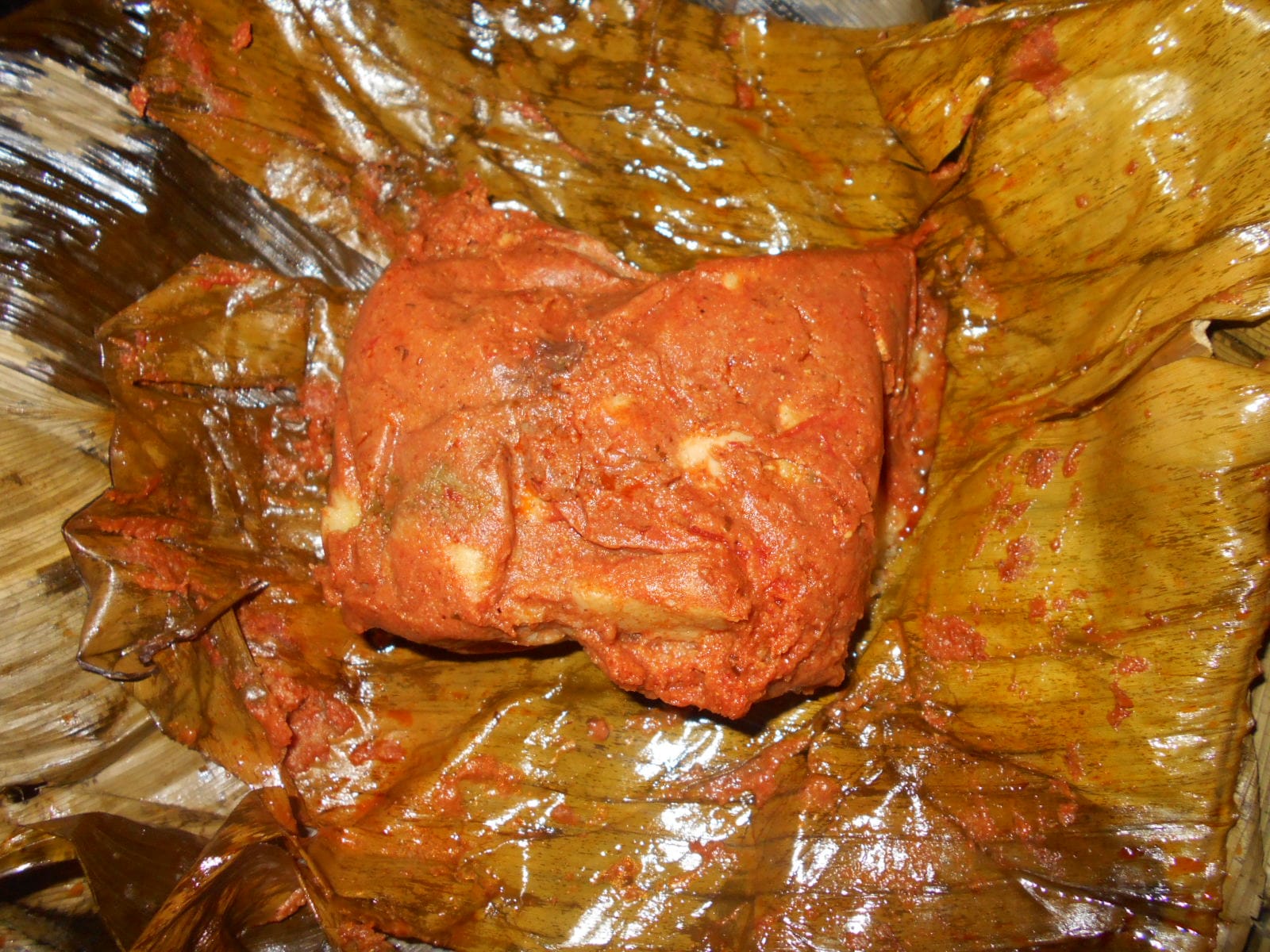
For cooks outside Guatemala, substitutions are honest and easy. Guaque is close to guajillo. Pasa stands in for ancho or pasilla. Tomatillos are found in most Latin grocery stores. Pepitoria is just hulled raw pumpkin seeds. If you cannot find hoja de maxán, use a double layer of banana leaf, which most Latin markets carry frozen. Corn husk will hold a tamal together in a pinch, but you lose the floral banana-leaf aroma that perfumes the masa, and the result is a different animal.
These freeze well. Wrap the cooked tamales and freeze them whole, then resteam straight from frozen until heated through. The recado can be made a full day ahead, which is what most home cooks do when they are making a large batch. Do not under-salt the masa. Salt fades as it cooks, and an underseasoned tamal is the most common disappointment.
Frequently Asked Questions
What are tamales colorados?
Tamales colorados are Guatemala’s red tamal: soft corn masa colored and flavored with a red recado of tomato, tomatillo, achiote, mild dried chiles, and toasted seeds, filled with pork or chicken plus an olive and a strip of roasted red pepper, then wrapped in banana leaf and steamed. They are eaten weekly on Saturdays and at Christmas.
What is the difference between tamales colorados and chuchitos?
Chuchitos are smaller and firmer, wrapped in corn husks, made from raw masa with a simple tomato sauce, and sold as a street snack. Tamales colorados are larger and softer, wrapped in banana leaf, built from pre-cooked masa with a complex recado, and eaten as a sit-down meal. Both are Guatemalan, but the colorado is the full Saturday and Christmas tamal while the chuchito is the everyday handheld version.
What is recado for tamales made of?
The red recado is built on charred ripe tomatoes and tomatillos with achiote for color, mild dried chiles like guaque and pasa, toasted pepitoria and sesame seeds for depth, a little cinnamon, and stale bread or tortilla to give it body. The seeds are toasted dry, the tomatoes and tomatillos are charred, and then the blended sauce is fried down in lard until it darkens. That cooking-down is what separates a good recado from a flat one.
Can I use corn husks instead of banana leaves for tamales colorados?
You can, but you change the dish. Banana leaves give tamales colorados their soft texture and floral aroma, and they hold the moist masa better than husks do. To prepare them, pass each leaf over a flame until pliable. If you truly cannot find banana leaves, frozen ones at a Latin market work, and corn husk is a last resort that loses the signature aroma.
When do Guatemalans eat tamales colorados?
Every Saturday, year-round. Saturday is tamale day in Guatemala, and neighborhood tiendas hang a small red lantern to signal that the tamales colorados are ready in the evening. They are also a centerpiece of Christmas, eaten on Christmas Eve and Christmas Day when families gather and share them warm.
What is the difference between tamales colorados and tamales negros?
Tamales colorados are the red, savory, year-round tamal, built on tomato, tomatillo, and achiote, garnished inside with an olive and roasted red pepper. Tamales negros are darker and sweet-savory, built on chocolate and dried fruit, filled with a prune and an almond half, and made strictly for Christmas. Guatemalan families make both for the holidays, but the colorado is the one you find every Saturday.
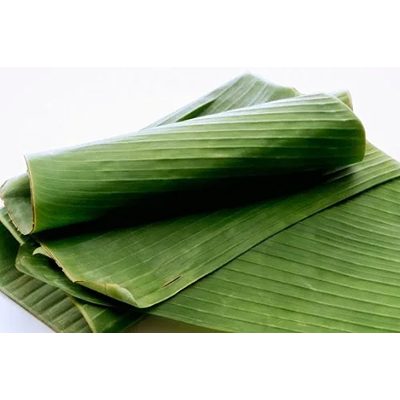
Frozen banana leaves for tamales, mukbil pollo, pibil, conkies, dukunu, and the Garifuna wrappers on hudut and bundiga — pass over a flame to make them pliable before wrapping; far easier than chasing fresh leaves outside the tropics.
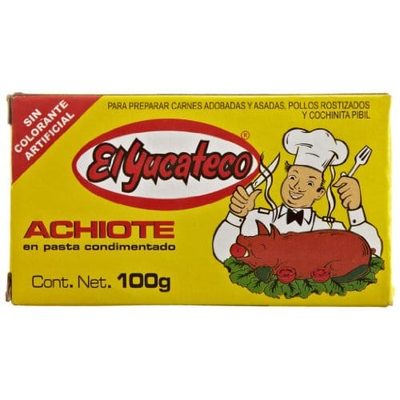
Cochinita pibil, poc chuc, and escabeche all start with red recado. A prepared achiote paste dissolves into sour orange in minutes instead of the hour it takes to grind annatto, oregano, and clove from seed.
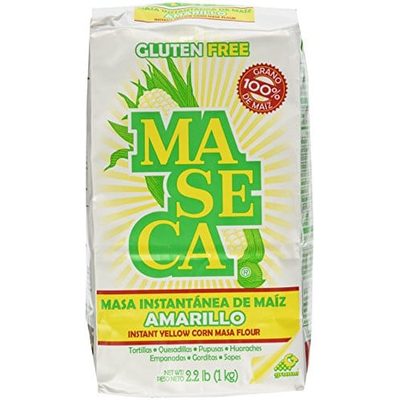
Maseca brand yellow corn masa harina, pre-ground and treated for immediate use in dough for tortillas, tamales, and other corn dough applications.