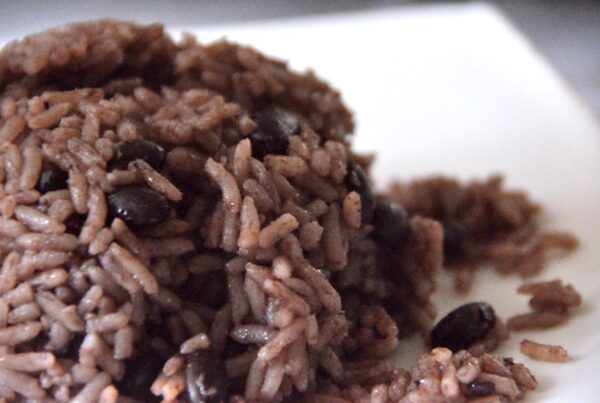
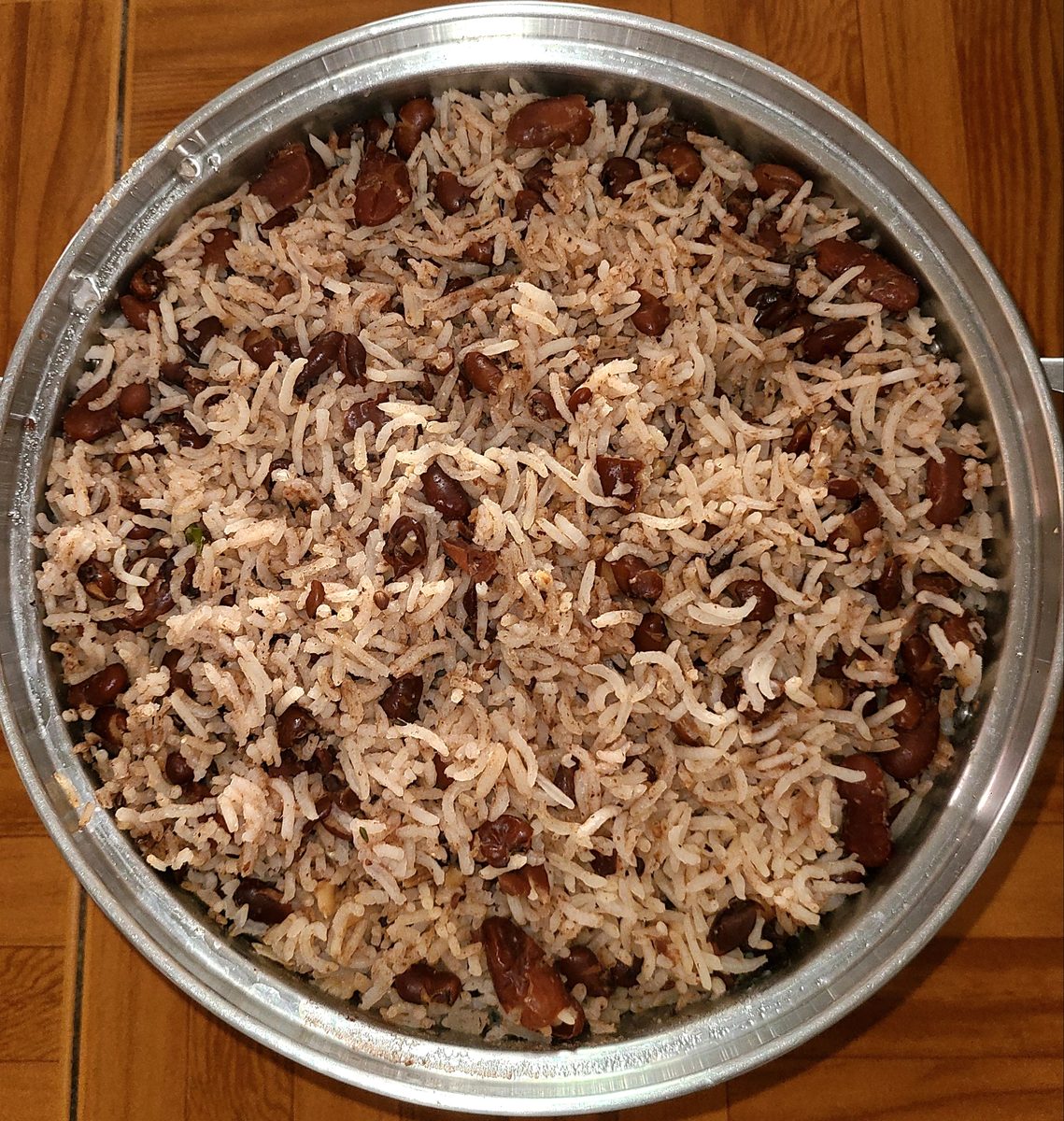
Jamaican rice and peas is not rice with beans stirred in. The peas are boiled first, on their own, for the better part of an hour, and the pink water they leave behind is what the rice cooks in. Coconut milk, scallion, thyme, garlic, pimento and a whole Scotch bonnet go into that same liquid, and the rice goes in last. Done right it comes out reddish and separate. Done wrong it comes out pale, sticky, and studded with hard peas.
It is Sunday food. In Jamaica the dish is prepared especially on Sundays for dinner, alongside the meats it exists to soak up (source).
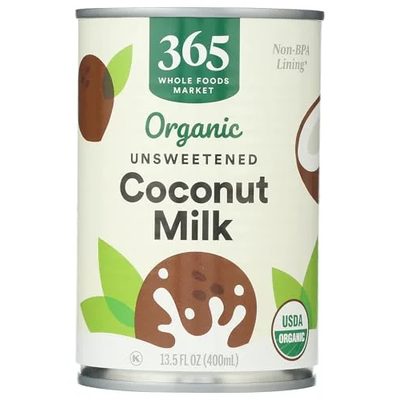
Full-fat coconut milk with nothing added - the choice for recipes where fat carries flavor and texture matters, from soups to baking.
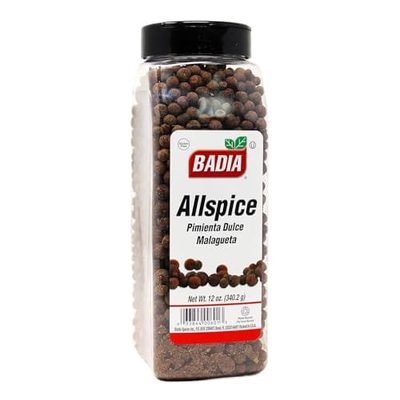
Whole allspice berries you grind fresh; the warm, complex spice flavor is strongest when ground right before use, unlike pre-ground powder.
Peas, Beans, and Gandules
The word peas is where most of the confusion starts. In Jamaica, peas means red kidney beans. In Belize the same bean is called a bean, which is why the Belizean dish is rice and beans and the Jamaican one is rice and peas. Same legume, two vocabularies.
Red peas are the everyday default, and one cook says outright that he prefers red peas rice and peas over gungo because that is the more traditional way to make it. The others are seasonal. Gungo peas are pigeon peas, the same thing sold as gandules, and they are traditionally cooked during the Christmas season (source). Cow peas turn up in Jamaican pots the same way, when they are in.
The recipe below is the red peas version, which is the one you can cook any week of the year. Gungo and cow peas both cook faster and give a milder pot, so if you use them, start checking at 30 minutes rather than 45.
One thing worth saying plainly, because the shared word gandules makes people assume otherwise: this is not arroz con gandules. That dish is built on sofrito, and there is no sofrito in either the Jamaican or the Belizean pot. The spirit is similar and the flavour profile is not.
Ingredients
These amounts fill a big pot and serve eight as a side, which is the scale Jamaican cooks work at. Halve everything for four and keep the liquid rule the same.
The peas
- 1 cup (200 g) dried red kidney beans, soaked overnight in cold water.
- 6 cups (1.4 L) water for boiling them, and keep every drop of it.
The pot
- 3 cups (600 g) long-grain white rice, washed two or three times.
- 1 large dry coconut, grated and squeezed for about 2 cups (475 ml) of milk. Hold back 3 tbsp of the grated meat. A 13.5 fl oz (400 ml) tin of full-fat coconut milk is the shortcut.
- 4 scallions, crushed along the white end.
- 6 sprigs fresh thyme.
- 4 garlic cloves, crushed.
- 1 tsp pimento berries, about 8 whole allspice.
- 1 whole Scotch bonnet pepper, left unbroken.
- 1 in (2.5 cm) piece fresh ginger, grated or smashed. Optional.
- 2 tbsp (28 g) butter.
- 1 1/2 tsp salt and 1/2 tsp black pepper.
Instructions
- Soak the peas overnight in cold water. They get softer and cook easier, and this is the step that decides whether you end up with hard peas in the finished rice.
- Drain the soaking water off, put the peas in the pot with 6 cups (1.4 L) of fresh water, and cook 45 minutes to an hour until properly tender. Keep it at a gentle simmer, never a hard rolling boil, and put no salt and no seasoning in until they are soft. Salt early and the skins toughen. Do not pour that water off either: the pinkish red colour of the finished dish comes out of the kidney beans and into it.
- While the peas cook, grate the coconut and squeeze it with about 2 cups (475 ml) of hot water to get the milk. Hold back 3 tbsp of the grated meat. Wash the rice two or three times to take the excess starch off, which is the difference between separate grains and a sticky pot.
- Now the peas are tender, so the seasoning can go in: coconut milk, the reserved 3 tbsp grated coconut, scallion, thyme, garlic, pimento berries, ginger, butter, salt and black pepper. Bring it back up and let it run a couple of minutes so the seasoning gets into the liquid.
- Add the washed rice and level it off with a spoon. Now check the liquid: stand a spoon in the middle until it touches the rice, and the liquid should come about an inch (2.5 cm) up the handle. Top up with hot water if you are short.
- Lay the whole Scotch bonnet on top. Cook with it whole and do not rupture it, because a burst pepper puts the heat beyond control. If you want none at all, a green bell pepper gives similar depth with no chance of heat.
- Boil uncovered until the liquid has dropped to the level of the rice and you can see the surface.
- Cover tightly, foil under the lid if your lid is loose, drop the heat to low and steam 20 to 30 minutes.
- Lift the pepper out whole, then fork the rice through. Do not stir it like a risotto.
The One-Inch Rule
Jamaican cooks do not measure the liquid for this pot. They measure it against the rice, and two of them describe the same test in the same words: put the spoon in until it touches the top of the rice, and you need an inch of liquid on the spoon.
That works because the pea water is already in the pot and nobody knows how much of it boiled away. A fixed ratio would need you to measure what is left, which nobody does. The spoon tells you the answer directly.
The one place a number does get stated is the canned version, where there is no pea water to account for: three cups of rice, one tin of coconut milk and a cup and a half of water. With dried peas you are topping that same liquid up to the spoon mark instead.
Wash the Rice, Keep the Pea Water
Two habits carry this dish, and they pull in opposite directions: throw one liquid away, keep the other.
The rice gets washed. One cook is blunt about why people fail at this recipe: if it comes out soggy and starchy, chances are you did not wash the rice properly. Two or three rinses is what the cooks specify, enough to pull the loose surface starch off without rinsing the grain to death.
The pea water stays. That is where the colour lives, described as a lovely pinkish reddish colour coming off the red kidney beans, and it carries flavour that plain water cannot. Draining the peas and starting again with fresh water gives you white rice with beans in it.
The third habit is negative: do not put the rice in before the peas are soft. One cook says it plainly, that rice and hard peas is no good, because the rice is done in half an hour and the peas are not going to catch up.
Fresh Coconut Milk, and Gentle Peas
Two shortcuts run through nearly every video version of this dish: tinned peas and tinned coconut milk. Both work. Neither is the authentic pot.
The authentic version grates a dry coconut and squeezes the milk out by hand. It is a different ingredient from the tin, not a better grade of the same one, and the whole dish sits on it. If you are going to do one thing differently from the videos, do this one.
Once you have grated the coconut, hold back about 3 tablespoons of the meat and put it into the pot with the rice. It cooks in and gives the finished rice a texture and a coconut presence that strained milk alone does not.
The peas want the opposite of energy. Soak overnight, then cook them gently until tender with no hard boiling, and keep salt and seasoning out of the pot until they are soft. Salt going in early toughens the skins, and a hard boil breaks the peas up before they are cooked through. This holds for any pot of red beans, not just this one.
Where the Cooks Disagree
Canned versus dried is the loudest split, and it is worth noticing how consistently the video versions take the shortcut. One cook has published a canned kidney bean version and still says he prefers the real thing. Another has built a whole method around making canned beans look authentic, which is covered below and is genuinely good. Tinned coconut milk goes the same way: almost universal in the video versions, and not what the dish is actually built on.
Washing the rice is not universal either. One cook insists on two or three washes to stop it going sticky; others do not make a point of it. Given that the same cooks blame unwashed rice for failed pots, washing is the safer default.
And the pepper. One cook uses two Scotch bonnets and admits you should really use one. Another uses one and refuses to break it, on the grounds that if he did, nobody could eat the result.
The Canned Bean Shortcut
Tinned peas skip the overnight soak and the hour of boiling, but they also skip the pea water, which is where the colour came from. One Jamaican cook has a specific fix for both problems.
First, take about a quarter cup of the peas along with the juice from the tin and blend them with the coconut milk. Smoothing out some of the peas creates the illusion that you boiled them yourself, because it puts pea solids into the liquid the way a long boil would.
Second, burn a tablespoon of brown sugar in the pot before anything else goes in, until it caramelises. That is the same burnt sugar used for colour elsewhere in Caribbean cooking, and here it puts the red back into rice that never sat in pea water. Use a 19 oz (540 g) tin of peas to 3 cups of rice, with the coconut milk and about 1 1/2 cups (350 ml) of water.
What It Is Served With
Rice and peas is a side, and the cooks name what it sits beside: brown stew fish, curry chicken, stewed chicken, curry goat, oxtail. It is built to take gravy, which is why it is dry and separate rather than creamy.
On BNP that means it belongs next to oxtail and brown stew chicken, both of which finish with the kind of gravy this rice exists to absorb.
Storage and Make-Ahead
The peas are the slow part and they hold well. Boil them a day or two ahead and refrigerate them in their cooking water, which is the part you cannot replace. Bring it back to a boil and carry on from the coconut milk.
Cooked rice and peas keeps four days refrigerated. Reheat it covered with a splash of water so it steams rather than fries, and it comes back close to fresh.
It freezes for three months in portions. Cool it fully before it goes in, since a warm container gives you one solid block that has to be thawed whole.
Equipment
A heavy pot with a tight lid is the whole equipment list. Loose lids let the steam out and leave the top layer underdone, which is what the sheet of foil under the lid is for.
A pressure cooker takes the soaked peas to tender in about 15 minutes instead of an hour. Release the pressure and finish the rice on the stovetop, because the one-inch check needs an open pot.
Tips and Variations
Some Jamaican versions call for ginger, grated or smashed, and some do not. Treat it as optional. One cook describes it exactly that way, optional but giving the rice a nice flavour.
Rice type is genuinely open. The corpus cooks use long-grain white, long-grain brown and basmati between them. Brown rice needs more liquid and longer steaming; check the pot at 40 minutes rather than 25.
Judge the finished pot on two things the cooks name: it should have a nice red look, and the grains should sit separate rather than mushy. Pale rice usually means the pea water went down the sink.
Nutrition below is estimated from standard ingredient labels, per serving with the pot divided eight ways as a side dish.
The Same Idea Across the Region
Cooking rice in a flavoured liquid instead of water is a Caribbean habit rather than a Jamaican one, and the differences between versions are where the region shows itself.
Belizean rice and beans is the closest relative this dish has. Same red kidney bean, same coconut milk, same one-pot finish. Even the name is the same dish in a different vocabulary, since what Jamaica calls peas is what Belize calls beans.
The differences are in the seasoning and in the order of work. Jamaica puts pimento berries in, which you do not really meet in a Belizean rice and beans pot. Jamaica reaches for Scotch bonnet where Belize reaches for habanero, close cousins that are not interchangeable in flavour. Jamaican versions lean hard on scallion in particular, where Belize builds on onion, garlic and thyme.
The structural difference is the bean pot. Jamaica cooks the peas and then keeps going in the same pot, dropping the coconut milk straight in on top of them so the peas finish in coconut. Belize makes stewed beans as a standing item, a pot that lives in the fridge and gets used for several things, and the rice is then built from that gravy. Belize also keeps a hard line between rice and beans, cooked together, and stew beans and rice, served side by side. Jamaica does not make that distinction.
Arroz con gandules is the one to keep separate. It uses pigeon peas, the same gungo peas Jamaica cooks at Christmas, and it is a rice-and-peas dish in spirit. But it is built on sofrito and stock, and there is no sofrito in either the Jamaican or the Belizean pot and no coconut milk in that one. Shared ingredient, different cuisine.
Jamaica’s other red peas pot is stew peas, which takes the same beans and coconut milk and goes the opposite direction: thick, salted, and a main course rather than a side.
Frequently Asked Questions
What are the peas in Jamaican rice and peas?
Red peas, meaning red kidney beans, in the everyday version. Gungo peas, which are pigeon peas, are the alternative and are traditionally cooked at Christmas.
Why is my rice and peas not red?
You almost certainly threw away the water the peas boiled in. That water carries the pinkish red colour out of the kidney beans, and the rice has to cook in it.
How much liquid do I use?
Stand a spoon in the pot until it touches the top of the levelled rice. The liquid should come about an inch up the spoon. Cooks measure it this way rather than by ratio because nobody knows how much pea water boiled off.
Why is my rice sticky?
Unwashed rice. Two or three rinses take off the excess surface starch, and cooks blame soggy, starchy results on skipping it.
Do I have to soak the peas?
Soaking overnight in cold water makes them softer and easier to cook. Skipping it is how you end up with hard peas in the finished rice, which cooks treat as a failed pot.
Can I use canned beans?
Yes, with two adjustments. Blend about a quarter cup of the peas and their tin juice into the coconut milk, and caramelise a tablespoon of brown sugar in the pot first for colour, since there is no pea water.
Should the Scotch bonnet be broken?
No. Cook with it whole and lift it out whole. Rupture it and the heat goes beyond control, and one cook refuses to break his on exactly those grounds. For no heat at all, use a green bell pepper instead: similar depth, no risk.
Why do Jamaicans call kidney beans peas?
It is vocabulary, not botany. Jamaica calls red kidney beans red peas; Belize calls the same bean a bean. That is the only reason one country’s dish is rice and peas and its close relative next door is rice and beans.
Is tinned coconut milk acceptable?
It works and nearly every video version uses it, but the authentic pot uses coconut milk grated and squeezed fresh. If you do grate a coconut, save 3 tablespoons of the meat and cook it in with the rice.
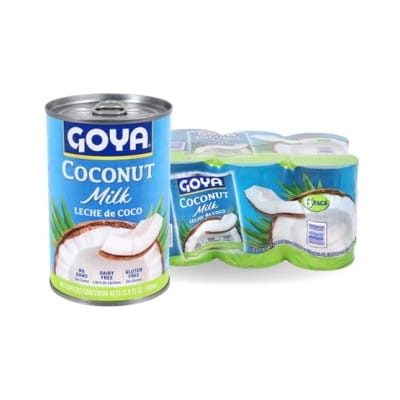
Goya Coconut Milk 13.5 oz (6-pack)
Creole bread's richness is two full cups of coconut milk kneaded into the dough. A six-pack means the next bake is already covered.
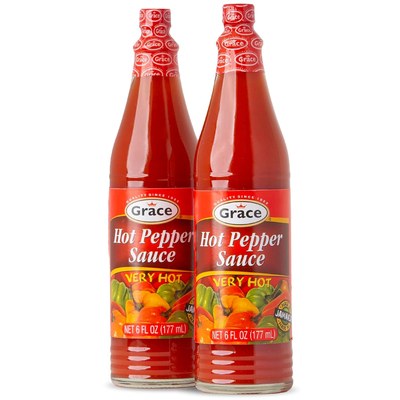
Scotch bonnet blended with West Indian red peppers: the everyday bottle that sits on a Jamaican table rather than a specialty sauce bought for one dish. The two-pack is the sensible buy for a household that cooks Jamaican food regularly.