A good pernil is decided before it ever sees the oven. It is decided the night before, when you take a knife to a pork shoulder and cut deeper than feels polite.
Shallow cuts are the common mistake. People score the surface the way you would score a ham, get a pretty diamond pattern, and stop. Then they wonder why the meat tastes seasoned on the outside and plain in the middle. The cuts have to go deep enough that garlic and salt and oregano travel into the muscle instead of sitting on it. The marinade needs somewhere to go.
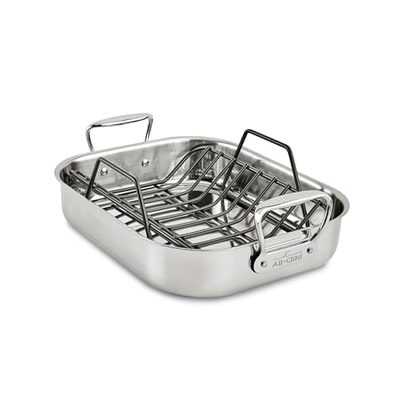
All-Clad Specialty Stainless Steel Roaster with Nonstick Rack 11×14 Inch Oven Broiler Safe 600F
A pork shoulder renders a lot of fat over several hours, and meat sitting in it will not crisp the skin. A heavy pan with a rack holds the shoulder above the drippings and still catches them for the pan juices.
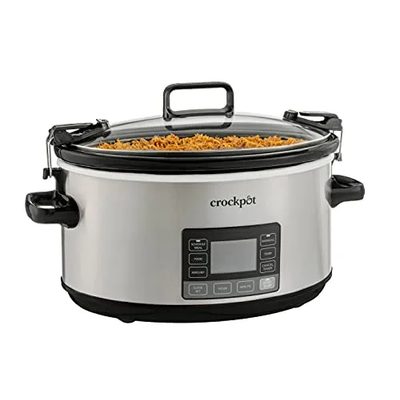
Stewed beans, cow foot soup, pigtail stews, anything that wants four to eight hours of low simmer, works cleanly in a 7-quart programmable slow cooker. The size handles family-batch cooking that smaller models can't.
Then you leave it alone. Pernil is seasoned the day before roasting (source), and a second day in the refrigerator does no harm. The salt works inward, the vinegar loosens the meat, and by the time it goes in the oven the seasoning is already part of it.
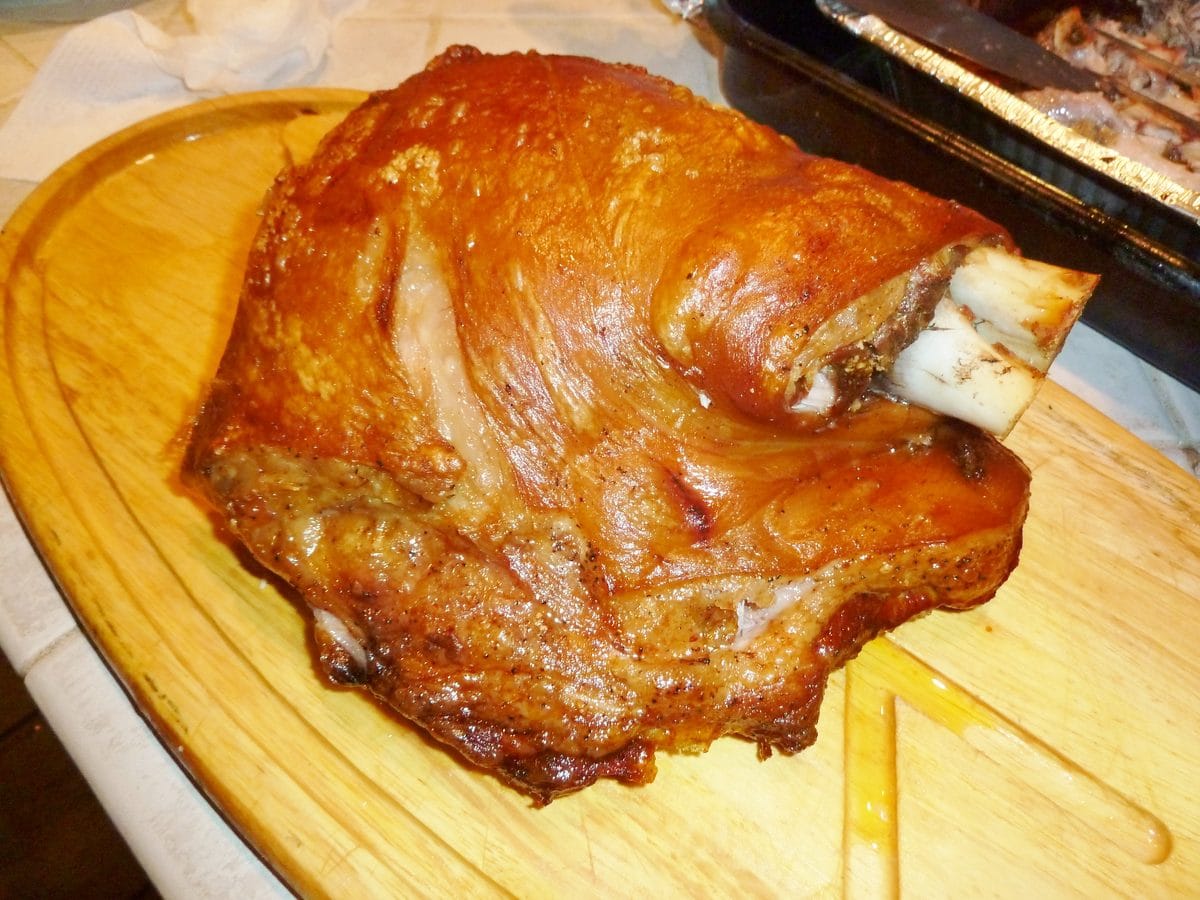
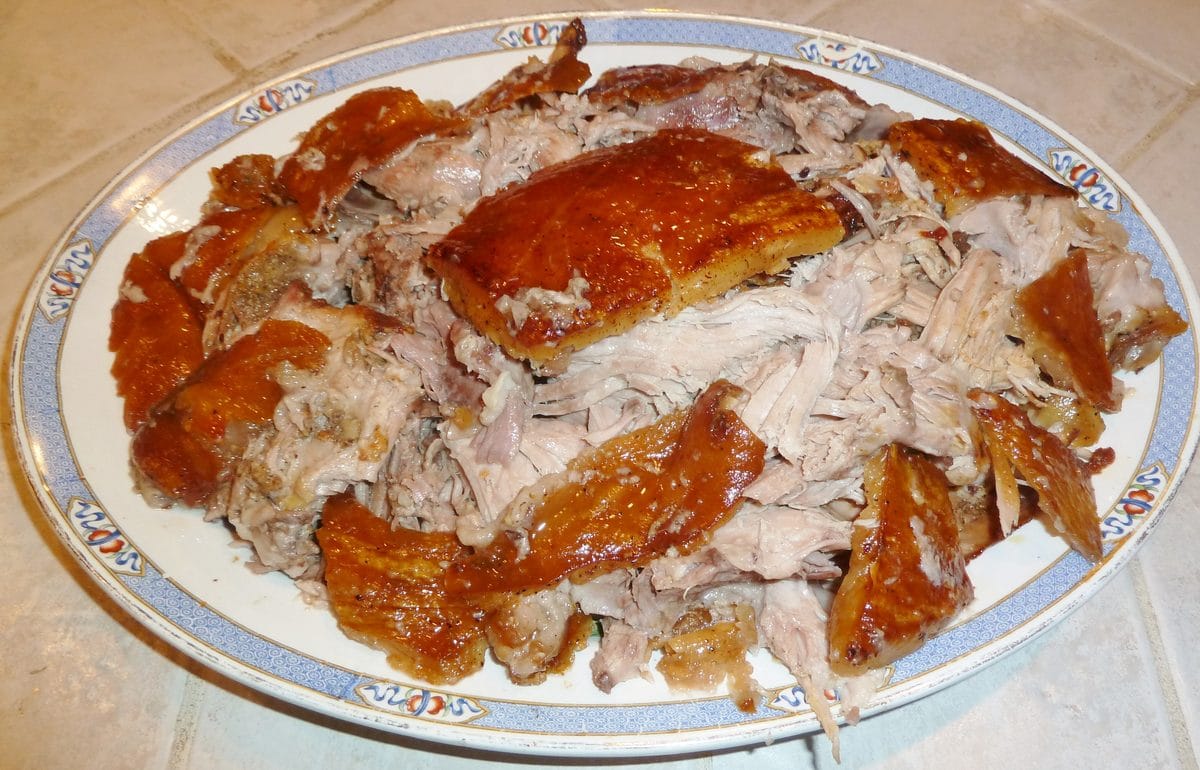
What comes out is a pork shoulder you can pull apart with a spoon, under a sheet of skin that shatters. That skin has its own name, cuerito, and its own method, and it is where most of the disagreement between cooks sits.
The cuts have to go deep enough that garlic and salt and oregano travel into the muscle instead of sitting on it.
What is pernil?
Pernil is a slow-roasted marinated pork leg or pork shoulder, seasoned the day before with garlic, oregano, salt, and sofrito, then cooked low for hours until the meat pulls apart and the skin crisps. It is common in Puerto Rico, the Dominican Republic, Cuba, Colombia, Venezuela, and Ecuador, and it is commonly shared during Christmas (source).
Pernil is not lechón, and the difference matters
Pernil belongs to a whole stretch of the Spanish-speaking Caribbean and northern South America, not to one island. Calling it exclusively Puerto Rican would be wrong.
It is commonly shared during Christmas (source), and a Forbes piece on the Puerto Rican holiday table calls it the roast no Christmas Eve dinner is complete without (source). Encyclopedic accounts of Christmas in Puerto Rico name lechón asado, the whole spit-roasted pig, served with arroz con gandules (source). That is worth saying plainly, because the two dishes get blurred constantly: lechón is the whole animal over fire, pernil is the leg or the shoulder in an oven. Pernil is what you make when a whole pig is not happening, which for most people is most of the time.
The seasoning is the same argument either way. Garlic, oregano, salt, and achiote for color.
What you need for Puerto Rican pernil
For the pork
- 1 bone-in pork shoulder, 6 to 8 lb (2.7 to 3.6 kg), skin on. The bone matters and so does the skin
- 10 to 12 cloves garlic, smashed
- 2 tbsp (30 ml) white vinegar
- 2 tbsp (36 g) coarse sea salt
- 1 tbsp (6 g) dried oregano
- 2 tsp (4 g) black pepper, coarsely ground
- 3 tbsp (45 ml) extra virgin olive oil
- 2 tbsp (30 ml) sofrito, homemade or jarred
- 1 tsp (2 g) ground achiote for color, or 1 packet sazón con achiote. If you use sazón, cut the sea salt above to 1 tablespoon. Sazón is mostly salt, and the two together will ruin the roast
For the cuerito, the skin
- 1 tsp (6 g) fine salt
- 1 tsp (3 g) garlic powder
- 1/2 tsp (1 g) black pepper
How long pernil takes
| Stage | Time |
|---|---|
| Prep | 30 minutes |
| Marinate | 24 to 48 hours |
| Roast, low | About 6 hours for an 8 lb shoulder |
| Roast, to crisp the skin | 20 to 30 minutes |
| Rest | 20 minutes |
| Total, active and oven | About 7 hours |
| Yield | 10 to 14 servings |
How to make Puerto Rican pernil
- Rinse and dry the pork. Some cooks wash the shoulder with white vinegar first. Do it or skip it, but dry the meat completely either way. Wet skin will not crisp.
- Loosen the skin. Slide a knife under the skin and separate it from the meat, leaving it attached along one edge so it lifts like a lid. Set it back over the roast later.
- Cut deep. Make deep incisions all over the meat, several inches in, angled toward the center. This is the step people rush. The marinade needs somewhere to go.
- Make the adobo. Crush the garlic with the salt into a rough paste, then work in the oregano, pepper, vinegar, achiote, sofrito, and olive oil. It should be loose enough to pour, thick enough to cling.
- Season into the cuts. Push the paste into every incision with your fingers. Do not just coat the outside. Rub whatever is left over the whole surface, under the skin included.
- Dry-season the skin. Pat the underside of the skin dry, then rub it with the fine salt, garlic powder, and pepper. Salt pulls water out, and dry skin is the whole point.
- Rest it cold. Lay the skin back over, cover, and refrigerate 24 hours, up to 48. This is not optional if you want the seasoning past the surface.
- Roast low. Take it out an hour before cooking. Heat the oven to 300°F (150°C). Roast skin side up, loosely tented with foil, about 45 minutes per pound, until a fork twists in the meat with no resistance. On an 8 lb shoulder that is around 6 hours.
- Crisp the cuerito. Pull the foil, raise the oven to 425°F (220°C), and roast 20 to 30 minutes more, watching it. The skin will blister, bubble, and go the color of dark honey. When it sounds hollow under a tap, it is done.
- Rest, then pull. Give it 20 minutes before you touch it. The meat should fall apart under a spoon. Break the cuerito into shards and serve it alongside, not on top, or it goes soft.
Tips and variations
- Bone-in, every time. The bone is where the flavor comes from, and a boneless shoulder cooks faster and drier. If your market only sells boneless, cut the roasting time by about a quarter and check early.
- Slow cooker version. Some cooks skip the oven entirely and use a crock-pot, adding a little chicken stock to get the juices moving. You will get meat that pulls apart beautifully and no crackling at all. If you go that route, roast the skin separately at 425°F on a sheet pan.
- Do not trim the fat. People see a fatty cut and start cutting. The fat is what bastes the meat over six hours. Leave it.
- If the skin will not crisp, it was damp going in. Next time, leave the seasoned roast uncovered in the refrigerator for the last few hours so the skin dries out properly.
What to serve with pernil
Pernil is typically accompanied by rice (source), and on a Puerto Rican Christmas table that rice is arroz con gandules, rice with pigeon peas (source). An 8 lb shoulder does not scale down, so this is a roast for a full table.
Serve the meat pulled or in thick slices, with the cuerito broken into pieces on the side so it stays crisp. The pan juices are worth spooning over the rice, or over a dome of mofongo if you would rather skip the rice altogether.
A big roast at Christmas is not unique to Puerto Rico. Belize puts out a holiday ham, and Jamaica seasons its pork along completely different lines with jerk.
Pernil is what you make when a whole pig is not happening, which for most people is most of the time.
Nutrition
Per serving, estimated, based on standard ingredient labels and 12 servings from an 8 lb shoulder.
| Nutrient | Per serving |
|---|---|
| Calories | 540 |
| Protein | 38 g |
| Fat | 42 g |
| Carbohydrate | 2 g |
| Sodium | 690 mg |
Sodium assumes most of the marinade salt stays behind in the pan rather than in the meat. Using sazón in place of plain achiote raises it noticeably.
Storing and making pernil ahead
- Marinate ahead: 24 to 48 hours in the refrigerator is the recipe, not a shortcut.
- Leftovers: refrigerate up to 4 days in a sealed container, in some of the pan juices.
- Freezing: pulled pernil freezes well for up to 3 months. The cuerito does not. Eat that the first day.
- Reheating: covered, at 300°F (150°C), with a splash of the juices. A microwave will make it stringy.
Equipment you will want
- A sharp boning or paring knife, for the incisions and for lifting the skin
- A heavy roasting pan with a rack
- Aluminum foil
- A mortar and pestle, or a food processor, for the garlic paste
- An instant-read thermometer, though on a shoulder this long the fork test is more useful
Pernil questions, answered
What is the difference between pernil and lechón?
Pernil is the pork leg or shoulder, roasted in an oven. Lechón is the whole pig, roasted over fire. Encyclopedic accounts of Puerto Rican Christmas name lechón asado as the holiday roast (source), and pernil is the version that fits in a home kitchen. They are seasoned along the same lines, so they get confused constantly.
Can I make pernil without sofrito?
You can. Garlic, oregano, salt, pepper, and vinegar will carry it, and plenty of cooks stop right there. Sofrito adds a green, aromatic layer underneath the garlic. If you are skipping it, add a couple more cloves of garlic and do not skip the vinegar.
Do I have to leave the skin on?
If you want cuerito, yes. The skin is half the reason people make this dish, and you cannot add it back later. If your butcher has already removed it, ask for it separately and roast it on a sheet pan at 425°F while the shoulder rests.
How long should pernil marinate?
24 hours at minimum, 48 if you can plan that far ahead. Pernil is marinated the day before roasting as a matter of course (source). Under about 12 hours the salt has not moved past the surface and you will taste the difference.
Why is my pernil dry?
Almost always one of three things: a boneless shoulder, trimmed fat, or too high an oven. This is a cut that wants a long time at a low temperature. If it went in at 375°F to save an hour, that is the answer.
Is pernil Puerto Rican?
It is eaten across Puerto Rico, the Dominican Republic, Cuba, Colombia, Venezuela, and Ecuador (source). The Puerto Rican seasoning of garlic, oregano, and achiote is the one this recipe follows. It is not exclusively Puerto Rican, and cooks from any of those countries will tell you their version is the standard.
Can I use pork loin instead?
I would not. Loin is lean, and this recipe depends on fat and connective tissue breaking down over hours. Use the shoulder, or the leg if you can get it.
Photographs by Ekem, CC BY-SA 4.0, via Wikimedia Commons.
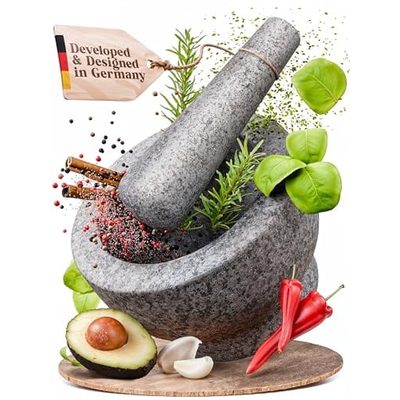
ChefSofi Mortar and Pestle Set 6-Inch Unpolished Granite
Whole allspice, peppercorns, dried chiles and toasted cumin all grind down by hand into pastes and rubs. Unpolished granite grips dry spices the way a polished bowl cannot.
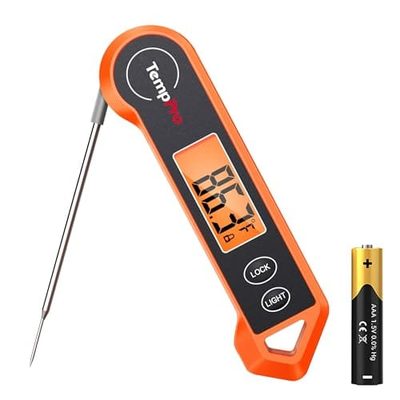
TempPro TP19H Digital Instant-Read Thermometer (Formerly ThermoPro)
Stewed chicken and braised pork have to clear 165°F, and cutting in to check drains the juices onto the board. A three-second read settles it through one small hole.
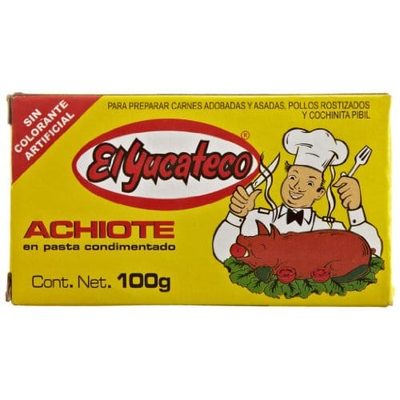
Cochinita pibil, poc chuc, and escabeche all start with red recado. A prepared achiote paste dissolves into sour orange in minutes instead of the hour it takes to grind annatto, oregano, and clove from seed.
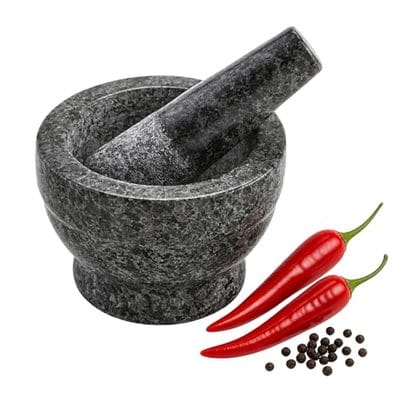
IMUSA USA Small Polished Mortar and Pestle, 3.75”, Granite
For the garlic, allspice, and peppercorn that get crushed fresh at the counter rather than ground by the batch. At 3.75 inches it lives beside the stove instead of in a cabinet.