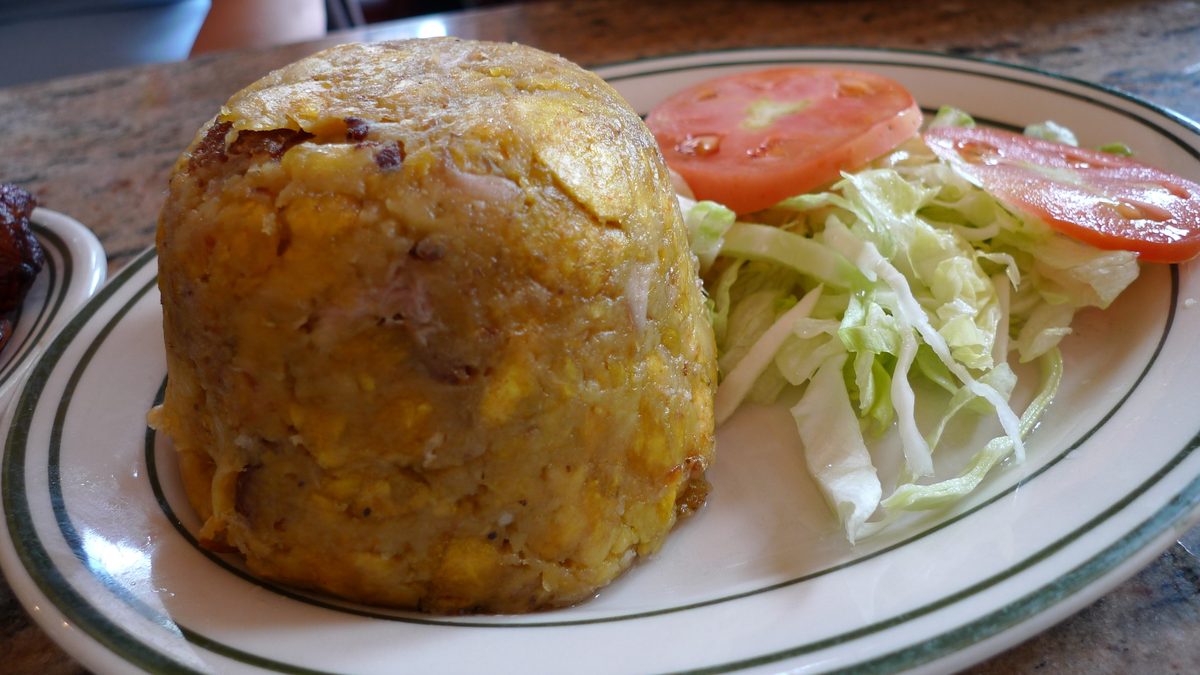
Mofongo is green plantain, fried and then mashed in a wooden pilon with garlic, salt, fat and broth, packed with chicharron and turned out as a dome. It is a Puerto Rican dish, traditionally served with fried meat and a chicken broth soup (source).
Green plantains, never ripe. Mofongo is not supposed to be sweet, and there is no fixing it once it is.
What is mofongo?
Plantains are picked green, cut into pieces and fried, then mashed with salt, garlic, pork, broth and cooking oil in a wooden pilon. The aim is a tight ball of mashed plantain that soaks up whatever is poured over it, with pork cracklings or bacon worked through the middle (source).
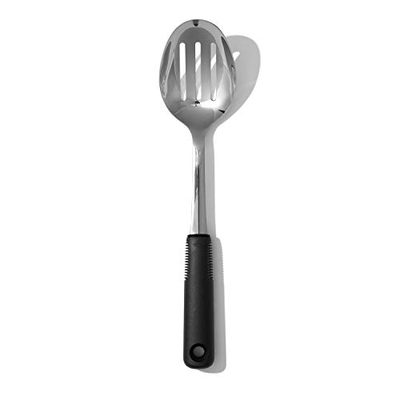
OXO Good Grips Stainless Steel Slotted Spoon
Fried plantain rounds have to come out of the oil and go straight into the pilon while they are still hot enough to mash. A wide slotted head lifts a batch at once and drains it without trapping the pieces.
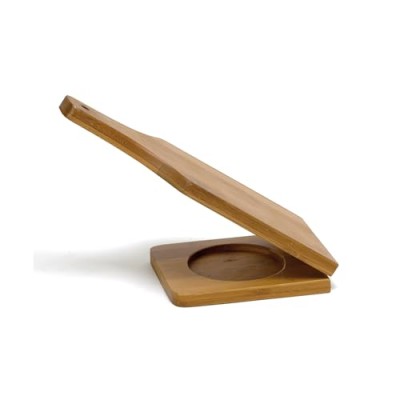
IMUSA Bamboo Tostonera Plantain Press, Large
The classic bamboo press for even, restaurant-flat tostones on the second fry.
Variations come from what goes inside or around the dome: vegetables, chicken, shrimp, beef or octopus (source). The plantain part does not change.
The dish carries Spanish, West African and Taino influence, and it is a relative of West African fufu, which reached the Caribbean with Africans in the Spanish colonies. Each island took the idea somewhere different: Cuba to fufu de platano, the Dominican Republic to mangu, Haiti to tomtom, Puerto Rico to mofongo (source).
The earliest known written recipe is in Puerto Rico’s first cookbook, El Cocinero Puerto-Riqueno o Formulario, in 1859, under the title mofongo criollo. That version boils the plantains with veal and hen before mashing them with garlic, oregano, aji dulce, bacon or lard, and ham, then eats the ball with the broth it cooked in (source).
Dry mofongo is failed mofongo
The most common fault is a dome that crumbles into sawdust on the fork. Plantain has almost no fat and no moisture to spare, so the liquid has to be added while you mash: oil, or better, hot broth, a spoonful at a time until the mass is pliable and holds together when you press it.
The test cooks use is the unmolding. If the mofongo drops out of the cup or the pilon cleanly and in one piece, the fat and liquid were right. If it sticks or breaks up, it needed more.
The other half of the rule is timing. Serve it immediately. Left standing, the chicharron inside softens and the whole thing stiffens.
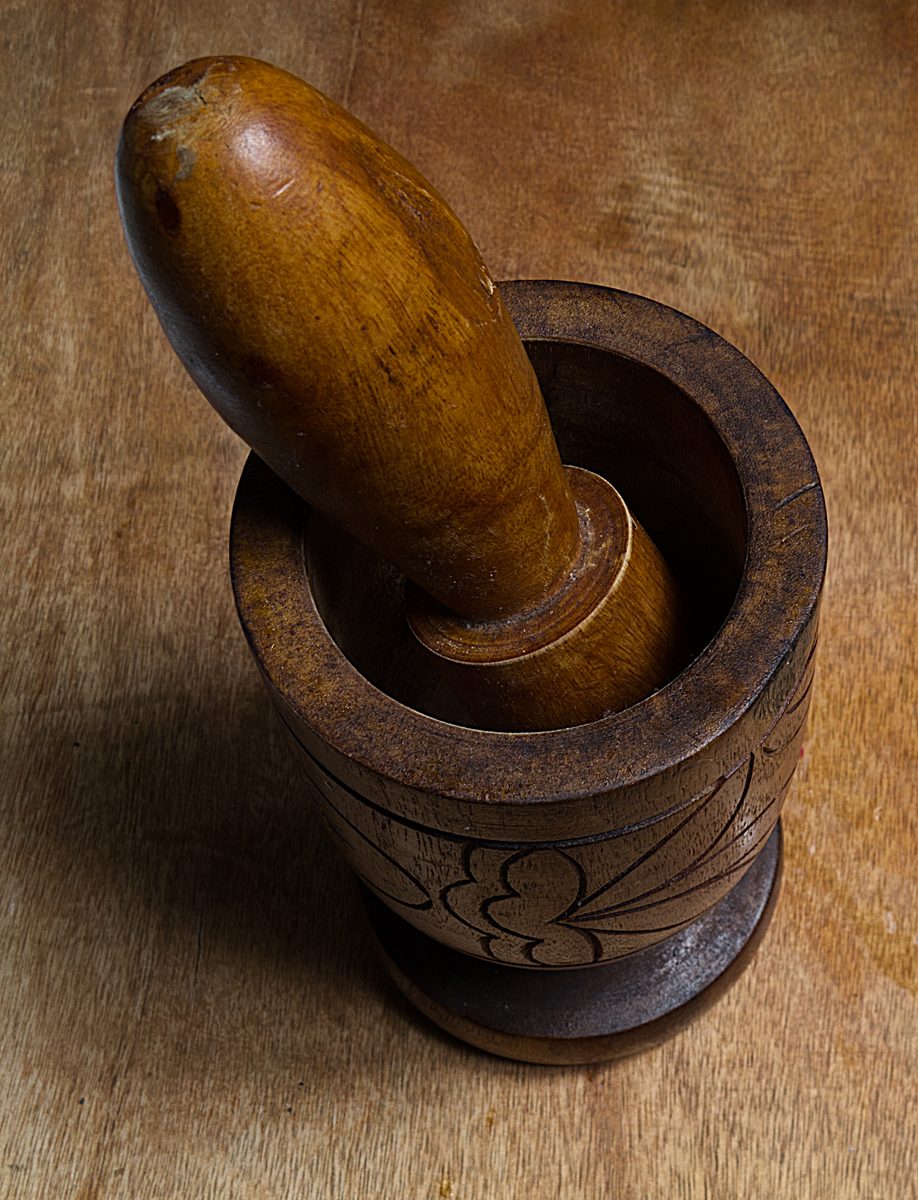
The pilon. Photograph by Ll1324, CC0, via Wikimedia Commons.
What you need for Puerto Rican mofongo
- 3 large green plantains, about 2 lb (900 g) total
- 4 cloves garlic, one per plantain, plus one for the pot
- 1 tsp (6 g) coarse salt, plus more for the soaking water
- 1/4 tsp (0.5 g) black pepper
- 3 tbsp (45 ml) olive oil, or the fat from the chicharron
- 1 cup (240 ml) hot chicken broth, more as needed
- 1 cup (about 100 g) chicharron, broken into small pieces, or 6 slices bacon, cooked and chopped
- Neutral oil, about 2 in (5 cm) deep in the pot, for frying
For a shrimp or chicken mofongo, add 1 lb (450 g) of either, cooked down in sofrito and tomato, and spoon it over or around the dome.
How long mofongo takes
| Prep | 20 minutes |
| Optional soak | 15 minutes |
| Cooking | 25 minutes |
| Total | about 1 hour |
| Serves | 4 |
How to make Puerto Rican mofongo
- Peel the plantains. Cut both ends off, score the skin along its ridges, and lever it off in strips. Green skin does not slip off the way a ripe one does.
- Cut into rounds. Slice into pieces about 1 in (2.5 cm) thick.
- Soak, if you want to. Some cooks hold the rounds in salted water for 15 minutes and dry them well before frying, which seasons them through. Others go straight from the board to the oil.
- Make the garlic paste. Mash the garlic with the coarse salt in the pilon until it becomes a paste. The salt does the grinding work, so do not use fine salt here.
- Fry the plantains. At about 325°F (165°C), fry the rounds until deep gold and cooked through but not crunchy, roughly 6 to 7 minutes a side. They should mash, not shatter.
- Mash while hot. Working in batches, drop the hot rounds into the pilon with a spoonful of the garlic paste, the pepper, some chicharron and a little olive oil. Pound and turn until it comes together.
- Add broth as you go. Spoon in hot broth a little at a time. Stop when the mass is moist and pliable and holds a shape under pressure.
- Shape the dome. Press the mofongo firmly into a small bowl, a ramekin or the pilon itself, then invert it onto the plate and lift the mold away.
- Serve immediately. Pour hot broth over or around it, or set the meat and its sauce on top. Mofongo waits for nobody.
Tips and variations
- No pilon, no problem. A sturdy bowl and a potato masher, or a small heavy pot and the end of a rolling pin, will do the same work. The pilon is the traditional tool, not a requirement.
- One clove of garlic per plantain is the ratio cooks use. Scale up from there if your household likes garlic.
- Broth over the top or on the side. A garlicky beef or chicken caldo poured over the dome is one way to serve it. Mayoketchup on the side is another.
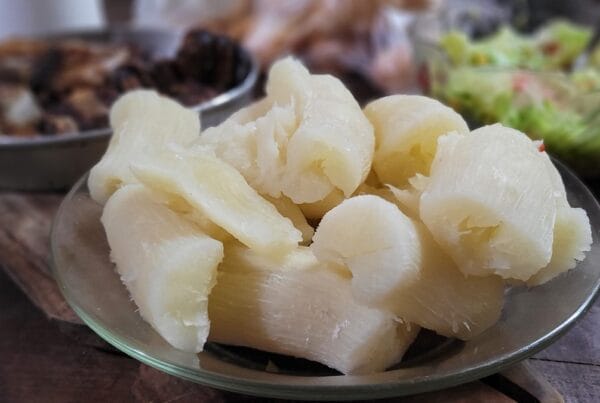
- Cassava and sweet potato work too. Both are boiled first, then roasted or flash fried, and mashed the same way (source).
- Butter instead of oil. Some cooks finish the mash with butter or extra virgin olive oil for a softer, richer texture. It is a matter of taste, not of correctness.
Where it sits on the table
Mofongo is a plate of its own, not a side. It comes with fried meat and a bowl of chicken broth in the traditional service (source), and in most kitchens it arrives as a dome with something saucy poured over it.
It belongs to the same fried-plantain family as alcapurrias, and next to pernil it makes a full meal without any rice at all. Belize mashes green plantain too, in hudut, though that one is pounded with coconut broth and fish rather than garlic and pork.
Nutrition
Estimated, for one of 4 servings, based on the amounts above and standard ingredient labels.
| Calories | 480 kcal |
| Protein | 11 g |
| Fat | 24 g |
| Carbohydrates | 58 g |
| Sugar | 22 g |
| Sodium | 690 mg |
Storing mofongo
Mofongo does not keep well and it is not meant to. A dome held in the refrigerator overnight comes back dense and dry. If you must, reheat it covered with a splash of broth, or break it up and fry it as a hash.
The part that does keep is the fried plantain. Fry the rounds ahead, refrigerate them, and warm them before mashing. That gets you most of the way to dinner without losing the texture.
Equipment you will want
- A pilon, or a heavy bowl and a masher.
- A deep pot for frying and a spider or slotted spoon.
- A small bowl or ramekin to shape the dome.
- A small pan of broth kept hot beside you.
Mofongo questions, answered
Can I use ripe plantains?
No. Mofongo is made from plantains picked green, and ripe ones make a sweet mash that is a different dish (source). If the skin is yellowing, buy again.
Why is my mofongo dry and crumbly?
Not enough fat or broth went in during the mashing, or the plantains were fried too long and went crisp. Add hot broth a spoonful at a time until the mass is pliable.
Do I need a pilon?
No. A wooden pilon is the traditional tool and it does the job well, but a potato masher in a sturdy bowl produces the same result.
What is the difference between mofongo and tostones?
Tostones are slices fried, flattened, and fried again, and they stay separate. Mofongo is fried plantain mashed with garlic, fat and broth into one mass and shaped.
Is mofongo the same as fufu?
They are related but not the same. Fufu is a starchy dough brought to the Caribbean by Africans in the Spanish colonies, and mofongo is one of the dishes that grew from it, alongside Cuban fufu de platano, Dominican mangu and Haitian tomtom (source).
How old is mofongo?
The earliest written recipe appears in Puerto Rico’s first cookbook in 1859, as mofongo criollo (source). The dish itself is older than its first printing, but that is the date that can be checked.
Can mofongo be made without pork?
Yes. Leave out the chicharron and mash with olive oil and vegetable broth. You lose the salt and crunch the pork brings, so season a little harder.
Featured photograph by Arnold Gatilao, CC BY 2.0, via Wikimedia Commons: mofongo de chicharron de cerdo.
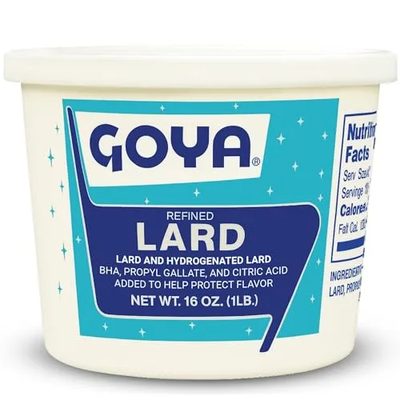
Pure lard (manteca) for making masa dough and frying - the fat traditional recipes rely on for texture and flavor.