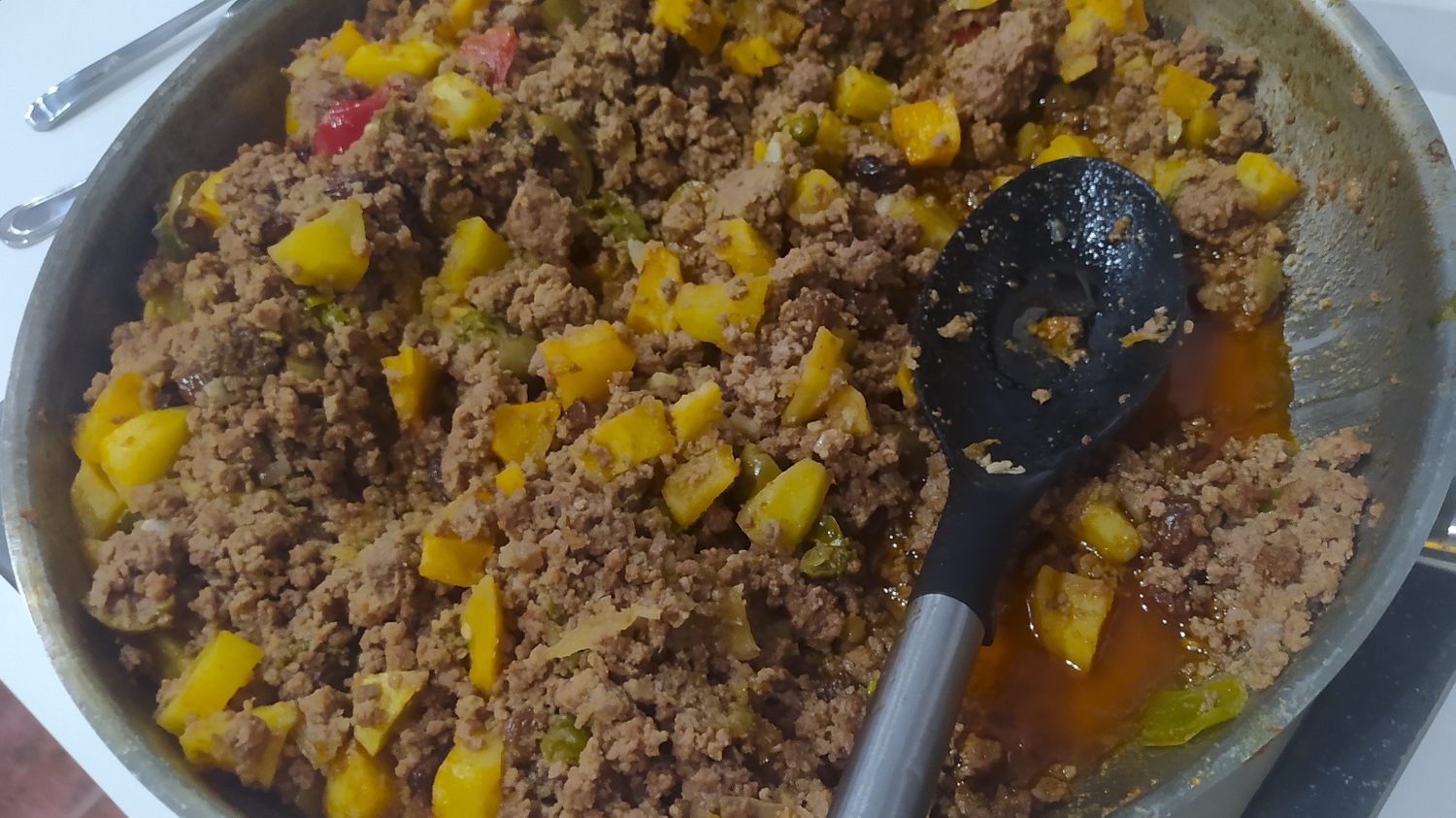
Cuban picadillo is ground beef simmered with a sofrito of onion, pepper and garlic, tomato sauce, dry white wine, Spanish olives and their brine, and diced potato. Cumin, oregano and bay season it. Raisins go in some houses and not others. It is served over white rice.
The olives and their brine are what make it Cuban. The sofrito underneath belongs to half the Caribbean.
What is Cuban picadillo?
Ground beef browned hard, then simmered in a sofrito of onion, bell pepper and garlic with tomato sauce and a splash of dry white wine. What rides along with it is the Cuban part: pimiento-stuffed Spanish olives with a spoonful of their brine, diced potato, and raisins in about half of households.
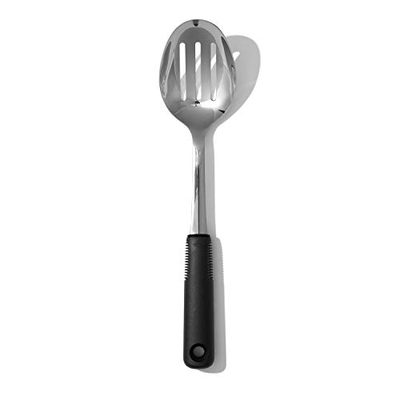
Step 3 depends on lifting the browned beef out and leaving the rendered fat behind, because that fat is what the sofrito cooks in. A slotted spoon does it in one motion where a solid spoon carries the fat back out with the meat.
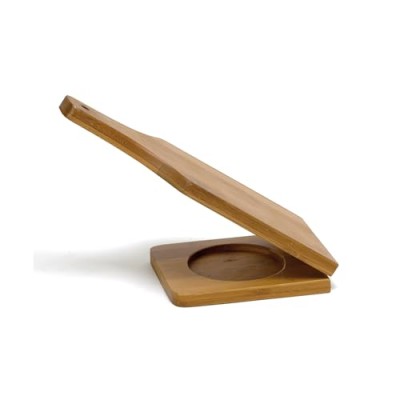
IMUSA Bamboo Tostonera Plantain Press, Large
The classic bamboo press for even, restaurant-flat tostones on the second fry.
The word itself names a category rather than a dish. The Real Academia Española defines picadillo as “cada uno de los distintos platos compuestos por diversos ingredientes muy troceados,” each of the various dishes made of finely chopped ingredients (source). That is why three cooks in three countries can hand you a plate by this name and mean three different dinners.
The cattle behind the beef arrived with Spanish colonization, beginning on Hispaniola and moving to Cuba, Puerto Rico and Jamaica (source). That is as far back as the record goes. The dish itself has no documented origin, and anything more specific would be guesswork.
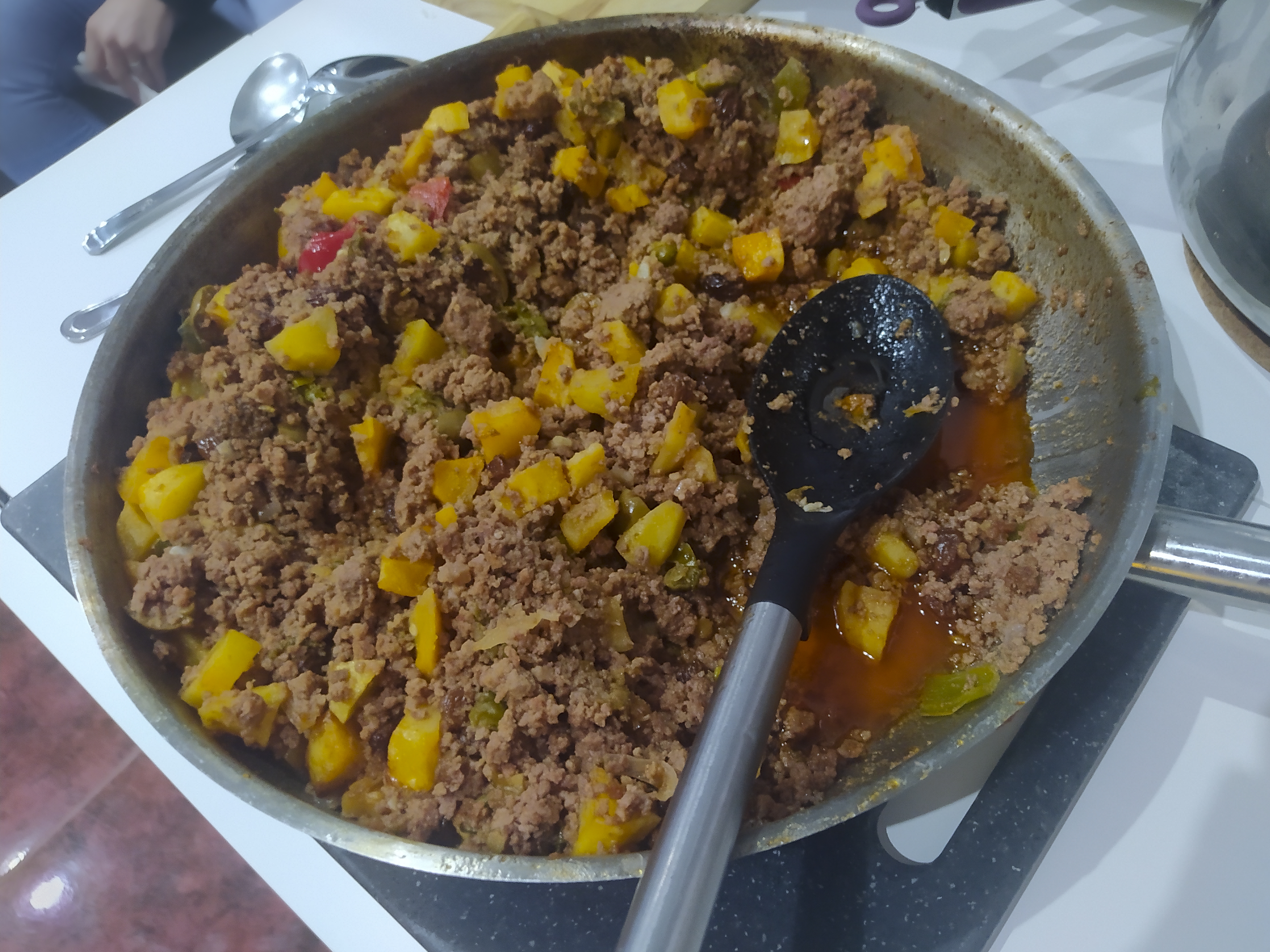
Cuban, Mexican and Belizean picadillo are three different dinners
Mexican picadillo is ground beef with carrots and potato in a blended tomato sauce, seasoned mostly with salt, pepper and cumin, and eaten with tortillas, tostadas or chips rather than rice (source). No olives, no capers, no wine.
Belizean picadillo is not a skillet dish at all. It is pork meatballs in a black recado broth, each one built around a boiled egg yolk, simmered until the broth turns black with chilmole and scented with epazote, served with corn tortillas. It shares nothing with this recipe but the word.
The Cuban one is the beef in a pan, and the olives are the tell. Raisins are traditional but often left out to taste (source). The same sofrito-and-beef base sits under ropa vieja, where the beef is shredded instead of ground.
The sofrito is not what makes it Cuban. Onion, pepper and garlic start most of the Spanish Caribbean. But this one gets built fresh in the pan while the browned beef waits on a plate, rather than blended ahead and frozen the way Puerto Rican sofrito is.
What you need for Cuban picadillo
Beef and aromatics
- 1 1/2 lb (680 g) ground beef, 85/15
- 2 tablespoons (30 ml) olive oil
- 1 large yellow onion, diced, about 1 1/2 cups (200 g)
- 1 large red or green bell pepper, diced, about 1 cup (150 g)
- 6 garlic cloves, minced, about 2 tablespoons (18 g)
Seasoning
- 1 teaspoon (2 g) ground cumin
- 1 teaspoon (1 g) dried oregano
- 1/2 teaspoon (1 g) sweet paprika
- 2 bay leaves (about 1 g)
- 1 packet (about 1 1/2 teaspoons / 5 g) sazon with culantro and achiote, optional
- 1 1/2 teaspoons (9 g) salt, added in stages
- 1/2 teaspoon (1 g) freshly ground black pepper
The pot
- 1/2 cup (120 ml) dry white wine
- 1 can (8 oz / 227 g) tomato sauce
- 1/2 cup (120 ml) water or chicken broth
- 1 lb (450 g) potatoes, peeled and cut into 1/2-inch (1 cm) dice
- 1/2 cup (75 g) pimiento-stuffed Spanish olives, plus 1 tablespoon (15 ml) of their brine
- 1 tablespoon (9 g) capers, drained, optional
- 1/3 cup (50 g) raisins, optional
- 2 tablespoons (5 g) fresh cilantro or parsley, torn, to finish
The olives are not optional and neither is the tablespoon of brine, which is the part most recipes skip. If pimiento-stuffed Spanish olives are not on the shelf, plain green olives with a few chopped jarred pimientos stirred in gets you close.
Vino seco is the traditional Cuban cooking wine, but any dry white you already have works. Some houses use red. Raisins split the room and both sides are right, so treat them as a household choice rather than a correction.
Write down “sazon with culantro and achiote” at the store; the brand does not matter. Without it, a pinch of ground annatto or extra paprika gets close, though the color comes out lighter.
How long picadillo takes
| Prep | 20 minutes |
| Browning the beef | about 15 minutes |
| Simmering | 25 minutes |
| Total | about 1 hour 10 minutes |
| Serves | 6 |
How to make Cuban picadillo
- Start the beef. Season it lightly with salt. Heat the olive oil in a wide skillet over medium and add the beef, breaking it apart as it goes in.
- Brown it properly. Leave it alone about 5 minutes, then keep breaking it up and cooking another 10. You want real color, not the gray steamed look that comes from stirring too soon.
- Lift the beef out with a slotted spoon, leaving the fat and the browned bits in the pan. Pour off any fat past about 2 tablespoons. Those browned bits are the flavor base, so do not scrub them out.
- Build the sofrito in that fat. Onion and bell pepper over medium heat until tender, 5 to 6 minutes, scraping the browned bits loose. Add the garlic only once the onion has softened, and cook one minute more.
- Return the beef and season. Cumin, oregano, paprika, the sazon if you are using it, black pepper and a little of the salt. Go light on the salt here; the olives and their brine bring more later.
- Deglaze with the wine, scraping the bottom of the pan clean, and let it cook down about a minute.
- Add the tomato sauce, the water or broth and the bay leaves. Cover and simmer on low for 20 minutes.
- Boil the potatoes in salted water while it simmers, until just fork-tender, about 10 minutes, then drain.
- Fold everything in. Potatoes, olives and their brine, capers and raisins if you are using them. Fold gently so the potatoes stay in pieces.
- Simmer uncovered 5 minutes, taste and correct the salt, pull the bay leaves, tear the cilantro or parsley over the top and serve over white rice.
Tips and variations
- Fried potatoes instead of boiled. Fry the dice until golden and pile them on top of the finished picadillo instead of folding them in. Baking them at 400°F works too. Boiling is the fastest and the least trouble.
- Build the sofrito first. Adding raw beef straight into the softened aromatics gives a softer, more stew-like result. Browning first, as written above, gives more roasted flavor. Neither order is a mistake.
- Mixed meat. A third part ground pork, ground ham or chorizo blended into the beef adds fat and depth. Straight beef is the more common version.
- Capers push the dish further toward salty and sharp. Add them if that is the direction you want.
- Tear the cilantro, do not chop it. Torn by hand at the last second it stays rougher and greener on the plate.
- Under-salt on purpose. Salt goes in stages here because the olive brine arrives late and carries plenty. It is easy to add at the end and impossible to take out.
Where it sits on the table
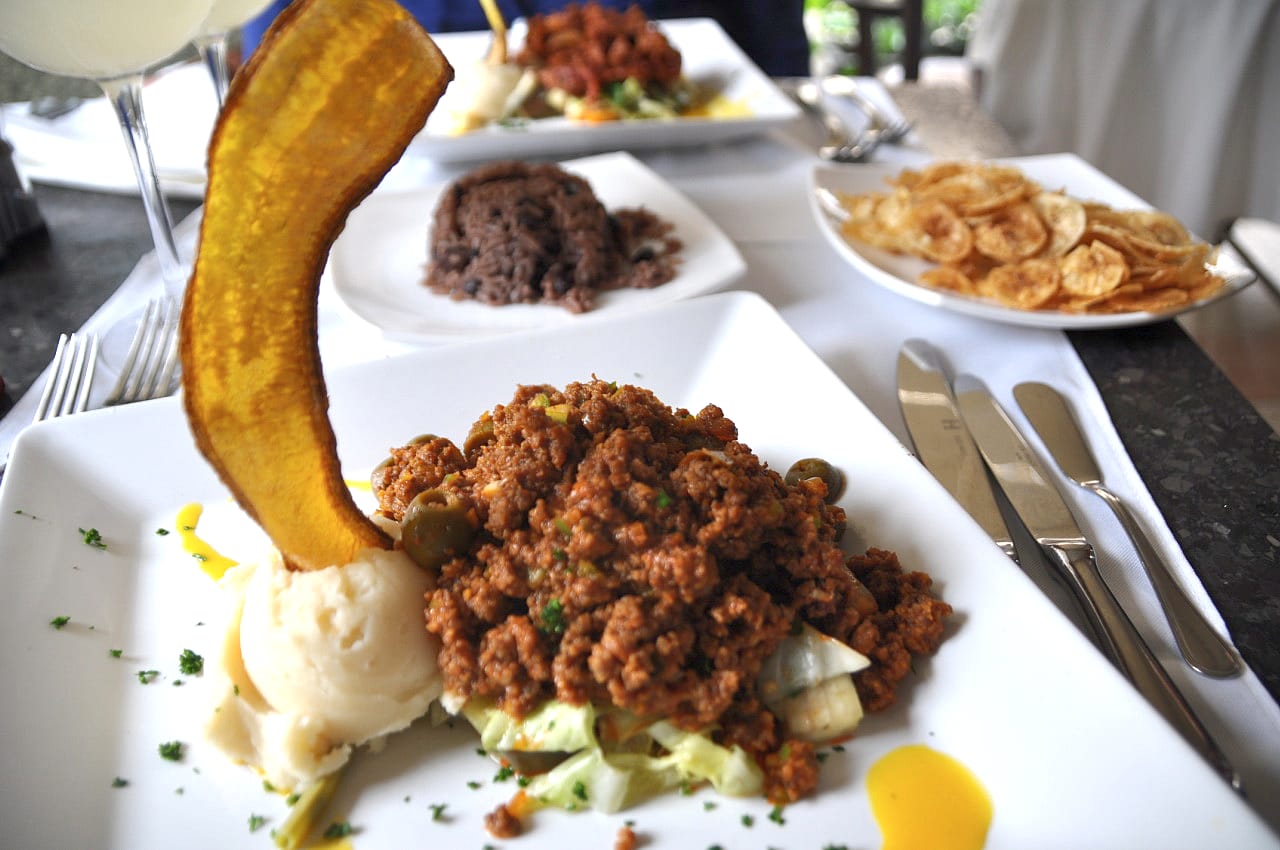
White rice under it, black beans beside it, sliced avocado on the side. That is the standard weeknight plate and it is what most Cuban households mean by dinner.
Sweet fried plantains or tostones add the fried element the plate wants. Extra potato does the same job if the plantains at the store look green.
Nutrition
Estimated, for one of 6 servings, based on the amounts above and standard ingredient labels. The rice served under it is not included.
| Calories | 415 kcal |
| Protein | 24 g |
| Fat | 24 g |
| Saturated fat | 8 g |
| Carbohydrates | 21 g |
| Sugar | 3 g |
| Fiber | 3 g |
| Cholesterol | 90 mg |
| Sodium | 820 mg |
Storing picadillo
Four days covered in the refrigerator, and it is better on day two once the olive brine and the wine have settled into the meat. Reheat gently in a pan with a splash of water so it does not dry out.
It freezes for 3 months, but leave the potato out of anything going in the freezer. Diced potato turns grainy once thawed. Boil a fresh batch and fold it in on the day you serve.
Cutting the sofrito vegetables a day ahead and keeping them covered saves real time at the stove.
Equipment you will want
- A wide heavy skillet or saute pan with a lid, at least 12 inches across, so the beef browns in a single layer instead of steaming.
- A slotted spoon. This is what makes step 3 work; a regular spoon carries the fat out with the meat.
- A small saucepan for the potatoes.
- A sharp knife and a cutting board. The dish depends on evenly cut aromatics.
Picadillo questions, answered
What is Cuban picadillo?
Ground beef simmered with a sofrito of onion, pepper and garlic, tomato sauce, dry white wine, Spanish olives with their brine and diced potato, seasoned with cumin, oregano and bay. It goes over white rice, and raisins are a household choice.
What is the difference between Cuban and Mexican picadillo?
The Cuban version has a sofrito base, Spanish olives, sometimes capers, and dry white wine, and it goes over rice. The Mexican version is ground beef with carrots and potato in a blended tomato sauce, seasoned mainly with cumin, salt and pepper, and eaten with tortillas (source). No olives and no wine in the Mexican one.
Is Cuban picadillo the same as Belizean picadillo?
No. Belizean picadillo is pork or turkey meatballs, each wrapped around a whole boiled egg yolk, simmered in a black recado broth with epazote and potato and served with corn tortillas. It is a soup. This is ground beef in a pan. They share only the word.
Do you put raisins in Cuban picadillo?
About half of households do. They give a little sweetness against the olives, which is either the point of the dish or the thing you dislike about it. The recipe holds up either way.
What do you serve with Cuban picadillo?
White rice underneath, black beans beside it, avocado, and something fried: sweet plantains or tostones. Extra potato covers the same job if plantains are not available.
Can you make Cuban picadillo without wine?
Yes. Use a little extra broth with a small splash of vinegar, or lean harder on the olive brine. It reads less rounded without the wine, but it is not ruined.
How long does Cuban picadillo keep?
Four days covered in the refrigerator, and it is better on the second day. It freezes three months, though the potato should be left out of any batch you are freezing and boiled fresh on the day.
How much picadillo per person?
A pound and a half of beef feeds 6 over rice, so about 4 oz (115 g) of raw beef each. The potato stretches it further than the meat weight suggests.
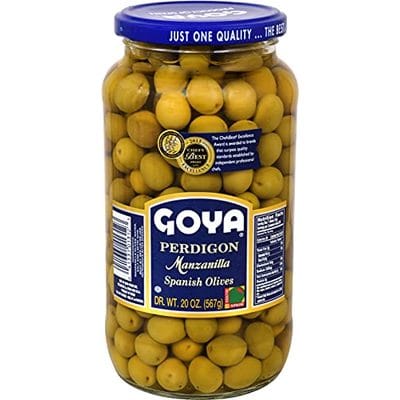
Pimiento-Stuffed Spanish Olives
Pimiento-stuffed Spanish olives and a spoonful of their brine go in near the end of the simmer. The brine is doing as much work here as the olives are.
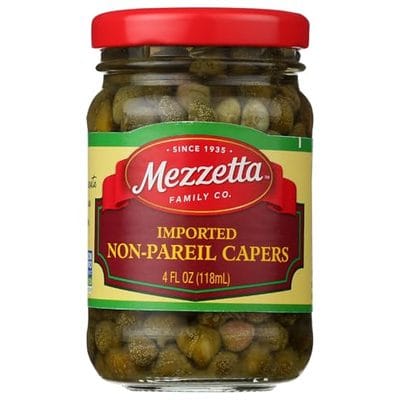
Capers are optional in picadillo, but they sharpen the sweet edge the raisins bring. Non-pareil are small enough to spread evenly through the whole pan.