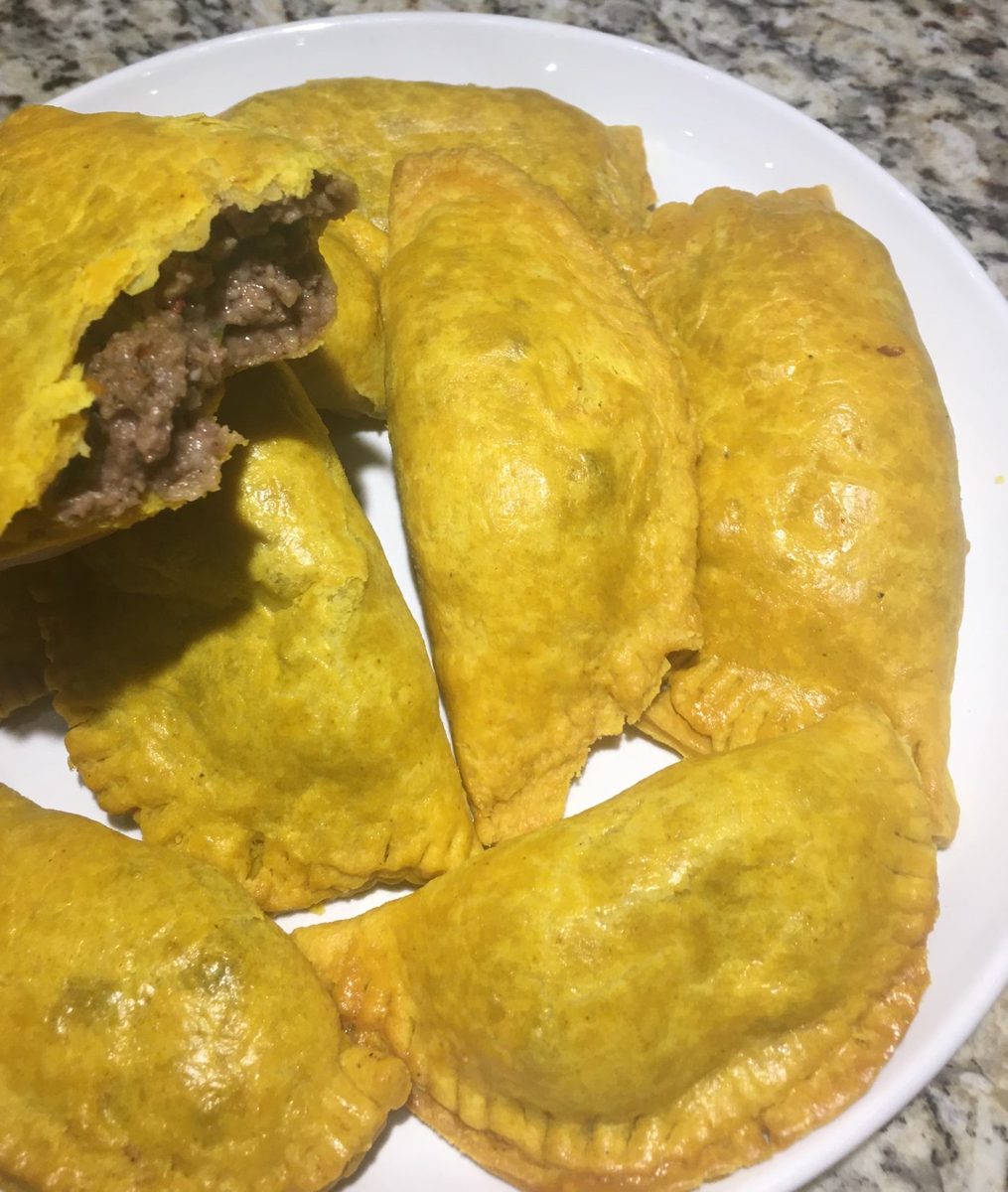
A Jamaican beef patty is a folded pastry with a yellow, laminated crust and a finely minced, well-seasoned beef filling. The crust is the harder half of the job. It gets its layers the way puff pastry does, from cold fat folded through the dough, and its color from turmeric or curry powder worked into the flour.
Ingredients
Amounts here make 12 patties. Two components, made separately and both cooled before they meet. Warm filling in cold dough ruins the crust, so the filling is made first and left to cool while the dough rests.
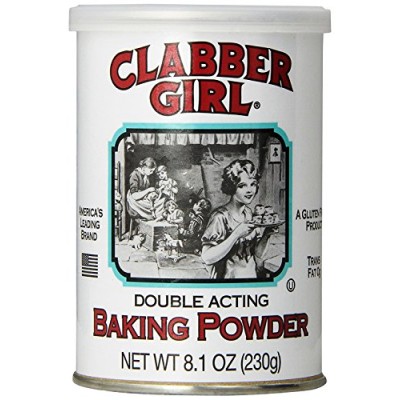
Clabber Girl Double Acting Baking Powder, 8.1 oz
Double-acting polvo para hornear — the lift behind rosquillas and quick breads.
For the dough
- 3 cups (375 g) all-purpose flour, or self-raising.
- 1 tsp baking powder.
- 1 tsp salt.
- 1 tbsp granulated sugar.
- 2 tsp turmeric and 1 tbsp curry powder, for color and flavor.
- 1 cup (225 g) cold fat: butter, vegetable shortening, margarine, or shredded beef suet.
- About 3/4 cup (180 ml) ice-cold water, or cold buttermilk.
For the filling
- 1 lb (450 g) lean ground beef.
- 3 scallions, 1 small white onion, and 3 garlic cloves, all finely chopped.
- 1 Scotch bonnet pepper, minced.
- 1 small carrot, finely diced.
- 1 tbsp fresh thyme leaves, or 1 tsp dried.
- 1 tsp ground pimento (allspice).
- 1 tsp each onion powder, garlic powder, and black pepper; 1/2 tsp ground ginger; 1 tsp all-purpose seasoning.
For the sauce and the bind
- 1 tbsp (15 ml) soy sauce and 1 tbsp (15 ml) oyster sauce.
- 2 tbsp (30 ml) ketchup and 1 tbsp (15 g) tomato paste.
- 1 tsp (5 ml) browning, for color.
- 1/2 cup (30 g) panko breadcrumbs, or a panade of 2 slices bread blended with water.
To finish
- 1 egg, beaten, for the wash.
- 12 slices cheese, if you are making cheese patties.
Instructions
- Mix the flour, baking powder, salt, sugar, turmeric, and curry powder. Cut in the cold fat until the mixture looks like breadcrumbs.
- Add the ice-cold water or buttermilk and knead only until the dough comes together. Wrap it and refrigerate 30 to 45 minutes, which rests the dough and hardens the fat back up.
- Cooks differ on the order here. One browns the ground beef on its own first, to drive off moisture and grease, then takes it out and sautés the garlic, onion, scallion, peppers, and carrots in what is left. Others sauté the aromatics first and add the beef to them.
- Return the beef to the pot with the spices, thyme, ketchup, soy sauce, and browning. Stir in the breadcrumbs or panade, which holds the juice in the meat instead of letting it run into the pastry.
- Pulse about three quarters of the filling in a blender, or use an immersion blender, until it is smooth but not a paste. Cool it completely.
- Roll the chilled dough out, spread more cold fat over it, then fold and roll it several times to build layers. Chill it again if it warms up while you work.
- Roll to roughly 3mm, cut your rounds, spoon in the cooled filling, brush the edges with egg wash or water, fold over, and crimp with a fork or a pastry wheel.
- Bake at 350°F to 425°F for 20 to 40 minutes, until the crust is set and golden.
Everything About the Crust Is Temperature
The flakiness comes from lamination, the same fold-and-roll that makes puff pastry. Cold fat sits between layers of dough, hits the oven, and turns to steam that pushes the layers apart. A single-layer pastry cannot do that no matter how much butter is in it.
Which means the enemy is warmth. If the fat melts into the flour before baking, the layers never form and you get a greasy, heavy crust. Frozen fat and ice-cold liquid are the standard, and the dough goes back in the fridge whenever it softens while you are rolling.
Beef suet is the version cooks point to for the closest thing to a patty-shop crust, because it has a higher melting point than butter. Shortening is the common substitute. Bake on a pizza tray with holes if you have one, so the heat reaches the bottom crust and it crisps like the top.
The measure of success is mess. Jamaican cooks are blunt about it: you have not enjoyed a patty unless the crumbs are all over the place.
Why the Filling Is Blended, Not Chunky
This is the difference most people miss. A Jamaican patty filling is finely minced and smooth, closer to a thick sauce than to a mince, and it stays juicy inside the pastry. Cooks pulse most of the cooked filling in a blender, leaving some texture, so the result is not a paste but is nowhere near chunky.
The breadcrumbs or panade do the other half. They emulsify the grease and lock the moisture into the meat, which keeps the juice out of the dough. A filling that leaks makes the bottom soggy, and the crust work is wasted.
Color counts too. Filling that looks pale reads as underdone to a Jamaican eye, which is what the browning is for, alongside the ketchup and tomato paste. Pimento and fresh thyme in the meat are treated as requirements rather than options.
Where the Patty Comes From
The patty has two ancestries folded into one pastry. It is influenced by the Cornish pasty, brought to Jamaica by British colonists and Cornish sailors, and it carries curry introduced by Indian indentured labourers (source). The yellow shell that reads as Jamaican at a glance comes from an egg yolk mixture, annatto, or turmeric.
By the 1930s patties were a mainstay, eaten as an affordable snack, street food, and lunchtime meal (source), and that is still where they live. Jamaicans eat them as a full meal paired with coco bread, the soft folded coconut-milk bread that opens into two layers and turns a patty into a sandwich.
The same colonial pastry reached us in Belize on a different route. Our Belizean meat pies are small, baked in muffin tins with a lid of dough on top, and our Belizean patties are the simpler folded version of the same idea. Neither one has the turmeric crust or the blended filling.
Tips and Variations
Make the filling a day ahead. It has to be completely cool before it touches the dough, and cold filling is easier to portion without tearing the pastry. Cheese patties are a standard variation: lay a slice of cheese over the filling before you fold.
Roll to about 3mm. Thicker dough will not crisp through, and the ratio tips away from the filling. Crimp with a fork or a pastry wheel and seal the edge with egg wash, because a patty that opens in the oven loses its juice onto the tray.
Storage, Freezing, and Getting Ahead
The filling is the make-ahead component, and it has to be cold before it touches pastry anyway. Cook it a day early and refrigerate it, which also makes it easier to portion without tearing the dough.
Assembled unbaked patties freeze well on a tray, then go into a bag once solid. Bake them from frozen with a few extra minutes rather than thawing, since thawed dough turns soft and loses its layers.
Baked patties keep two to three days refrigerated. Reheat them in an oven, not a microwave: the whole point of the crust is that it flakes, and a microwave turns it to leather.
Frequently Asked Questions
What makes a Jamaican patty crust yellow?
Turmeric or curry powder worked into the flour, and in some versions an egg yolk mixture or annatto. It is color and flavor together, not just color.
Why is my patty crust not flaky?
Almost always temperature. If the fat melts into the flour before the patty bakes, the layers never separate and the crust comes out greasy instead of flaky. Use frozen fat and ice-cold liquid, and chill the dough again whenever it softens while you roll.
Should the beef filling be chunky?
No. Pulse about three quarters of it in a blender so it is smooth and moist with some definition left. A chunky filling is the texture of a standard meat pie, not a patty.
What are the breadcrumbs for?
Panko breadcrumbs or a panade of blended bread and water emulsify the grease and hold the juice inside the meat, so the filling stays moist and the pastry underneath does not go soggy.
What is a patty eaten with in Jamaica?
Often coco bread, which turns it into a full meal rather than a snack. Patties have been street food and a lunchtime staple in Jamaica since the 1930s.
How many patties does this make?
Twelve, from 3 cups (375 g) of flour and 1 lb (450 g) of beef. Roll the dough to about 3mm: thicker and the crust will not crisp through, and the ratio tips away from the filling.
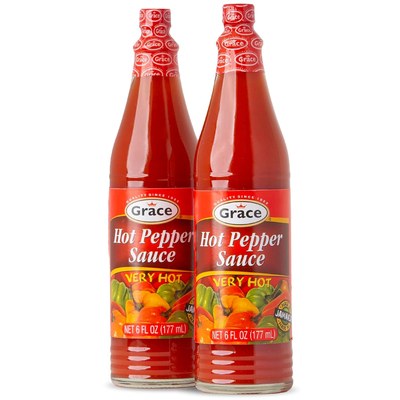
Scotch bonnet blended with West Indian red peppers: the everyday bottle that sits on a Jamaican table rather than a specialty sauce bought for one dish. The two-pack is the sensible buy for a household that cooks Jamaican food regularly.