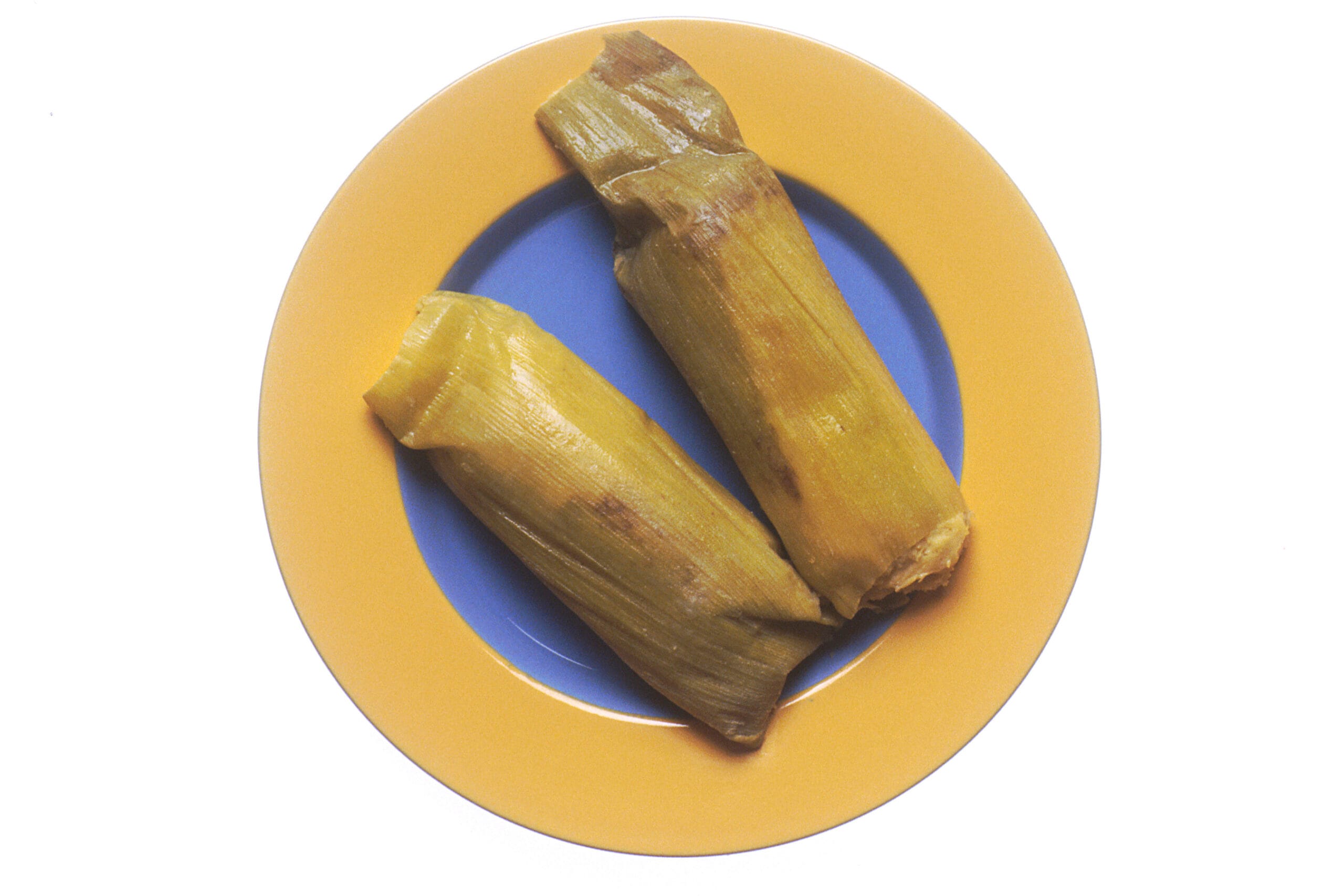
There is a smell that stays with you. Not the finished dish, not the crema on top — the steam. Corn husks in hot water release something that is warm and green and animal at once, and the first time I smelled it at a morning market in western El Salvador, I stood still for a full minute before I could figure out what it was. Then I saw the woman with her vaporera beside her, folded husks standing upright like soldiers in the pot, and I understood: tamales de elote, just starting to set. Sweet corn. No filling. The corn itself is the whole point.
That distinction matters more than it sounds. Belize News Post has covered the savory Salvadoran tamale world: tamales pisques with their refried-bean masa and banana-leaf wrapping, and the pork-and-raisin montucas from Honduras. Those tamales are about what goes inside them. Tamales de elote put the question back to the corn. That is the Salvadoran contribution to the conversation, and it deserves its own recipe.
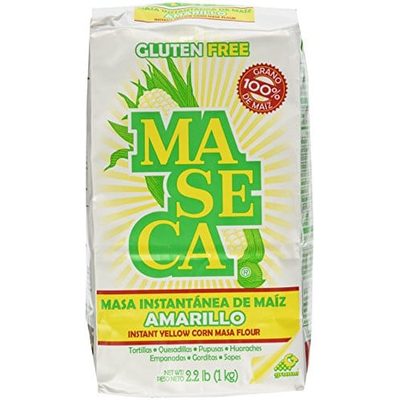
Maseca brand yellow corn masa harina, pre-ground and treated for immediate use in dough for tortillas, tamales, and other corn dough applications.
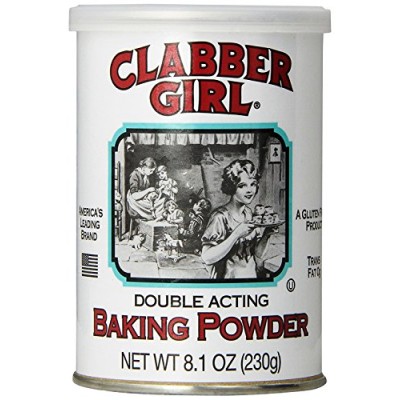
Clabber Girl Double Acting Baking Powder, 8.1 oz
Double-acting polvo para hornear — the lift behind rosquillas and quick breads.
Tamales de elote are sweet fresh-corn tamales from El Salvador, made by grinding tender elote kernels with butter, sugar, and a touch of masa, then wrapping the mixture in corn husks and steaming until soft. Eaten warm with crema and fresh cheese, they are a classic Salvadoran merienda during corn season.
Why El Salvador’s Sweet Corn Tamales Are Nothing Like the Ones You’ve Had Before
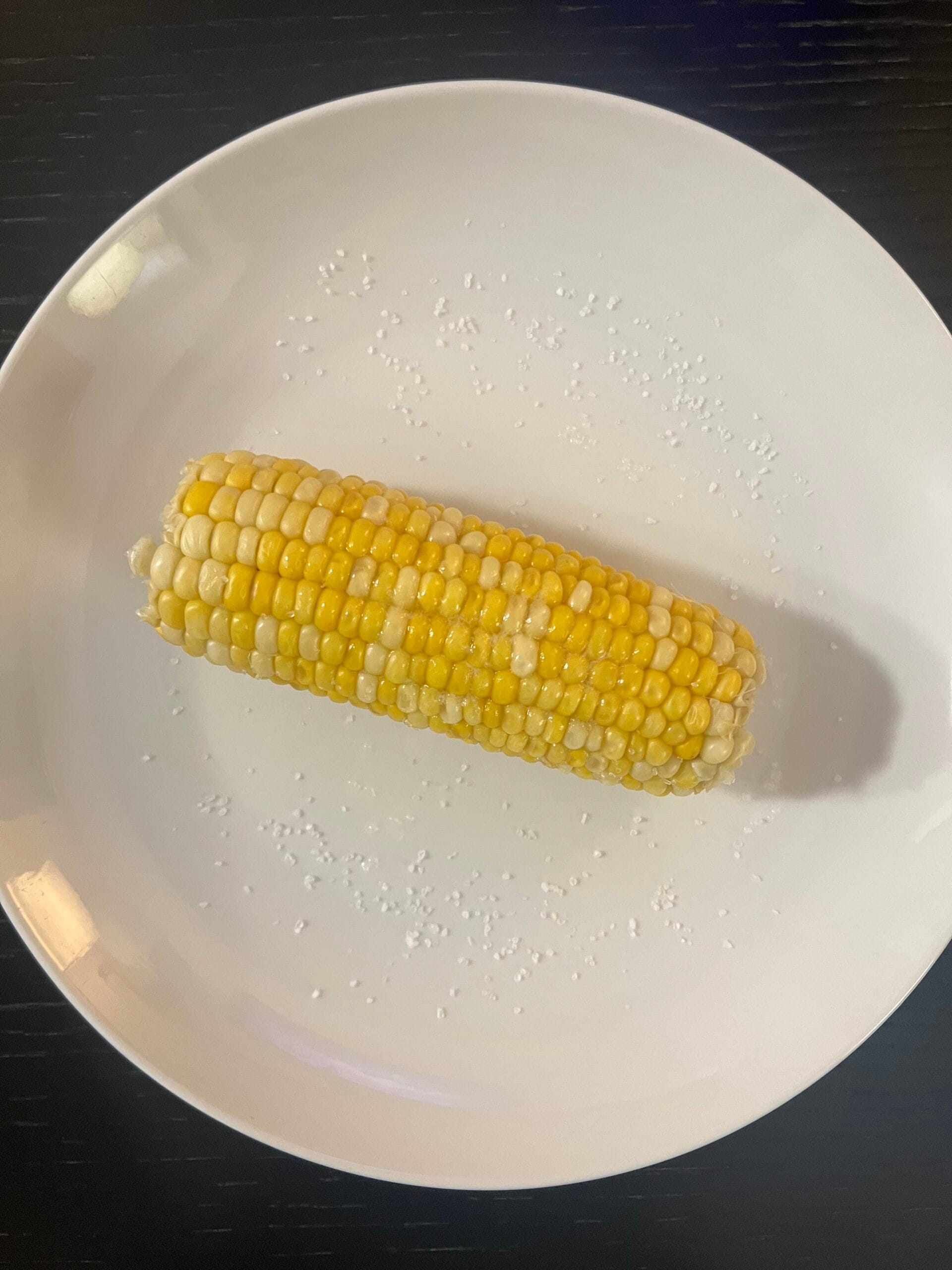
The critical word is elote tierno: young, tender corn, harvested before the kernels fully starch out. Dried corn makes masa. Elote makes something sweeter, softer, with its own milk. In El Salvador this dish belongs to the early harvest season, when small-town markets and street vendors appear with steaming pots before the morning has fully started. You eat them at breakfast, or as merienda in the afternoon, with crema salvadoreña, a piece of queso fresco, a cup of coffee or hot chocolate. There is no complex occasion attached to them. They are what you eat when fresh corn is good and you want to do something simple that honors it.
El Salvador has its own internal variations. In the western part of the country, tamales de elote lean sweet and soft, almost creamy, with a finer grind. Go east and you find the charo (a thicker, slightly salted version with a coarser texture that gives the masa some bite). Same dish, different geography, and neither version is wrong. What they share: corn husks (called tusas in Salvadoran Spanish) as the wrapper, and the absence of any filling. The corn is not carrying anything. The corn is what you came for.
The cultural roots here are Pipil and mestizo Salvadoran, not Maya. I want to say that plainly because I know my own heritage and I know the difference. This is not a Belizean dish and it is not Maya in origin. What it is: a Salvadoran recipe that connects to the broader Central American corn-cooking tradition Isela grew up knowing from across the border, and that belongs on this site because the El Salvador food guide on BNP is incomplete without it. Corn season in El Salvador is a specific thing, and this is its best expression.
Ingredients
Makes approximately 12 tamales. Fresh corn is the only real non-negotiable here: frozen (well-drained) works but gives a wetter batter; canned corn is a last resort and flattens everything.
- 2.2 lbs (about 5–6 ears) fresh corn kernels (elotes tiernos), cut from the cob
- ½ cup unsalted butter (mantequilla), softened, margarine is the traditional substitute
- ½ cup granulated sugar (azúcar)
- ½ cup masa harina (or fine cornmeal for structure)
- ½ teaspoon baking soda (or 1 teaspoon baking powder)
- 1 teaspoon salt
- 1–2 tablespoons milk or cream (leche o crema), only if batter is too thick
- 12–15 dried corn husks (tusas), soaked in warm water for at least 30 minutes
To serve: crema salvadoreña, fresh white cheese (queso fresco)
Instructions
- Soak dried corn husks in warm water for at least 30 minutes until pliable. Drain and pat dry.
- Strip corn kernels from cobs with a sharp knife. Reserve any corn milk that drips from the cob.
- Working in batches, blend corn kernels to a coarse, paste-like consistency. Do not blend until completely smooth: a slightly rustic texture gives the final tamal its characteristic body.
- If the blended corn is very watery, drain briefly in a colander for 10 minutes.
- In a large bowl, beat softened butter with sugar until light and fluffy.
- Add the blended corn, masa harina, baking soda, and salt to the butter mixture. Stir until evenly combined. The batter should hold its shape on a spoon; if too stiff, add 1–2 tablespoons of milk.
- Lay a soaked corn husk flat on your work surface. Spoon 3 tablespoons of batter onto the center.
- Fold the left side of the husk over the batter, then the right side, to form a tube. Fold the tapered bottom end up to seal.
- Arrange tamales upright in a steamer pot (vaporera) with the open end facing up. The tamales should not touch the water directly.
- Steam over medium heat for 1 to 1.5 hours. Check water level every 30 minutes and add hot water as needed.
- Test for doneness: open one tamal. The masa should be firm, slightly spongy, and pull away cleanly from the husk. If it sticks, steam 15 more minutes.
- Remove from steamer and let rest 5 minutes before serving. Serve warm with crema and queso fresco.
The Sweet Tamale That Belongs to Corn Season
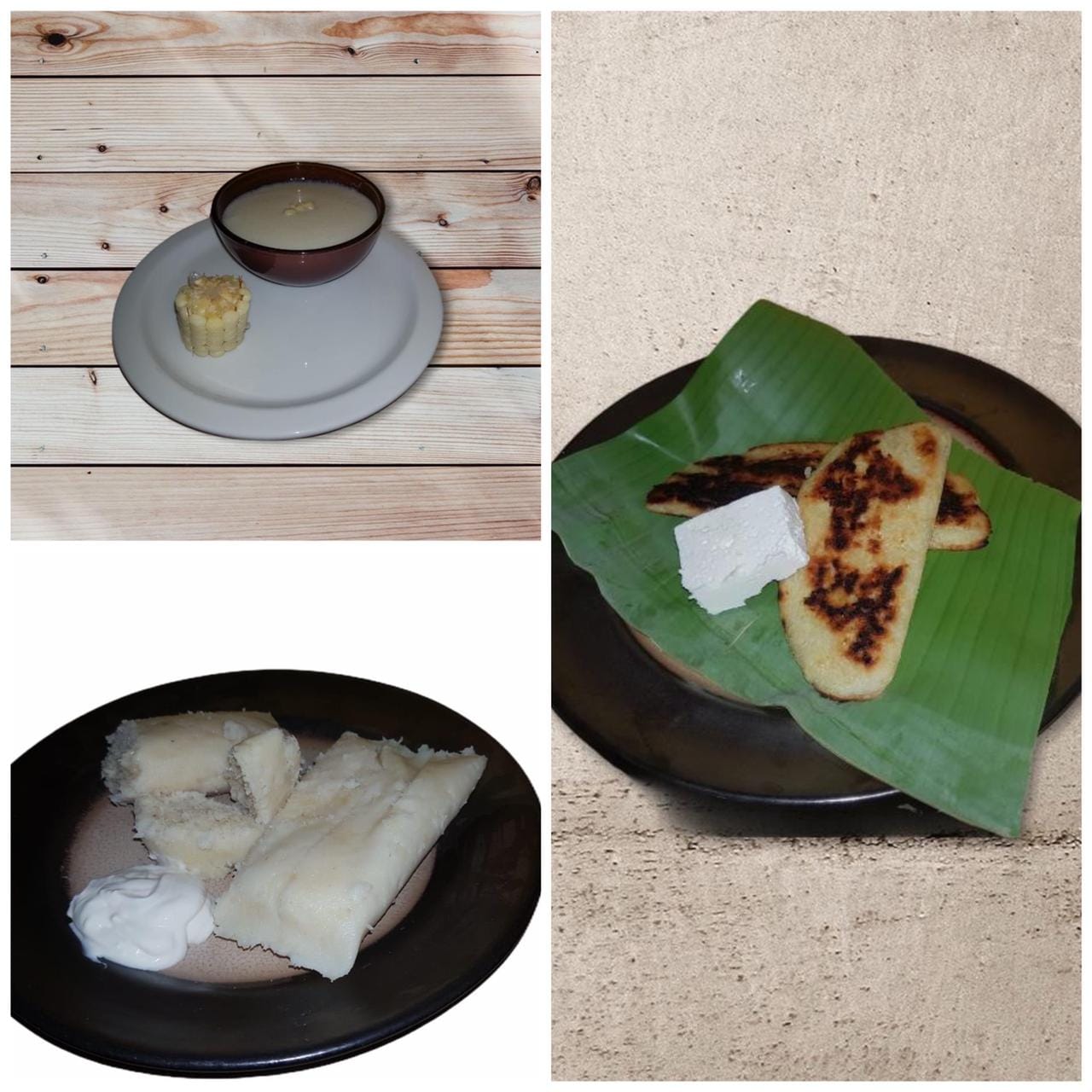
Salvadoran tamale culture has workhorses and it has celebrations, and then it has tamales de elote, which belong to neither category. They belong to corn season. The dish does not ask for a special occasion. It asks for good fresh corn and a free morning.
The contrast with the savory Salvadoran tradition is worth stating once, clearly. Tamales pisques use refried red-bean masa wrapped in plantain leaves: the wrapper is different, the masa is different, and the whole point is the bean filling. Montucas, the Honduran fresh-corn tamale, are filled with seasoned pork, olives, and raisins, sweet and savory in combination, complex and meat-forward. Tamales de elote have nothing inside them. That is not a limitation. That is the argument the dish makes about corn: that at its best, fresh elote needs no accompaniment inside the husk, only what you put on top when it comes out.
Tamales de elote have nothing inside them. That is not a limitation. That is the argument the dish makes about corn.
The eastern charo, a regional variation, shows how a dish adapts without losing itself. Thicker, slightly salted, coarser grind. Different texture, same logic: corn, husks, steam. The fact that El Salvador has two versions of the same dish from different ends of the same country tells you something about how seriously people take fresh corn there. It is not a casual ingredient.
Tips for Getting Tamales de Elote Right the First Time
- Fresh corn only when possible. Frozen (well-drained) works but the batter will be wetter and may need extra masa harina. Canned corn is the last resort; it tends to flatten the flavor and makes a wetter, gummier result than either fresh or frozen.
- Don’t over-blend. A completely smooth corn paste loses the rustic, slightly fibrous texture that makes these tamales recognizably corn, not just sweetened masa. Stop when the paste still has some coarseness to it.
- The batter test. It’s ready when it holds a soft peak on a spoon. Too runny means the tamal will be gummy after steaming; too stiff means it won’t cook through properly. Adjust with milk (to loosen) or masa harina (to firm).
- Simmer, don’t boil hard. Aggressive boiling floods the pot bottom and makes the lowest tamales wet. Keep the heat at a steady medium so the steam does the work without the water climbing up.
- Storage and reheating. Refrigerate up to 4 days in a sealed container. Steam to reheat for 10–15 minutes; this restores the texture. The microwave dries them out fast; it works in a pinch but the result is not the same.
- Optional variation. Some Salvadoran cooks tuck a small piece of queso fresco into the center before folding. It melts into the batter and creates a sweet-salty surprise that is common in certain households, particularly in western El Salvador. Not traditional everywhere, but worth trying once you have the basic tamale down.
Too runny means the tamal will be gummy. Too stiff means it won’t cook through. The batter is ready when it holds a soft peak on a spoon.
Frequently Asked Questions
What are tamales de elote made of?
Tamales de elote are made from fresh corn kernels (elote tierno) ground to a coarse paste, mixed with softened butter, sugar, masa harina, baking soda, and salt. The batter is spooned onto soaked corn husks (tusas), folded, and steamed for 1 to 1.5 hours. There is no filling. The corn is both the wrapper medium and the entire substance of the dish.
How are tamales de elote different from tamales pisques?
Tamales pisques use corn masa mixed with refried red beans and are wrapped in plantain or banana leaves: they are savory, dense, and built around the bean filling. Tamales de elote use fresh sweet corn and corn husks as the wrapper, contain no filling, and are sweet rather than savory. Different wrapper, different flavor profile, different occasion. The two dishes share the word “tamale” and not much else in practice.
How are tamales de elote different from riguas?
Riguas are a different Salvadoran corn-season dish: fresh-grated corn pressed flat, enclosed in a banana leaf, and cooked on a comal (griddle). Tamales de elote use ground corn folded into corn husks and cooked upright by steam. The wrapper is different (banana leaf vs corn husk), the cooking method is different (griddled vs steamed), and the texture is different (flat and slightly charred on the outside vs soft and spongy throughout). Both belong to harvest season. Neither is a substitute for the other.
Can I use frozen corn to make tamales de elote?
You can. Thaw and drain it thoroughly before blending, as frozen corn holds more water than fresh, so the batter will be looser. Add an extra tablespoon or two of masa harina to compensate. The flavor is good enough, though fresh corn has a sweetness that frozen does not fully replicate. Canned corn is workable but the flavor flattens noticeably; use it only if fresh and frozen are genuinely unavailable.
How do I know when tamales de elote are done steaming?
Open one tamal after 1 hour. The masa inside should be firm and slightly spongy, pulling away cleanly from the corn husk with no sticking. If it tears or clings to the husk, fold it back up and steam another 15 minutes, then check again. The husks will have yellowed slightly and puffed a little: that is normal and a good sign.
What do you eat with tamales de elote?
In El Salvador the standard accompaniments are crema salvadoreña and queso fresco. The crema is thick and slightly sweet; the cheese is fresh and mild. You eat tamales de elote as merienda (afternoon snack) or breakfast, typically alongside coffee, hot chocolate, or atole de elote. Pupusas are the other Salvadoran staple most people recognize; tamales de elote occupy the sweet, corn-season register that pupusas do not.