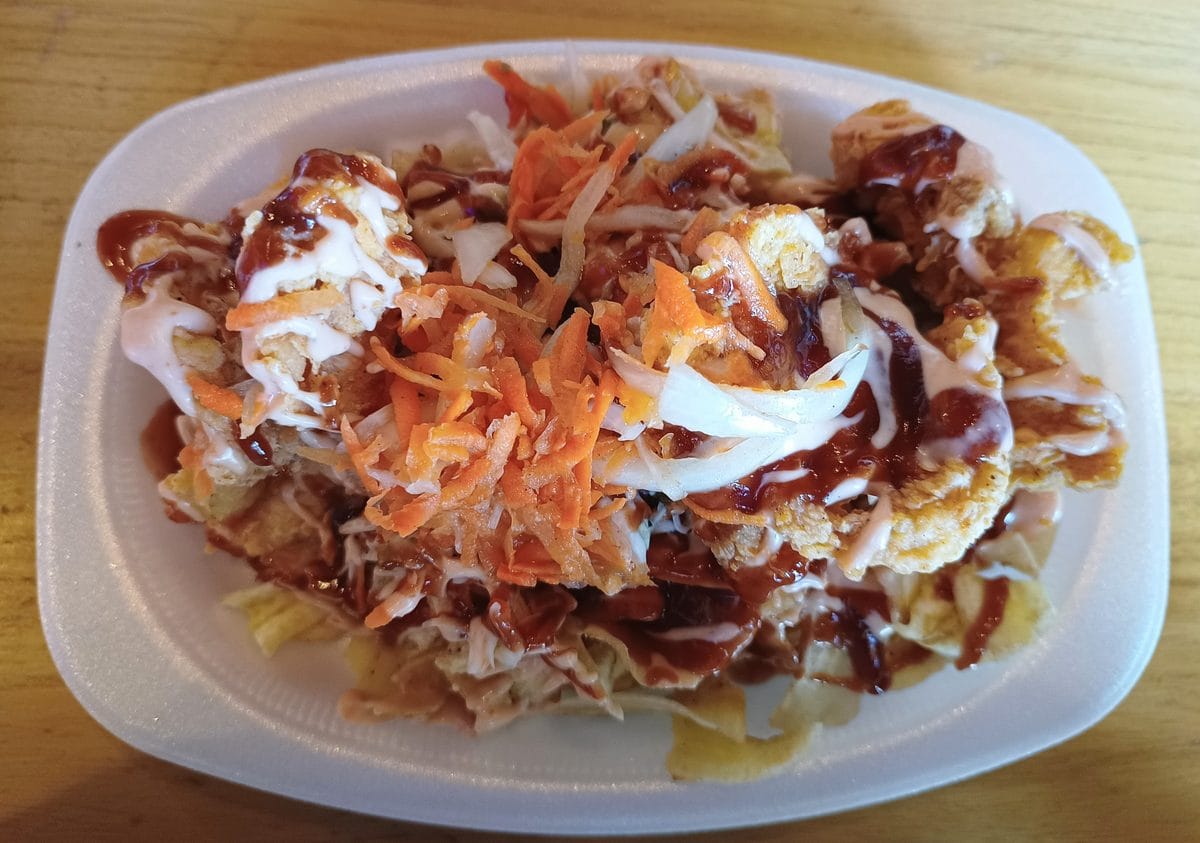
Short answer: Pollo chuco is Honduras’s signature messy street plate: crispy fried chicken piled over a bed of fried green-banana tajadas, buried under tangy cabbage slaw, fresh chismol, pickled red onions, and a stripe of ketchup-and-pink-sauce. The name means dirty chicken, and the mess is the whole point. It is a full composed plate, not a snack — no tortilla anywhere on it.
Honduras’s tortilla snacks are easy to mix up. Here is how catracha, baleada, enchilada, and tustaca differ.
Cast iron dutch oven (Le Creuset)
Heavy cast iron Dutch oven with enamel coating - distributes heat evenly for long, low-temperature cooking and braising without losing liquid to evaporation.
Granulated chicken bouillon for seasoning broth, rice and stews. A tablespoon goes into the pot before anything else does.
The plate is built in layers, and each one earns its place. The tajadas must be sliced thin from unripe green bananas and fried until rigid: the structural base, not just a side. The chicken goes on last, so the acid from the slaw and chismol cuts through the fried richness with every bite. Get the assembly order wrong and you get soft tajadas and a dull plate. Get it right and you understand why San Pedro Sula declared a National Pollo Chuco Day.
What makes pollo chuco different from the other Honduran fried snacks?
Pollo chuco gets confused with its siblings because Honduras has a whole family of fried street foods, but one detail separates it from every other member: there is no tortilla. Catrachas, enchiladas hondurenas, and baleadas are all built on a corn or flour tortilla base. Pollo chuco has none. The base is fried green-banana tajadas, a full forkable plate where fried chicken is the main protein, not a topping on a cracker. If there is fried chicken, tajadas, and no tortilla, it is pollo chuco.
The second separator is scale. This is not a finger snack. It is a meal: three or four pieces of chicken, a generous heap of tajadas, and enough slaw and sauce to fill a foam tray. Street vendors in San Pedro Sula serve it from carts and fritangas, eaten with a fork, often with the tray balanced on a knee. That casual, abundant format is what earned it the name chuco.
Where pollo chuco comes from
Pollo chuco is 100 percent sampedrano — it was born in the neighborhoods of San Pedro Sula, Honduras’s industrial north-coast capital. Local accounts say it started as humble fringe-market food, sold cheap in the outer barrios before spreading to the center. The dish reflects the mestizo food culture of the north coast, where African, indigenous, and Spanish influences braided together around the fried plantain and the roadside grill. By the time it traveled countrywide, every Honduran city had its own fritanga version, but San Pedro Sula kept the naming rights. The city now marks a national pollo chuco celebration each January.
Ingredients
For the chicken:
- 3 lb bone-in chicken pieces (thighs and drumsticks fry best)
- 4 tablespoons yellow mustard
- 1 teaspoon chicken bouillon powder
- 2 teaspoons cumin
- 2 teaspoons onion powder
- 1 teaspoon paprika
- 1 teaspoon garlic salt
- 1/2 teaspoon black pepper
- Oil for frying (enough to submerge or half-submerge the pieces)
For the tajadas:
- 4 unripe green bananas (guineo verde), or green plantains if green bananas are unavailable (see FAQ)
- Oil for frying
- Salt
For the slaw, chismol, and pickled onions:
- 1/2 small head green cabbage, finely shredded
- 1 medium carrot, grated
- 2 tablespoons white vinegar, juice of 1 lime, and salt for the slaw
- 2 ripe tomatoes, 1/2 white onion, 1 green chile, small handful cilantro, juice of 1 lime, salt for the chismol
- 1 red onion, thinly sliced, soaked in 3 tablespoons hot white vinegar + 3 tablespoons water
- Ketchup and pink sauce (3 tablespoons mayonnaise + 2 tablespoons ketchup, thinned with 2 tablespoons milk if desired)
How to make pollo chuco
- Marinate the chicken. In a bowl, coat the chicken pieces all over with mustard, then rub in the bouillon, cumin, onion powder, paprika, garlic salt, and pepper. Cover with plastic wrap and refrigerate at least 1 hour. Overnight gives deeper flavor. The mustard acts as both a tenderizer and a spice binder; it fries off, leaving no mustard taste in the finished chicken.
- Make the toppings first. Toss the cabbage and carrot with vinegar, lime juice, and salt; set aside so it softens slightly. Dice the tomatoes, onion, chile, and cilantro for the chismol; dress with lime and salt. Pour the hot vinegar and water over the sliced red onion and let it sit at least 20 minutes until soft and pink. Mix the mayonnaise and ketchup for the pink sauce.
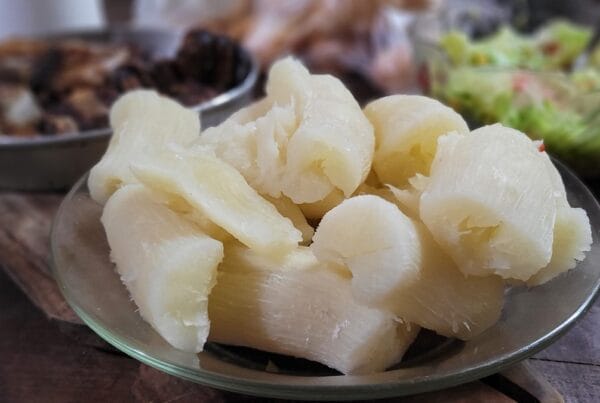
- Fry the tajadas. Peel the green bananas and slice thin on the diagonal, no thicker than 1/4 inch. Heat oil in a heavy pan to about 350°F (175°C). Fry the slices in batches until crisp and pale gold, 2 to 3 minutes per side. Drain on paper towels and salt immediately. They should be rigid enough to hold the weight of the chicken without bending.
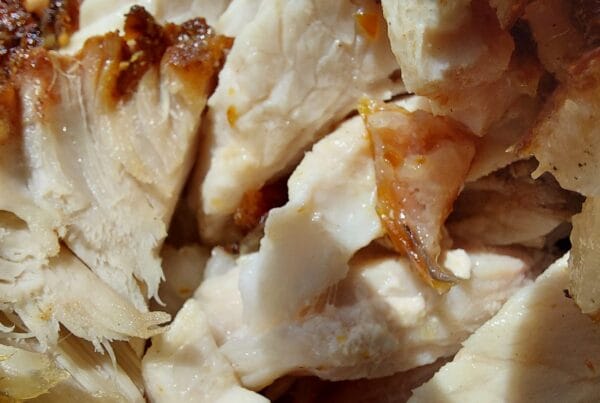
- Fry the chicken. Heat oil to 325°F (160°C) in a deep skillet or Dutch oven. Add the chicken skin-side down and fry without moving until deep golden brown, about 12 to 15 minutes per side, until the internal temperature reaches 165°F (74°C). The lower starting heat lets the dark meat cook through before the outside over-browns. Drain on a rack, not paper towels, so the crust stays crisp.
- Assemble in order. Cover the plate with tajadas as the base. Mound the slaw over them. Place the fried chicken on the slaw. Spoon the chismol over the chicken, drizzle ketchup and pink sauce across everything, and scatter the pickled onions on top.
- Eat immediately. The tajadas soften once the slaw and sauce hit them. This is a dish that waits for no one.
Tips for the best result
- Slice the bananas as thin as possible. Thin tajadas fry through to a rigid crisp. Thick ones stay soft in the center and collapse under the toppings before you take two bites.
- The mustard disappears. New cooks are often skeptical of the mustard marinade. The vinegar and proteins in the mustard tenderize the chicken and bind the spices to the skin; the mustard flavor cooks off entirely during the fry.
- Acid is the balance. The slaw, chismol, and pickled onion do the heaviest lifting. All three together cut the fried richness. Skip any one of them and the plate tastes flat.
- Build it at the last minute. Assemble just before eating. The tajadas hold their crunch for about five minutes under the toppings. After that, the moisture wins. Street vendors in San Pedro Sula assemble to order, and you should too.
More of the country’s table is in the Honduran food guide.
Frequently asked questions
What is pollo chuco?
A Honduran street plate of fried chicken served over fried green-banana tajadas, topped with shredded cabbage slaw, chismol (a fresh tomato-and-onion relish), pickled red onions, ketchup, and pink sauce. It is also called pollo con tajadas. The defining feature is that it has no tortilla, making it a full plate meal, not a tortilla-based snack.
Why is it called chuco?
Chuco means dirty or messy in Honduran Spanish, and in Guatemalan and Salvadoran Spanish too; it traces back to Nahuatl. The name refers to the loaded, sauced, eat-with-a-fork-or-your-hands character of the plate. Some local accounts say the dish got the name because it started out as humble fringe-market food, nothing fancy, just good, cheap, and satisfying.
Is pollo chuco made with green banana or green plantain?
In San Pedro Sula, the traditional tajada is made from guineo verde, unripe green banana, not plantain. Green bananas fry up slightly firmer and more neutral in flavor than plantains. Green plantains are a widely accepted substitute and taste nearly identical in the finished dish, but if you are in Honduras and see guineo verde, use it.
Is pollo chuco the same as pollo con tajadas?
Yes. Pollo con tajadas is the plain description: fried chicken with banana slices. Pollo chuco is the street name from San Pedro Sula. They are the same dish; which name you use depends on where you are in Honduras.
Where is pollo chuco from?
San Pedro Sula, on the north coast of Honduras. It is the city’s signature street food and has spread across the country, but the name and the celebration belong to San Pedro Sula. The city marks a National Pollo Chuco Day each January.
What does the mustard do in the marinade?
The mustard acts as a binder that holds the dry spices against the chicken skin and helps them penetrate during the resting time. The acidity in the mustard also tenderizes the meat slightly. The mustard flavor itself cooks off during frying, so the finished chicken does not taste of mustard, just well-seasoned and crisp.
More Honduran Recipes
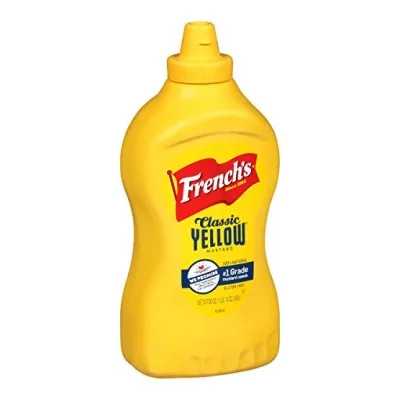
Classic Yellow Mustard (French’s)
Every shuco gets finished the same way: a zigzag of yellow mustard — mostaza — over the guacamole and mayonesa. The classic squeeze bottle is the street-cart standard.
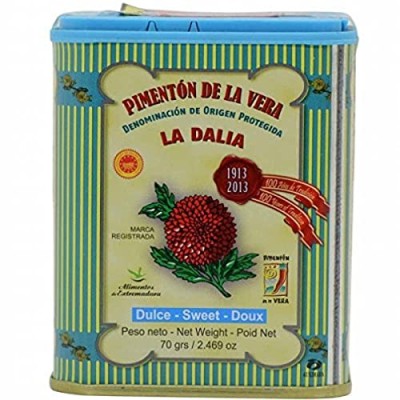
La Dalia Sweet Smoked Paprika, Pimentón de la Vera DOP, 2.46 oz
DOP-certified pimentón from La Vera, Spain — the smoky paprika that gives pastelitos their color and depth.