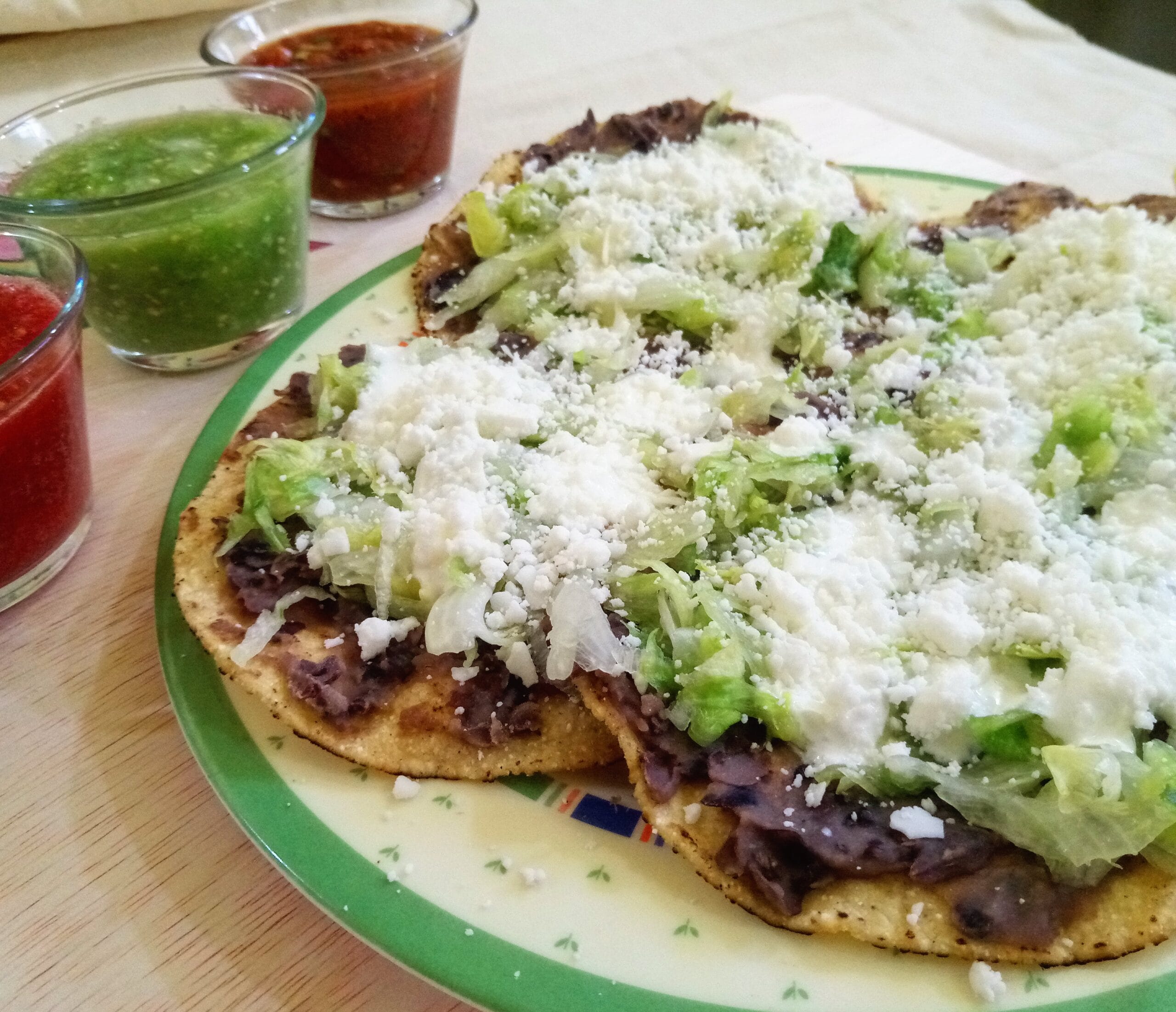
Catrachas are crispy fried corn tortillas spread with refried red beans and topped with crumbled queso fresco, the everyday street snack and party appetizer of Honduras. The name comes from catracha, the feminine of catracho, the word Hondurans use for themselves — so the dish is named after the people who eat it.
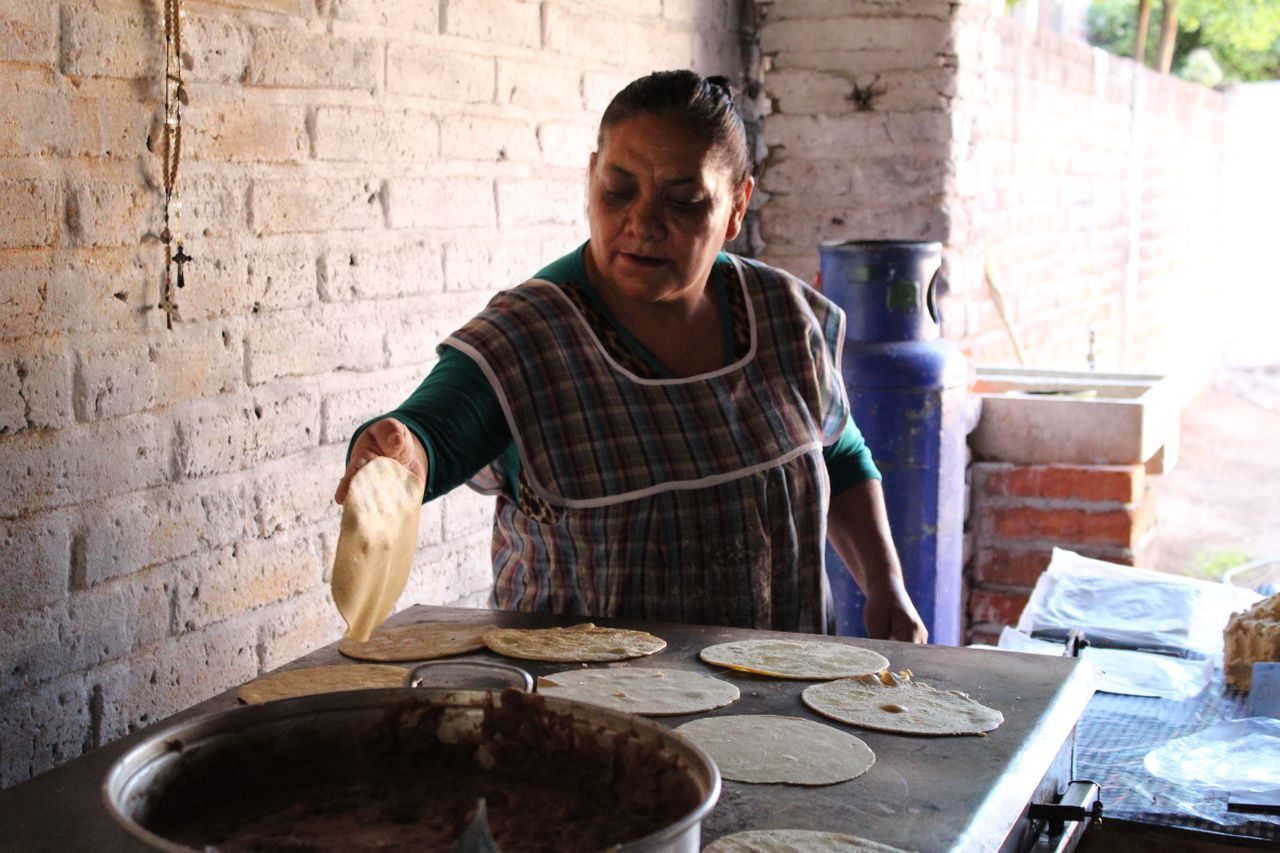
Honduras’s tortilla snacks are easy to mix up. Here is how catracha, baleada, enchilada, and tustaca differ.
Pure lard (manteca) for making masa dough and frying - the fat traditional recipes rely on for texture and flavor.
Marie Sharp’s Original Habanero
The habanero sauce that goes on the table with almost everything: stewed chicken, fried dough, ceviche, rice and beans. Fruit-forward heat rather than pure burn.
When I lived in Amapala, on the Pacific side of Honduras, catrachas were the thing you ate standing up. A woman frying tortillas at the edge of the market, a spoon of warm beans, a fistful of cheese crumbled over the top, and you were done. No plate needed. That is the whole dish, and the restraint is the point. People who have never eaten one assume it must be missing something. It is not. A catracha is a crisp corn tortilla, beans, and salty fresh cheese, and when each of those three things is right, you do not want anything else on it.
I have made these for years now, both there and at home, and the version below is the one I keep coming back to. It is honest food. It does not ask much of you, and it gives back more than it should.
Ingredients
This makes 6 catrachas and serves 3. The beans are the part that takes time, so make them first, or make a batch the day before.
For the refried red beans
- 1 cup dry small red beans (frijoles rojos, the small Central American red bean; black beans are an accepted regional swap but red beans are the classic)
- 1 small white onion, halved (half goes in the pot, half gets diced for refrying)
- 2 garlic cloves
- 1 teaspoon salt
- 3 tablespoons vegetable oil or lard
- Reserved bean cooking liquid, about 1/2 cup
For the tortillas
- 6 corn tortillas (store-bought or homemade from masa harina)
- 1 to 1.5 cups vegetable oil, for shallow frying
To finish
- 3/4 cup queso fresco, crumbled (the traditional Honduran fresh cheese: mild, slightly salty, and crumbly; queso seco or queso duro are the aged grating-cheese alternative if you prefer a sharper, saltier finish; cotija is the closest easy stand-in outside a Latin market)
- A dab of salsa or hot sauce, optional
Instructions
- Soak the red beans. Cover them with cold water and leave them overnight, or pour boiling water over them and let them sit 1.5 hours. Drain.
- Put the beans in a pot with half the onion and the two garlic cloves. Cover with fresh water by a couple of inches and simmer until the beans are soft enough to crush against the side of the pot with a spoon, about 45 to 60 minutes. Add the salt near the end. Scoop out and reserve about half a cup of the cooking liquid before you drain.
- Mash or blend the beans with a little of that reserved liquid until you have a thick, spreadable paste. You want it smooth but not loose.
- Dice the other half of the onion. Heat the oil or lard in a wide pan and cook the onion until soft. Add the bean paste and cook it down, stirring often, until it thickens enough to hold its shape on a spoon, about 8 to 10 minutes. Beans that are too wet will turn the tortilla soggy; keep cooking until the paste pulls away cleanly from the pan. Keep them warm.
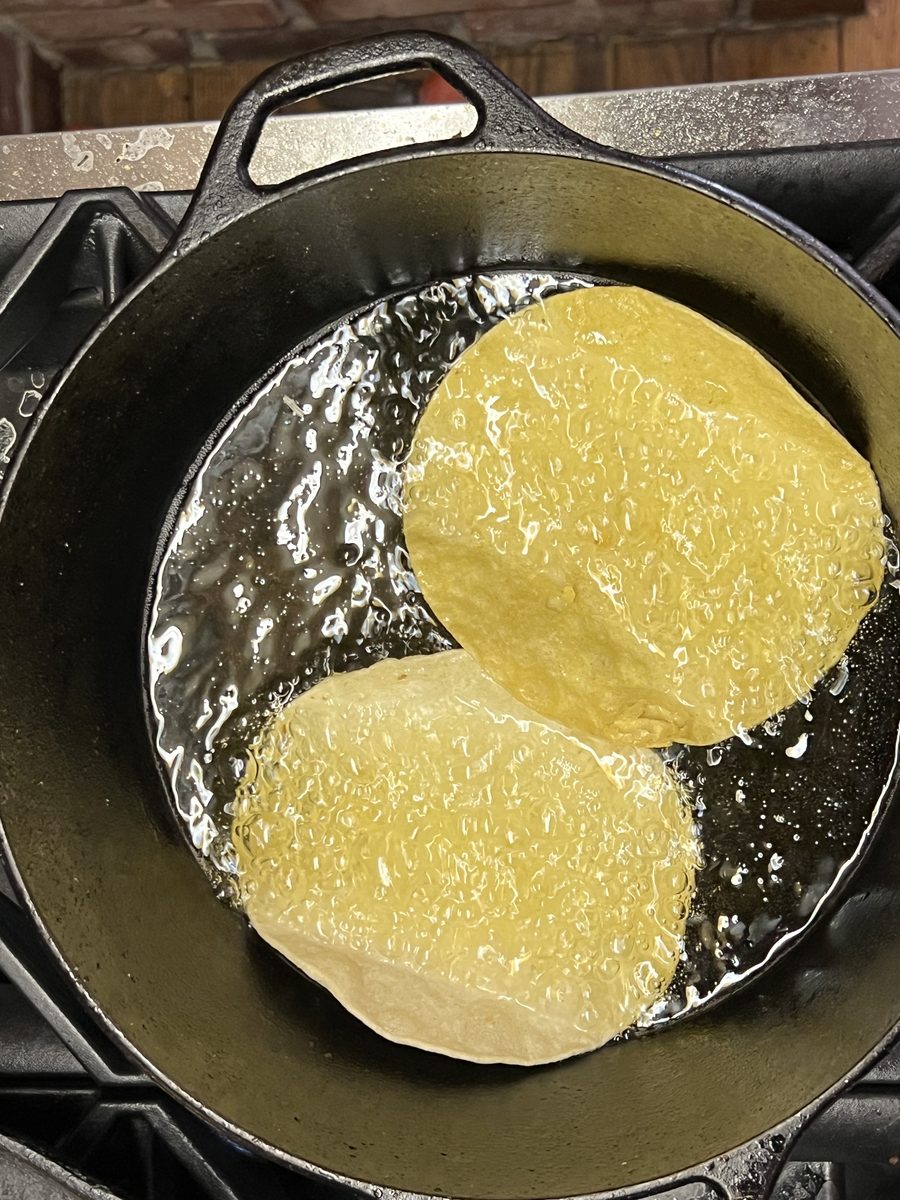
- Heat the frying oil in a separate pan over medium-high. You want enough oil to come about halfway up the side of a tortilla. When the edge of a tortilla bubbles immediately on contact, the oil is ready. Fry each corn tortilla until it is completely rigid and golden-brown throughout, about 45 to 60 seconds a side, not just golden but hard. A catracha that bends is not done. Drain on paper towels.
- Spread 2 to 3 tablespoons of the warm refried beans over each hard-crisp tortilla.
- Crumble queso fresco generously over the beans. Add a dab of salsa or hot sauce if you want it. Serve right away; the crisp tortilla softens quickly once the beans are on. There is no cooking after assembly: assemble, hand it off, eat it standing.
Why Catrachas Carry the Name Hondurans Call Themselves
A catracha is, quite literally, a Honduran one. Catracha is the feminine of catracho, the everyday word Hondurans use for themselves, so the dish is named after the people who eat it.
A catracha is, quite literally, a Honduran one.
The name has a story behind it, and it is the kind of detail that tells you something true about the country. In 1856 and 1857, General Florencio Xatruch led Honduran troops against the American filibuster William Walker, who had seized power in Nicaragua. When the soldiers returned, Nicaraguans cheered them as los Xatruches, after their commander.
The Catalan surname was hard on the tongue, so it slid first to catruches and then to catrachos, and the name stuck. It stopped meaning Xatruch’s men and started meaning all Hondurans. This is the popularly accepted account, documented in Honduran cultural sources and repeated for generations. The 1856 campaign is part of the historical record of William Walker’s Central American filibuster.
What that history leaves out is how ordinary the dish is. Catrachas are not feast food. They are cheap, fast, everyday food sold by street vendors and made at home for breakfast, for merienda (the afternoon snack), and for parties and celebrations where you want something people can eat without sitting down. They sit on the same table as the rest of everyday Honduran food: beans and corn and cheese turned into something you can hold in one hand. When I say this is a national dish, I do not mean it is grand. I mean the opposite. It belongs to everyone because it asks nothing of anyone.
Catrachas are a mestizo Honduran street food, eaten across the whole country. They are not a Garifuna dish and not a Maya one, and they are not Belizean, even though Belize sits right next door and shares so much of the same corn-and-bean kitchen. The honest thing is to let Honduras keep this one.
One Crunchy Corn Tortilla, Beans, Cheese — and Nothing Else
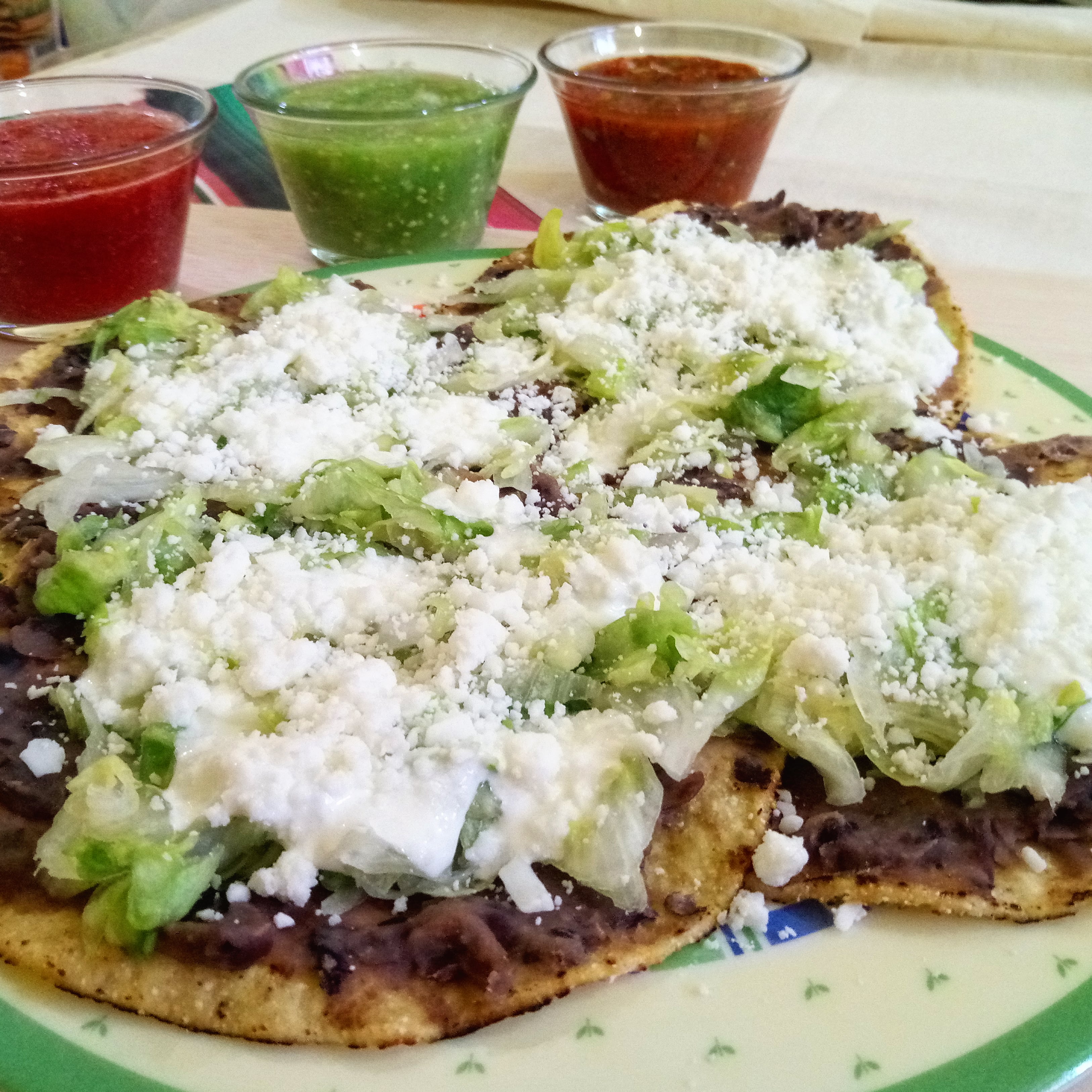
The defining move of a catracha is what it leaves off. The tortilla is fried until it is completely rigid: not pliable, not bendy, not just golden, but hard enough that it will crack if you press it. You spread cold or warm beans on top after frying, crumble cheese over that, and the dish is done. There is no further cooking. The restraint is the technique.
The cheese is where most of the variation lives. The classic finish is grated queso seco, the hard dry cheese. Crumbled queso fresco, the mild fresh cheese you find in every Honduran kitchen, is the common substitute and is entirely acceptable. It does not melt; it softens a little and holds its crumble. Some cooks reach for queso seco or queso duro instead, the aged hard-grating cheeses that bring a sharper, saltier edge. Both are correct; queso fresco is the default you will see on the street.
The beans are the other variable. Classic catrachas use small red beans, and that is the default. Black beans appear as a personal or regional swap, but they are the variation, not the rule.
Beyond that, there is how far you load it. The bare catracha stops at beans and cheese, and that is the real one. People add a spoon of salsa, a slice of avocado, a drizzle of crema, or a fried egg to turn it into a fuller breakfast. Build it up if you like, but know that the plain version is the one with its name on it.
Build it up if you like, but know that the plain version is the one with its name on it.
How Catrachas Differ from Baleadas, Enchiladas Hondureñas, and Other Honduran Snacks
Because the core ingredients overlap, the confusion is constant. Here is how to sort them out.
A baleada uses a thick, soft, hand-made wheat-flour tortilla (never corn, never crunchy), spread with beans and crema, then folded into a half-moon. The fold and the soft flour tortilla are the binary test: if it bends and is made of wheat, it is a baleada. If it is corn and rigid, it is not.
Honduran enchiladas share the same crunchy fried corn tortilla base as a catracha, which is where the confusion starts. But an enchilada hondureña is loaded: seasoned ground beef cooked with potato and cumin, a layer of shredded cabbage dressed with lime, a sliced hard-boiled egg, crumbled queso fresco, and tomato sauce. Meat plus cabbage plus egg converts a catracha into an enchilada. The catracha stops at beans and cheese, and that is the difference.
Tustacas occupy similar snack territory but are not a tortilla dish at all. They are shaped corn-masa cakes made with cuajada (fresh curd cheese) and dulce de rapadura (unrefined cane sugar) baked into the dough. The presence of sweetness is the absolute separator: a tustaca is sweet-savory, a catracha is purely savory.
Anafre is a shared hot dip: refried red beans and melted quesillo (Honduran string cheese) with crumbled chorizo, kept bubbling in a clay pot over coals at the table. It is communal, never individually plated, and eaten by scooping with tortilla chips. The clay-pot format removes it from the same category entirely.
The catracha is its own specific thing: refried red beans and crumbled queso fresco on a completely rigid fried corn tortilla. Two toppings on a hard corn disk. Nothing added, nothing hidden, nothing sweet.
Frequently Asked Questions
What are catrachas?
Catrachas are completely rigid fried corn tortillas spread with refried red beans and topped with crumbled queso fresco. They are Honduras’s simplest everyday street and breakfast food, sold by vendors and made at home, and the dish is named after catracho, the nickname Hondurans use for themselves.
What cheese goes on catrachas?
The classic finish is grated queso seco, the hard dry salty cheese. Crumbled queso fresco is the common substitute and is what many home cooks use; it is mild, slightly salty, and it softens on the warm beans without melting. Either is right. Neither melts. Some cooks use queso seco or queso duro, the hard aged grating cheeses, for a sharper finish. Both are found in Honduras. Outside a Latin market, cotija is the closest widely available substitute.
Are catrachas made with red or black beans?
Classic Honduran catrachas use small red beans, frijoles rojos. Black beans are an accepted home variation but not the traditional default. If you want the version most Hondurans would recognize, use small red beans.
What is the difference between catrachas and baleadas?
A catracha is a completely rigid fried corn tortilla topped open-faced with beans and cheese. A baleada is a thick, soft wheat-flour tortilla folded around beans and crema. The material and texture are opposite: corn and crisp versus wheat and soft.
What is the difference between catrachas and Honduran enchiladas?
Both start with a hard fried corn tortilla. The difference is everything on top. A catracha carries only refried beans and cheese. A Honduran enchilada adds seasoned ground beef, shredded cabbage, a sliced hard-boiled egg, and tomato sauce. If there is meat and cabbage, it is an enchilada, not a catracha.
Why are they called catrachas?
They are named after catracho and catracha, the nickname for Hondurans. The word traces to General Florencio Xatruch, who led Honduran troops in the 1856 war against William Walker’s filibusters in Nicaragua. Nicaraguans called the returning soldiers los Xatruches, which wore down to catrachos over time, and the name spread to all Hondurans.
Can you make catrachas ahead of time?
You can make the beans a day ahead and store them in the refrigerator. You can fry the tortillas up to an hour in advance if you keep them uncovered in a single layer. What you cannot do is assemble them early; the crisp tortilla softens quickly once the beans go on. Spread and top right before you serve.
More Honduran Recipes
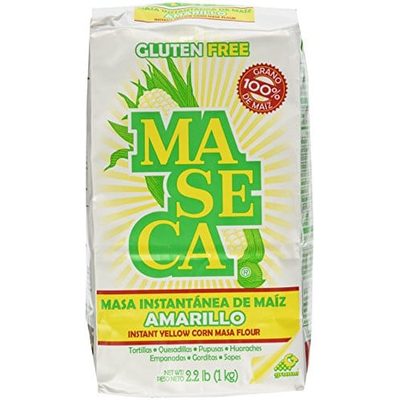
Maseca brand yellow corn masa harina, pre-ground and treated for immediate use in dough for tortillas, tamales, and other corn dough applications.