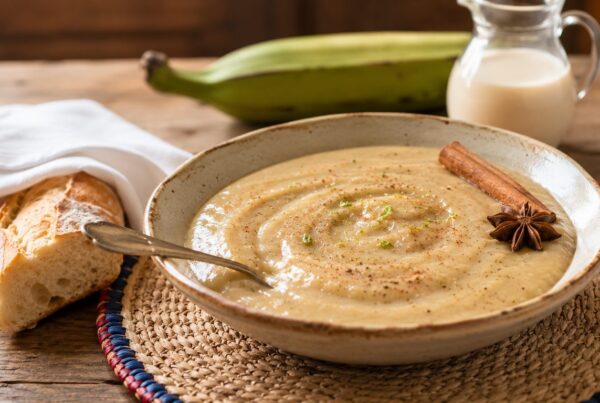
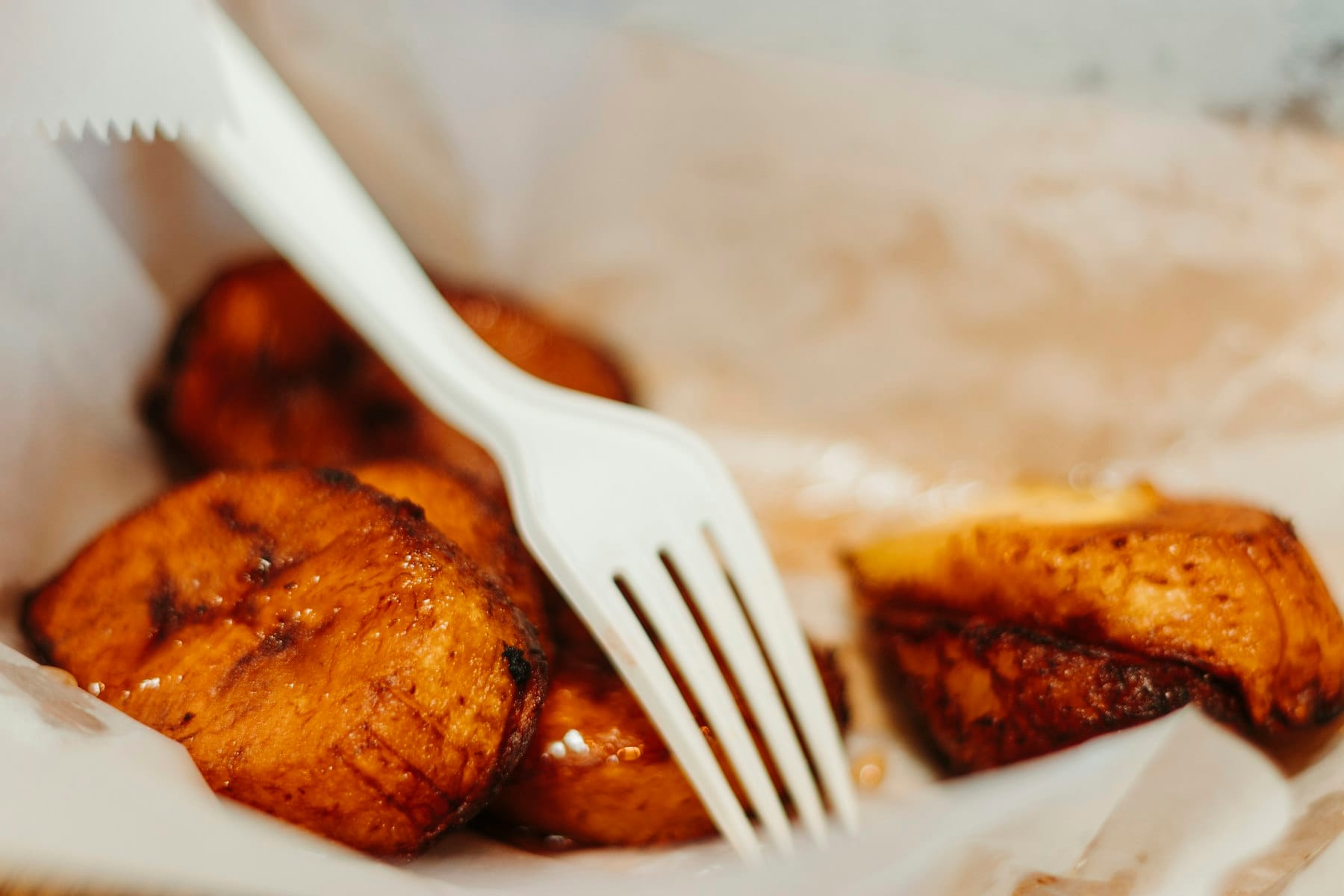
Plátanos fritos con crema is the Salvadoran desayuno típico breakfast plate: very ripe plantains fried until caramelized and soft, served with a spoonful of Salvadoran crema and refried black beans. This mestizo dish appears at morning and evening meals across El Salvador as everyday sustenance, not a special occasion.
What Makes Plátanos Fritos con Crema the Salvadoran Breakfast Plate?
The desayuno típico is not a weekend treat. At comedores across El Salvador, the doors open at six in the morning and the plates are already moving: fried plantains, frijoles molidos, crema, eggs, a wedge of queso, warm tortillas. This is Tuesday. This is any day before work.
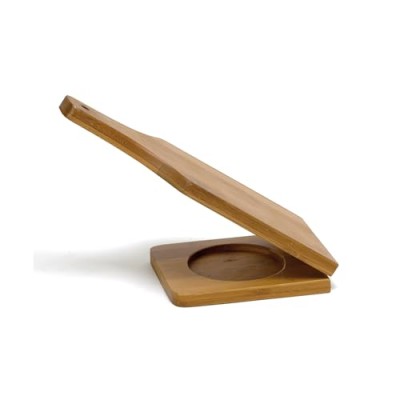
IMUSA Bamboo Tostonera Plantain Press, Large
The classic bamboo press for even, restaurant-flat tostones on the second fry.
Nutiva Organic Cold-Pressed Virgin Coconut Oil, 15 oz
Rice and beans, sweet baking, and the occasional skillet of fried plantain all benefit from virgin coconut oil's fragrance. Cold-pressed and unrefined is what BNP recipes call for.
What makes the plate work is the composition. The sweetness of caramelized ripe plantains against the earthy weight of blended black beans, cut by the tang and fat of crema salvadoreña. Each element has a function. Remove the crema and you lose the binding. Remove the frijoles and the sweetness has nothing to answer it. These are not toppings. They are structural.
The sweetness of caramelized ripe plantains against the earthy weight of blended black beans, cut by the tang and fat of crema salvadoreña. Each element has a function.
The dish carries Pipil and mestizo roots that go back centuries. El Salvador’s indigenous Pipil people built their diet around corn and beans, both of which appear on this plate. Plantains arrived later with Spanish colonization, brought through African and Caribbean trade networks. The crema came with Spanish colonial dairy culture. Over generations, these elements merged into something that belongs specifically to El Salvador in a way that none of its neighbors share in quite the same form. Karla Vasquez, writing in the SalviSoul Cookbook (Ten Speed Press, 2024), calls plátanos fritos with frijoles licuados a “masterful pairing” and treats it as fundamental to Salvadoran home cooking.
For more on the full range of Salvadoran food, see our Salvadoran food guide.
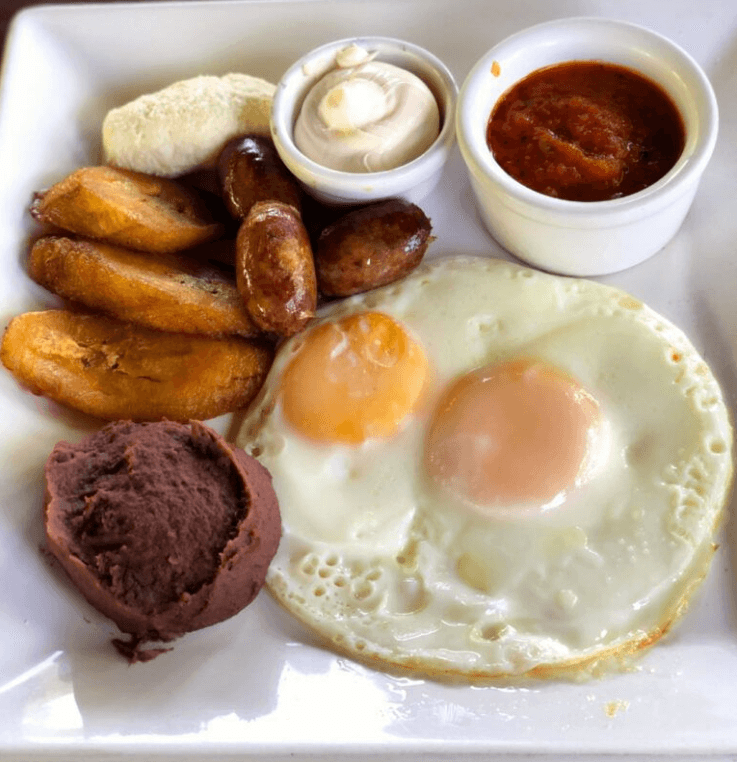
I have eaten this plate at comedores in San Salvador and along the Pan-American Highway in smaller towns where the typical plate is the only plate on the menu. It tastes the same everywhere. That consistency is the point: this dish does not vary because it does not need to. The method is settled.
Ingredients
For the plátanos:
- 3 ripe plátanos maduros (very ripe — skin should be mostly black, not yellow)
- 2–3 tablespoons vegetable oil or coconut oil for frying
- Pinch of salt (optional)
For the frijoles molidos:
- 2 cups cooked black beans (or 1 can, drained and rinsed)
- ½ white onion, divided
- 2 cloves garlic
- 2 tablespoons vegetable oil
- ½ teaspoon salt
- ¼ cup bean cooking liquid or water, as needed
For serving:
- ½ cup crema salvadoreña (or crème fraîche as the closest substitute — see Tips)
- Queso duro blando or queso fresco, crumbled (optional but traditional)
- Warm corn tortillas or pan francés
Instructions
- Make the frijoles molidos. If starting from dried beans, rinse them and cover with cold water. Bring to a boil, then reduce to a simmer and cook 1.5 to 2 hours until completely tender. Reserve the cooking liquid. In a blender, combine the cooked beans, half cup of cooking liquid, half the onion, and the garlic. Blend until fully smooth.
- Fry the bean purée. Heat 2 tablespoons of oil in a skillet over medium heat. Add the remaining onion and cook, stirring, about 3 minutes until soft. Pour in the blended bean mixture. Cook, stirring frequently, for 8 to 10 minutes until the purée thickens and begins to pull away from the sides of the pan. Season with salt. Keep warm.
- Prepare the plantains. Cut both ends off each plátano. Score the skin lengthwise with a knife, then peel it away. Slice diagonally into half-inch pieces.
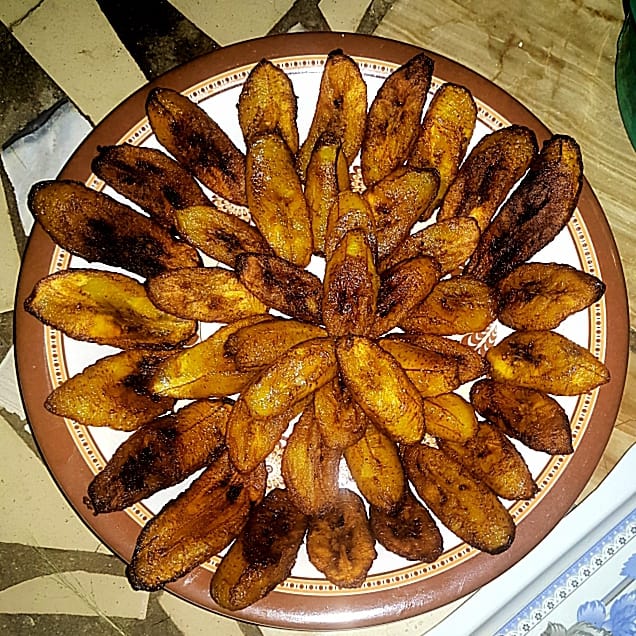
- Fry the plantains. Heat oil in a wide skillet over medium heat until shimmering. Add plantain slices in a single layer. Do not crowd the pan or they steam instead of caramelize. Fry 4 to 5 minutes without moving them, until deep golden on the bottom. Flip and fry another 3 to 4 minutes until both sides are caramelized and the interior is soft when pressed. Medium heat is not negotiable: too high and the outside burns before the inside cooks through; too low and they absorb oil and turn greasy.
- Drain. Transfer plantains to a plate lined with paper towel. Let them drain for about a minute.
- Assemble the plate. Spoon frijoles molidos onto a warm plate. Arrange the plantains alongside. Drizzle crema salvadoreña generously over the plantains. Add crumbled queso and warm tortillas or bread on the side.
The Salvadoran Crema and Beans Make This More Than Fried Plantains
There is a version of fried plantains that is just fried plantains: ripe, sweet, simple, good. That is not this dish. Plátanos fritos con crema is a composed plate, and the composition is the point.
Plátanos fritos con crema is a composed plate, and the composition is the point.
Crema salvadoreña is different from Mexican crema and quite different from American sour cream. It is pourable, smooth, thicker than Mexican crema, and slightly sweet with a gentle tang — less salty and more yellow in color. The closest Western substitute is crème fraîche, which has the right texture — note that crème fraîche is tangier than crema salvadoreña, so if you want to match the slight sweetness, stir in a small pinch of sugar. Full-fat sour cream thinned with a small amount of milk works in a pinch. What you want is something that sits on the plantain and melts slightly into it, not something that globs or separates.
Empanadas de plátano, another Salvadoran dish, uses ripe plantain differently: the plantain is mashed into a dough shell that is stuffed with leche poleada custard or refried beans, then fried and dusted with sugar. Plátanos fritos con crema slices the plantain flat and fries it unadorned — the beans stay on the plate, not inside it.
Tostones are a different dish entirely. Those use green, unripe plantains, smashed and fried twice for a starchy, savory result. Plátanos fritos con crema uses only very ripe plantains, fried once, for sweetness and caramelization. The same fruit, handled differently, becomes something completely unrelated in flavor and function. Readers sometimes confuse them. They should not.
The same plate also appears as cena típica, served at dinner with the same frequency as breakfast. Salvadorans eat this in the morning before work and in the evening after it. The comedores keep the typical plate on the menu through the whole day because the demand holds. This dish belongs to no single meal.
For a variation: frijoles molidos can be replaced by casamiento, which is black beans and rice cooked together. Casamiento is named for the “marriage” of the two ingredients, and it is a common weekend variation in many Salvadoran households. The plate gains some starchiness from the rice but keeps the same savory grounding.
You can also serve this alongside curtido, the lightly fermented cabbage slaw that appears throughout Salvadoran meals. It adds acidity and crunch and cuts through the richness of the crema.
Belizean fried plantains follow a simpler preparation: ripe plantains fried plain, typically served as a side. They are excellent. But they are not this dish. If you want to understand the difference in approach, our Belizean fried plantains recipe lays it out clearly.
Frequently Asked Questions
What is the difference between plátanos fritos and tostones?
Tostones use green, unripe plantains. The plantain slices are smashed flat and fried twice, producing a starchy, savory result with a firm texture. Plátanos fritos use very ripe plantains with blackened skin, fried once. The high sugar content caramelizes in the oil, creating a sweet, soft interior and slightly crisp edges. The two dishes use the same fruit at completely different stages of ripeness and produce completely different results.
What is crema salvadoreña and can I substitute it?
Crema salvadoreña is a pourable, smooth cultured cream that is thicker and slightly sweet, with less salt and a more yellow color than Mexican crema. The closest substitute is crème fraîche, which matches the texture well — crème fraîche is tangier, so a small pinch of sugar helps match the sweetness. Mexican crema is a reasonable second option. Full-fat sour cream thinned with a small amount of milk also works. American-style sour cream used straight from the container is too thick and too sour; thin it before using.
How is plátanos fritos con crema different from empanadas de plátano?
Both dishes start with ripe plantain, but the preparation is completely different. Empanadas de plátano mash the plantain into a soft dough shell, stuff it with leche poleada custard or refried beans, and fry the filled packet whole — then finish with a dusting of sugar. Plátanos fritos con crema slices the plantain and fries it flat; the beans are a side component on the plate, not a filling inside the plantain. One is a stuffed pastry. The other is a composed breakfast plate.
Can I use canned beans instead of cooking dried beans?
Yes. One can of drained, rinsed black beans substitutes for two cups of cooked beans. The flavor of beans cooked from dried is deeper, and the cooking liquid makes a better purée, but the canned shortcut is reliable and cuts the prep time significantly. Karla Vasquez notes in SalviSoul (Ten Speed Press, 2024) that preparing the beans a day ahead improves the flavor of the frijoles molidos regardless of whether you start from dried or canned.
Why do my fried plantains turn out greasy instead of caramelized?
The most common cause is oil temperature. If the oil is not hot enough when the plantains go in, they absorb oil rather than sear. Heat the oil over medium heat until it shimmers. A second cause is crowding: too many plantain slices in the pan drops the temperature and traps steam, which prevents caramelization. Fry in a single layer with space between pieces. A third cause is using plantains that are not ripe enough: the skin should be mostly black, not yellow. Yellow plantains are starchy and do not caramelize properly.
Is plátanos fritos con crema a breakfast or dessert?
Neither specifically. In El Salvador, this is an everyday típico plate served at breakfast and dinner with equal frequency. Comedores serve it from early morning through the evening meal. The sweetness of the plantains can read as dessert-adjacent to people unfamiliar with the dish, but within Salvadoran food culture it functions as a savory-sweet anchor in a composed meal that also includes beans, eggs, and cheese. It is not served as a course after a main meal.
How do I know when a plantain is ripe enough to fry?
The peel should be mostly black, with at most a few yellow patches. A plantain with a green or fully yellow peel is too starchy and will not caramelize. If you have yellow plantains that need to ripen, leave them at room temperature for several days; the skin will continue to darken as the starches convert to sugars. Ripe plantains feel slightly soft when pressed, similar to a ripe banana, and the skin separates easily from the flesh.
You can read more about pupusas and other dishes that appear on the Salvadoran típico table.
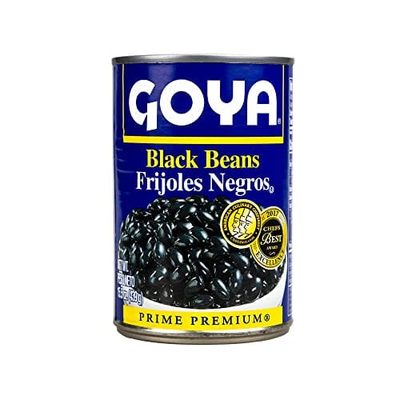
Goya Premium Black Beans, 15.5 oz
Premium black beans in a convenient 15.5 oz can, ready to heat and incorporate into any recipe calling for cooked beans.
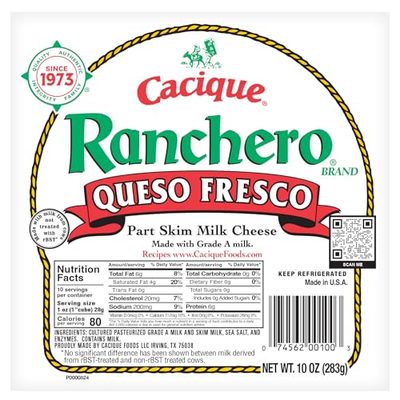
Cacique Queso Fresco Ranchero, 10 oz
A fresh crumbling queso fresco in 10 oz size, ready to sprinkle on cooked dishes or incorporate into recipes without shredding.