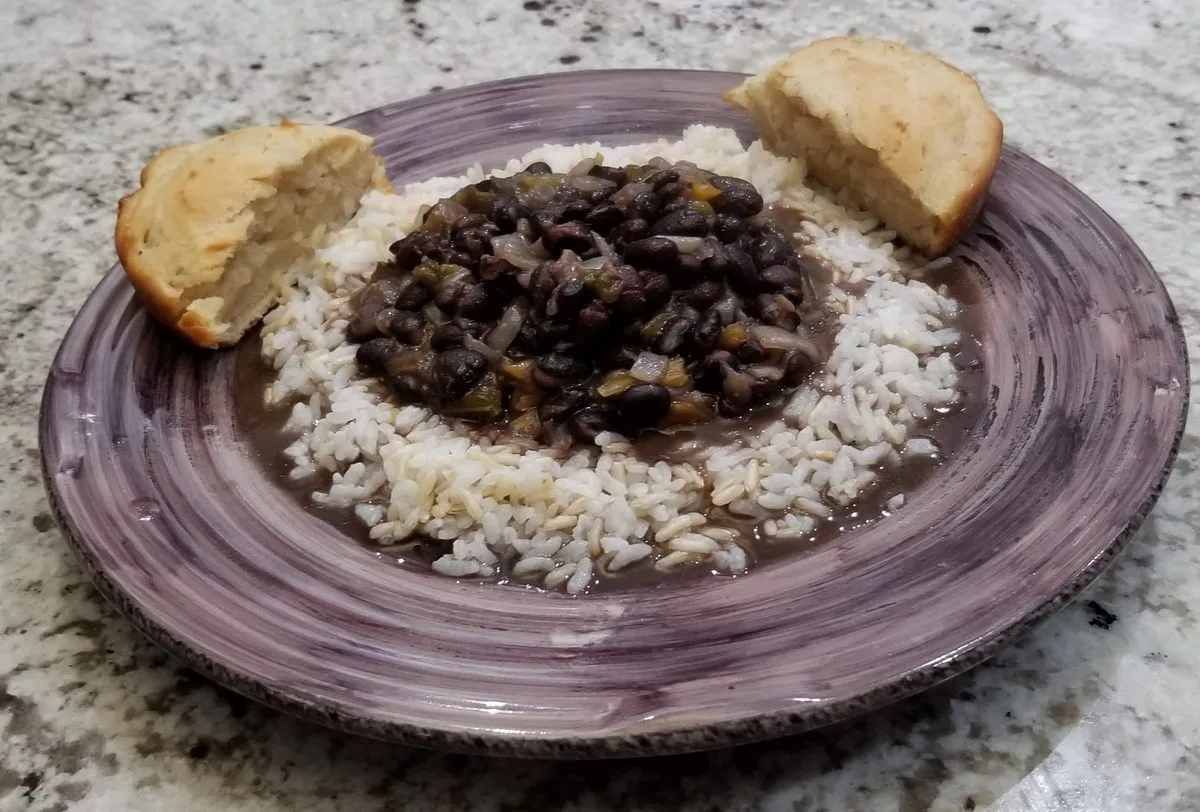
Cuban frijoles negros is a thick black bean potaje simmered with onion, green pepper, garlic, cumin, oregano and bay leaf, then finished with sugar, vinegar and dry white wine. The beans cook in their own pot and are spooned over white rice. Cook the beans and the rice together instead and the dish becomes moros y cristianos.
Frijoles Negros Is the Bean Pot, Not the Rice Dish
Frijoles negros is a pot of black beans simmered down thick and dark. Cooks spoon it beside or over white rice cooked separately in its own pot. So every cook behind this recipe makes it this way. Receta Cubana serves hers with white rice, and in her words: pueden acompañarlo con arroz blanco como acostumbramos en cuba. That means you can serve it with white rice, just as home cooks do in Cuba (source). NydiasMiamiKitchen calls the dish simply “a staple of the Cuban Cuisine” (source). The same white rice carries Cuban picadillo, browned ground beef simmered with olives, potato and white wine.

The garlic is mashed with salt into a paste before it goes into the sofrito, not chopped. Unpolished granite grips the cloves so the paste comes together instead of skidding around the bowl.
The confusion starts because Cuban kitchens also make a version where the beans and rice go into the same pot. An encyclopedia entry on Cuban cuisine states it plainly. A typical Cuban meal contains rice and black beans, “either cooked together or separately” (source). When they go in together, the dish gets a different name. Moros y cristianos differ from plain arroz con frijoles “in that the beans and rice are cooked in the same pot instead of separately” (source). Moros refers to the black beans. Cristianos refers to the white rice. So that one-pot dish is not this post.
One more correction, because Cuban cooks make it themselves. Congrí sounds like a synonym for either dish, and it isn’t. The word “is used more commonly to refer to the similar dish with red beans that is traditionally eaten on the eastern part of the island” (source). Frijoles negros is neither congrí nor moros y cristianos. In structure it sits closer to a dish already on this site. Beans cooked in the same pot as the rice is exactly what moros y cristianos does. It is exactly what this bean pot does not do.
Beans in their own pot, rice in its own: that separation is the whole point.
Where the bean itself comes from is a shorter story than the dish. The common bean is “native to the Americas” (source). Cuban cooking generally draws on a mix an encyclopedia describes as “largely based on Spanish cuisine with influence from Amerindian, African and other Caribbean cuisines” (source). That is as far back as this post goes.
Why Cuban Black Beans Finish with Sugar, Vinegar and Dry Wine
The finish is what marks this pot as Cuban black beans specifically. It goes in at the very end, not the start. The three components: two tablespoons of vinegar, a quarter cup of dry white wine, and a teaspoon of sugar. They go in during the last five minutes. NydiasMiamiKitchen names the wine outright: “the traditional flavoring is that wine and it’s very distinctive in the bean” (source). An encyclopedia independently lists vinegar among the dish’s standard seasonings (source). Receta Cubana uses the same trio, brown sugar and dry wine, in her own pot.
Get the texture wrong, though, and none of that finish saves the dish. NydiasMiamiKitchen puts it this way: “a good Cuban Bean should be should have a thick sauce” (source). She describes the finished pot as “like you see it here very very thick.” The fix is mashing some of the beans back in.
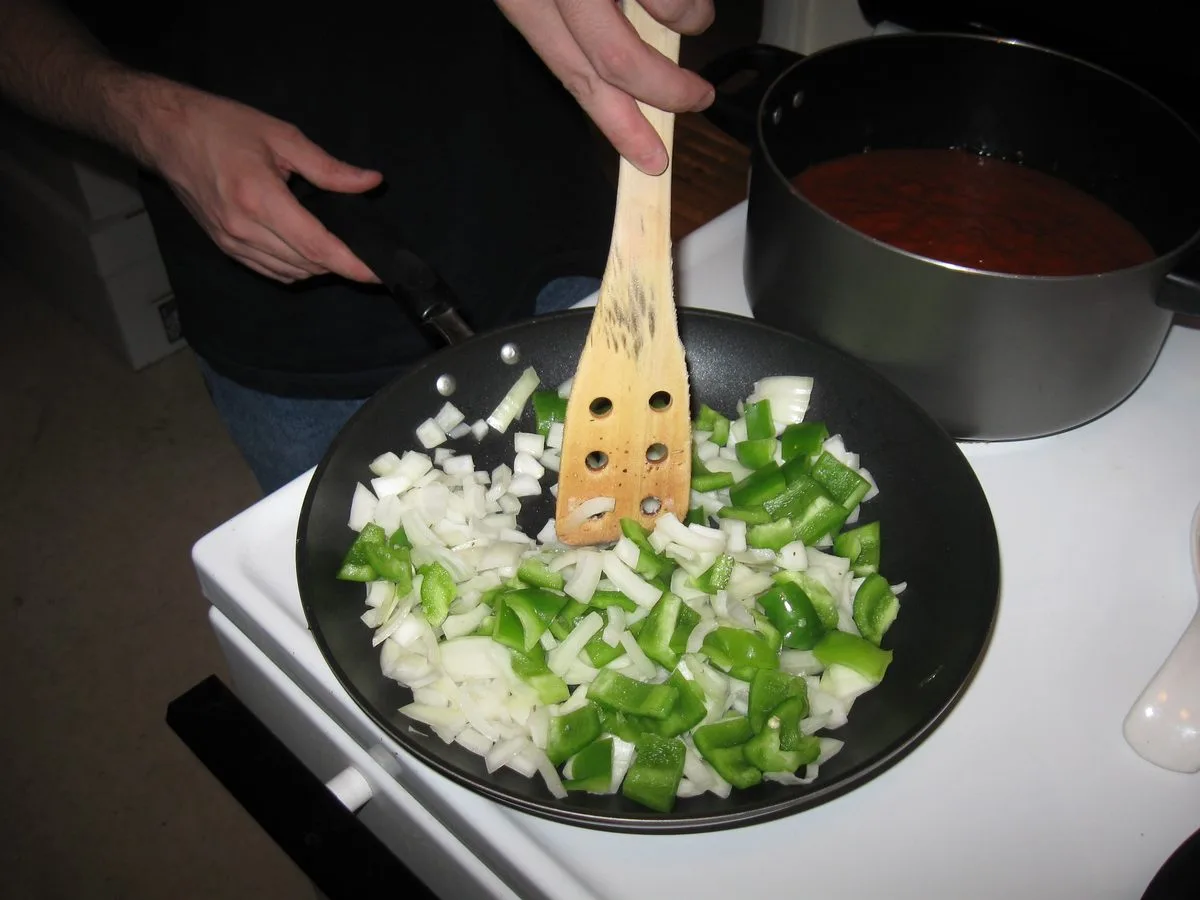
Two of the cooks behind this recipe judge the pot the same way: it is done when it holds its shape on the spoon, not before.
Receta Cubana mashes directly against the side of the pan. In her words: aplastarlos un poco esto le dará más fuerza al potaje. That means: mash them a little, it gives the potaje more strength. SamazingTravels takes a different route. Cooks lift the vegetables out of the pot and mash them in a pan with a few spoonfuls of beans. Then they return everything to the main pot. Her reasoning: “black beans they’re not like sticky you know it’s a little bit more watery.” So the mash is meant “to make it a little bit more to give it a little more substance” (source).
Cocina Con Fujita is the most opinionated of the four cooks behind this recipe. She has one rule for the spice cabinet: no single spice may take over. Nunca se pase de una especie, never overdo one spice. So the pot ends up with un conjunto de sabores: a set of flavors together, not one loud one (source). That is her rule, not a general Cuban law. Even so, it is worth following anyway.
I did not grow up cooking this pot. I grew up cooking stewed black beans the Belizean way, a pot that never sees vinegar or wine. The sugar-vinegar-wine finish here is not a variation on that pot. Instead, it is a different one, worth learning on its own terms.
Ingredients
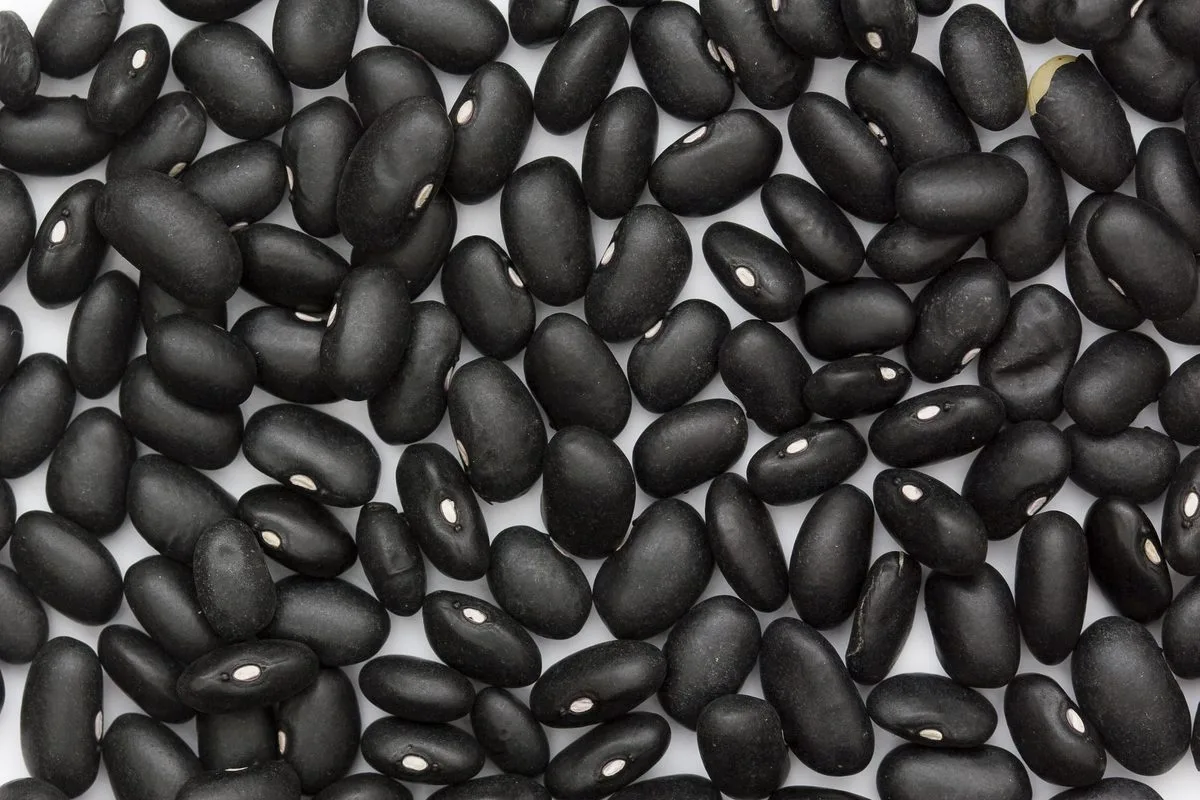
This recipe follows NydiasMiamiKitchen’s stovetop route end to end. Three of the four Cuban cooks behind this post agree on the same shape. Soak, boil, build a separate sofrito, combine, then finish. The bean quantity below splits the difference between a 14-ounce bag and a full pound. It belongs to no single cook. All four sources work from dried beans, not canned, and that stays the rule here too.
Cocina Con Fujita drops a whole, unseeded green pepper into the soaking water. In her words: ponga los remojo con un ají pimiento verde enteros sin sacarle semillas ni nada. That means: put them to soak with a whole green bell pepper, without taking out the seeds or anything. It earns a place here even though only one cook does it. The main list below includes cumin. Cocina Con Fujita alone leaves it out, and this post reports that disagreement rather than settling it. Ham hocks, bacon and tomato stay off the main list. An encyclopedia’s seasoning note for the dish generally names them. But no Cuban cook in this post’s research uses tomato, and the one who uses pork calls it optional herself.
For the beans:
- 1 pound (454 g) dried black beans
- 10 cups (2.4 L) water, for cooking, plus more for soaking
- 1 bay leaf
- 2 tablespoons (30 ml) olive oil
- 1 medium green bell pepper, left whole and unseeded (for the soak)
For the sofrito:
- 3 tablespoons (45 ml) olive oil
- 1 large yellow onion (about 300 g), finely chopped
- 1 medium green bell pepper (about 150 g), finely chopped
- 4 cloves garlic
- 1 teaspoon (2 g) ground cumin
- 1 teaspoon (1 g) dried oregano
- 2 teaspoons (12 g) fine sea salt, plus more to taste
To finish:
- 2 tablespoons (30 ml) white vinegar
- 1/4 cup (60 ml) dry white wine (vino seco)
- 1 teaspoon (4 g) granulated sugar
To serve:
- Cooked white rice, in a separate pot
Instructions
- Soak the beans overnight, or at least 4 hours. Cover them by three inches of cold water and drop in the whole green pepper, seeds and all. Receta Cubana’s window: al menos durante 4 horas o toda la noche, at least 4 hours or overnight.
- Throw the soaking water away. Do not cook in it. Receta Cubana explains why: desechamos el agua del remojo que contiene las impurezas, we discard the soaking water because it holds the impurities. Fish out the green pepper and discard it too, then rinse the beans.
- Put the beans in a heavy pot with 10 cups (2.4 L) fresh water, the bay leaf and 2 tablespoons of olive oil. Bring to a boil.
- Drop the heat to medium-low, cover, and simmer 45 to 60 minutes, until a bean crushes easily against the roof of your mouth. Top up with hot water if the beans ever go dry.
- While the beans cook, crush the garlic with the salt. NydiasMiamiKitchen works hers into a paste this way. A mortar and pestle turns four cloves and a pinch of salt into something smooth. Even so, a knife with the flat of the blade works if you have no mortar.
- Fry the sofrito: three tablespoons of olive oil, medium heat, the chopped onion and green pepper. Cook until the onion turns translucent, about 8 minutes.
- Add the garlic paste, the cumin and the oregano, and cook one minute more. Toasting the dry spices in the oil is deliberate. Receta Cubana does it because, in her words, encuentro que fijan mejor el sabor, she finds it sets the flavor better.
- Scrape the whole sofrito into the beans, cover, and simmer another 15 minutes.
- Mash about a cup of the beans against the side of the pot and stir them back in. This is the step that turns bean soup into potaje. Skipping it is the most common way this dish goes wrong. Receta Cubana explains: aplastarlos un poco esto le dará más fuerza al potaje. That means: mash them a little, it gives the potaje more strength. Even so, do it more than once if the pot still looks thin.
- Simmer uncovered until the liquid reduces to a thick, dark gravy that coats the spoon, 10 to 20 minutes. That said, it thickens further off the heat.
- Stir in the vinegar, the dry wine and the sugar, and simmer 5 minutes more. That said, these go in at the end, not earlier.
- Taste for salt and stop just short. SamazingTravels’ rule: “it’s better that the beans come out less salted than overly salted because you can always add more salt at the end.”
- Rest the pot off the heat, covered, for 10 minutes, then serve over white rice cooked in a separate pot.
Nutrition
These numbers are estimated from the ingredient list, not lab-tested, and they count the beans only. The rice you serve alongside is not included. Per serving, 8 servings from the pot:
- Calories: 285 kcal
- Fat: 9 g
- Saturated fat: 1.3 g
- Cholesterol: 0 mg
- Carbohydrates: 39 g
- Fiber: 9 g
- Sugar: 2 g
- Protein: 13 g
- Sodium: 520 mg
Storage and Make-Ahead
These beans are better on day two. Cool them, cover, and refrigerate up to 5 days. The potaje sets thick in the fridge, so loosen it with a splash of water over low heat when you reheat it.
Freeze in portions up to 3 months. Thaw overnight and reheat gently, stirring, so the beans do not scorch on the bottom of the pot.
Make-ahead here is really about the soak. Give the beans at least 4 hours, overnight if you can manage it. Which means starting the night before the day you actually want beans on the table.
Equipment
- A heavy 6- to 8-quart pot with a lid: an enamelled cast iron Dutch oven or a Cuban-style caldero. The long, low simmer is where a thin pot scorches beans.
- A skillet for the sofrito.
- A mortar and pestle for the garlic-and-salt paste, though a knife works.
- A wooden spoon sturdy enough to mash beans against the side of the pot.
- Optional: a pressure cooker or an electric multicooker. Two of the four cooks behind this recipe cook their beans this way, and it is a real route, not a shortcut. See Tips and Variations.
Tips and Variations
- The pressure cooker route. Receta Cubana cooks soaked beans under pressure for 35 minutes. Then she checks them and gives another 20 if they are not soft enough. SamazingTravels puts everything into a standalone pressure cooker at once. The load: beans, whole garlic cloves, chopped onion and pepper, bay leaves, cumin, oregano, pepper, a big pour of olive oil, sugar, vinegar and salt. She runs it 30 minutes. Give the times as each cook gives them. Do not average them into one route.
- The pull-and-mash finish. In the SamazingTravels video, the cooked onion, pepper and garlic come out of the pot first. Then cooks mash them in a pan with a few spoonfuls of beans, and return everything to the pot. Instead, it is a tidier way to build body than mashing directly in the pot.
- The one-pot version with no sofrito at all. Cocina Con Fujita skips frying a sofrito on purpose. In her words: esta receta no vamos a hacer un sofrito vamos a cocinarlo todo junto, everything goes in together. She does it, she says, para utilizar menos aceite para hacerlo más saludable: to use less oil and eat healthier. She finishes by pouring a quarter cup of raw extra-virgin olive oil over the pot, off the heat. Then she covers it and lets it sit 10 minutes.
- Culantro, if you can find it. Cocina Con Fujita treats two leaves of it as essential to her pot. Culantro is the long-leaf herb, not cilantro, and hers is the only recipe among the four that calls for it.
- Heat, hers as well. Cocina Con Fujita cuts a whole habanero into the pot near the end. It is her own variation, framed as her own, not as the standard. The other three cooks in this recipe’s research keep the dish mild.
- Pork, optional and one cook’s. Receta Cubana fries a small amount of finely chopped bacon into her sofrito and pours off half the rendered fat. The other three pots are meatless, which makes the standard version of this dish vegetarian.
- Thinner or thicker. If you want it thicker, Receta Cubana’s fix is simple: leave it uncovered on the heat a few more minutes. Guatemalan cooks make a black bean pot of their own, Guatemalan frijoles volteados. Instead of a potaje, they refry it down into a paste. It is not this dish either, but it is worth knowing.
- The canned shortcut, and why this post does not lead with it. A can of black beans will get you dinner faster. But it changes the texture this whole method is built around. If you use it, skip the soak and boil steps and start from the sofrito, and expect a thinner pot.
Frequently Asked Questions
What is the difference between frijoles negros and moros y cristianos?
Frijoles negros is beans cooked alone in their own pot and served beside or over white rice cooked separately. Moros y cristianos is beans and rice cooked together in the same pot. An encyclopedia states the boundary directly: the two are cooked “either cooked together or separately.” Cooking them together is what makes them moros y cristianos, not frijoles negros. Congrí, confusingly, more often means the red-bean version from eastern Cuba, not this black-bean dish.
How long do black beans need to soak before cooking?
At least 4 hours, and overnight is better. Receta Cubana’s own window is “at least 4 hours or overnight.” She discards the soaking water afterward because it holds the beans’ impurities. If you are using a pressure cooker instead, the Cuban cooks behind this recipe are less strict about the soak. Even so, it still helps the beans cook evenly.
Why do Cuban black beans have sugar and vinegar in them?
Sugar, vinegar and dry white wine make the finish that marks this dish as Cuban. They go in during the last five minutes. NydiasMiamiKitchen calls the wine “very distinctive in the bean,” and an encyclopedia entry lists vinegar among the dish’s standard seasonings. The finish goes in at the end so it stays bright instead of cooking away.
Can you make Cuban frijoles negros in a pressure cooker?
Yes, and two of the four Cuban cooks behind this recipe do exactly that. Receta Cubana pressure-cooks soaked beans for 35 minutes and gives them another 20 if they still need it. SamazingTravels loads beans, sofrito ingredients and the finishing seasonings into the pressure cooker together and runs it for 30 minutes. Either route replaces roughly an hour of stovetop simmering.
How do you make Cuban black beans thicker?
Mash about a cup of the cooked beans against the side of the pot and stir them back in. Then simmer uncovered until the liquid coats a spoon. Receta Cubana uses this exact move, saying it gives the potaje more strength. The pot also thickens further as it rests off the heat. So do not judge it while it is still simmering.
Are Cuban frijoles negros vegetarian?
As usually cooked here, yes. Three of the four Cuban sources behind this recipe cook their beans with no meat at all. Receta Cubana’s version is the exception: she fries a small amount of chopped bacon into her sofrito. Even so, she calls it optional rather than required.
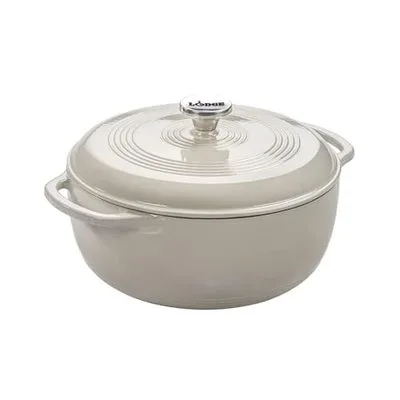
Dried black beans want a long, low simmer, and a thin pot scorches the bottom layer before the middle ever softens. Enamel over cast iron holds that heat steady and takes the vinegar and dry wine at the end without reacting.
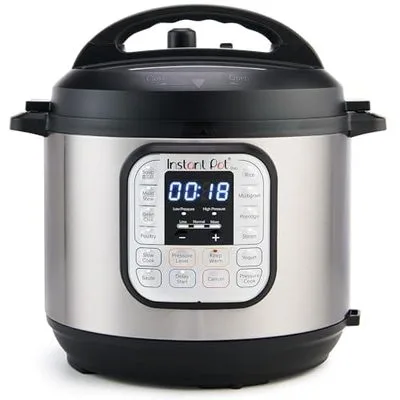
Two of the four cooks behind this recipe cook their beans under pressure, and it is a real route rather than a shortcut. Unsoaked beans come tender in about half an hour.