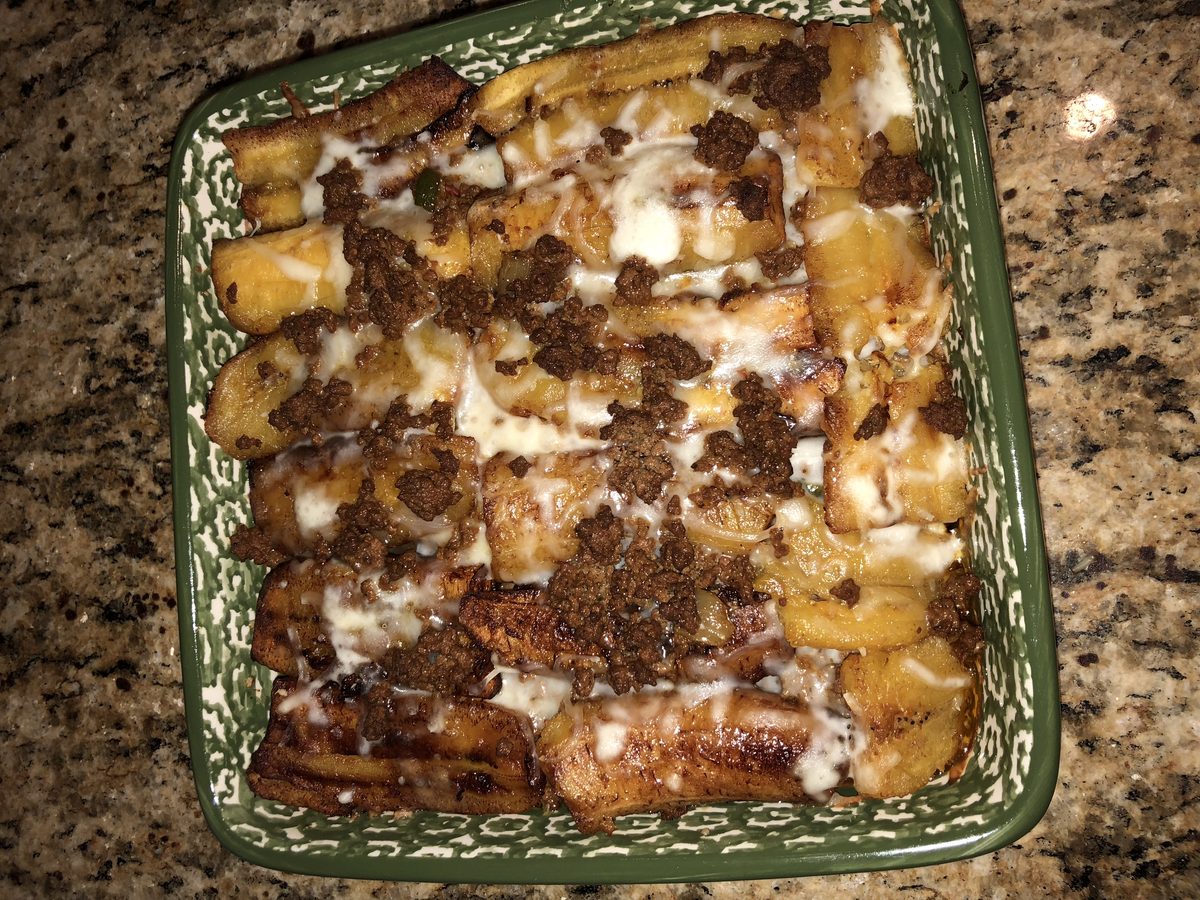
Pastelon is Puerto Rico’s plantain lasagne: sweet ripe plantains sliced lengthwise and fried, layered with a seasoned ground beef picadillo and cheese, bound with beaten egg and baked. It is considered a Puerto Rican variation of lasagne and inspired by it, with plantains standing in for the pasta (source).
The plantains should be black. Yellow ones make a decent casserole and the wrong dish.
What is pastelon?
A casserole built from typical Latin Caribbean ingredients: plantains, sofrito and seasoned minced beef (source). The plantains are peeled, cut lengthwise into strips and fried, then layered with the meat, and traditional versions get a beaten egg poured over the top layer before the cheese goes on (source).
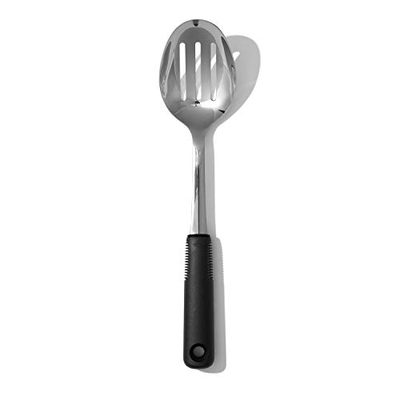
OXO Good Grips Stainless Steel Slotted Spoon
Ripe plantain slices go into the oil soft and come out fragile, and they burn in the time it takes to fish them out one by one. A wide slotted head lifts a layer at once and drains it before it collapses.
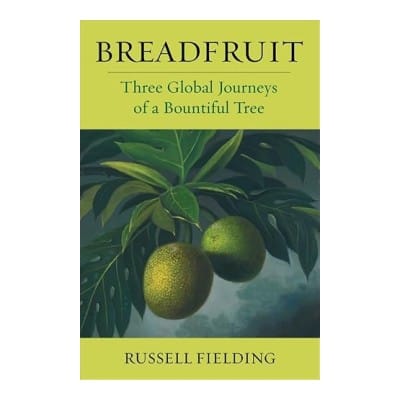
Breadfruit: Three Global Journeys (book)
If breadfruit's journey from Pacific canoe crop to Caribbean staple hooks you, this culinary history traces all three of its global voyages — the deep story behind the tree in every Belizean yard.
Traditional pastelon uses stewed ground meat, picadillo, because the sauce from the stew goes between the layers and keeps them moist. Modern versions sauté the meat instead, which comes out drier, and that is why mozzarella, ricotta, bechamel or marinara start appearing (source).
Pastelon is made in the Dominican Republic too and prepared differently there, with boiled mashed plantain rather than fried strips (source). Both are real. This is the Puerto Rican one.
Pastelon or pinon?
Puerto Rican cooks use both names for this dish and often treat them as the same thing. Some say there is a difference between the two and are vague about what it is. If someone in your family insists on one name, use theirs.
What you need for Puerto Rican pastelon
For the layers
- 6 very ripe plantains, skins mostly black
- Oil for frying
- 3 eggs, beaten
- 2 cups (about 200 g) shredded mozzarella, or cheddar, or both
For the picadillo
- 1 1/2 lb (680 g) ground beef
- 3/4 cup (180 ml) sofrito
- 1/2 cup (120 ml) tomato sauce
- 2 tbsp (30 ml) white vinegar
- 1 packet sazon con achiote
- 1 tsp (2 g) dried oregano
- 1/2 cup (85 g) pitted green olives with pimiento, chopped, plus 1 tbsp capers
- Salt and black pepper
Ripeness is the whole dish. The darker the skin the sweeter the plantain, and the contrast between sweet plantain and salty, vinegary meat is the point. Green plantains do not work here at all.
How long pastelon takes
| Cooking the picadillo | 25 to 30 minutes |
| Slicing and frying the plantains | 30 minutes |
| Layering | 10 minutes |
| Baking at 350F | 20 to 25 minutes |
| Resting before you cut it | 15 minutes, and it matters |
How to make Puerto Rican pastelon
- Stew the picadillo. Cook the sofrito in a little oil, brown the beef, then add the tomato sauce, vinegar, sazon, oregano, olives and capers. Simmer 25 to 30 minutes.
- Drain it. Spoon off the loose liquid, or the bottom layer of plantain sits in a puddle and the casserole will not hold a cut edge. Keep the drained sauce; a little goes back between the layers.
- Slice the plantains lengthwise. Peel them and cut long strips about a quarter inch thick. Ripe plantain peels tear rather than strip; a knife down the seam helps.
- Fry the strips. In shallow oil, until golden brown on both sides. They will darken fast because of the sugar, so watch them. Drain on a rack.
- Start the layers. Grease a baking dish and lay plantain strips across the bottom, overlapping slightly, like lasagne sheets.
- Meat, then cheese, then press. Spread half the picadillo, scatter cheese, and press the layer down firmly so it compacts. Loose layers slide apart on the plate.
- Repeat and finish with plantain. Another layer of strips, the rest of the meat and cheese, then a final layer of plantain on top.
- Pour the egg over. Beaten egg across the top layer, tilting the pan so it runs everywhere. The egg is what holds the whole thing together once it sets.
- Cheese on top and bake. 350F (175C) for 20 to 25 minutes, until the egg has set and the top is browned.
- Rest it 15 minutes before cutting. Straight out of the oven it collapses into a delicious mess. Fifteen minutes and it cuts into squares.
Tips and variations
- Bake the plantain strips instead of frying. Fifteen minutes in the oven gets you most of the way with far less oil. The texture is drier and the edges do not caramelise the same way.
- Cheese is optional and modern. Plenty of Puerto Rican cooks grew up with a pastelon that had no cheese in it at all, and it is a perfectly good dish without.
- Egg between the layers, not just on top. Some cooks put a spoonful at the bottom of the pan and between the middle layers so the whole casserole binds rather than just the crust.
- Season the cheese. Mixing chopped parsley, garlic powder and onion powder into the shredded cheese before layering is a small step that changes the top a lot.
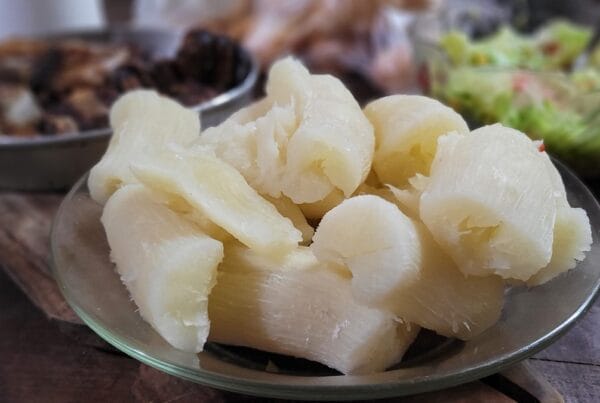
- Other starches work. Plantain can be replaced with boiled mashed potato, batata, breadfruit, cassava, apio, taro, name or yautia (source). Sweetness goes, structure stays.
What to serve with it
It is rich and sweet and it wants something sharp beside it. Guineitos en escabeche does that job exactly, and a plain green salad does it adequately. A scoop of white rice is traditional enough, though the pastelon is already carrying the starch.
The picadillo is the same seasoning family that fills alcapurrias, so a batch made for one can stretch to the other.
Nutrition
Estimated, for one of 8 squares, based on the amounts above and standard ingredient labels. Frying rather than baking the plantains raises the fat figure.
| Calories | 480 kcal |
| Protein | 24 g |
| Fat | 24 g |
| Carbohydrates | 42 g |
| Sugar | 18 g |
| Sodium | 720 mg |
Storing pastelon
Three or four days covered in the refrigerator, and it slices better cold than hot. Reheat squares in a moderate oven rather than a microwave, which turns the plantain rubbery.
It freezes reasonably well, baked and cut into portions, for about two months. Thaw in the refrigerator overnight and reheat covered so the top does not dry out.
Photograph CC BY-SA 4.0, via Wikimedia Commons.
Equipment you will want
- A 9 by 13 inch baking dish.
- A wide skillet for frying the strips.
- A slotted spoon for draining the picadillo.
- A cooling rack, so the fried plantains do not steam soft.
Pastelon questions, answered
Is pastelon the same as pinon?
Puerto Rican cooks use both names for the plantain-and-picadillo casserole, and most treat them as the same dish. Some say a distinction exists without specifying it. Nothing in the sources settles it.
How ripe should the plantains be?
Mostly black. The sweetness is the point of the dish, and yellow plantains give you a mild casserole rather than the sweet and savoury contrast pastelon is built on.
Why did my pastelon fall apart?
Either the meat was too wet or you cut it too soon. Drain the picadillo before layering, press each layer down as you build, and let the baked casserole rest 15 minutes before a knife goes near it.
Do I have to use egg?
In the traditional version, some cooks pour a beaten egg over the top layer before the cheese goes on (source), and it is what sets the casserole into something sliceable. Without it you get layers that slide.
Is cheese traditional in pastelon?
Cheese features heavily in modern versions, partly because sautéed rather than stewed meat comes out drier and the cheese compensates. Cooks who grew up without it in the dish are not making it wrong.
What is the difference from Dominican pastelon?
The Dominican version is made with boiled mashed ripe plantain layered with picadillo and cheddar, rather than the fried lengthwise strips used in Puerto Rico (source).
Can I make pastelon without frying?
You can bake the plantain strips for about 15 minutes instead. It uses much less oil, and the strips come out drier without the caramelised edges frying gives.
Can pastelon be made ahead?
Yes. Assemble it a day ahead and bake it when you need it, or bake it fully and reheat squares in a moderate oven. It slices more cleanly on the second day than the first.
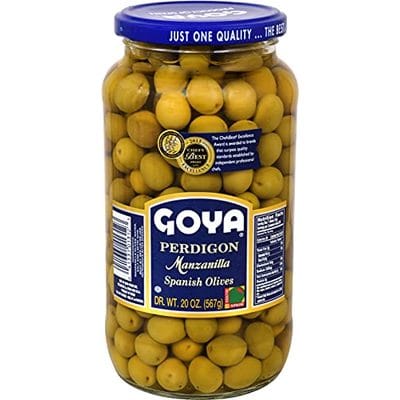
Goya Perdigon Manzanilla Spanish Olives
Queso relleno picadillo needs olives, capers, and raisins working against the pork. Manzanillas are the small, firm grade that hold their shape through the stuffing and the steam.
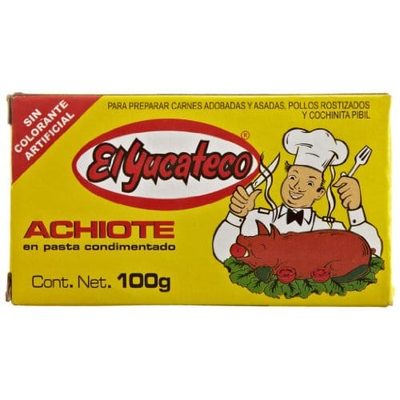
Cochinita pibil, poc chuc, and escabeche all start with red recado. A prepared achiote paste dissolves into sour orange in minutes instead of the hour it takes to grind annatto, oregano, and clove from seed.
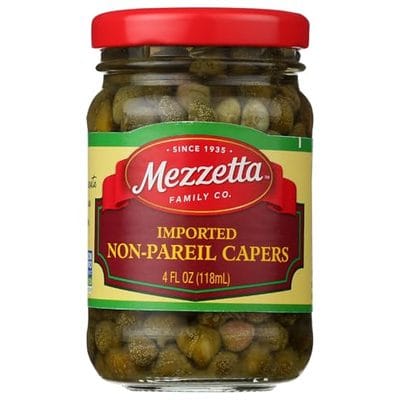
The smallest caper grade, and the one queso relleno picadillo calls for. Bigger capers turn to mush in the filling; non-pareils keep their brine-sharp bite against the raisins.