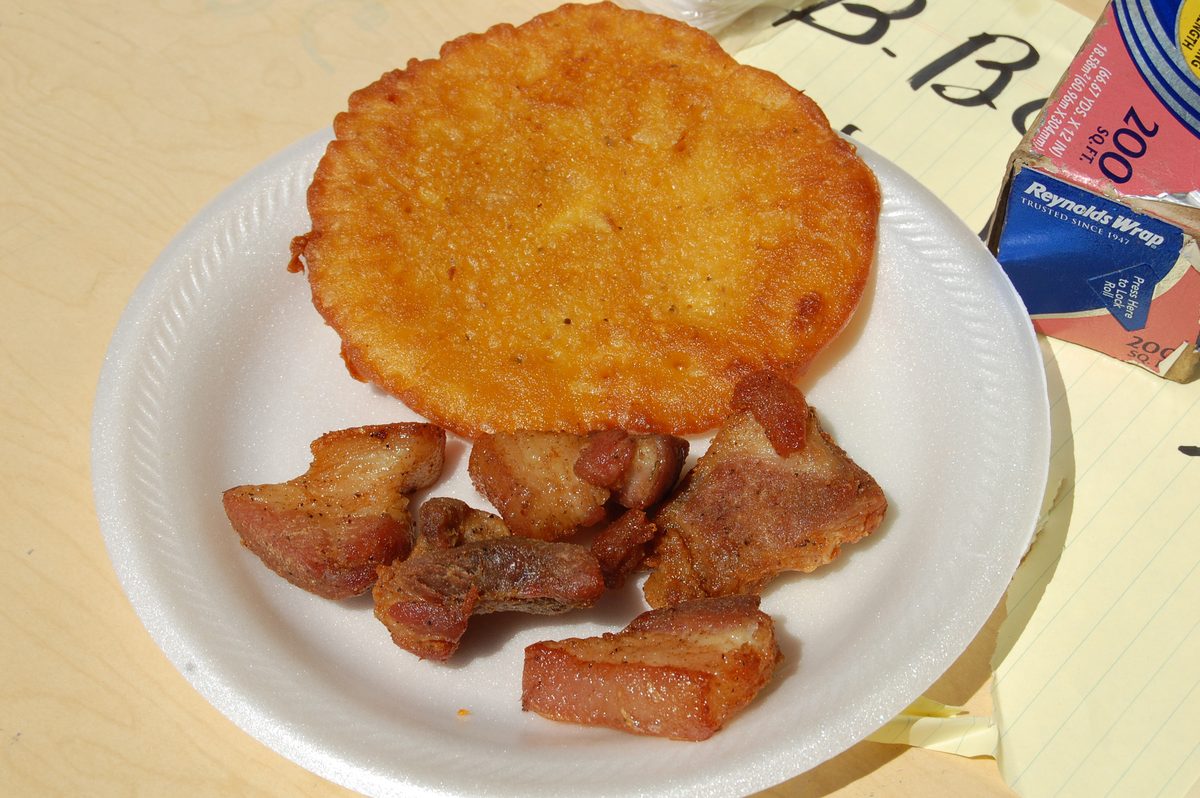
A bacalaito is a salt cod fritter, and it is the fritter Puerto Ricans eat more than any other. Thin, ragged, crisp at the edges and dense in the middle, fried by the ladleful and eaten at the beach, at cuchifritos counters and at festivals (source). It should come out looking like a pancake nobody was careful about.
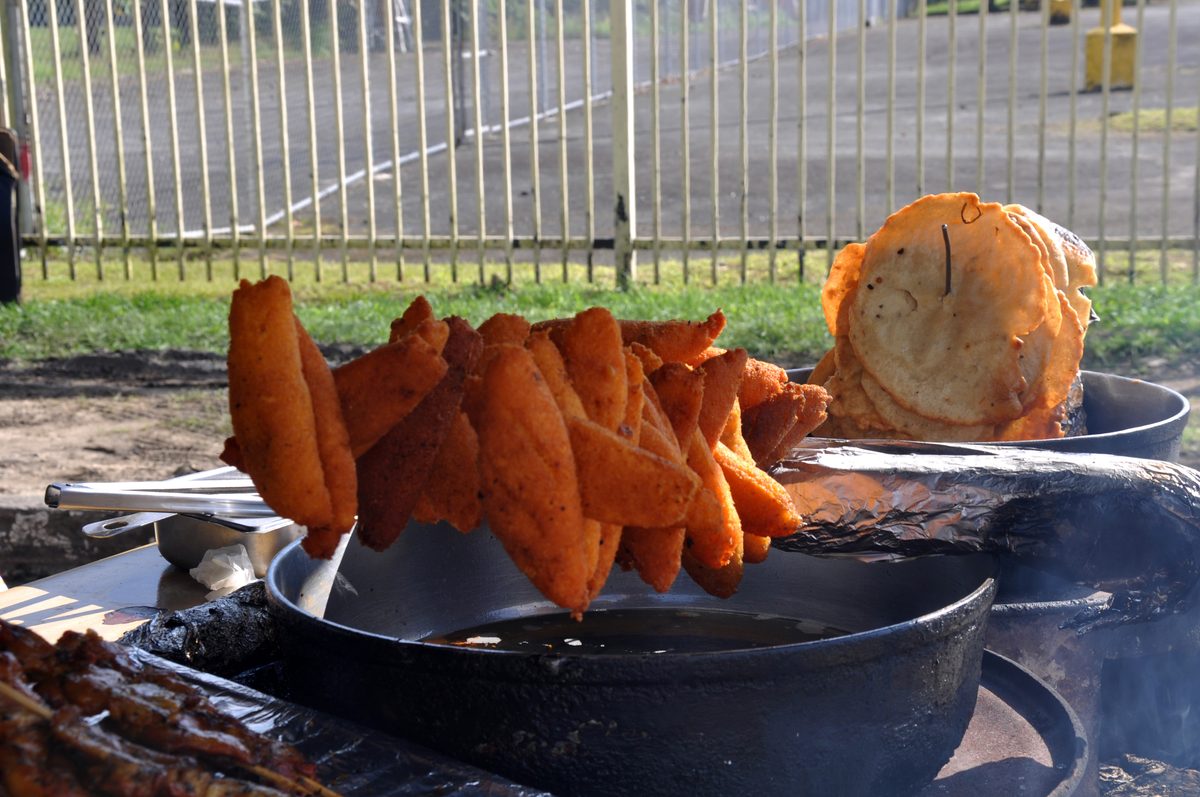
Festival bacalaitos have no shape. They are thrown in the oil. That is the tradition.
What is a bacalaito?
Salted cod, desalted and shredded, worked into a batter of all-purpose flour, baking powder, sazon, sofrito and oregano brujo with water, then deep fried. Crisp on the outside, dense and chewy inside (source).
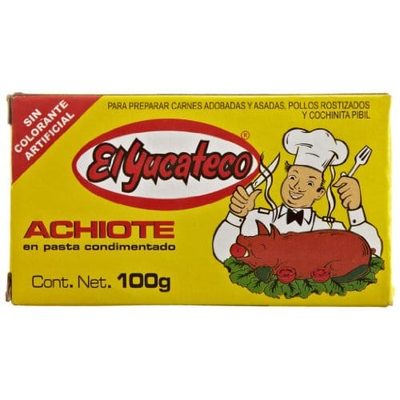
Cochinita pibil, poc chuc, and escabeche all start with red recado. A prepared achiote paste dissolves into sour orange in minutes instead of the hour it takes to grind annatto, oregano, and clove from seed.
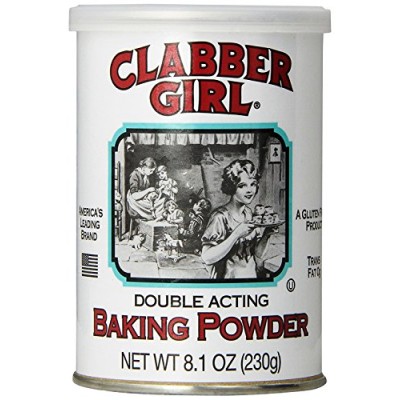
Clabber Girl Double Acting Baking Powder, 8.1 oz
Double-acting polvo para hornear — the lift behind rosquillas and quick breads.
There is no single version. They are served all over the island with many different versions (source), and the arguments are about batter thickness, how big the flakes of fish should be, and whether sofrito belongs in it at all.
Festival style versus home style
The thin, wide, lacy bacalaito you buy at a feria is thin on purpose. Cooks add extra water to stretch the batter and get more fritters out of a batch, and the result spreads across the oil and crisps almost all the way through. That is the version most people picture.
A home batter is often closer to pancake thickness, which gives you a smaller, softer fritter with more fish in each bite. Neither is wrong. Decide which one you want before you add the last cup of water, because that is the only decision that matters here.
What you need for Puerto Rican bacalaitos
- 1 lb (450 g) boneless salt cod
- 2 cups (250 g) all-purpose flour
- 1 tsp (4 g) baking powder
- 1 packet sazon con achiote
- 1 tsp (5 g) adobo seasoning
- 1 tsp (2 g) dried oregano, or fresh oregano brujo if you can get it
- 2 tbsp (30 ml) sofrito, optional
- 2 to 2 1/2 cups (480 to 600 ml) cold water
- Oil for frying, about 1/2 inch deep
Buy the cheap salt cod. This is the dish it exists for, and the expensive loin pieces are wasted once the fish is shredded into batter. No salt goes into the recipe anywhere: the cod brings all of it.
How long bacalaitos take
| Desalting, boiled method | 30 minutes |
| Desalting, overnight soak | 8 to 12 hours |
| Mixing the batter | 10 minutes |
| Frying a dozen | 25 minutes |
How to make Puerto Rican bacalaitos
- Take the salt out. Soak the cod in water overnight, changing the water a few times, or boil it, usually three times in fresh water. Boiling for 10 to 15 minutes is the fast route and it cooks the fish at the same time.
- Taste it. A small piece should be pleasantly salty, not aggressive. If it still bites, one more change of water.
- Shred the fish. Drain it well and pull it apart with a fork or your fingers. Small shreds for the thin festival style, larger flakes if you want to find the fish.
- Mix the dry first. Flour, baking powder, sazon, adobo and oregano in a bowl, whisked together before any liquid goes in.
- Add cold water gradually. Pour it in a little at a time, whisking, until you have a smooth batter with no lumps. Cold water keeps the batter from going gluey.
- Decide your thickness. For festival-thin, keep going until the batter pours off the ladle in a stream. For home style, stop at pancake batter.
- Fold in the cod and the sofrito. Gently, so the flakes stay whole if you made them large.
- Fry shallow, on medium high. Half an inch of oil is enough. Less depth means the batter spreads sideways instead of puffing, which is what you want.
- Throw the batter, do not place it. A quick flick of the ladle spreads it into a ragged disc. Wait about 30 seconds before laying the next one down or they weld together.
- Fry until toasted and golden. Two or three minutes a side. Drain on a rack and eat them hot.
Tips and variations
- Sofrito or dry spices, not both at full strength. Some cooks build the whole flavor on sazon and adobo and leave sofrito out. If you use sofrito, ease off the adobo or it turns muddy.
- Oregano brujo if you can find it. The thick-leafed Caribbean oregano is the traditional herb here and it is much stronger than the dried Mediterranean kind. Use half as much.
- Ice cold water is a real technique. It keeps the batter slack and helps the edges crisp rather than toughen.
- Do not crowd the pan. Two at a time in a normal skillet. They spread more than you expect and a crowded pan drops the oil temperature.
- Batter holds for a day. Cover and refrigerate, then whisk and check the thickness before frying, because the flour keeps drinking water.
What to eat them with
Bacalaitos are a snack that gets eaten with an entire meal (source), which is a polite way of saying nobody stops at one. At a kiosk they come out of the same fryer as alcapurrias, sorullitos and rellenos de papa, and go in the same paper bag.
At a table they sit next to arroz con gandules, or ahead of pernil while the roast finishes. Salt cod fritters turn up across the Caribbean, wherever salted dried fish arrived as cheap imported protein and stayed in the cooking.
Nutrition
Estimated, for one fritter of 12, based on the amounts above. Salt cod carries most of the sodium and the number varies with how thoroughly you desalt it.
| Calories | 180 kcal |
| Protein | 10 g |
| Fat | 7 g |
| Carbohydrates | 18 g |
| Sodium | 620 mg |
Storing bacalaitos
They are best in the first ten minutes and acceptable for a day. Refrigerate what is left and reheat in a hot oven or an air fryer to bring the edges back. A microwave makes them limp.
Do not freeze fried ones. Freeze nothing here, in fact. The batter is quick enough to make fresh, and desalted cod keeps three days in the refrigerator if you want to split the work.
Bacalaito with fried pork by Stuart Spivack, CC BY-SA 2.0. Kiosk fryer by trawin, CC BY-SA 2.0. Both via Wikimedia Commons.
Equipment you will want
- A wide skillet. Depth is not the point here, surface is.
- A ladle, and the nerve to throw with it.
- A spider or a wide slotted spatula.
- A cooling rack.
Bacalaito questions, answered
Do I have to soak the cod overnight?
No. Soaking overnight in several changes of water is one route; boiling the cod, usually three times in fresh water, is the other (source). Boiling is faster and cooks the fish at the same time.
Why are mine thick and doughy instead of crisp?
The batter was too thick or the oil too deep. Festival-style bacalaitos are thin because cooks add extra water to stretch the batter, and a shallow pan makes them spread sideways rather than puff.
What shape should a bacalaito be?
None in particular. The batter is thrown into the oil and spreads however it lands, and the irregular ragged edge is the mark of the real thing rather than a mistake.
Do I add salt to the batter?
No. The cod supplies all of it, and the seasoning packets add more. Taste a piece of the desalted fish before you mix, and if it is still sharp, rinse it again rather than compensating in the batter.
Can I use fresh cod instead of salt cod?
You can make a fritter with it, but it will not be a bacalaito. The cured, dried fish has a firmer texture and a depth that fresh cod does not, and the dish is built around what salting does to the flesh.
Should the batter have sofrito in it?
Cooks split on this. Sofrito is listed among the most common batter ingredients on the island, and plenty of cooks skip it and build the flavor on sazon and adobo alone. Both are ordinary practice.
Why do mine stick together in the pan?
They were laid down too close in time. Give about 30 seconds between fritters so the first one sets its edge before the next one spreads into it.
Where are bacalaitos eaten?
At the beach, at cuchifritos counters and at festivals (source). They are the fritter Puerto Rican cooks describe as the one eaten most, and the festival version is its own recognisable style.