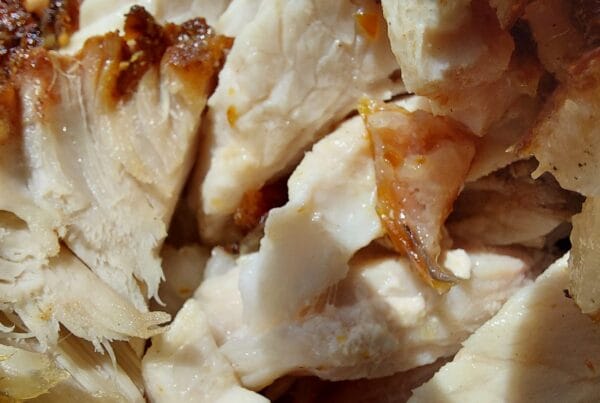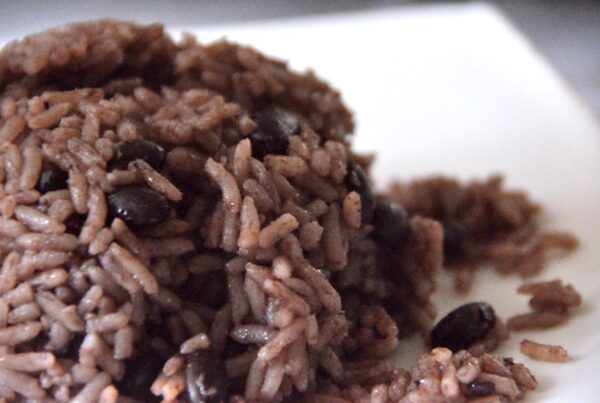
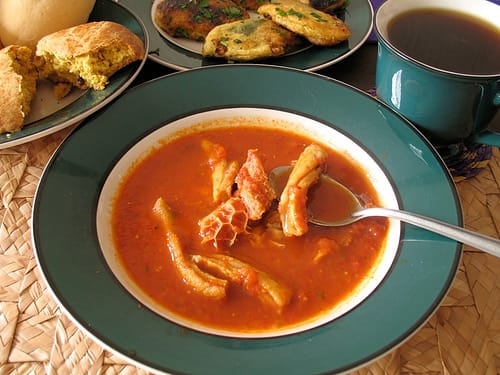
Guatemalan revolcado is a hearty stew of simmered pork head and offal napped in a thick red recado of charred tomato, miltomate, and toasted chiles guaque, pasa, and zambo, colored with achiote and thickened with blended liver and corn tortilla. It is a weekend and fiesta dish, served with white rice and hot tortillas.
Ingredients
This makes a large pot, enough for about 8 people. In Guatemala the butcher halves the head for you; ask yours to do the same, and to score the skin. If the butcher includes the brain, cook it with the heart and liver — it dissolves into the broth and adds body.
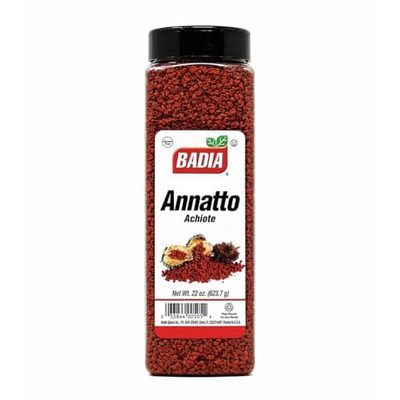
Whole achiote seeds you grind fresh for homemade seasoning pastes; the vibrant red color and earthy flavor come through best when prepared this way.
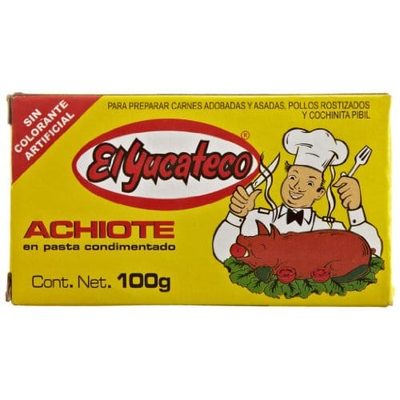
Cochinita pibil, poc chuc, and escabeche all start with red recado. A prepared achiote paste dissolves into sour orange in minutes instead of the hour it takes to grind annatto, oregano, and clove from seed.
For the meat:
- 1 pig’s head (cabeza de cerdo), halved by the butcher — snout, ears, cheeks, and tongue (lengua) attached; brain (sesos) optional but traditional
- 1 lb pork liver (hígado)
- 4 pork hearts (corazón), or about 1 lb
- Salt, for the simmering water
For the red recado:
- 1½ lb ripe tomatoes
- 10 oz miltomate (tomatillo), husks removed
- 3 chiles guaque, stemmed and seeded
- 2 chiles pasa, stemmed and seeded
- 1 chile zambo, stemmed and seeded
- 1 large white onion
- 7 garlic cloves
- 1 large red bell pepper (chile pimiento)
- 1 tablespoon achiote (annatto seed)
- 1 teaspoon cumin (comino), whole or ground
- ½ teaspoon ground coriander seed (cilantro en polvo)
- 1 bay leaf (laurel)
- 3 corn tortillas
- 5 tablespoons corn oil
- Salt and pepper to taste
To serve:
- White rice
- Fresh corn tortillas
- Lime wedges
Instructions
- Rinse the head pieces and put them in your largest pot. Cover with water, add a good handful of salt, and bring to a boil.
- Lower to a steady simmer, cover, and cook about 2 hours and 30 minutes, until the meat pulls cleanly from the bone.
- In the last 30 minutes, add the liver and hearts so they cook through without turning rubbery. Lift the liver out when it is just firm — a toothpick should meet slight resistance at the center, not squeeze out juice.
- Set half the liver aside for the sauce. The other half, and the hearts, you will chop later for the stew. This blended liver is what thickens the recado and gives it depth — do not skip it.
- Strain and keep the broth. You need it for both the sauce and the final simmer.
- Heat a dry comal or skillet. Toast the chiles guaque, pasa, and zambo a few seconds per side until they smell nutty. Do not let them scorch, or the sauce turns bitter. Soak them in hot broth until soft, about 20 minutes.
- On the same comal, char the tomatoes, miltomate, onion, garlic, and red bell pepper until blistered and soft, turning as needed.
- Toast the achiote and cumin for about 30 seconds, just until fragrant. Soak the corn tortillas in warm broth until they fall apart.
- Blend the charred vegetables, soaked chiles, achiote, cumin, ground coriander, soaked tortillas, and the reserved half of the cooked liver with enough broth to move the blades. Blend to a smooth red recado.
- Pass the recado through a strainer for the silky texture Guatemalan cooks expect. This step is traditional and worth the few minutes.
- Pull the head meat from the bones and chop it. Chop the reserved liver and the hearts.
- Heat the corn oil in a clean pot. Pour in the strained recado and fry it, stirring, until it darkens and thickens, about 8 to 10 minutes. This step — frying the recado in oil before adding the meat — concentrates the color and knocks back the raw chile edge.
- Add all the chopped meats and the bay leaf. Pour in enough broth to nap everything in sauce, not drown it.
- Simmer 20 to 30 minutes, until the sauce coats the meat and the flavors settle. Taste and adjust salt and pepper.
- If you can, let it rest a day in the refrigerator. The achiote blooms and the flavor deepens overnight.
What Is Revolcado, and Why the Pig’s Head Is the Point
Revolcado is honest nose-to-tail cooking, and the head is not a garnish here. It is the dish. Snout, ear, cheek, tongue, liver, and heart all go into the pot, and the cook treats each one as something worth eating rather than something to hide. If you have only met pork as a chop or a roast, this is a different relationship with the animal, and a more complete one.
The name tells you what happens to the meat. Revolcar means to roll or toss something about, and in this stew the chopped meat is tossed and coated in the red recado until every piece wears the sauce. Guatemalans often call it revolcado de cabeza, head revolcado, to be precise about the cut.
Revolcar means to roll or toss something about, and in this stew the chopped meat is tossed and coated in the red recado until every piece wears the sauce.
Revolcado is colonial-era ladino food in the fullest sense: Spanish colonists brought pig husbandry and the practice of cooking the whole head, and mestizo cooks folded that ingredient into a recado tradition already deep in tomato, miltomate, sweet pepper, and achiote. The dish is documented to La Antigua Guatemala, the former colonial capital, and it spread from there to Guatemala City’s markets and comedores. This is how most Guatemalan cooking that involves pork came to be: an indigenous sauce architecture absorbing a European animal.
It is Ladino Guatemalan food, mestizo in the fullest sense: a Spanish ingredient cooked through an indigenous sauce.
You do not see revolcado on a Tuesday. It is a weekend and fiesta dish across Guatemala: made for Sunday lunch, patron-saint fairs, Holy Week, All Saints’ Day, and the kind of family gathering where people have time to sit and eat slowly. It takes most of an afternoon, and it earns its place at that table.
In the markets of Guatemala City and Antigua, revolcado is a morning staple: vendors sell it by the plate alongside black beans and tortillas from early in the day, a serious meal for serious appetites. At home, it is typically a weekend project — the kind of dish that fills the house with the smell of toasting chiles and charring tomatoes for hours before anyone sits down.
The Signature Move: Blended Liver as Thickener
Most stews thicken with seeds, corn masa, or time. Revolcado thickens with liver. Half the pork liver gets blended directly into the recado — not as a detectable flavor (the chiles and achiote dominate) but as a binding agent that gives the sauce a deep, velvety body you cannot get any other way. Guatemalan cooks call this step non-negotiable. Omit the liver from the blend and you have a red chile stew; include it and you have revolcado.
The rest of the liver is chopped and folded in with the head meat and hearts, where it provides a contrasting texture: firm, slightly mineral, unmistakably organ meat. If you find that too confrontational, you can reduce the amount — but the half-liver-in-the-sauce step is the dish’s defining technique and should not be skipped.
Revolcado vs Chanfaina, and a Leaner Way In
People mix up revolcado and chanfaina, and the confusion is fair because they share the same recado and the same method. The difference is the cut. Revolcado is built on the pig’s head, with liver and heart added. Chanfaina uses no head at all: it is offal only, typically tongue, kidney, heart, and liver, in the same red sauce. In some kitchens the names get used loosely, but that is the line serious Guatemalan cooks draw.
If the head is a step too far for your kitchen, there is a leaner entry that still tastes like revolcado. Use chunks of pork shoulder, and keep a little liver in the blend. The liver is what gives the sauce its body, so it does more than add flavor. You lose the gelatin and richness the head contributes, but the recado stays intact, and the recado is the soul of the dish.
Revolcado keeps and even improves. It holds three to four days in the refrigerator and freezes well, so it is worth making the full pot. Reheat it gently with a splash of broth to loosen the sauce.
Serve it the Guatemalan way: white rice to catch the sauce, fresh corn tortillas off the comal, and a wedge of lime to cut the richness. Some cooks add avocado and a little fresh cheese on the side. Refried black beans round out the plate for a full Sunday meal.
Frequently Asked Questions
What is revolcado?
Revolcado is a traditional Guatemalan stew of pork head and offal simmered until tender, then chopped and coated in a thick red recado of charred tomato, miltomate, and toasted chiles colored with achiote. Half the pork liver is blended into the sauce as a thickener, giving it a velvety body. Revolcado is a weekend and special-occasion dish across Guatemala, served with white rice and fresh corn tortillas.
What is the difference between revolcado and chanfaina?
The difference is the cut of meat, not the sauce. Revolcado is built on the pig’s head, with liver and heart added. Chanfaina uses no head: it is made from offal only, typically tongue, kidney, heart, and liver. Both dishes use the same red recado and the same cooking method, which is why they are often confused.
What cuts of pork are used for revolcado?
Revolcado uses the pig’s head, including the snout, ears, cheeks, and tongue, plus pork liver and pork heart. Half the liver is blended into the sauce as a thickener; the rest is chopped into the stew. The brain is traditional when included by the butcher and adds body to the broth. Cooks who prefer leaner meat can substitute pork shoulder while keeping some liver for the sauce.
How do you make Guatemalan revolcado red?
The red color comes from achiote (annatto seed), toasted and blended into the recado along with charred ripe tomatoes and dried chiles guaque, pasa, and zambo. Achiote gives the sauce its deep brick-red color and a faintly earthy flavor. Frying the blended recado in oil for 8 to 10 minutes before adding the meat darkens it further and concentrates the flavor.
What do you serve with revolcado?
Revolcado is served hot with white rice to absorb the sauce and fresh corn tortillas straight off the comal. A wedge of lime cuts the richness. Many Guatemalan cooks also add avocado and a little fresh cheese on the side. Refried black beans round out the plate for a full Sunday meal.
Is revolcado the same as a Maya dish?
No. Revolcado is a ladino mestizo dish, not a Maya one. Pork and pig husbandry came to Guatemala with Spanish colonization; pre-Hispanic Maya cooking had no pigs. What is Maya in origin is the recado architecture: the use of tomato, miltomate, achiote, and toasted chiles as the sauce base. Revolcado is what happens when a colonial European ingredient — the pig’s head — meets an indigenous sauce tradition. The result is distinctly Guatemalan but not ceremonially Maya.
More Guatemalan Recipes
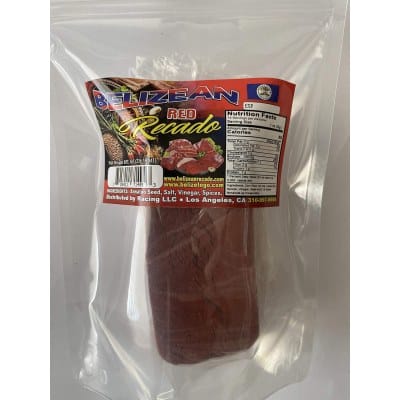
The achiote-based paste behind stew chicken, pibil, and escabeche. Sold ready-made so you skip toasting and grinding annatto, cumin, oregano, and clove from seed.
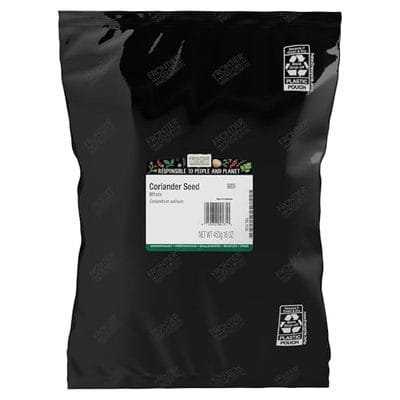
Frontier Co-op Whole Coriander Seed, 16 oz Bulk Bag
Recado blanco and dry rubs need whole coriander toasted and ground fresh. Pre-ground loses the citrus note within weeks; whole seed holds for a year.
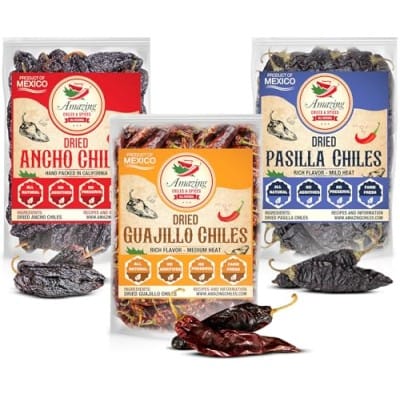
Dried Chile Peppers Variety Pack: Ancho, Guajillo, Pasilla (12 oz)
Guajillo (guaque) and pasilla (pasa) in one pack — both dried chiles kak'ik recado needs.