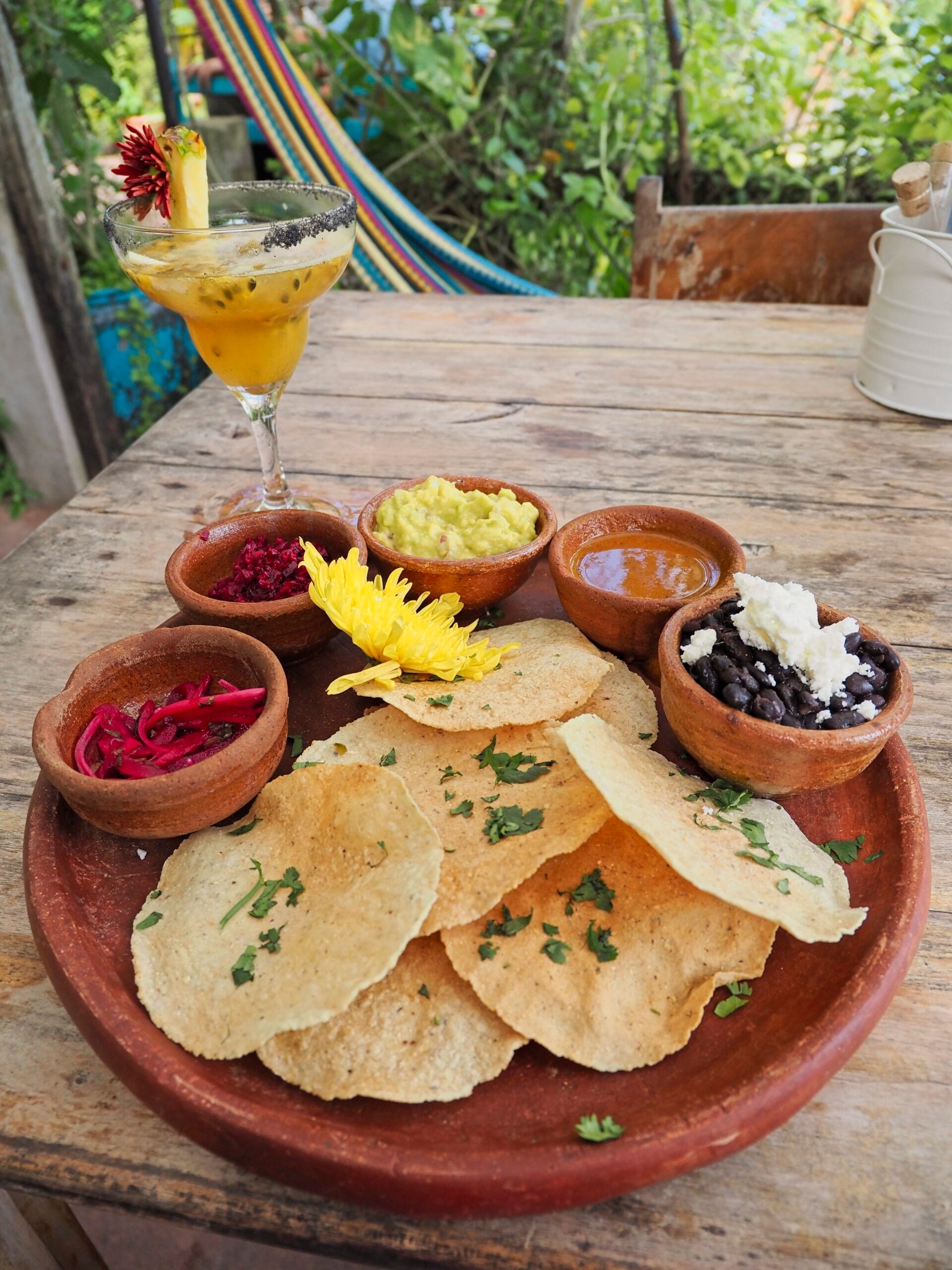
Tostadas guatemaltecas are crisp fried corn tortillas, each spread with exactly one topping: frijol (refried black beans), guacamol, or salsa de tomate. All three are finished with thin onion rounds, chopped parsley, and grated queso seco. The custom is to serve them as a set of three, one of each spread, so that each tortilla shows off a single thing at its best. They appear at home as a light appetizer, at family gatherings, and at Guatemalan ferias (patron-saint festivals) sold from the same stands that serve atol.
Ingredients
For the tostada base:
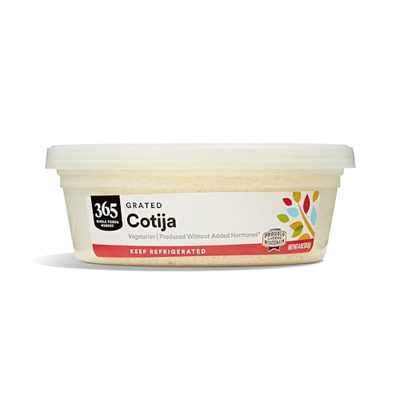
365 by Whole Foods Market Cotija Cheese, 4 OZ
The dry, salty crumbling cheese these dishes finish with, standing in for Central American queso duro.
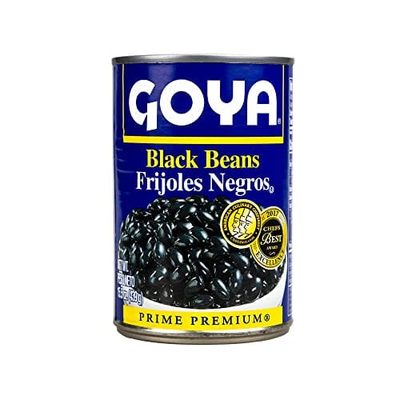
Goya Premium Black Beans, 15.5 oz
Premium black beans in a convenient 15.5 oz can, ready to heat and incorporate into any recipe calling for cooked beans.
- 12 thin corn tortillas (or 12 packaged tostada shells)
- Vegetable oil for frying
Frijol (refried black beans):
- 2 cups cooked black beans (frijoles volteados)
- 3 tbsp finely chopped white onion
- 3 tbsp vegetable oil
- Salt to taste
- Splash of bean broth or water to loosen
Guacamol:
- 2 ripe avocados
- 1/3 white onion, finely chopped
- 2–3 tbsp lime juice
- 1/2 tsp dried oregano
- Salt to taste
Salsa de tomate:
- 4 medium tomatoes
- 1/4 white onion
- 1 garlic clove
- 1/2 sweet (bell) pepper
- Salt to taste
To finish every tostada:
- 1 small red or white onion, sliced into thin rounds
- 1 small bunch parsley, finely chopped
- 1 cup grated queso seco (dry aged cheese; Cotija or any firm grating cheese works outside Central America)
Instructions
- Pour enough vegetable oil into a wide pan to reach about 1 cm depth. Heat over medium-high until a small piece of tortilla sizzles immediately. Add the tortillas one at a time and fry until crisp and golden, about 1–2 minutes per side. Drain on paper towels. Work in batches so the oil stays hot.
- Warm 3 tbsp oil in a saucepan over medium heat. Add the chopped onion and cook, stirring, until soft but not browned, about 3 minutes. Add the cooked black beans and mash them as they heat, stirring steadily until you have a thick, spreadable paste. Add a splash of bean broth or water if the paste tightens up too much. Season with salt.
- Halve and pit the avocados and scoop the flesh into a bowl. Mash with a fork to a thick, smooth puree (not chunky). Mix in the chopped onion, lime juice, oregano, and salt. Taste and adjust the lime.
- Combine the tomatoes, onion, garlic, and bell pepper in a small saucepan with just enough water to cover the bottom. Simmer over medium heat until everything is soft, about 5–6 minutes. Transfer to a blender and blend smooth. Return the sauce to the pan and cook over medium heat, stirring often, until it thickens to a paste that holds its shape on the back of a spoon. This step matters: a thin sauce will soften the crisp shell within minutes.
- Slice the onion into paper-thin rounds. Chop the parsley finely. Grate the queso seco.
- Spread one topping on each crisp tostada. The rule here is one spread per shell. Use frijol on some, guacamol on others, salsa de tomate on the rest. Never layer all three on a single tostada.
- Scatter a few onion rounds over the spread, pinch a little parsley on top, and add a generous dusting of grated queso seco.
- Arrange a few of each kind on the platter and bring them to the table right away, while the shells are still crisp.
What makes Guatemalan tostadas different from garnachas and enchiladas?
Three antojitos share the same base: a thin, crisp fried corn tortilla. Yet each one carries a different identity. The tostada carries one spread plus the universal dry finish of onion, parsley, and queso seco. The garnacha is a smaller, thicker coin of masa, fried and topped with a single unified stack: seasoned ground beef, curtido (quick-cooked shredded cabbage and carrot softened in vinegar), simple tomato salsa, and crumbled queso seco. It reads as a heartier, more filling fair snack. The enchilada guatemalteca, also called jardinera, is the loaded one: a full-size crisp tostada topped with a lettuce leaf, a generous spoonful of escabeche (long-marinated pickled carrots, beets, green beans, chayote, and cauliflower in vinegar brine, the beets tinting everything pink), seasoned ground beef, tomato sauce, a slice of hard-boiled egg, and queso seco with parsley. The egg slice is the enchilada’s signature; the beet-stained escabeche is its visual fingerprint. Same tortilla format, three distinct ideas about a small plate.
The tostada is the simplest of the three, and that simplicity is the point. Each version in the trio shows off a single spread on its own terms. You learn what refried black beans taste like when they are the whole story, what a properly made guacamol does when nothing else competes with it. Part of what defines Guatemala’s street-antojito tradition is this discipline: each fried-tortilla snack is its own complete thing, not a platform for loading up as many toppings as possible. If you want the three sorted apart in one place, our guide to Guatemalan fried-tortilla snacks sets the tostada, garnacha, and enchilada side by side.
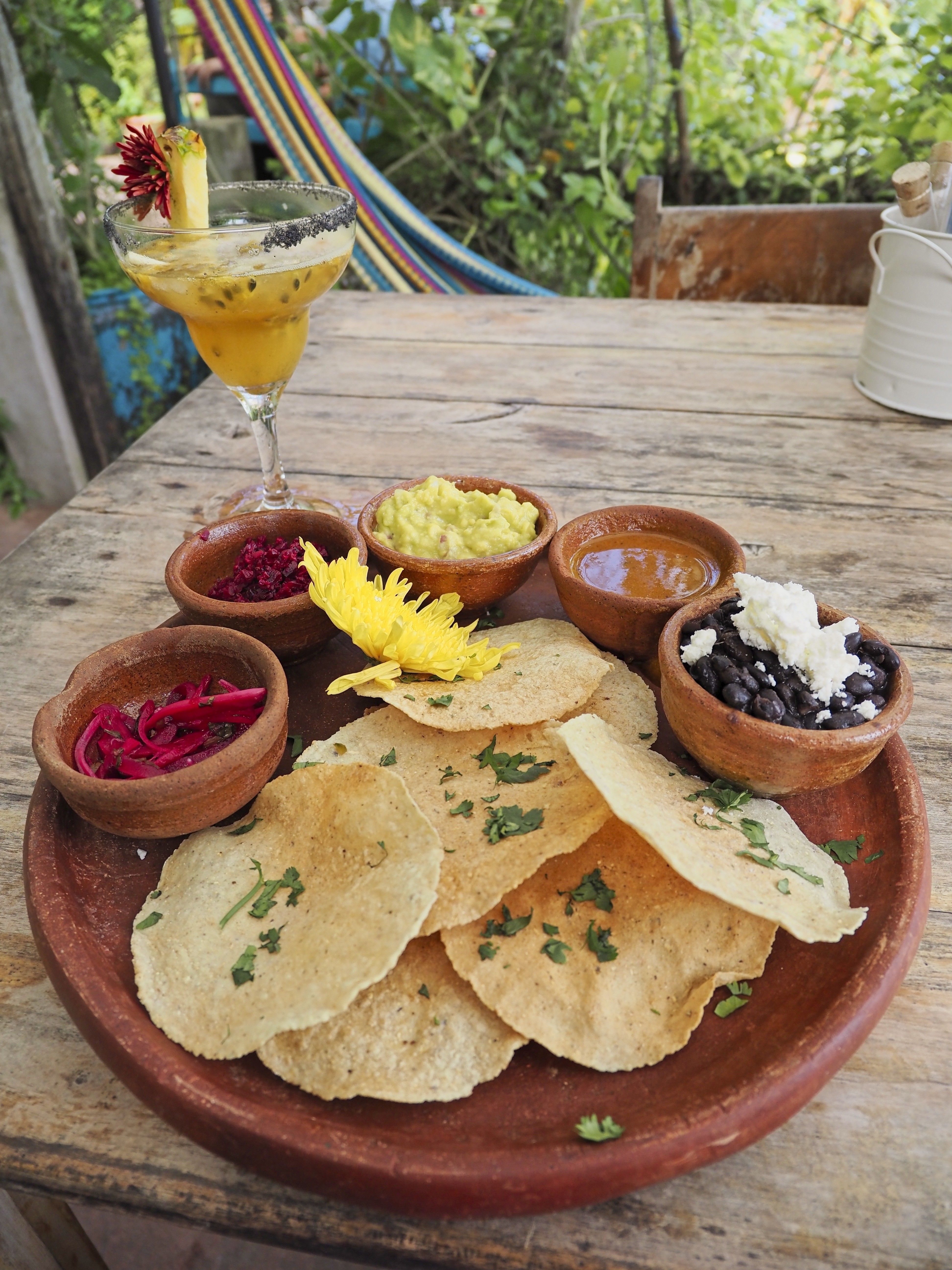
The setting is a home table or a feria (patron-saint festival) food stand. Vendors who sell tostadas often sell atol from the same counter. For a home cook, this is the appetizer that comes out before the main course, the light plate served at gatherings when something satisfying but not filling is needed. The tostada’s origin is mestizo — Maya corn tortillas meeting the oil-frying technique introduced after the conquest — and the result became its own food object with its own logic.
The Belizean tostada layers refried beans, shredded cabbage, and crumbled cheese on one tortilla. Both are good food. They are not the same food.
The Belizean tostada takes a different path. It layers refried beans, shredded cabbage, and crumbled cheese on one tortilla — one loaded shell, not a trio of single-spread shells. Both are good food. They are not the same food.
How to keep the tostada crisp and vary the three spreads
The shell needs to stay crisp from the moment of assembly to the moment it reaches the table. Three things help most.
Reduce the salsa de tomate all the way down to a thick paste before spreading. A watery sauce soaks through the shell in minutes. When you can drag a spoon through the sauce and the line holds, it is ready.
Spread and serve immediately. All three toppings (frijol, guacamol, and salsa de tomate) are moist enough to soften the shell if they sit too long. If you are making a large batch, keep the shells and spreads separate and assemble just before eating.
The frijol must also be thick. Loosen it during cooking only enough to keep it spreadable. Once it cools slightly on the shell, it will set into a firm layer that holds its shape without soaking through.
Cooks who prefer not to deep-fry can brush the raw corn tortillas lightly with oil on both sides and bake at 400°F (about 200°C), turning once, until they snap cleanly. The result is slightly lighter and less rich than the fried version, and it works well for a home cook making a dozen at once.
For queso seco outside Central America, Cotija is the nearest substitute: dry, salty, and firm enough to grate. Any aged dry-style cheese that crumbles or grates fine will work. Avoid soft fresh cheeses, which clump rather than providing the dry, slightly salty finish the dish needs.
Some vendors add a small piece of canned or jarred sardine to the tomato-salsa tostada. This is not standard but appears as a regional habit in some markets. Treat it as an option, not part of the base recipe.
All three spreads hold well in the refrigerator for a day. Keep guacamol covered with the avocado pit in the bowl and a thin layer of lime juice on the surface to slow browning.
Frequently Asked Questions
What are Guatemalan tostadas?
Guatemalan tostadas (tostadas guatemaltecas) are crisp fried corn tortillas spread with one of three classic toppings: frijol (refried black beans), guacamol, or salsa de tomate, and finished with thin onion rounds, chopped parsley, and grated queso seco. They are served as a trio, one of each spread, and are a traditional antojito made at home, served at family gatherings, and sold at ferias (patron-saint festivals) and weekend food stands across Guatemala.
What are the three classic Guatemalan tostada toppings?
The three toppings are frijol (refried black beans cooked down with onion to a thick paste), guacamol (mashed avocado with onion, lime juice, and oregano), and salsa de tomate (a cooked tomato sauce reduced to a thick consistency). Every tostada, regardless of the spread, is finished with onion rounds, parsley, and grated queso seco.
What is the difference between a tostada, a garnacha, and an enchilada in Guatemala?
All three are built on a fried corn tortilla, but they are different food objects. A tostada is a full-size, thin, fully crisped tortilla carrying one spread (frijol, guacamol, or salsa de tomate) with a dry cheese-parsley finish — the simplest of the three. A garnacha is a small, thick coin of masa, fried and topped with a unified stack of seasoned ground beef, curtido (vinegar-softened shredded cabbage and carrot), simple tomato salsa, and crumbled queso seco — a heartier snack with a very different size and topping logic. An enchilada guatemalteca (also called jardinera) is the most loaded: a full-size crisp tostada with a lettuce leaf, a generous spoonful of beet-tinted escabeche (long-marinated pickled vegetable mix), seasoned ground beef, tomato sauce, a hard-boiled egg slice, and queso seco. The egg slice and the beet-stained escabeche are the enchilada’s fingerprints. Same base concept — fried tortilla — three entirely different dishes.
How are tostadas guatemaltecas different from Belizean tostadas?
A Guatemalan tostada carries one spread (frijol, guacamol, or salsa de tomate), finished with dry grated cheese, onion, and parsley, and is served as part of a trio. A Belizean tostada layers refried beans, shredded cabbage, and crumbled cheese on a single shell, all combined on one tostada. The Belizean version is a loaded single serving; the Guatemalan version is three separate single-topping pieces served together.
What cheese goes on Guatemalan tostadas?
Queso seco is a dry aged cheese that grates into small, slightly salty flakes. Outside Central America, Cotija is the closest substitute. Any firm, dry grating cheese with a salty character works well. Avoid soft fresh cheeses; the texture should be dry and crumbly, not moist.
Can you bake the tortillas instead of frying them?
Yes. Brush thin corn tortillas lightly with oil on both sides and bake at 400°F (about 200°C), turning once, until they snap cleanly and hold their shape. The result is slightly less rich than the fried version and easier to manage when making a large batch.
More Guatemalan Recipes
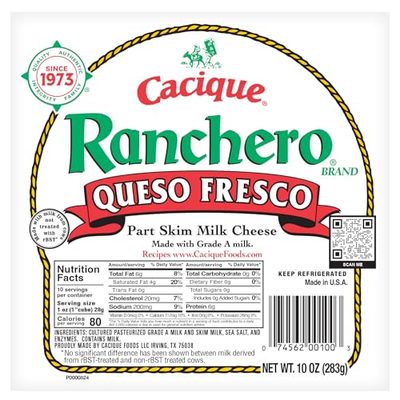
Cacique Queso Fresco Ranchero, 10 oz
A fresh crumbling queso fresco in 10 oz size, ready to sprinkle on cooked dishes or incorporate into recipes without shredding.